Prince Naseem Hamed was once the most electrifying figure in British boxing, a featherweight champion who turned ring entrances into theater and knockouts into art. By the late 1990s, he was a global superstar pulling up to events in Ferraris, flipping over the ropes in leopard-print trunks, and collecting millions with every performance. Today, at 51, he is barely recognizable from that era, living a quiet and isolated life far from the cameras he once commanded. Hamed was born on February 12, 1974, in Sheffield, England, the son of Yemeni immigrants.
He grew up in a crowded home with nine siblings, where money was tight and survival was the daily routine. As a boy, he shadowboxed in front of a mirror, mimicking Muhammad Ali and declaring he would surpass Sugar Ray Leonard. His family laughed, and neighbors dismissed him, but he believed it. His path changed when he walked into the gym run by trainer Brendan Ingle, an eccentric but gifted coach who immediately recognized something special in the small boy with oversized gloves.
Ingle taught him rhythm, footwork, angles, and timing, making him shadowbox to reggae beats and fight in ways opponents could not predict. But Ingle could not teach the part that came naturally: pure, freakish knockout power. By his teenage years, word had spread that this skinny Yemeni kid from Sheffield was not just good, he was frightening. Hamed made his professional debut in 1992 on live television and flattened his opponent in two rounds.
He called himself the Prince, and Britain did not know whether to laugh at his arrogance or applaud his brilliance. In 1995, he traveled to Cardiff to face Steve Robinson for the WBO featherweight belt. The Welsh crowd booed him mercilessly, but by the eighth round, Robinson was finished and Hamed was champion. What made him different was not just his power but the way he carried himself.
His entrances became legendary: walking out on flying carpets, backflipping over the ropes, dancing in leopard-print trunks while fireworks exploded. Purists hated him, calling him arrogant and disrespectful. Fans loved him, chanting his name before he even threw a punch. And he backed it all up, knocking out opponent after opponent, often without letting them land a clean glove on him.
By 1997, America came calling. His U. S. debut against Kevin Kelley at Madison Square Garden became an instant classic, a chaotic fight with knockdowns on both sides.
In the fourth round, Hamed landed his signature left hand and dropped Kelley for good. Overnight, he became a global superstar, compared to Muhammad Ali for showmanship and Mike Tyson for power. He was living like royalty, with mansions, diamond-encrusted Rolexes, and a driveway lined with supercars. But behind the glitter, something was slipping.
His relationship with Ingle, the man who had built him into a star, began to fracture. Hamed stopped listening, brushing off advice, and soon the partnership ended in an ugly split. Without Ingle’s discipline, training camps became chaotic, sparring grew softer, and his diet slipped. He bulked up, losing some of the razor-sharp edge that had once made him untouchable.
Still, he kept winning, unifying the IBF and WBO belts and demolishing a string of top contenders. But whispers grew louder that his reflexes were not as sharp and his timing was a beat off. The reckoning came on April 7, 2001, at the MGM Grand in Las Vegas. Hamed was supposed to be crowned the king of boxing in front of the world.
Across from him stood Marco Antonio Barrera, the Mexican legend known for relentless, technical, ruthless fighting. Hamed arrived with his usual swagger, telling reporters his power was too much for any man alive. But from the first round, Barrera refused to play his game. He boxed smart, disciplined, and surgical, slipping Hamed’s wide looping shots and punishing him with clean counters.
By the third round, the smile was gone. By the sixth, Hamed’s eyes betrayed confusion. Barrera was not afraid, and that terrified him. As the rounds dragged on, Hamed became desperate, swinging wildly for the one punch that could save him.
In the 12th and final round, Barrera delivered the ultimate insult: he trapped Hamed in the corner and deliberately rammed his face into the turnbuckle pad. The judges scored it a unanimous decision for Barrera. Hamed left with his head down, his crown shattered. The boxing world waited for a rematch or a comeback.
Instead, the Prince went silent. In 2002, he returned for what was billed as his comeback against Manuel Calvo, but it became the funeral of his career. He walked to the ring heavier, slower, and without the electric spark that once lit up arenas. For 12 dull rounds, he jabbed and circled without risk.
There were no backflips, no taunts, no explosive knockouts, just a sluggish points victory that left fans openly booing. At just 28 years old, still undefeated outside of Barrera and still wealthy, he vanished from the sport without a retirement speech, without a farewell fight, without closure. He still had an estimated net worth of more than $38 million, enough to live like a king forever. But money without purpose became a curse.
Without training camps, cameras, or rivals, his body softened and his fire dimmed. Paparazzi photos over the years showed a transformation: the shredded featherweight phenom replaced by a bloated figure almost unrecognizable, often speculated to have gained more than 100 pounds. He refused interviews, refused commentary jobs, and refused to train fighters. In 2005, his life took another dramatic turn on the roads of South Yorkshire.
Hamed was behind the wheel of his $325,000 Mercedes McLaren SLR, driving recklessly, weaving through traffic and overtaking cars on a blind bend. His car collided head-on with a Volkswagen Golf driven by Anthony Bergen, an ordinary driver with no connection to boxing. Bergen suffered multiple fractures, broken bones, and lifelong injuries. Hamed crawled from the wreck shaken but alive.
The investigation revealed he had been speeding far beyond the limit and driving without valid insurance. In 2006, Hamed was sentenced to 15 months in prison. Though he served only 16 weeks before being released on electronic tag, the damage was permanent. Tabloids tore him apart, and former fans called him reckless and careless with lives that weren’t his own.
The crash stripped away what little shine remained on his legacy, leaving behind a man remembered less for his knockouts and more for his downfall. Even after prison, the shadow lingered. Hamed tried to retreat into his quiet life of wealth and isolation, but the world wouldn’t forget. When he was inducted into the International Boxing Hall of Fame in 2015, fans hoped it would spark something.
Instead, his acceptance speech was brief, flat, and distant. There were no jokes, no backflips, no arrogance, just a tired man speaking in monotone as if the memories themselves weighed too much. To many, it was heartbreaking. The crowd wanted the showman.
What they got was a ghost. In gyms across Britain, younger fighters studied Floyd Mayweather, Manny Pacquiao, or Amir Khan, but rarely Nasim. Trainers stopped teaching his unorthodox style, and promoters stopped referencing his box office magic. In the void of his silence, narratives formed without him.
Some critics labeled him overrated, claiming he relied too heavily on power and never proved himself after his first real loss. Others saw him as a tragic cautionary tale of arrogance and wasted potential. Because he refused to tell his side of the story, myths filled the silence. Today, Hamed is a man almost unrecognizable from the superstar who once danced into arenas.
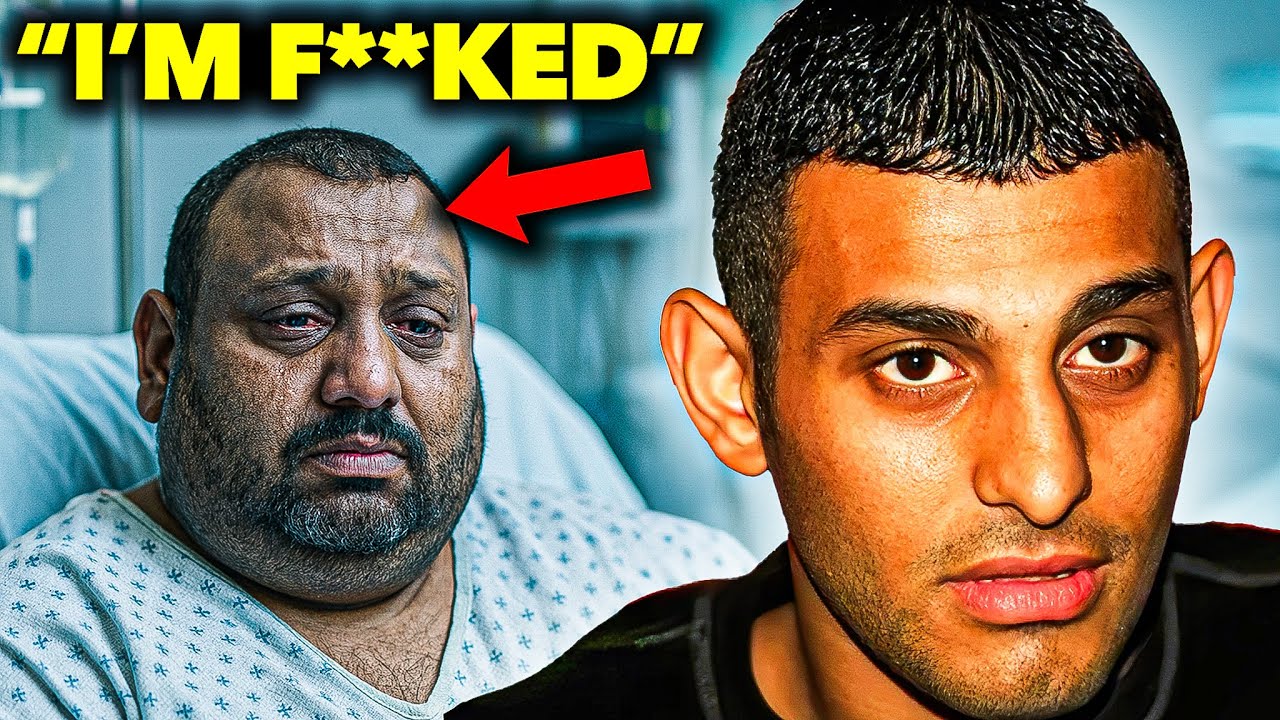
The body that once seemed built for speed is gone, replaced by a heavier frame that struggles under the weight of time and indulgence. In one public appearance in 2022, gasps filled the venue as he shuffled into the room, moving slowly and looking older than his years. Social media lit up with disbelief. But beneath the weight gain lies an absence of purpose.
He has no podcast, no autobiography, no gym with his name on the wall. There are glimpses behind closed doors. He supports his sons, who have shown interest in boxing, sometimes giving quiet advice and stepping into the gym just long enough to pass on a tip. Young Yemeni fighters in Britain speak of private words of encouragement, moments where the old fire flickers again.
But he avoids cameras, avoids headlines, and avoids the chance to explain his silence. Some close to him whisper that he still hasn’t forgiven himself for walking away. Others believe his religious devotion deepened, pulling him away from fame toward a quieter life of faith. His health is now a growing concern.
Years of inactivity, weight fluctuation, and indulgence have taken their toll. Reports suggest chronic knee pain, fatigue, and mobility issues. Friends say it’s a sensitive subject he avoids at all costs, but the images speak for themselves. The fighter who once floated on his toes now struggles with each step.
The tragedy of Prince Naseem Hamed’s story isn’t that he lost to Barrera. It isn’t even that he went to prison. It’s that he never came back. In a sport where redemption is woven into its DNA, he denied himself a second act.
George Foreman shocked the world at 45. Tyson returned for exhibitions at 54. But Hamed cut the tape mid-film, leaving his story unfinished. At 51, he may never fight again, but his charisma and knowledge could still inspire.
The world is waiting for closure, for the Prince to reclaim his crown in some form, not through punches but through presence. For now, he lives in the shadows, a legend defined not only by what he did in the ring but by what he left undone outside of it.