In December 1809, the British brigantine Boyd anchored off the coast of New Zealand, carrying a young Māori man named Te Ara who had spent the previous year traveling on British ships. He was the son of a chief from the Ngāti Manu hapū, an influential people of the North Island, and had joined the Boyd in New South Wales as it sought a cargo of valuable kauri timber. The voyage home, however, became one of the most infamous and violent episodes in early New Zealand-European contact. From the outset, Te Ara clashed with the ship’s captain, John Thompson.
One account claims Te Ara, as a chief’s son, considered lowly ship tasks beneath his rank and refused to perform them. Another version suggests the crew falsely accused him of stealing silver that they themselves had thrown overboard. Regardless of the cause, Thompson’s punishment was brutal. Te Ara was tied to the capstan, starved, and flogged with a cat-o’-nine-tails.
Though legally permitted under British maritime law at the time, the treatment of a Māori chief’s son, with no regard for his cultural and political standing, was a grave miscalculation. During the flogging, Te Ara swore vengeance on Thompson and the crew. In the weeks that followed, Te Ara feigned compliance and gradually gained Thompson’s trust. He convinced the captain to sail to Whangaroa Bay, claiming the area held abundant kauri timber.
By agreeing, Thompson unwittingly sealed the fate of those aboard. When the Boyd anchored in the bay’s scenic waters, Te Ara seized his moment, plunging into the sea despite the saltwater burning the open wounds on his back, and swam ashore, disappearing into the dense forest. Uncertain whether to stay or depart, Thompson and the crew remained anchored for three days. As they prepared to leave, a Māori canoe approached signaling peace.
Through gestures, the occupants indicated they would lead Thompson and a small group to prime kauri trees near the Kaeo River. Eager for the timber, Thompson, his chief officer, and three others followed in a rowboat. Once out of view, they were ambushed and killed. Their bodies were stripped of clothing and weapons and taken to the village, where they were dismembered and eaten.
That night, Māori warriors dressed in the Englishmen’s clothes boarded the Boyd and quickly killed the lookouts. Other war canoes, hidden from view, swarmed the ship and massacred most of the crew and passengers. Five people were initially spared:Anne Morley and her infant, second mate Thomas Davis, an unnamed sailor, and two-year-old Elizabeth Broughton. Five others hid in the ship’s rigging and escaped the slaughter.
The next morning, a canoe carrying Chief Te Pahi from a neighboring Ngāpuhi hapū approached, intending to trade. Te Pahi and his men boarded the Boyd and discovered the survivors. Willing to assist, they urged the survivors to flee in their canoe. However, as they reached shore, two Whangaroa war canoes pursued them.
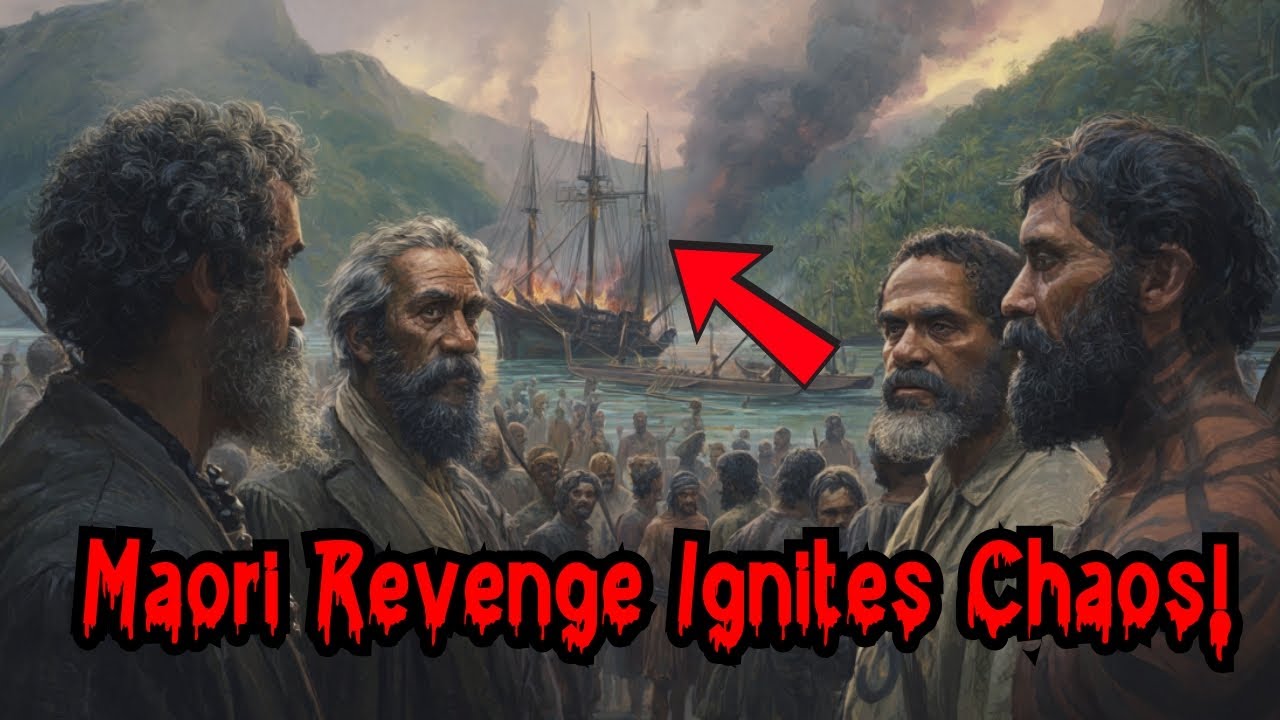
Te Pahi, unable or unwilling to intervene, watched as the warriors killed all but one survivor, who was taken captive. The Māori then towed the Boyd to mudflats near Motu Wai Island and plundered its cargo for days. Flour sacks, barrels of salt pork, and bottles of wine were ruined in the looting. Catastrophe struck when a warrior unfamiliar with firearms ignited a fire that triggered the ship’s gunpowder stores.
The blast killed ten Māori, including Te Ara’s father, and ignited the whale oil reserves, reducing the Boyd to a charred wreck. Declared tapu, or sacred and forbidden, the wreck was abandoned. The three adult survivors, Anne Morley, Thomas Davis, and the unnamed sailor, were enslaved and forced to perform exhausting tasks. When the unnamed sailor collapsed while crafting fishing hooks, he was killed.
Anne Morley, her infant, and Elizabeth Broughton were spared but given minimal food and shelter. Word of the massacre reached European settlements. In the Bay of Islands, Captain Alexander Berry of the whaling ship City of Edinburgh organized a rescue. Sailing north, Berry’s crew attacked a Māori village and captured several members.
Unbeknownst to them, this was Te Pahi’s hapū, the very group that had tried to help the survivors. The next day in Whangaroa Bay, Berry’s crew spotted the Boyd’s remains and captured more Māori. Holding hostages, Berry demanded the survivors be released, threatening to kill the captives and destroy the village. The Māori complied, freeing Anne Morley, her infant, Thomas Davis, and Elizabeth Broughton, all gaunt but alive.
Berry also recovered the Boyd’s logs and demanded that the Whangaroa chiefs be stripped of rank, a symbolic but unenforced act. The City of Edinburgh sailed to Valparaíso, Chile, for repairs, then to Lima, Peru. There, Anne Morley died, and her daughter was placed in a Spanish household. Elizabeth Broughton was adopted by a wealthy Spanish couple.
Thomas Davis worked for Berry but drowned in 1822 while exploring the Shelhaven River. In New Zealand, the massacre’s consequences endured long after the ship burned. In March 1810, sailors from whaling ships attacked a village on Motu Apo in Waiwa Bay, Te Pahi’s hapū, wounding Te Pahi. In April, Te Pahi led an attack on the Whangaroa Māori but was killed.
The Musket Wars, which had begun around 1807, escalated in the wake of the massacre, fueled by European weapons. From 1807 to 1845, roughly 20,000 Māori died, with thousands more enslaved or displaced as tribes vied for resources and dominance. The Boyd massacre and its aftermath, entwined with European expansion, remain a tragic episode in New Zealand’s history, defined by cultural miscommunication and devastating outcomes.