Vera Davydova spent decades publicly denying a label that had been attached to her by others: Stalin’s mistress. The accusation came from a book she did not write and spent years rejecting, yet it threatened to overshadow a distinguished career at the Bolshoi Theatre that had earned her multiple state honors. Davydova was born in September 1906 and rose to become one of the Bolshoi’s most prominent mezzo-sopranos during the peak of Stalin’s rule. She trained rigorously through the Soviet conservatory system, developing the technical and dramatic reputation that brought genuine artists to the top of Soviet cultural life.
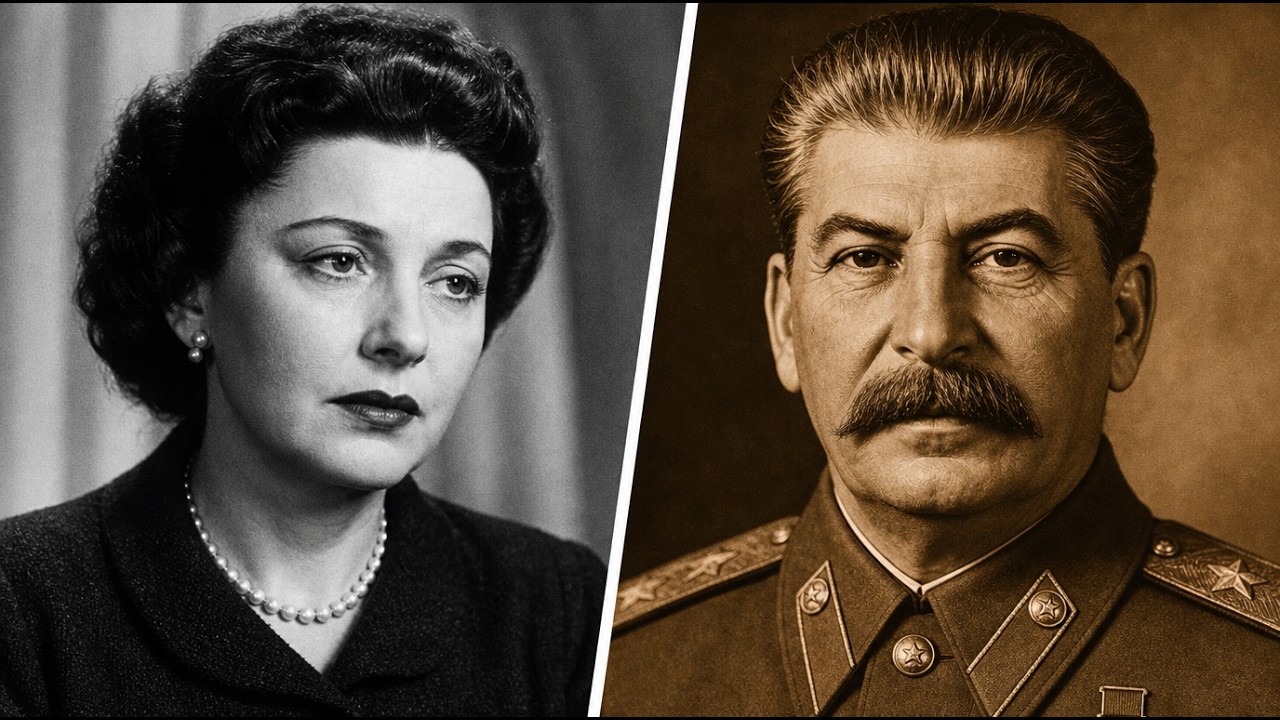
By the 1930s, she had established herself as one of the theatre’s most reliable and celebrated performers, taking leading mezzo-soprano roles in Russian and European operas that placed her at the center of its most distinguished productions. These performances were attended not only by the ordinary Soviet public but also by the political leadership, which increasingly used the Bolshoi as a showcase for Soviet cultural achievement. Stalin was known to attend Bolshoi performances and to take a strong personal interest in certain selected artists, a pattern of attention that shaped careers throughout the Soviet cultural establishment. Davydova received Stalin Prizes in 1946, 1947, and 1951 — official recognition that placed her among the most honored artists in the entire Soviet system.
This was a privilege granted over multiple years, reflecting sustained institutional support rather than a single moment of recognition. Few artists in any field managed this more than once during their careers. She was also married to Dmitri Machalidze, a singer and voice teacher in his own right. Their professional partnership placed both careers within the state-sponsored world of Soviet opera, and their marriage lasted across the very decades that later became central to the contested timeline in the memoir.
In the world of Stalin, receiving prizes, applause, and access to the most powerful cultural institutions could mean talent, loyalty, patronage, or a personal relationship. No one could safely label it. State prizes alone do not prove a romantic relationship, and cultural success under Stalin could come through genuine talent, proven political reliability, useful patronage networks, or personal favor — often a combination that even recipients themselves might not fully untangle. The Soviet system rewarded artists who aligned with state expectations and punished, sometimes brutally, those who fell out of favor for reasons unrelated to artistic merit.
Survival and advancement within institutions like the Bolshoi required careful, constant political navigation that had nothing to do with singing itself. Davydova’s rise coincided with an era in which Stalin’s cultural interests directly shaped which artists received prestige, prizes, and protection. Her repeated honors placed her firmly within that system of favor. This pattern created later suspicion once observers began looking backward for an explanation of why one singer among many talented Bolshoi artists received consistent, prominent state attention for over a decade — a question the surviving archival records alone cannot definitively answer in either direction.
Stalin’s life ended in March 1953 after a documented health crisis. Davydova survived him by nearly four decades. In the years immediately following his death, the Soviet system began to change, and his personality cult was later directly challenged during the de-Stalinization period under his successors. Artists and officials who had clearly benefited from Stalin’s personal favor now faced a different set of expectations, with proximity to the former leader becoming a burden rather than a mark of prestige.
Davydova continued her artistic life through this transition, with her documented public record remaining centered on her singing career and later teaching. She navigated the changing political landscape with apparent success, continuing to perform and then teach without the kind of public scrutiny that befell more politically involved figures from the Stalin era. Nothing in her public life during that period suggested her name would eventually be tied to a story far bigger than her documented career. That changed with the appearance of a later book titled “Confessions of Stalin’s Mistress,” which claimed a long, special relationship between Davydova and Stalin, presenting her as a hidden companion in his private world for years.
The book appeared decades after Stalin’s death, when Davydova was an elderly woman with a reputation built entirely on her artistic record. Its publication forced her, for the first time in her later life, to publicly confront a claim about her private history that she had never made herself and had no role in shaping. The timing meant that an entire generation of new readers, with little independent knowledge of Soviet history or Stalin-era institutional culture, learned Davydova’s name for the first time through the memoir’s sensational framing rather than through any awareness of her documented career. The book’s claims spread internationally, reaching audiences beyond the Soviet Union and Russia itself, linking a sensational private narrative to a career previously known primarily for significant public achievements, prizes, and decades of respected teaching.
Davydova rejected the book’s account. Her family and defenders also questioned its portrayal of her relationship with Stalin, offering their own counter-narrative built on her documented career and the absence of any such claim during the many decades between the alleged relationship and the book’s publication. Critics pointed to this decades-long silence as reason for doubt, while the book’s defenders argued that the political dangers of speaking earlier — especially during Stalin’s lifetime and the years immediately after his death — provided a reasonable explanation for why such a claim emerged so late. The book’s credibility remains genuinely disputed among those who have examined its claims.
No independent archival records have emerged that definitively settle whether the relationship it describes actually happened, to what extent, or for what period. What the historical record can confidently prove is Davydova’s public career, the state prizes she received, and Stalin’s documented pattern of cultural patronage toward Bolshoi artists generally — a pattern well documented for many artists, not limited to her alone. What the record cannot fully prove is the private relationship described in the memoir — whether any alleged relationship lasted for years as claimed, or whether Davydova’s public denial was complete, strategic, or entirely sincere and simple. That question ultimately depends on evidence that, if it ever existed, has not appeared in any form independent of the controversial book itself.
Davydova spent much of her later life away from the most visible centers of Soviet political and cultural power, eventually settling in Tbilisi, where she continued teaching and working in music. She built a second phase of her career centered on training the next generation of singers rather than performing on the Bolshoi stage. The Georgian musical culture, closely tied to the broader Soviet opera tradition, provided her a new institutional home for her work, somewhat removed from the intense political scrutiny still surrounding Moscow’s most prominent cultural institutions in the years after Stalin’s death. This later period carried its own difficulties.
Any documented connection to Stalin, however vague, became a more complicated association to manage once de-Stalinization made open affiliation with the former leader far more dangerous than during his lifetime, when proximity to Stalin’s favor was the surest form of protection available within Soviet cultural life. Davydova never publicly built any identity around her connection to Stalin, whether positive or otherwise — during a period when many former beneficiaries of his patronage were actively distancing themselves from any association with his name, sometimes minimizing or outright denying past interactions that had once been sources of professional pride. Instead, she consistently presented herself as an artist and teacher, someone whose professional record spoke for itself, apart from any private narrative others attached to her after the fact. Her documented artistic career remained substantial throughout that period.
She was a celebrated opera performer, a respected teacher whose students carried her training into the next generation of Soviet and Georgian music, and an award-winning figure whose name remained associated with some of the Bolshoi’s most important Stalin-era productions, regardless of how her personal history was later reinterpreted by outside observers decades after the events. Once the claim appeared, however, it became for many readers and audiences outside the Soviet Union the dominant public story about her in her final years, overshadowing decades of documented artistic achievement with a single contested claim she never sought to carry and had no role in publishing herself. International audiences, unfamiliar with the depth of her actual Bolshoi career or the substance of her decades of teaching, encountered the sensational claim first and often exclusively, absorbing a version of Vera Davydova built entirely around one disputed book rather than around the substantial documented artistic record that defined her public life for half a century. The public wanted the private scandal.
Davydova wanted to be remembered for her work. This conflict sits at the emotional center of her later life — a tension between the artist’s own account of her career and a narrative imposed on her from outside that she could never fully shake off. Nevertheless, she denied it steadily and firmly in interviews, through her family, and through the ongoing reality of her teaching career that continued regardless of what outside observers believed about her private history. Vera Davydova survived Stalin by nearly four decades.
Yet the dictator’s shadow pursued her to the end — not through official recognition, but through a story that archives could neither fully prove nor erase. She died in January 1993, 40 years after the man she was alleged to have loved. She spent those four decades building and defending a public identity as a serious artist while an unresolved private claim pursued her, no matter how firmly or repeatedly she rejected it. Her death came at a moment when the Soviet Union itself no longer existed, having dissolved less than two years earlier.
Davydova lived long enough to see the entire political system that shaped her career, and the leader whose favor raised her, enter history alongside her, replaced by an entirely new political order in the states that once formed the Union. Today, archives can confirm her career, her prizes, and Stalin’s documented cultural patronage of prominent Bolshoi artists. They cannot confirm every private detail claimed by the later memoir, and likely never will — since the only two people who could have definitively settled the matter are long gone, leaving behind an official record of professional success and a contested book that neither historical evidence nor Davydova’s lifelong denial has resolved.
What remains, in the end, is a career substantial enough to stand on its own merits, a claim persistent enough to survive every denial leveled against it, and a historical question that — like many private stories connected to Stalin’s inner world — may never receive the definitive answer either side would prefer, leaving Vera Davydova suspended forever between the artist she documented herself to be and the mistress one controversial book insisted she also was.