In Memphis, Tennessee, in 1960, a Black family could walk into any major bank in the city with a steady paycheck, a clean record, and a down payment, yet still leave empty-handed. Not a single conventional mortgage was approved for a Black applicant that year through standard lending channels, in a city where more than 200,000 Black residents lived. This was not a fluke of one bad year; it was the routine result of a lending system designed, both in theory and in practice, to exclude an entire population from the most reliable path to generational wealth in America: owning a home financed at a fair interest rate. Yet within a decade before or after that year, Black families across the South and the industrial North were quietly building homes, sending their children to college, securing their funerals, and leaving something for the generations that followed.
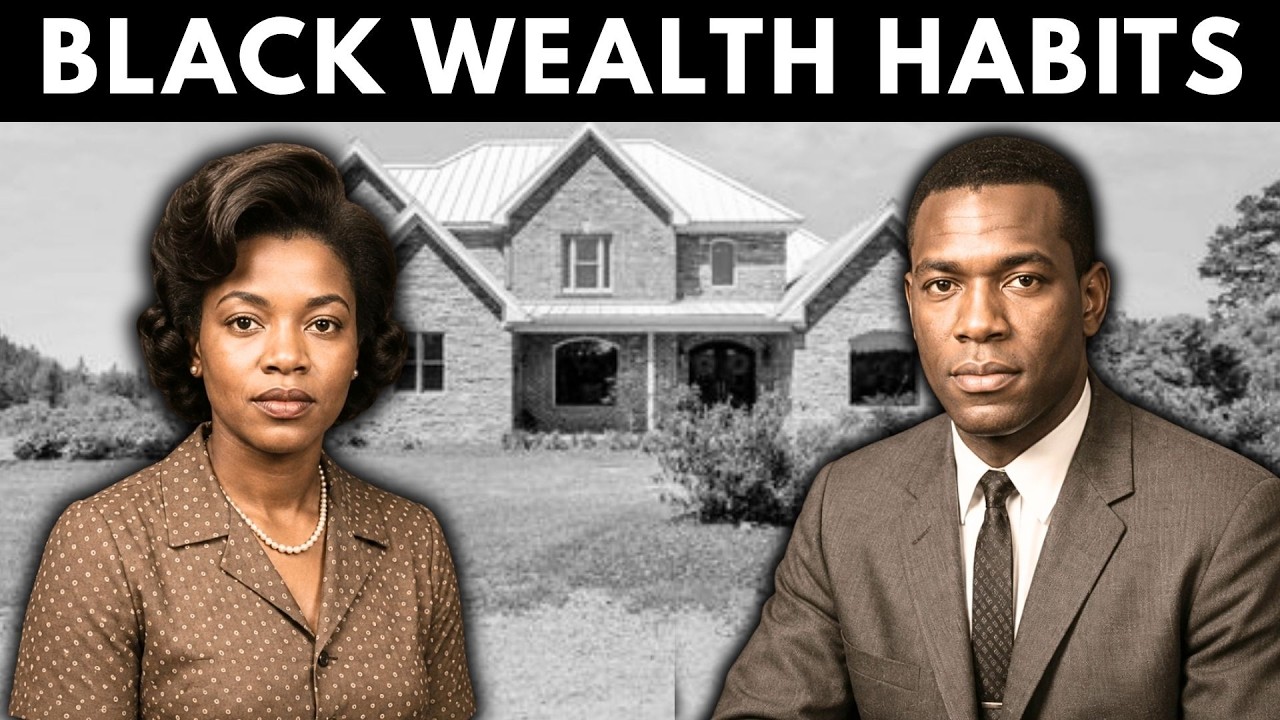
They did it without the banks that rejected them. They built an entire parallel financial system, run from church basements instead of bank vaults, social clubs instead of insurance companies, and handwritten agreements instead of courtrooms that had a documented history of losing their paperwork. Historians studying the Black middle class in the postwar period found that most of the wealth built by Black families before 1970 was built almost entirely outside the formal financial system. During the same era, the average white family enjoyed access to federally backed mortgages, veterans’ housing benefits, and business loans that were routinely denied to Black applicants with identical qualifications.
The gap was not an accident of effort but a direct consequence of policy, and what policy could not measure was what Black families built anyway. By the 1980s, most of these habits had stopped being taught. Integration opened new doors, wages rose, and the old methods began to look like relics of a harsher, more limited time. But those methods were never a symptom of poverty.
They were precise, disciplined solutions to a problem that had no other solution. Each one still works exactly as it did in 1960; the only thing that was allowed to fade was the habit itself. In rural counties across Mississippi, Alabama, and the Carolinas, four or five families would share the cost of raising and slaughtering one hog each winter. One family would provide corn to fatten the animal through the fall, another supplied labor on slaughter day, and a third offered the smokehouse where the meat was cured.
When the hog was slaughtered in November, the meat was divided according to family size rather than strictly by contribution. A family raising and curing a hog alone in 1960 spent roughly 40 dollars a season on feed and equipment; splitting that cost among five families cut the burden by more than half and ensured no family in the cooperative entered January with less meat than they needed. That same cooperative model extended into the late-summer canning season. The same groups pooled sugar, jars, and cooking time to put up tomatoes, beans, and peaches together, reducing the individual cost of a full pantry by the same margin the meat cooperative provided.
Fraternal lodges such as Prince Hall Masons, the Improved Benevolent and Protective Order of Elks of the World, and the Knights of Pythias were more than just Friday-night social clubs. A worker in Louisville in 1960 paid about two dollars a month in lodge dues, and in return, the lodge covered a significant portion of his funeral costs, offered small emergency loans to members in good standing, and often ran a modest scholarship fund for members’ children. These organizations had existed since the nineteenth century specifically because commercial insurers would not issue affordable policies to Black clients. By 1960, Black fraternal organizations collectively owned meeting halls, real estate, and reserve funds built entirely from small dues paid over decades.
The Elks alone owned properties whose value dwarfed that of any Black-owned bank of the era. A Black-owned grocery store in a segregated Kansas City neighborhood ran what everyone called “the book. ” A trusted customer could take groceries on credit between paychecks and settle the account fully every two weeks, with no interest and no formal application process. The owner knew every family in his ledger personally, kept their balances by hand in a notebook, adjusted terms quietly for a family struggling through a hard period, and sometimes allowed a balance to ride an extra week without mentioning it.
When white-owned chain stores opened in Black neighborhoods in the 1960s with lower advertised prices, many families kept shopping at the small store because “the book” had carried them through times no chain or bank would have. Leftover from 1940s war bond campaigns, many households kept the habit of buying 10- and 25-cent savings stamps at the post office window and pasting them into a booklet until it reached a redeemable value, often 18. 75 dollars for a bond worth 25 dollars after ten years. A domestic worker in Charleston filled one complete booklet roughly every six weeks from a nine-dollar weekly wage.
It was not a huge amount by itself, but it was money that left her hands before she could spend it on anything else, turning instantly into a stamp she could not easily undo. By 1960 she held three completed booklets that converted into savings bonds covering her son’s first semester at trade school. It was paid for in full without a loan and without interest owed to anyone. Women in rural Georgia met weekly to assemble quilts from fabric scraps, worn clothing, and flour sacks.
The finished quilts were not only for warmth; they were bartered directly for canned goods, for the use of a neighbor’s mule and plow during planting season, or sold for cash to white families in the nearest town for six to ten dollars each. A single circle of eight women meeting through the winter could produce and sell roughly 30 quilts, with the proceeds split evenly regardless of whose scraps went into any particular quilt. It was labor converted directly into goods or cash, with no bank, no middleman, and no interest at any stage. Black-owned banks like Tri-State Bank in Memphis and Broadway Federal Savings in Los Angeles, both founded in 1946, existed because Black depositors elsewhere were routinely refused loans regardless of their balances or income.
A Memphis teacher who kept her savings at Tri-State in 1960 dealt with an institution that later financed civil rights organizing in that same city, offering credit lines and bail funds when no other Memphis bank would touch those accounts. Each deposited dollar worked double duty: it served as her personal savings and as working capital for the community around her. By the mid-1960s, there were fewer than 50 Black-owned banks in the country, a tiny fraction of roughly 14,000 banks nationwide, meaning every deposit carried significant weight. In industrial cities like Pittsburgh and Cleveland, families set aside a fixed sum, often 50 cents to a dollar a week, exclusively for the coal bill and rent during the coldest months.
This fund was kept entirely separate from the general household budget, often in a labeled tin or envelope, to guarantee it would not be quietly absorbed into grocery money no matter how hard any given week was. A family that maintained this discipline consistently through the 1950s entered the winter of 1960 owing nothing for heat, while neighboring families without the habit routinely fell behind by January, paying late fees on top of what they already owed. A subscription to the Pittsburgh Courier or the Chicago Defender cost about six dollars a year in 1960 and functioned as far more than a news source. These papers regularly listed employers in cities that hired Black workers at fair wages, neighborhoods opening up to Black homebuyers, and hotels, doctors, and businesses that were safe and welcoming when traveling through an unfamiliar city.
A railroad worker who read the Defender on every Chicago run used its employment listings to move his family into a better-paying position in the same industry, raising his household income by about 30 percent within two years. At its peak circulation in this period, the Black press reached several million readers weekly, making it by far the most trusted source of practical, financial, and employment information available to most Black families. Formal construction trade unions frequently and openly excluded Black workers throughout the 1950s and 1960s. So fathers who had learned building, electrical work, or plumbing on the job trained their sons directly at work sites, sometimes for years before the son ever touched a formal license or union card.
A father-and-son team of skilled but unlicensed electricians in Birmingham could charge about 60 percent of what a licensed white-owned firm charged for the same work, yet still earn far more per hour than either could make working for wages in any factory in the city. The trade itself became the inheritance, passed down with no tuition costs and no gatekeeper between a father’s skill and his son’s future. A common practice across the rural South was keeping a cash reserve folded between the pages of the family Bible, both for physical safekeeping and because it was one of the few places in a poor home no visitor or child would think to disturb. A widow in rural Louisiana kept nearly 200 dollars there into the late 1950s, collected a few dollars at a time from selling eggs and canned jam at the local market.
That money paid for the doctor visit when her grandson broke his arm in 1960, completely and immediately, with no medical debt and no delay in treatment while money was found elsewhere. A family in Atlanta could put a small deposit on a winter coat or school shoes in September and pay off the remaining balance in small weekly installments before taking the purchases home, with no interest charged and no credit check at any point in the process. Over one school year, a mother who regularly used layaway for three or four items could outfit three children for under 30 dollars total spread across eight full months, without a loan, credit card, or any account that would accrue interest against her. Layaway was practically the only form of consumer credit widely available to Black shoppers at the time, and it carried no fee for the installment privilege, during an era when prevailing installment plans often added heavy, poorly disclosed interest charges.
When the head of a household died in rural North Carolina in the late 1950s, the family’s response was not to hire a lawyer or open a formal probate case in a court with a long and documented history of losing Black landowners’ paperwork. Instead, relatives gathered at the family home within days of the funeral, divided the land, tools, and savings by group consensus, and wrote the agreement by hand on plain paper, signed by every adult present. That handwritten agreement held for three generations with no legal challenge, and the land it described was still farmed by the original signers’ descendants decades later. Parents in cities like Baltimore sent children as young as eight on errands to neighborhood markets with specific instructions: ask for a better price on damaged produce, count the change twice before leaving the store, and steer clear of any vendor who shortchanged them by even a few cents.
By the time those children reached working age, they had nearly a decade of practical experience evaluating fair transactions, a skill that later saved many of them from the predatory installment contracts and door-to-door sales schemes that specifically targeted Black families without that early training. Segregationist housing policies pushed many Black workers far from their jobs. A factory worker calculated that walking four miles each direction in reasonable weather saved him about 15 dollars a month, and he applied that entire amount to rent every month for years. This was not saving for its own sake; it was a direct and deliberate substitution of time for money in a city where housing policy made both scarce.
Workers who made the same calculation often extended it, selling still-usable work boots or coats to Black-owned shops rather than throwing them away, turning what most households considered trash into a small, recurring source of cash. A woman in Cleveland styled her own hair and her children’s hair at the kitchen table every Saturday morning instead of paying for a weekly salon visit, saving her family about 10 dollars a month in household money. The skill was taught by practice, daughter learning from mother across the kitchen chair, and remained one of the most passed-down money-saving practices in Black households for the rest of the century, long after the economic pressures that created it had eased. Individual incomes in Newark in the early 1960s often could not meet bank requirements for home loan approval.
So brothers or sisters pooled their income and signed a mortgage together, sharing the house itself or the proceeds of its later sale under a written agreement made in advance. A bank could refuse a single applicant far more easily and quietly than it could refuse two applicants with a combined income that exceeded the bank’s threshold. The arrangement effectively turned family relationships into financial collateral that no individual income could provide alone. Tuition at a historically Black college like Tuskegee or Hampton in 1960 was a fraction of what a comparable flagship state university charged, and many families began saving for it at the child’s birth, often through a savings account funded with a few dollars deposited every week without exception.
A janitor who opened that account in 1945 could send his daughter to college for four full years debt-free by 1963. The income she later sent home as a working professional often exceeded what the rest of the family had earned in the previous generation combined. When a widow in Harlem could not pay her rent in 1960, neighbors gathered in her apartment on a Saturday night, paid a small admission fee, and stayed for fried fish, potato salad, and music into the early morning. One well-attended rent party could cover a full month’s arrears in a single evening.
Researchers studying overcrowded Black northern neighborhoods estimated that the practice covered a significant portion of all rent arrears in those areas, functioning as informal insurance that required no premiums, only an implicit agreement to return the favor when someone else stumbled. In one Oakland block, five households might share a single complete set of tools rather than each buying a hammer, saw, ladder, and level separately. When one family needed a roof repair or a sagging porch, the other four supplied tools and physical labor free of charge, working together through a weekend with the clear understanding that the favor would be returned. Over a decade, this arrangement let families make repairs and improvements that would otherwise have required cash none of them could afford alone.
A working man in St. Louis in 1960 might own one well-made, carefully tailored suit bought once from a Black tailor, rather than several cheap ready-made suits that would wear out within a year or two. That single suit, pressed weekly and carefully kept for a decade or more, was worn to job interviews, church, court appearances, and funerals alike, and it consistently changed how the man was treated at desks and by service workers. The quality investment was made only once; the advantage it produced lasted for years.
Companies like North Carolina Mutual Life and Atlanta Life Insurance were founded specifically because mainstream insurers refused to issue affordable policies to Black families at any price reflecting their real risk. A family in Durham paying about four dollars a month to North Carolina Mutual in 1960 could expect its claim to be settled within days rather than challenged and delayed for months on technical grounds. The premiums paid by such families helped build some of the largest Black-owned financial institutions in the country. By the late 1960s, North Carolina Mutual alone managed assets exceeding 100 million dollars, making it at the time the largest Black-owned company in America.
Membership dues in organizations like the NAACP and the Urban League, often only two or three dollars a year for a family membership in 1960, were rarely counted as a financial habit, but the families that paid them regularly were investing directly in legal challenges against housing and employment discrimination and unequal school funding, the very policies holding back their wealth. A Nashville family that maintained its NAACP membership through the 1950s helped finance the same legal battles that, within a few years, opened new neighborhoods, new employers, and new mortgage products to their children. In neighborhoods where most women worked outside the home, informal childcare rotations let one or two women watch the children of six or seven working families on any given day, freeing the rest to take extra shifts or a second job without paying for formal care they could not afford. A mother in Richmond who took her turn watching the neighborhood’s children two days a week could take on extra laundry work on the other three days, adding nearly eight dollars to her household income, money that would have been impossible to earn without the childcare her neighbors provided in return.
A Black-owned funeral home in Birmingham allowed families to pay a fixed sum each month, often five dollars, to cover funeral expenses years before any death occurred. By the time the policyholder died in the mid-1960s, the full cost of the funeral was already covered, and the surviving widow faced no financial decisions during the worst week of her life. It was one of the oldest and most consistent uses of installment payment in Black communities, adopted specifically because unplanned funeral debts could consume an entire family’s savings in a single week. Families who owned land in rural Georgia and South Carolina made a habit of paying their property taxes months before the legal deadline, always in person, with every receipt kept in a locked box in the home.
Some county tax offices had a documented pattern of losing Black landowners’ payment records specifically, a pattern that legally cleared the way for tax auctions and foreclosure on land that was in fact fully paid. A family that could produce a physical receipt on demand could not lose its property to a legal technicality. Land managed with this strict discipline often stayed within one family for three generations or more, while less careful neighbors steadily lost theirs. Between the 1920s and the 1970s, Black-owned farmland across the South fell at a staggering rate, and researchers who later studied those losses found that a disproportionate share came from this kind of administrative failure rather than voluntary sale.
Instead of spending on entertainment or non-essential goods, some families in 1960 followed a deliberate practice of investing small, regular amounts in trade manuals, sewing machines, welding equipment, or carpentry tools, treating these purchases as capital rather than consumption. A Nashville woman who bought a used Singer sewing machine on installment for 18 dollars in 1958 earned enough within two years from alteration and sewing work to cover the machine’s cost more than four times over. The tool itself became a small, independent, fully owned business requiring no landlord, no employer, and no permission from anyone outside the family. A child in Atlanta, at age five, was sent to the corner store, and with a quarter he was expected to return with the right groceries and correct change, before he could read a full sentence.
By age twelve, a child raised that way could budget a week’s groceries on three dollars and knew from years of direct experience which neighborhood vendors tended to shortchange Black customers and which could be trusted without recounting. Financial literacy in such households was taught at the kitchen table with real coins in hand, specifically because the public schools of the time offered no such education to Black children. In 1960, a family often relied on four separate income streams rather than one. One husband worked a daytime factory shift and drove a taxi on weekends, while a wife taught school during the day and did hair or sewing at night.
A Black worker could be fired from a factory job for almost any reason without recourse, meaning a family with a single income was practically one bad week away from disaster. The four-income family could absorb the sudden loss of any single stream and keep living, exactly why Black homeownership rates rose steadily during that period even as federal housing policy continued to work directly against them. The rate of Black homeownership rose from well under a quarter of all households in 1940 to nearly two in five by 1970, driven almost entirely by families using this kind of multi-layered income strategy rather than by any expansion of fair access to conventional credit. A skilled welder in a Gary, Indiana, steel mill, whose welds consistently passed inspection at rates far above the plant average, kept his job through layoff waves that eliminated workers with much greater seniority but noticeably less skill.
Black workers in Midwestern industrial cities learned early and directly that being merely qualified made them the most vulnerable on any shift, the easiest to fire, and the easiest to cut. For many families, being demonstrably and measurably better than every available alternative was the only real job security in the entire system. A domestic worker in Savannah earning roughly 22 dollars a week in 1960 would set aside two dollars from every paycheck, before rent, before groceries, before any other bill, depositing that money directly into a savings account the same day she received her pay. She was saving what remained at the end of the week, because for a family living on the edge, nothing remained.
Over more than two decades of maintaining that single habit without interruption, those small weekly deposits became a fully paid-off home and a savings fund that covered the first year of college costs for two children. She used no financial advisor, no investment account, and no financial product of any kind, only a passbook, unyielding discipline, and a simple fixed routine she never allowed herself to break. These thirty habits were not a response to having nothing, and they were never a symptom of poverty. They were a precise, disciplined strategy built by people who were deliberately and systematically excluded from the mainstream financial system, who responded by building an entire second system alongside it, using fraternal orders instead of insurers, church basements instead of bank vaults, quilting circles and hog cooperatives instead of lines of credit, and handwritten agreements instead of courts that could not protect them.
They saved where they were treated with respect. They bought only what they could actually pay for. They taught their children to count money and negotiate prices years before those children ever set foot in a classroom that would teach them anything about money. They built associations, churches, and insurance companies that secured them precisely because no one else would.
Most of these habits disappeared within a single generation, not because they stopped working, but because the world around them changed enough to make them seem unnecessary, even old-fashioned. Credit cards replaced the layaway. Commercial banks opened their doors, at least in theory. The fraternal lodge that covered funeral costs was replaced by an insurance policy sold over the phone by a stranger.
Each substitute was more convenient. Few of them were built with the family’s interest at heart the way the original habit had been. The savings passbook still exists today. Fridays still come every week as they always have.
The dollar saved first before any other expense still becomes a house, tuition, and a safety net for the next generation, just as it did for a domestic worker in Savannah in 1960. The habit itself is the only part of the entire system that was truly lost, and it is the only part that any family, in any generation, is fully free to reclaim.