For more than eighty years after his death, Al Capone has remained the defining image of organized crime in America. Younger mobsters like John Gotti captured headlines and inspired documentaries, but none displaced Capone in the public imagination. His name still surfaces whenever great gangsters are discussed. Yet the story of how Capone finally fell is less straightforward than the famous legends suggest.
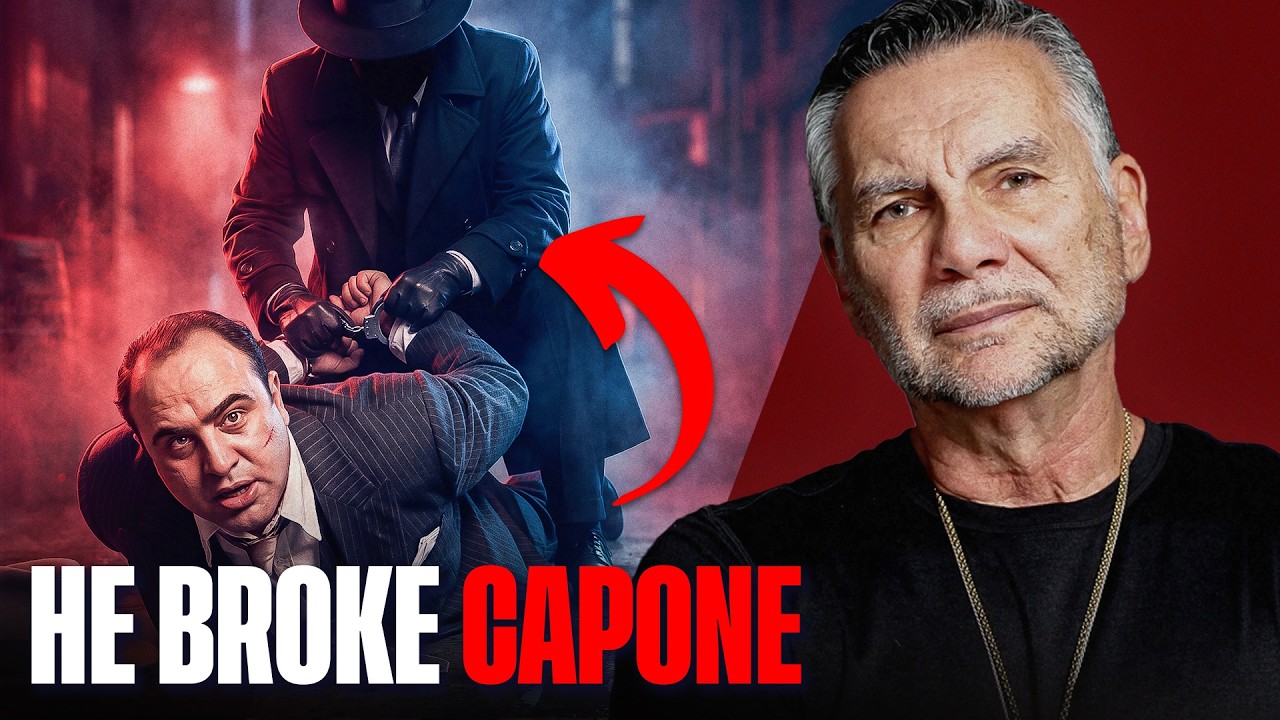
The celebrated federal agent Elliott Ness was not the man who brought him down. That distinction belongs to a far less known figure: a Treasury Department undercover agent named Michael Malone, who spent nearly two years inside Capone’s inner circle. Malone was Irish by descent, the son of parents who emigrated from Ireland, but he grew up in New Jersey and moved easily among European immigrant communities. He spoke Gaelic, Italian, Yiddish, and Greek.
With his dark hair and olive complexion, he could pass as a man from southern Europe. That appearance became his greatest asset. After service in World War I, he joined the Treasury Department’s intelligence unit, known as the T-Men. In the early 1920s, he learned that disguise brought him closer to suspects.
He assumed ordinary roles, working as a janitor and a shoeshiner, doing whatever it took to get near the men he was investigating. The decisive moment came in March 1929. President Herbert Hoover had just taken office, only weeks after the infamous Valentine’s Day Massacre in Chicago, in which seven men linked to George “Bugs” Moran, Capone’s bitter rival in the bootlegging trade, were gunned down. The killings were widely blamed on Capone.
Hoover pressed his administration to act. He urged the Treasury Department to assemble a team of special agents specifically to catch Capone on tax evasion charges. That presidential directive set in motion the investigation that would ultimately destroy Capone. Malone’s entry into Capone’s world was carefully staged.
He went to the Lexington Hotel in Chicago, where Capone and his men lived, dressed in an expensive suit, a purple shirt, and a white hat. For days, he sat in the hotel lobby reading newspapers, speaking with an Italian accent and calling himself Mike Lepito. He presented himself as a gangster from Philadelphia. His technique was deliberate.
He had arranged for letters to be sent to him from Philadelphia, mail that arrived in the hotel and could be inspected. Capone’s men, suspicious of any newcomer, broke into his room. They found expensive striped suits and silk underwear hanging in his closet. They opened the mail from Philadelphia and read the letters, which were written in the knowing language of the underworld.
Every check they ran seemed to confirm that this man was what he claimed to be. They reported back to Capone that he was trustworthy. Eventually, Capone sent one of his men to ask Lepito why he was in the city. Speaking through his Italian accent, Malone answered that he was keeping quiet.
Over the following days, over drinks, he told the man he was a fugitive from justice, wanted for robbery in Philadelphia. The story fit the mail and the apparent connections. Malone was soon invited to play poker and talk with the gang. Before long, he was dining with them at their regular gathering place, the New Florence restaurant, and being welcomed into the highest levels of the organization.
The breakthrough came when he attended a birthday party that Capone organized for his top lieutenant, Frank Nitti, at the Lexington Hotel. That evening, Malone met Capone himself. He also came to know the other leading figures of the outfit: Nitti, Jack “Machine Gun” McGurn, Jack “Greasy Thumb” Guzik, Paul “The Waiter” Ricca, Murray “The Camel” Humphreys, and Sam “Golf Bag” Hunt. These were the men who ran Capone’s criminal empire, and Malone moved among them freely.
Working undercover carried a far greater risk in Capone’s day than it would in later decades. The mafia of later years generally avoided killing federal agents, but in Capone’s time, violence was indiscriminate, and anyone suspected of betrayal could expect death. Malone kept up his performance, feeding information to his superior, agent Wilson, who tracked signatures on bank checks while building tax evasion cases against Nitti and Guzik. The first major success came when a federal court in Chicago convicted Guzik, sentencing him to five years in prison.
Nitti, however, fled the city. Malone was assigned to find him. He followed Nitti’s wife to an apartment building in Berwyn, Illinois, where police arrested Nitti. He was later sentenced to eighteen months for tax evasion.
The cases were building, but the biggest target remained Capone himself. When Capone was indicted in 1931 on tax evasion charges, Malone was still in place. He was present at the Lexington Hotel when Capone returned triumphantly from posting a fifty-thousand-dollar bond. Malone listened and reported to Wilson that Capone planned to bribe and manipulate the jury.
The federal authorities moved quickly. A judge issued a new list of juror names, and the scheme collapsed. Malone then reported another threat. Capone had hired five gunmen from New York to kill four federal officials in Chicago, including Wilson.
Security measures were tightened, and Capone eventually ordered the gunmen to leave the city. The assassination plot failed before it could be carried out. In October 1931, Capone’s trial began after the judge refused to accept a plea deal. For four days, Malone continued his undercover work.
Then he finally gave it up. Word of his true identity spread quickly among Capone and his men. Malone had also learned that Willie Dandria, one of Capone’s bodyguards, planned to smuggle a concealed gun into the courthouse. Malone and another agent searched Dandria, disarmed him, and arrested him.
The jury that Capone had been unable to corrupt convicted him on twenty-two counts. The judge sentenced him to eleven years in federal prison, fined him fifty thousand dollars, and added court costs. The most famous gangster in America was brought down not by Elliott Ness and the Untouchables, but by a Treasury agent who had spent two years inside his organization. Capone’s downfall changed how the federal government pursued organized crime.
Because the Racketeer Influenced and Corrupt Organizations Act, known as RICO, did not yet exist, prosecutors used tax evasion as their weapon. The Treasury Department, and especially the Internal Revenue Service, became the instrument of that campaign. The strategy of following the money proved devastatingly effective. Years later, long after the trial, Malone encountered Capone in a Chicago courthouse elevator.
Capone was standing with his lawyer when Malone stepped in. According to the account, Capone said that the only thing that had fooled him was Malone’s appearance. He told Malone he looked like a working-class man. Then, in a remarkable moment, Capone acknowledged the agent’s work.
He said Malone had taken a risk, and so had he, and that he had lost. There was no anger in the admission, only respect for a performance better than his own. For a man who had spent a lifetime deceiving others, being deceived so completely was the final defeat. Michael Malone, the undercover agent who had so thoroughly infiltrated Capone’s world, succeeded where the more celebrated federal agents did not.
He was the real reason Al Capone went to prison, and the legacy of his work endured long after the mobster’s name had faded from the headlines.