Long before the Oak Ridge Boys filled arenas with their hit song “Elvira,” there was the Oak Ridge Quartet, a group born in the radioactive mud of the Manhattan Project. The original band did not emerge from a recording studio but from a secret city built to refine uranium for the atomic bomb dropped on Hiroshima. While their successors achieved global fame and fortune, the founding members were largely erased from the legacy they created, dying in bankruptcy and silence. In the early 1940s, the U.
S. Army Corps of Engineers descended on a remote stretch of the Clinch River in East Tennessee. They evicted roughly 3,000 families, bulldozed farmhouses, and built a fenced city from scratch. Called the Clinton Engineer Works, locals whispered its code name: Oak Ridge.
Inside lived 75,000 people—scientists, laborers, and mathematicians—working in massive facilities while forbidden to speak of their purpose. The stress was immense, and with no alcohol or nightclubs, music became a psychological necessity. Among those workers was a group of local young men who sang for exhausted employees on Friday nights. They called themselves the Georgia Claw Hoppers, playing old hillbilly gospel songs rooted in the Appalachian tradition.
Watching them from the wings was Wally Fowler, a songwriter and promoter who had already tasted success. Fowler saw more than a distraction in the group—he saw raw potential tied to the most important event in human history. Fowler approached the Claw Hoppers in 1945 and declared their name ridiculous. He renamed them the Oak Ridge Quartet, branding them after the secret city.
When the bombs fell on Japan in August 1945 and the Truman administration revealed Oak Ridge to the world, the group suddenly sounded modern, dangerous, and explosive. Fowler joined the band as its frontman and manager, turning gospel music into an electrifying spectacle. Fowler revolutionized the music business by inventing the all-night sing. Before him, gospel music was polite and confined to Sunday church services.
He moved it into auditoriums, booking multiple top groups for marathon performances. At the Ryman Auditorium in Nashville, the music would run from 8 p. m. until sunrise.
The atmosphere was electric, with crowds screaming, crying, and fainting. It was a rock concert before rock and roll existed—and it made gospel music exciting and profitable. From roughly 1946 to 1955, the Oak Ridge Quartet was untouchable, becoming regular members of the Grand Ole Opry and traveling in a custom bus. But behind the gleaming facade, the group was in chaos.
Fowler was a brilliant promoter but a disaster as a businessman, often spending the gate money on doomed ventures while band members went unpaid. Roster changes were constant, with singers fired or replaced on the road. Despite the turmoil, a magnificent sound emerged, anchored by the thunderous bass of Lon “Deacon” Freeman. By 1957, the post-war gospel boom had faded.
Elvis Presley had taken the moves and passion of gospel quartets and sold them to teenagers as rock and roll. Crowds thinned, money dried up, and Fowler, drowning in debt, panicked. In a backstage meeting, he sold the rights to the name Oak Ridge Quartet to a man named Smitty Gatlin—a young, polished singer who represented a new generation. Fowler thought he was selling a business asset and walked away clutching a modest check, unaware that the name was the true magic.
Gatlin immediately began sanitizing the group. The rough-edged men who defined the Fowler era were shown the door, including Deacon Freeman, whose raw vocal attack had been the sonic soul of the band. The sound was polished into a smooth, safe Nashville style. By 1964, Gatlin himself moved on, leaving the Oak Ridge Quartet drifting and irrelevant.
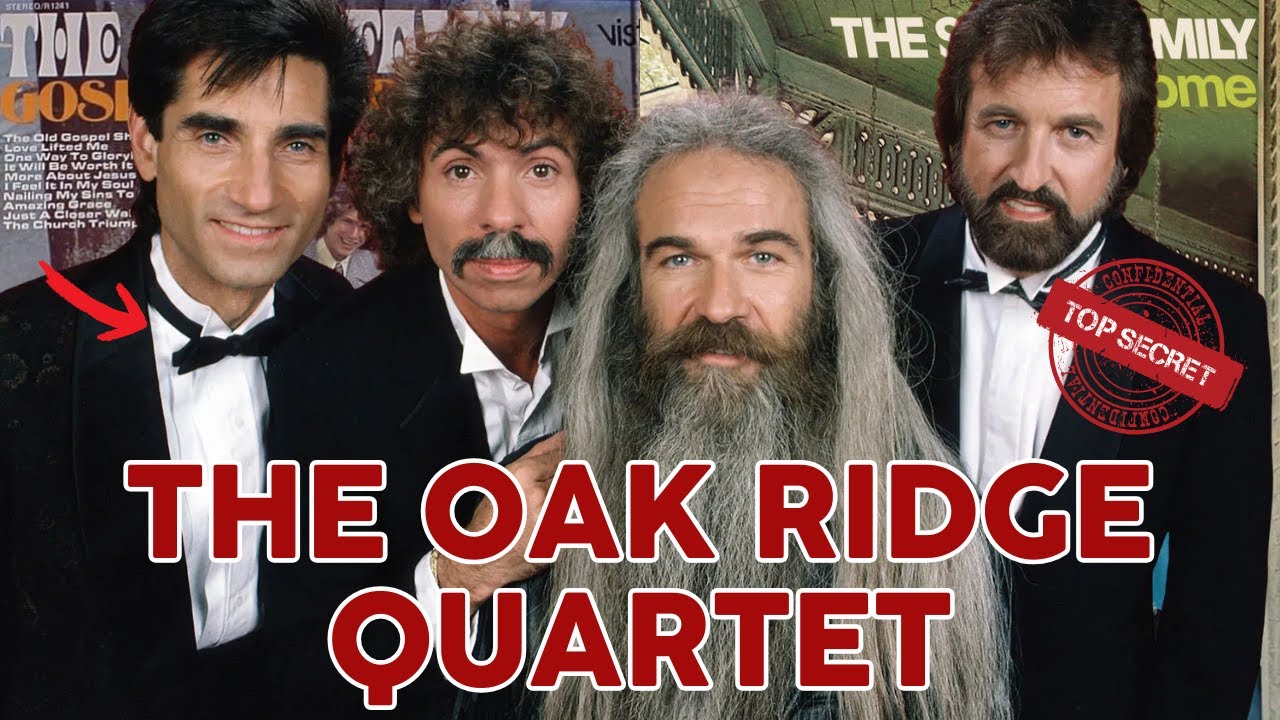
Then William Lee Golden joined in 1965, followed by lead singer Duane Allen in 1966. Together with bass singer Richard Sterban and tenor Joe Bonsall, they formed what would become the classic lineup. The group was still trapped by its name, which screamed church and tradition. In the early 1970s, they made a defining decision: they dropped the word “quartet” and became the Oak Ridge Boys.
Golden grew a beard, a visual rebellion that enraged the gospel establishment. Churches cancelled concerts, but the gamble paid off. With the 1977 breakthrough “Y’all Come Back Saloon,” they crossed over to country and pop, trading gospel pews for rock venues and Las Vegas. By 1981, the transformation was complete.
The release of “Elvira,” with its playful bassline and memorable nonsense syllables, turned the Oak Ridge Boys into global icons. The song went platinum, won a Grammy, and became a pop culture staple. While the new owners of the legacy wore denim and played arenas, the men who built the foundation were watching their history be rewritten. Fowler, now in his 60s and broke, formed new versions of the Oak Ridge Quartet, only to be sued for using a name he had legally sold.
He was told by a judge that he had no right to a brand he had signed away for pennies. The erasure was complete. The old albums, photos, and stories from the Fowler era were buried, as the new lineup sought to appear born in the 1970s. Founders like Deacon Freeman drifted into obscurity, working manual jobs while the successors collected awards.
On June 3, 1994, Wally Fowler, at age 77, suffered a massive heart attack while fishing alone on a dock at Center Hill Lake in Tennessee. He collapsed and drowned. The news was a brief blip in Music City, noted in a local obituary and acknowledged with flowers and a polite statement from the Oak Ridge Boys. The industry machine simply rolled on.
The original quartet’s history remains a void in Nashville. While the Oak Ridge Boys were inducted into the Country Music Hall of Fame in 2015, the bronze plaque celebrates only the classic lineup of Golden, Allen, Sterban, and Bonsall. There is no recognition of the Georgia Claw Hoppers, the men who sang to keep workers sane while they built the atomic bomb, or the chaotic genius of Wally Fowler, who invented the modern gospel concert.
Their story is a cautionary tale about how history rewards the survivor, not the innovator—and about what is thrown overboard when legacy becomes a corporate trademark.