The 2007 film *American Gangster* opens with a now-famous scene. It is 1968, and Harlem is simmering with tension. Bumpy Johnson, the aging king of Harlem’s underworld, collapses in a department store. He dies in the arms of his protégé, Frank Lucas, passing the torch in his final moments. The student becomes the master. The crown is transferred.
It is a powerful piece of cinema. The only problem, according to the people who were actually there, is that none of it happened. Bumpy Johnson did not die in a department store. He did not die in Frank Lucas’s arms. And he certainly did not pass his empire to a man he reportedly viewed as little more than an errand boy.
For decades, Frank Lucas told a compelling story. He claimed to be Bumpy Johnson’s right hand, his heir, and the man who took over Harlem when the old king fell. He told this story to magazines, to Hollywood producers, and eventually to Denzel Washington, who portrayed him on screen. The world believed him. Bumpy was dead and could not dispute the tale.
But Bumpy Johnson left behind a widow. Mayme Johnson, known as the Queen of Harlem, knew exactly where the skeletons were buried. For years, she watched Frank Lucas build a legend on her husband’s grave. She watched him brag and cash the checks. When the movie came out, she finally broke her silence. She delivered a four-word verdict on Frank Lucas’s reputation that was colder than any bullet. She simply told the truth about what Frank Lucas really was to Bumpy Johnson.
To understand the weight of her words, you have to understand the hierarchy of Harlem in the 1940s and 1950s. It was a world built on rigid codes. You did not simply walk in and become a boss. You earned it. Bumpy Johnson had earned it in blood. He fought the Jewish mob and the Italians. He survived Alcatraz. He was an intellectual who read Shakespeare and Nietzsche in solitary confinement. He was a chess master who viewed the streets as a board of 64 squares.
Frank Lucas was different. He arrived in Harlem in 1946, fleeing the Jim Crow South. He was a country boy from North Carolina with a fourth-grade education and a hunger that bordered on desperation. He was not a strategist. He was a survivor. He made his living mugging drunks and running small hustles on the edges of the underworld.
Legend has it that Bumpy took a liking to the young man’s boldness. But the street records tell a more specific story. Bumpy did not need a partner. He needed a driver. He needed muscle. He needed someone to stand outside the club in the freezing cold and watch the car while the real bosses discussed business inside.
That distinction matters. In the ecosystem of organized crime, there is a massive gap between a lieutenant and an associate. A lieutenant sits at the table. He knows the numbers. He has a vote. An associate holds the coat. He opens the door. He keeps the engine running.
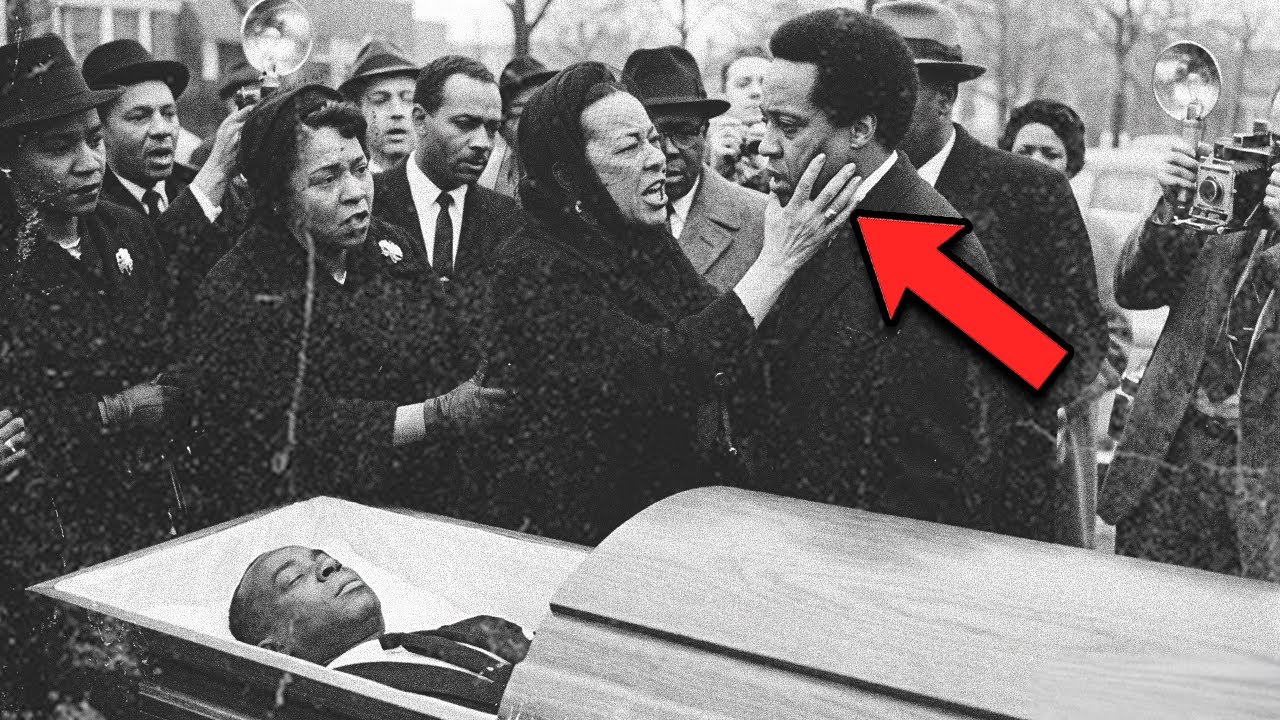
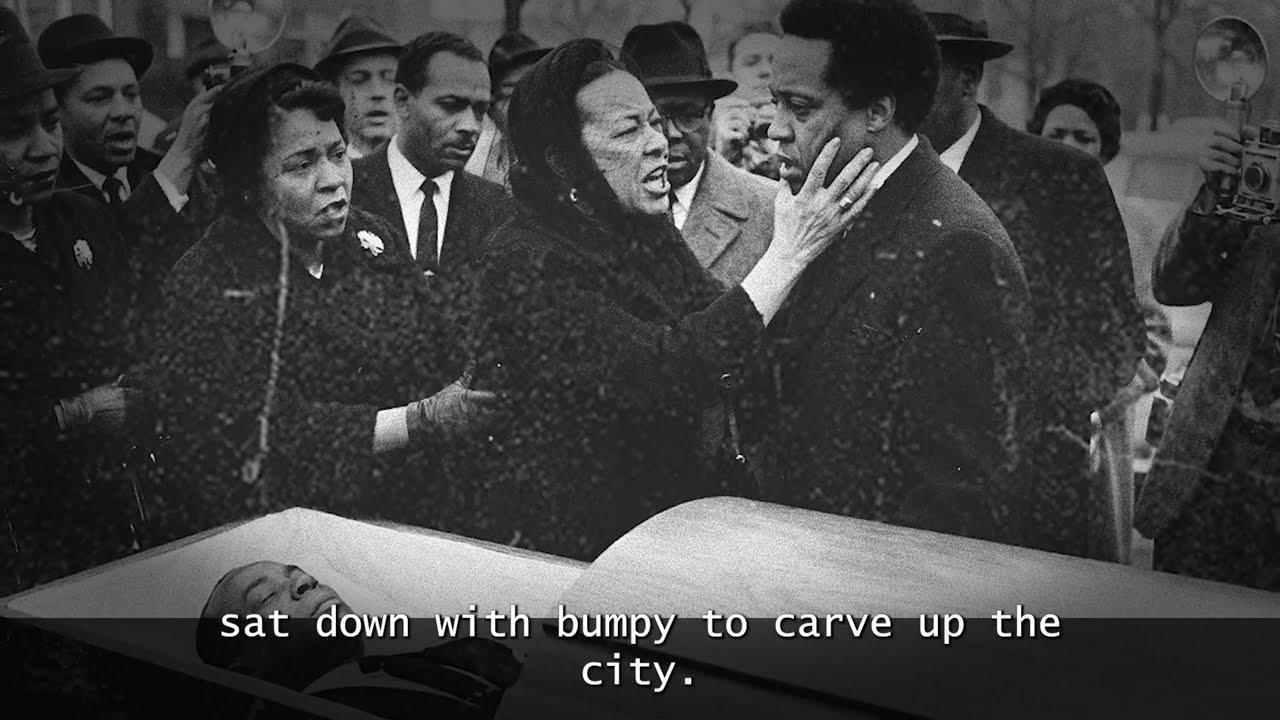
Mayme Johnson was clear about this. She said Frank was around, always around, like a shadow or a pet. He drove Bumpy to meetings with the Genovese family. He drove Bumpy to the racetrack. But he never sat in on the meetings. When Lucky Luciano or Frank Costello sat down with Bumpy to carve up the city, Frank Lucas was standing by the door, making sure nobody interrupted. He saw the power, but he did not touch it.
Frank Lucas later claimed he was Bumpy’s student. He claimed Bumpy taught him everything about the heroin trade, the French Connection, and supply chains. But Bumpy Johnson was not a drug dealer in the way Frank described. Bumpy was a numbers man and a protector. He despised the way heroin was destroying Harlem. He allowed it because he could not stop it, and he taxed it because that was business. He certainly was not giving master classes on international smuggling to his driver.
The biggest hole in Frank Lucas’s story is a matter of simple math. Frank claimed he was by Bumpy’s side every day for 15 years. But history tells a different story. In 1952, Bumpy was sentenced to 15 years in Alcatraz on a drug conspiracy charge. He did not return to the streets until 1963. That is an 11-year gap. During that time, Bumpy was locked in a cell 3,000 miles away in San Francisco Bay.
Where was Frank Lucas during those years? He was not running the empire. The empire was being run by Bumpy’s true lieutenants, men like Junie Byrd, Red Dillard, and Nat Pettigrew. These were the heavyweights with the reputation and the scars to prove it. Frank Lucas was still on the periphery, hustling, running craps games, and moving small amounts of product. He was a nobody in the grand scheme of the New York underworld.
When Bumpy returned in 1963, the world had changed. The Italians were tighter. The police were smarter. The heroin epidemic was beginning to swell. Bumpy was an old lion returning to a jungle that had grown wilder. He needed reliable men. He needed loyalty. And Frank Lucas was there.
This is where the grain of truth exists in the lie. Frank Lucas was loyal. He was useful. He was the young, hungry enforcer that an aging boss needs to keep the wolves at bay. Bumpy kept him close. He appreciated Frank’s ambition, even if he found it reckless. There are stories of Bumpy bailing Frank out of trouble, paying his legal fees, and lecturing him about being too flashy.
Bumpy moved in silence. Frank wanted to be a neon sign. It was a clash of philosophies. Bumpy believed a gangster’s power came from the community. You fed the poor at Thanksgiving. You paid people’s rent. You kept order. Frank believed power came from fear and money. He did not care about the community. He cared about the profit margin.
Mayme Johnson watched this dynamic play out in her living room. She saw Frank sitting on her plastic-covered furniture, nodding eagerly as Bumpy spoke. She saw a man who was not looking for a father. He was looking for a blueprint to steal.
By 1966, the tension was building. Bumpy was tired. His heart was failing. The years in Alcatraz had taken their toll. He spent his days reading newspapers, playing chess, and navigating the treacherous waters between the black power movement and the Italian mafia. Frank Lucas, on the other hand, was growing impatient. He saw Bumpy’s caution as weakness. He saw the Italians taking a massive cut of Harlem’s money, and he wanted it for himself.
Frank began to make moves that Bumpy had not authorized. He began to talk a little louder in the bars. He began to wear suits that cost more than Bumpy’s car. The streets talk. The word on the street was that Frank was getting too big for his britches. He was telling people he was the heir apparent. He was telling people that Bumpy was losing his step.
One specific incident captures this dynamic perfectly. It was not a shootout or a drug deal. It was a dinner. Frank Lucas showed up to a meeting wearing a loud, flashy coat dripping with jewelry. He was loud and boisterous, trying to impress the Italian heavyweights at the table. Bumpy did not shout at him. He just looked at him. A long, cold stare that sucked the air out of the room. He leaned over and whispered something to Frank. Frank stopped laughing. He sat down. He shut up.
We do not know exactly what was said that night, but the message was clear. You are not the boss. You are here because I allow you to be here. Frank swallowed the insult, but he kept the resentment. He waited. He knew that time was on his side. The lion was dying, and the hyena was ready to feast.
On July 7, 1968, the myth begins. The movie shows a dramatic heart attack in a department store. The truth was far more mundane. Bumpy Johnson was at Wells Restaurant in Harlem, his favorite spot. He was eating breakfast. Scrambled eggs, grits, and coffee. He was surrounded by his real friends. Junie Byrd, his lifelong friend and enforcer, was there. Frank Lucas was not there.
According to witnesses and Mayme Johnson, Bumpy clutched his chest. He did not give a speech. He did not hand over a key to the city. He simply collapsed. Junie Byrd caught him. Junie Byrd held him as he died. The man who had been by his side since the 1930s was the man who held him at the end. Frank Lucas was nowhere near Wells Restaurant.
In the chaos that followed Bumpy’s death, a vacuum opened up. The king was dead. The throne was empty. The Italians were looking for a new contact. The street soldiers were looking for a new leader. And Frank Lucas saw his opportunity. He knew that nobody would fact-check him. So Frank started talking.
He started telling anyone who would listen that he was there. He told them Bumpy died in his arms. He told them Bumpy’s last words were instructions to him. He hijacked the death of the most famous man in Harlem and made it the opening scene of his own movie. It was a brilliant lie. It gave him instant legitimacy. If Bumpy Johnson chose him, then who could question him?
Mayme Johnson heard the whispers. She heard Frank bragging. But she was a lady of the old school. She kept her dignity. She kept her silence. She let Frank Lucas have his moment. She let him build his Blue Magic empire. She let him wear his chinchilla coats and sit ringside at the Ali fight. But she never forgot. She kept the truth locked away in her heart like a loaded pistol, waiting for the right moment to pull the trigger.
Fast forward to 2007. Frank Lucas is an old man wheeling himself through the premiere of a film that bears his nickname. Ridley Scott has turned his life into an epic. Denzel Washington is playing Frank Lucas. When *American Gangster* hit theaters, it was a cultural event. It grossed $260 million. It was nominated for Oscars. Jay-Z released an entire concept album inspired by the film. Frank Lucas was suddenly more than a former inmate. He was a folk hero.
But while the world was applauding, a 93-year-old woman sat in a quiet apartment in Harlem, watching the television with a look of cold fury. Mayme Johnson was supposed to be a footnote. Frank Lucas had counted on her silence. He lost that bet. Mayme Johnson was sharp as a razor. She remembered every face, every name, and every debt.
She watched the scene where Denzel Washington, playing Frank, holds a dying Bumpy Johnson in a department store. She watched the scene where Bumpy gives Frank his blessing. She turned off the television and decided that the time for silence was over. She was going to burn the myth to the ground.
The myth of Frank Lucas did not start with the movie. It started seven years earlier, in the year 2000, with a magazine article. A journalist named Mark Jacobson wrote a piece for *New York Magazine* titled "The Return of Superfly." In that article, Frank Lucas spun a tale so elaborate, so cinematic, that Hollywood could not resist it. He claimed he was Bumpy’s right hand. He claimed he was with Bumpy every day for 15 years. He claimed he had killed people on Bumpy’s orders. He claimed that when Bumpy died, he left the keys to the kingdom to Frank.
It was a masterclass in manipulation. Frank knew that Bumpy was dead. He knew that the other heavy hitters of that era were either dead or in prison for life. There was no one left to fact-check him. Or so he thought.
Mayme Johnson wrote a book. She titled it *Harlem Godfather: The Rap on My Husband, Ellsworth "Bumpy" Johnson*. It was not just a memoir. It was an indictment. She went on the radio. She gave interviews to newspapers. She used the language of a woman who had survived the golden age of organized crime.
When an interviewer finally asked her the question that everyone wanted to know, what was Frank Lucas’s real job, Mayme did not hesitate. She looked into the camera and delivered four words that stripped the American gangster of all his glory. She said, "He held the coat."
Four words. He held the coat. It sounds simple, but in the underworld, it is a death sentence for a reputation. To say a man held the coat is to say he was furniture. It means he was a valet. It means that while the bosses were sitting at the table discussing life and death, Frank Lucas was standing by the door holding Bumpy’s overcoat, hoping for a tip.
She elaborated. She said Frank was a driver. If Bumpy was cold, Frank held his coat. If Bumpy was hot, Frank held his coat. That is all he did. She dismantled the specific lies of the movie with the precision of a prosecutor. She addressed the famous death scene. Frank was not with Bumpy when he died. Frank was not even in the neighborhood. Bumpy died in Junie Byrd’s arms, not Frank’s.
She attacked his claim that he was Bumpy’s heir. Bumpy did not have an heir, she explained. Bumpy did not believe in the drug trade the way Frank did. Bumpy was a numbers man. He did not pass the torch to a heroin dealer. When Bumpy died, the organization did not go to Frank. It went to the people who actually ran it.
The reaction to Mayme’s revelation was seismic. It gave permission for others to speak. Suddenly, the floodgates opened. Other figures from the era began to come forward. One of the most damning voices came from Nicky Barnes, known as Mr. Untouchable. Barnes was Frank’s biggest rival. He was in witness protection, but when he heard about the movie, he could not stay silent. He wrote his own book and backed Mayme Johnson up completely.
Nicky Barnes laughed at the idea of Frank Lucas being a boss. He called Frank a flimflam man. He said Frank’s story about smuggling heroin in the coffins of dead soldiers was a lie. He said Frank’s story about being Bumpy’s partner was a fantasy. "We all knew Frank," Barnes said. "He was a guy who talked a lot, but Bumpy didn’t respect him. Bumpy used him for muscle, nothing more."
The combined weight of the widow and the rival crushed the credibility of the movie. Historians started digging. They found court records that contradicted Frank’s timeline. They found that Frank was in and out of prison during the years he claimed to be running the streets. They found that the Blue Magic heroin empire, while real, was nowhere near as big or as exclusive as Frank claimed.
The most painful blow came from the realization that Frank Lucas had stolen valor. He had stolen the reputation of a man who could no longer defend himself. He had taken the silence of the grave and filled it with his own ego.
Mayme Johnson passed away in 2009, just two years after the movie came out. But she died satisfied. She had set the record straight. She had protected her husband’s name. She proved that even at 93, she was still the Queen of Harlem. She showed the world that while Hollywood can build a myth with million-dollar budgets and movie stars, the truth is harder than concrete.
Frank Lucas lived for another 10 years. He died in 2019. He died a famous man, but he died with an asterisk next to his name. Whenever his story is told now, it is accompanied by the shadow of Mayme Johnson. You cannot talk about *American Gangster* without talking about the lie.
The tragedy of Frank Lucas is that he was a successful criminal in his own right. He did make millions. He did smuggle drugs. He did live a life of high stakes. But it was not enough for him. He needed to be Bumpy Johnson. He needed the validation of the king. By trying to steal that validation, he exposed his own insecurity. He revealed that deep down, he was still the boy from the South, desperate to be invited to the big table.
The legacy of this story is a lesson in the power of the truth. We live in an age of viral stories and movies that claim to be based on actual events. It is easy to get swept up in the glamour. It is easy to believe Denzel Washington. But the streets have a long memory.
Bumpy Johnson was a complex man. He was a criminal, yes, but he was also a community leader, a philosopher, and a man of his word. He played a game of chess that lasted 40 years. His final move, the move that checkmated Frank Lucas from beyond the grave, was the loyalty he inspired in his wife. He did not need to leave a will. He left Mayme.
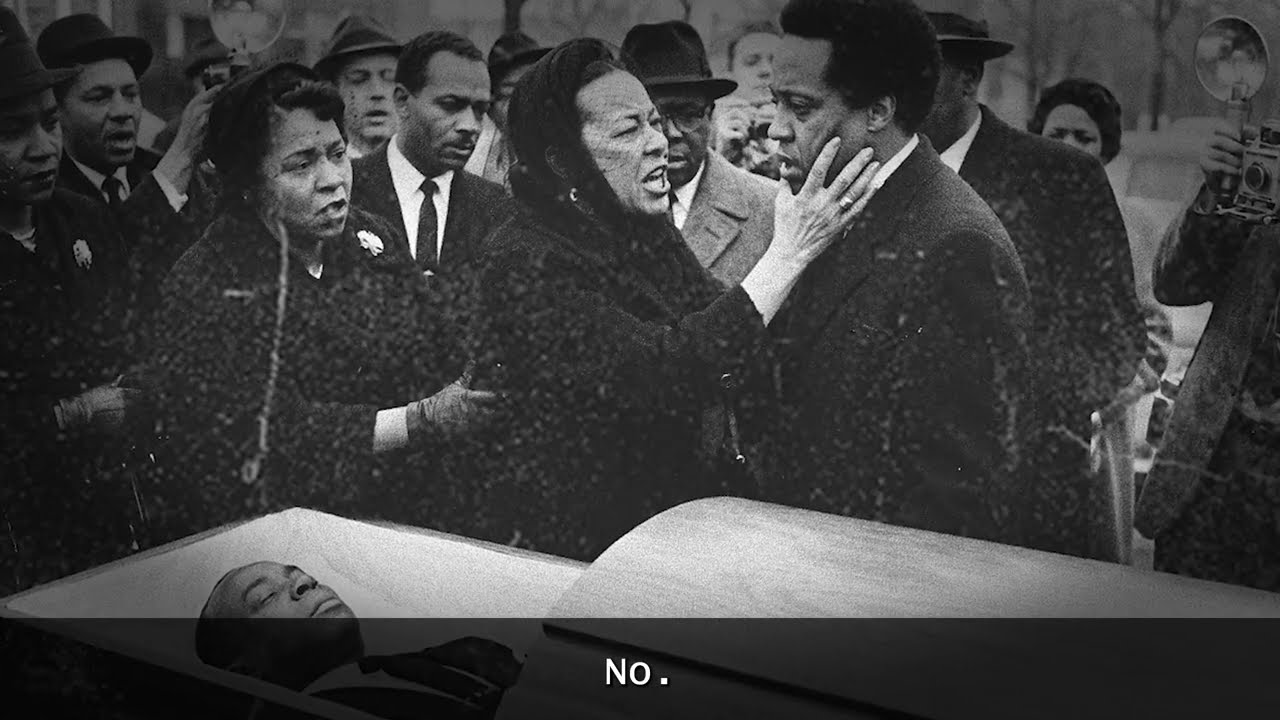
So the next time you watch *American Gangster*, enjoy the acting. Enjoy the music. It is a great film. But when you see the credits roll, remember the four words that destroyed the script. Remember the white-haired woman in Harlem who stood up to the billion-dollar movie industry and said, "No."
Frank Lucas might have worn the chinchilla coat. He might have sat in the front row. But in the history books of Harlem, written in the ink of truth, he will always be the man who held the coat. The flunky. The driver. The myth. And Bumpy Johnson remains the king. Untouched. Unbroken. And thanks to Mayme, unforgotten.