In February 2024, the Josephine County Sheriff’s Office in Oregon reopened a cold case from 1983. The investigation, which had stalled for more than four decades, was finally moving forward with help from state and local agencies, including police in Chico, California.
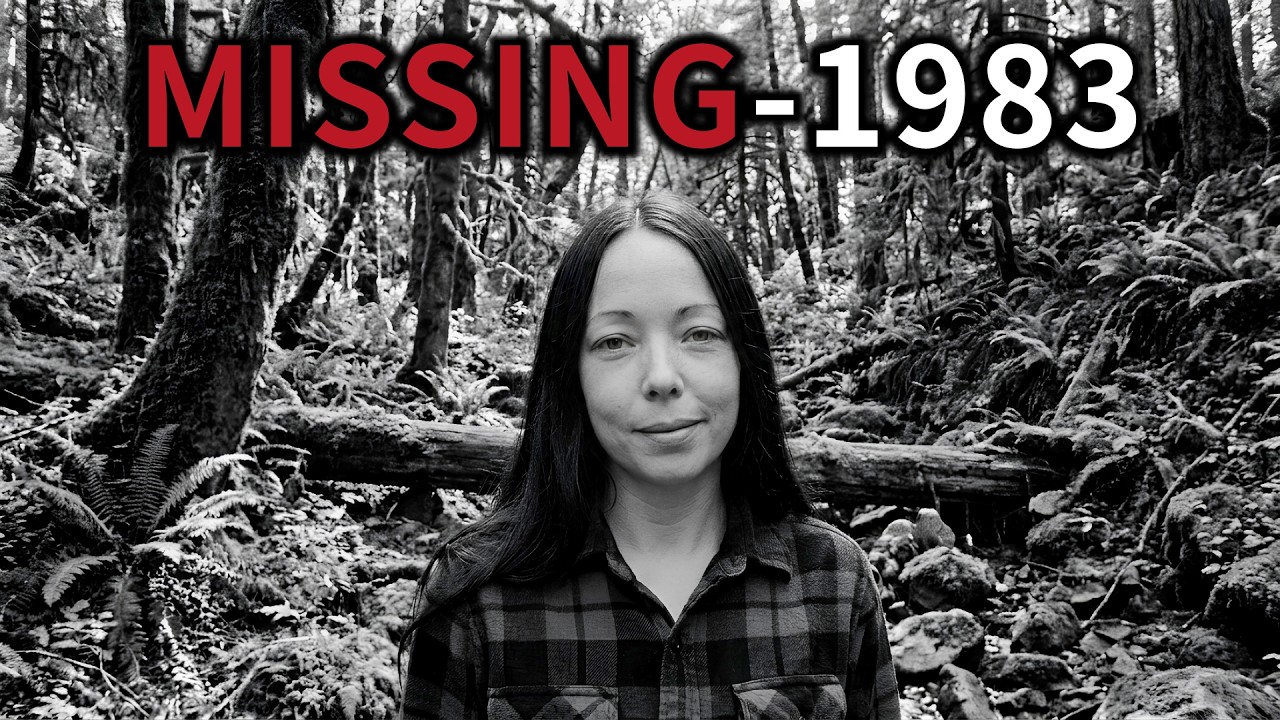
The case centered on Teresa Joanne Peroni, who was 27 years old when she disappeared on the night of July 4th, 1983. She was last seen walking into the woods near Illinois River Road in Selma, Oregon, with her boyfriend, Mark Sanfratello. She never came back out.
Teresa was described by friends as a free spirit. She lived with epilepsy and received medication monthly from the Josephine County clinic. Her brother, Russell Neal, said both siblings grew up with an abusive stepfather and both had run away from home.
Teresa had moved to Texas and married in 1974, but the marriage ended in divorce. She returned to Oregon and joined a church as a way to start over. Her brother recalled baptizing her in a creek in front of their mother and aunt. He said it was the last happy moment the family had with her.
In Oregon, Teresa met Sanfratello, who was 29 at the time. He was described as controlling and pathologically jealous. The relationship escalated into violence over many months, with arguments turning into physical fights. Sanfratello suspected Teresa of having a relationship with a mutual friend.
Teresa’s aunt observed that Sanfratello was furious with Teresa because she had joined the church. The church gave her a support network that he could not control.
On the night of July 4th, 1983, an outdoor party was held at a house on Illinois River Road. The couple had already argued earlier that day, but they attended the party together. The argument erupted again in front of many witnesses.
Afterward, the two walked into the forest. No one stopped them. The next morning, Sanfratello came back alone. Teresa Peroni walked into that forest alive and never walked out.
No one called the police right away. In the fringe living community, it was not uncommon for someone to disappear for a few days. But weeks passed with no word from Teresa.
Around a month after July 4th, Teresa’s family reported her missing. The Josephine County Sheriff’s Office opened an investigation. Sanfratello quickly drew attention as the last person seen with Teresa.
There was no body and no physical evidence. The district attorney’s office concluded there was not enough legal basis to prosecute.
Then a witness appeared. This person claimed to have seen Teresa drunk in a local bar at the end of July 1983, weeks after she disappeared. If true, Teresa had not been murdered but had simply left voluntarily.
The district attorney’s office closed the file. The witness was never mentioned again. No one knew the name of that person or why they made that claim.
In July 1984, exactly one year after the fateful night, someone walked into the Josephine County Police Station. They handed over a brown handbag and left without leaving a name.
Inside the bag were Teresa’s identification papers, an Oregon ID card, and a box of anti-epilepsy medication. This was the kind of medication she received monthly from the county clinic. People with epilepsy cannot stop taking such medication suddenly.
The bag was quiet but heartbreaking evidence. Teresa could not have voluntarily left this medication behind. The police accepted the bag and deployed a search team with cadaver dogs.
They searched the dense forest where Teresa was last seen. They found nothing. Without physical evidence, there was no legal basis to prosecute. The case froze for the second time.
In 1997, 14 years later, a landowner walking on private property near Illinois River Road discovered a human skull. Police were called. Cadaver dogs searched the surrounding area but found nothing else.
Investigators remembered the missing person’s case of Teresa Peroni. The location matched. The skull was recorded as evidence with the temporary identity of Jane Doe.
They took a sample from the skull and sent it to the FBI for DNA analysis. A DNA sample was also collected from Teresa’s sister for comparison.
The results came back and everything collapsed. The sample taken from the skull was a dental filling, not bone or dental tissue. A dental filling contains no biological cells and no DNA. The test could not be performed.
The identity could not be confirmed. The case froze for the third time. The skull was sent to the University of North Texas for safe storage.

In 2004, a new detective named Ken Seelig took over the Peroni file. He recognized the 1997 mistake and decided to retake the correct sample from the skull. He contacted the University of North Texas.
He was told that no one knew where the skull was located on campus. It had been lost within the storage system. The case froze for the fourth time.
Sanfratello, meanwhile, had left Oregon. He moved to Yreka, California, and started a new family. In August 1985, only two years after Teresa disappeared, he was arrested for stabbing his new wife and her 14-year-old daughter.
The 14-year-old girl told police she had been beaten, strangled, stabbed, and sexually assaulted. Sanfratello pleaded guilty to two counts of attempted murder and received a sentence of 15 years and 4 months in prison.
He was released in the late 1990s. He resettled in Butte County, California, and eventually moved to Chico. He integrated into the community and participated in open mic music performances.
In 2020, after many years of searching, someone finally located the skull at the University of North Texas. This time, with modern DNA technology, the test was performed correctly.
The DNA sample from the skull matched the DNA sample from Teresa’s sister. The 1997 Jane Doe skull was Teresa Peroni. This was confirmed 37 years after the night of July 4th, 1983.
By 2022, the two files were finally merged under the same case number. The system acknowledged that this was a murder case, not a missing person’s case.
In February 2024, Chief Detective Kyle Heinrich of the Josephine County Sheriff’s Office officially reopened the case. He had support from the Oregon Department of Justice and the Josephine County District Attorney’s Office.
Heinrich worked quietly. He located surviving witnesses from the summer of 1983 and re-interviewed them. He also collected new DNA samples from Teresa’s surviving family members.
The new DNA samples were sent to the University of North Texas. With 2024 forensic technology, the results confirmed that the skull was Teresa Joanne Peroni. Not possibly, but confirmed.

The case file officially moved from a missing person’s case to an active homicide. A prosecution team was assigned from the Oregon Department of Justice.
On June 27th, 2025, the Josephine County Grand Jury issued an indictment. Mark Marcus Anthony Sanfratello was charged with murder in the second degree.
On the morning of June 28th, 2025, police in Chico, California executed the arrest warrant. Sanfratello was 72 years old. He was living in an apartment on East 8th Street.
Neighbors were shocked. They had nodded hello to him in the hallway. They had listened to him perform at open mic nights. None of them knew who that man was.
Sanfratello was held without bail and brought back to Oregon. He appeared in Josephine County Circuit Court.
Plea negotiations began. An agreement was reached. The charge was reduced from murder in the second degree to manslaughter in the first degree.
On April 21st, 2026, the sentencing hearing took place. Sanfratello was sentenced to 20 years in prison with a minimum of 10 years before eligibility for parole. He was 73 years old.
Oregon Attorney General Dan Rayfield said the family had waited 43 years for an answer they should never have had to wait so long for.
The system failed Teresa Peroni not once but four times. In 1983, a witness lied and the investigation died. In 1984, the handbag with the epilepsy medication was set aside without changing anything. In 1997, a dental filling prevented science from telling the truth. And for 40 years, no one looked toward California to ask what had happened to the man who was the number one suspect.
Teresa’s brother, Russell Neal, heard the news of the arrest but not with joy. No kind of news could bring joy to someone who had lost his sister 42 years earlier.
The case leaves practical lessons. If you know someone in a violent relationship, speak up. If you have a missing loved one, contact NamUs, the National Missing and Unidentified Persons System. If you are a victim of domestic violence, call the National Domestic Violence Hotline at 1-800-799-7233.
The Teresa Peroni case shows that asking the right question at the right time can break 40 years of silence.