In January 1965, Edie Sedgwick arrived at the Factory at 231 East 47th Street. She was 21 years old, the daughter of a broken branch of a storied New England family, and she had just inherited $80,000. Within 18 months, the money was gone, the trust fund drained by the costs of the Silver Factory’s social economy, and her health was deteriorating under the weight of the amphetamine culture the Factory both ran on and promoted. She became Warhol’s first superstar, appearing in at least 15 films without pay, and she was the subject of a famous Tom Wolfe profile that made her a symbol of the mid-60s New York scene. But the relationship was not a partnership. It was a one-way extraction of value, and when her money ran out and her usefulness faded, Warhol’s attention moved elsewhere. She died on November 16, 1971, at the age of 28, from a barbiturate overdose that was ruled accidental. She had been married for less than four months.
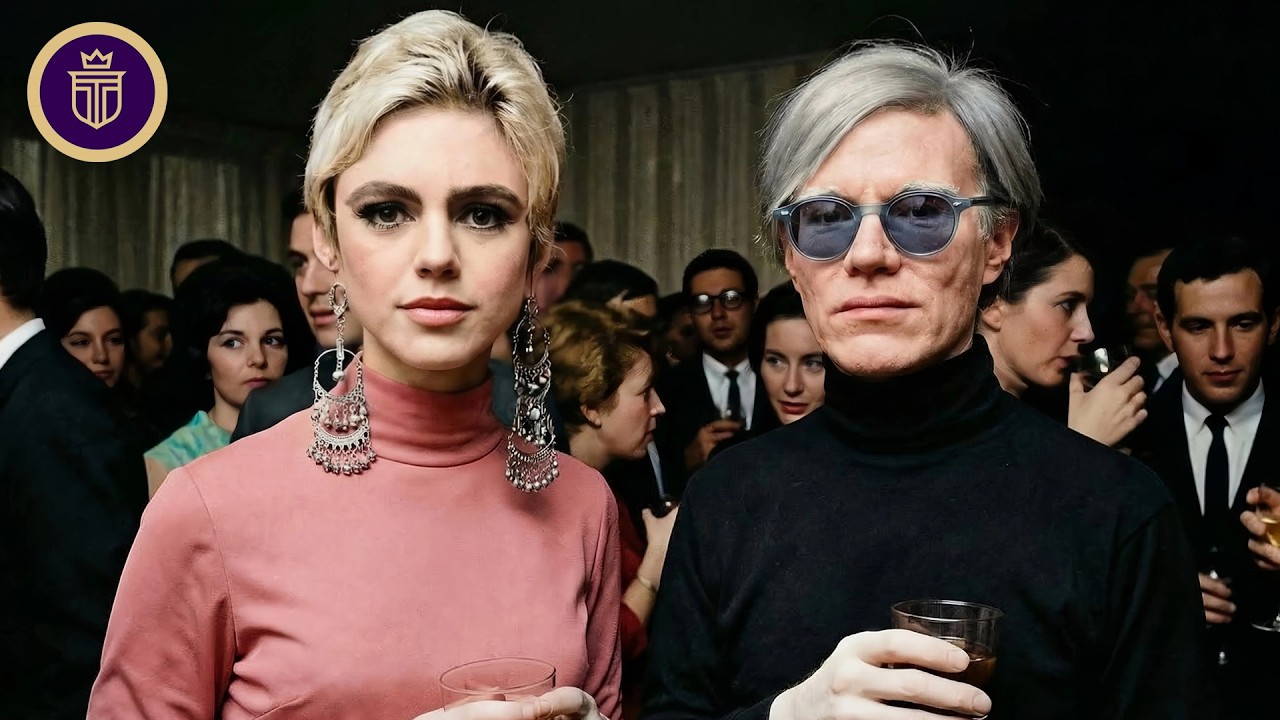
The Factory’s logic was simple and consistent. Warhol created art that sold for increasingly large sums, and he developed a portrait business that charged wealthy clients $25,000 per collection. He produced films cheaply, using his stars as unpaid labor, and he published books and magazines that relied on content generated by the people around him. He was a one-man media company, and the raw material for that company was the behavior, appearance, and relationships of the people who came to see him. The women who entered the Factory were often from wealthy or aristocratic backgrounds, and they were drawn to the glamour and the promise of cultural significance. But the exchange was rarely equal. They gave their money, their time, their reputations, and often their health, and in return they received a form of fame that was entirely dependent on Warhol’s continued interest. When that interest waned, they were discarded.

One of the most notable survivors of the Factory was a woman named Isabel Collin Dufresne, who Warhol renamed Ultra Violet. She arrived at the Factory in the mid-1960s, an older and more European presence than most of Warhol’s other stars. She was an aristocrat by birth, and she had come to the Factory with a more skeptical eye than many of the others. She appeared in several Factory films, including *San Diego Surf* in 1968, and she was part of the scene throughout the late 1960s. But she was never fully consumed by it. She maintained a distance that allowed her to see the dynamics at play, and she eventually left the Factory and became a born-again Christian. She died in 2014 at the age of 78, having outlived the Factory and its creator by more than a quarter of a century. Her memoir, *15 Minutes: My Years with Andy Warhol*, was published in 1988, the year after Warhol’s death, and it is a document of survival, written by a woman who was able to name the exploitation she witnessed without being destroyed by it.

The Factory was not the only institution that exploited vulnerable people, but it was uniquely effective at it. The pattern was consistent: find people who were interesting, preferably with money or social status, accelerate their self-destructive tendencies with drugs and flattery, extract their cultural value in the form of films, photographs, and social content, and then discard them when they were no longer useful. The death of Freddie Herko in 1964, who jumped from a fifth-floor window while dancing to Mozart’s *Coronation Mass*, was met by Warhol with a comment that he wished he had been there to film it. The death of Valerie Solanas, who shot Warhol in 1968, was a different matter. She was a radical feminist writer who had given Warhol a script she believed he had stolen, and she was a marginal figure in the Factory scene. She shot Warhol three times, and he nearly died. The shooting changed the Factory permanently. The open-door policy of the Silver Factory was replaced by a more controlled operation, and Warhol himself became more distant and more cautious. He died in 1987 at the age of 58, leaving an estate worth over $220 million.
The women of the Factory paid the highest price. They gave their money, their youth, and often their lives. The average age of death among the Factory’s casualties is a number that should give anyone pause. Candy Darling died in 1974 at the age of 29 from lymphoma, exacerbated by the hormone treatments she had undergone as a transgender woman. Jackie Curtis died in 1985 at the age of 38 from a heroin overdose. The list goes on. These were not isolated tragedies. They were the predictable outcomes of a system that found vulnerable people, accelerated their self-destructive tendencies, and then discarded them when they were no longer useful. The Factory was not a liberation. It was the most expensive party in New York, and the women who could least afford it were always the ones who were expected to pay.