The story of Mary Anne MacLeod Trump usually begins with a wedding. January 11th, 1936, at Madison Avenue Presbyterian Church. Twenty-five guests. A reception at the Carlyle. The fisherman’s daughter from a Scottish island who married a millionaire builder.
The ship manifest tells a different story. In May 1930, the RMS Transylvania docked in New York. The passenger list recorded her occupation in one word: domestic. She was 18 years old, carrying $50, and she had stated on a federal form that she intended to stay permanently.
She was born on May 10th, 1912, in Tong, a village on the Isle of Lewis in the Outer Hebrides. She was the youngest of 10 children. Her father, Malcolm, was a crofter and fisherman who also worked as the local school attendance officer. The family spoke Gaelic. English was learned, not inherited.
The MacLeods were not the poorest family on the island. Malcolm had steady work and standing. But Mary Anne grew up in a place that had run out of husbands. In January 1919, a naval yacht called the Iolaire ran onto the rocks at the entrance to Stornoway Harbor, killing more than 200 men returning from the war. The Western Isles had already lost a higher proportion of its men in the First World War than almost anywhere else in Britain.
For a girl on Lewis in the 1920s, the available futures were roughly these: gut herring, marry someone who survived, or get on a ship.
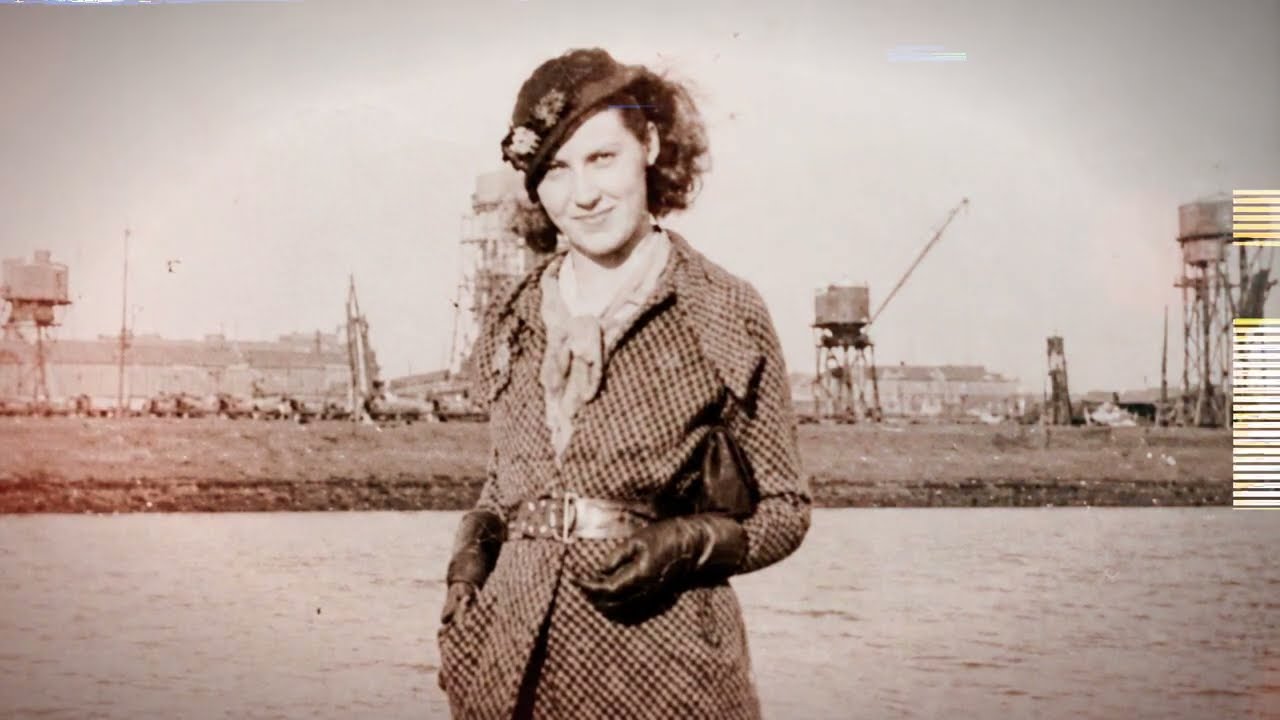
In 1926, a girl in Dundee named Agnes Stiven won a painting competition run by a Scottish newspaper. Mary Anne, 14 years old and hundreds of miles away, wrote to her. They became pen pals. They met in person in Glasgow before Mary Anne sailed. The letters survive. They are the only substantial body of writing in Mary Anne MacLeod’s own hand that no member of the Trump family has ever controlled.
She was issued immigration visa number 26,698 at Glasgow on February 17th, 1930. She left port on May 2nd. The Transylvania docked in New York on May 11th, one day after her 18th birthday. She went to live with her older sister in Astoria, Queens.
Her son has said publicly that she came to America on a holiday, met Fred and simply never left. The paperwork she personally signed contradicts that. She wasn’t a tourist who got swept away. She was an economic migrant who wrote down on a federal document that she was coming to work in other people’s houses and staying for good.
She did that work for roughly five years. There’s a persistent claim that she was a maid or nanny in the Carnegie mansion. It may be true, but it is unconfirmed. What isn’t in doubt is the category. She cleaned. She minded children. She lived in the physical spaces of rich New Yorkers while belonging to none of them.
The Depression hit. Domestic work dried up. And somewhere in the mid-1930s, at a party in Queens, she met a builder named Fred Trump. He was around 30 and selling houses in Queens for a few thousand dollars a piece. She reportedly described him later as the most eligible bachelor in New York.
Fred Trump’s family spent decades telling people they were Swedish. In an era when American attitudes toward Germans were about to get considerably worse, a builder with a name like Trump marrying a fair-haired Presbyterian girl from the British Isles was not a neutral event. She was, among other things, extremely useful.
On a trip home to Scotland, she told her family she had met the man she was going to marry before he had asked her.
The wedding was small. Twenty-five guests. The best man was Fred’s younger brother John, who had a doctorate in physics from MIT. The matron of honor was Mary Anne’s older sister. Her hometown paper, the Stornoway Gazette, ran a notice describing the bride’s gown: white satin, long train, tulle cap and veil, and a bouquet of white orchids and lilies of the valley.
Then they went to Atlantic City for two days because Fred had deals and came back. That’s the whole honeymoon.
The newlyweds moved into his mother’s house. Elizabeth Christ Trump held the company’s name. She was the woman whose signature made the family business legally possible. Into her household came a 23-year-old bride whose entire American resume consisted of working in other women’s homes. There was still someone above her deciding how the house worked.
She was pregnant within a year. Mary Anne was born in April 1937, Fred Jr. the following autumn. By 1940, the census taker recorded something notable. The family had moved up. And living with them, employed by them, was a Scottish domestic servant. Ten years after she signed her own name next to the word domestic, Mary Anne MacLeod Trump had a Scottish maid.
The role came with duties. The story goes that Mary Anne Trump, wife of one of the largest landlords in Brooklyn and Queens, personally drove around to the family’s apartment buildings and collected the coins out of the laundry machines. Other accounts attribute the same routine to Elizabeth, Fred’s mother. Donald has told a version in which he did it himself.
Possibly all three at different times. But notice what the confusion tells you. This is a household where the specific woman performing the task is interchangeable and the task itself is fixed.
She drove a Rolls-Royce with the vanity plates MMT. Mary MacLeod Trump. It was also, for a period, the vehicle in which she carried laundry change. She had married into a family corporation and she had a job in it.
In March 1942, she became an American citizen. Elizabeth, her third child, was born the same year. Donald followed in 1946. And then in 1948 came the birth of Robert, in the event that was the actual center of this marriage.
Something went badly wrong after the delivery. She hemorrhaged. Doctors performed an emergency hysterectomy. Then peritonitis set in, and she went back into surgery again and again. Her daughter, Mary Anne, speaking years later to the biographer Gwenda Blair, described four operations in something like two weeks. Mary Anne was 11.
Her father came home and told her that her mother wasn’t expected to live, but that she should go to school and he’d call if anything changed. Go to school as usual.
The other half of the same story is equally documented. Fred Trump sat on the board of Jamaica Hospital. He used that position and one of the very few car telephones in New York at the time to track down a surgeon from Columbia’s medical school. He went and got the man himself.
He moved everything he had to save her body, and he told his 11-year-old daughter to go to school. That’s not a contradiction. That’s a system. In this family, a crisis is a logistics problem. You solve the logistics problem with money and contacts and speed, and the emotional content of the crisis is simply not processed by anyone because processing it produces nothing.
Mary Anne survived. She was 36 years old. She would never have another child. The surgeries left her with damage that compounded for the rest of her life. She had recurring health problems, including bone deterioration and repeated hip surgeries in her later decades.
Why didn’t she leave? She had no money in her own name. The company was Fred’s. The house was Fred’s. Her citizenship was six years old. She had five children, a Presbyterian church that took marriage vows seriously, and an island back home where she was the great success story. Returning to Tong as a divorced woman with five children would not have been an escape. It would have been the single most public failure available to her.
There is no evidence she wanted to leave. None. No letters expressing regret about the marriage, no separation attempt, no confidant who later said she was miserable. What the record shows is a woman who stopped expecting the marriage to be something other than what it was, and got to work inside it.
In the 1950s, she got very good at the job. They moved into a 23-room house in Jamaica Estates. She ran it. She served on the Women’s Auxiliary of Jamaica Hospital. She was involved with the Jamaica Day Nursery. She raised money for cerebral palsy causes and for programs serving adults with intellectual disabilities. The family was active with the Salvation Army, the Boy Scouts, the Lighthouse for the Blind.
In 1954, a United States Senate committee under Homer Capehart hauled Fred Trump in over the way he had profited from federally backed housing loans. He hadn’t broken the law as it was then written. He was publicly humiliated anyway, and it cost him federal work. Nineteen years later, the Justice Department sued Trump Management for racial discrimination against black applicants in the family’s buildings.
Through all of it, the Trumps were the family with the hospital auxiliary and the Boy Scout donations and the Presbyterian pew. She had become the part of the family the newspapers could photograph without wincing.
In 1955, when Donald finished Sunday school at their Presbyterian church, his mother gave him a Bible. A revised standard version with his name on it. A small, ordinary gift from a religious mother to a 9-year-old boy.
She was, by consistent family accounts, the performer of the household. Donald has said flatly that he got his sense of showmanship from her. Her daughter described her as the star of family gatherings. Fred built the buildings. Mary Anne worked out what the family should look like while standing next to them.
The one thing the system could not absorb was a child who refused to play his position. Fred Jr. was the eldest son, named for his father, expected to inherit the business. He didn’t want it. He wanted to fly. He flew for TWA, and his father regarded the whole thing as a joke.
There’s a line attributed to Fred Sr. that has hardened into family legend, that Donald was worth 10 of him. Donald himself has confirmed that he pressured his brother into a business Fred Jr. was never going to want and that he regrets it.
Fred Jr. drank. The drinking took the career and then took the marriage and eventually he was living in the unfurnished attic of his parents’ house in Jamaica Estates doing maintenance work on his father’s buildings. The mother is downstairs. The eldest son is upstairs in a room with no furniture. This continued for years.
On September 26, 1981, he died of a heart attack at 42. What happened that night is contested. Mary L. Trump, Fred Jr.’s daughter, has said that nobody went with him to the hospital and that Donald went to a movie. Donald’s people have called her book false. She has an obvious stake. So does he.
Here’s what isn’t in dispute. Fred Trump Jr. died in a Queens hospital at 42. And in every account we have from every side, there is no description of his mother being at his side. The surviving record contains a great deal about who inherited what and nothing at all about where she was.
On the afternoon of October 31st, 1991, Mary Anne Trump was shopping near a supermarket in Queens. She was 79. A teenager knocked her to the ground and took her handbag. There were $14 in it.
A man named Lawrence Herbert, 44, driving a truck for Wonder Bread, saw it happen, jumped out and chased the kid. The kid threw the bag at him and Herbert recovered it, the $14 and her papers still inside. Police arrested a 16-year-old named Paul LoCasto, who was later sentenced to three to nine years.
She was left with fractured ribs, a brain hemorrhage, and permanent damage to her sight and her hearing. Her son Donald invited Lawrence Herbert and his family to dinner at the Plaza, offered him a job, and gave him a check. Nine years later, Donald opened a chapter of his book about crime in America with what had happened to his mother.
She was assaulted in the autumn of 1991. She never fully recovered. And the following year, in 1992, the Trump family incorporated a company called All County Building Supply and Maintenance.
All County had no real offices. Its stated purpose was to buy boilers, cleaning supplies, appliances, everything Fred Trump’s buildings needed. It did no such thing. What it did, according to the New York Times investigation that won a Pulitzer Prize in 2019, was take purchases Fred’s own employees had already made and mark them up, sometimes by 20%, sometimes by 50%, sometimes by double.
The inflated money flowed to All County’s owners, who were Fred and Maryanne’s children and a cousin. Untaxed. Gifts wearing the costume of invoices.
There was a second beneficiary. Fred Trump used those padded numbers to justify raising rents in rent-regulated buildings. Tenants in Brooklyn and Queens paid more so that the landlord’s children could receive money without paying gift tax on it.
In 1995, Fred and Mary Anne each executed a trust arrangement that transferred the empire to the children while valuing that empire on paper at $41.4 million. The actual worth was closer to a billion. The Times reported that Fred and Mary Trump transferred more than a billion dollars in wealth to their children. The tax bill on that should have been in the neighborhood of $550 million. They paid $52.2 million.
Trump’s attorney denied there was any fraud or tax evasion and called the reporting inaccurate. New York State’s tax department opened an investigation.
Mary Anne Trump was not a bystander to any of it. She was a signatory. The instruments moved because she signed them. The domestic servant from the Transylvania who arrived with $50 and wrote one word about herself on a federal form spent the last decade of her life co-executing the largest documented tax maneuver in her family’s history while partially blind and partially deaf from a mugging over $14.
Every version of this woman that circulates in American culture treats her as an object. The paperwork says she was a principal. Whatever the marriage cost her in 1948, by the 1990s, she was not being managed. She was a party.
Fred Trump had been slipping into dementia for years by then. He died on June 25th, 1999 at 93. The bulk of the estate went in equal shares to the four surviving children. Each grandchild got $200,000.
Fred Jr.’s two children, Fred the III and Mary, contested the will, arguing their grandfather had been unduly influenced in his final years. The family’s response is the single hardest fact in this entire account. They cut off the medical insurance the family foundation had been providing to Fred Jr.’s children.
At that moment, Fred the III had a newborn son, born within hours of Fred Sr.’s funeral, who was having seizures and needed months of intensive neonatal care. The later lawsuit described the move as unfathomable cruelty. It was transparently leverage.
Mary Anne Trump was alive for all of it. She died on August 7th, 2000 at 88, and her great-grandson’s coverage had been used as a bargaining chip against her son’s children while she was living. We have no record of her objecting. We also have no record of her being asked.
The family got its settlement in 2001. Fred the III and Mary signed, took the money, and signed a confidentiality agreement along with it.
The New York Times found the thread not through a leak or a whistleblower, but through a public document. A financial disclosure form Mary Anne Trump Barry had filed, unredacted, during her confirmation to the federal bench. A reporter searching for something else spotted a contribution of $1 million to an entity called All County Building Supply and Maintenance.
The family’s own paperwork opened the family’s books. Mary Anne retired from the bench in 2019, which halted a judicial misconduct inquiry into whether she’d participated in the schemes. Then she was secretly recorded by her niece calling her brother a liar with no principles. Donald sued that niece and the Times for $100 million.
Which brings us back to Scotland. In 1995, an elderly woman in Dundee named Agnes Stiven was watching a television documentary about a New York developer called Donald Trump. Somewhere in it, his mother’s maiden name came up. Agnes had lost touch with her teenage pen pal roughly 60 years earlier. She recognized her.
They reconnected and stayed in contact until Mary Anne’s death in 2000. Agnes kept the letters, the ones a 14-year-old girl on Lewis had written to a stranger in Dundee, and the ones that came after. Decades later, a filmmaker on the Isle of Lewis built a documentary around them.
Nobody in the Trump family signed off on that. Nobody bought it, sealed it, or made anyone sign anything. The only substantial body of Mary Anne MacLeod’s own words that survives outside her husband’s world survives because a girl who won a painting contest in 1926 held on to her mail.
Now, look at the wedding again. January 1936, 25 people at the Carlyle, white satin, a long train, orchids and lilies of the valley, all of it faithfully reported back to Stornoway. The island read it as a fairy tale.
What it actually was was a bride from the servant class marrying into a family firm registered in another woman’s name, then moving into that woman’s house, then spending 63 years inside an organization that could arrange a Columbia surgeon by car phone in a single afternoon, and could not manage to sit at a hospital bed.
That’s the marriage. Not a romance that failed, and not a horror story either. A merger entered knowingly by both parties in which she supplied respectability and a photogenic face and eventually a signature and he supplied everything else and set every term.
She was never conned. She was recruited.
On January 20th, 2017 her son placed his hand on a Bible she had given him in 1955 when he was nine and swore the presidential oath. She had been dead 17 years. It’s the only possession of hers that has ever appeared on the steps of the capital. A gift that cost nothing, proves nothing and can be photographed.
She’d have understood exactly why they chose it.