In the late summer of 1940, a bomb crater scarred the pale gravel of the Buckingham Palace courtyard. It was September 13th, and Queen Elizabeth stood at a window looking down at the damage. The image was perfect. She was in that moment the nation’s mother surveying a violation of the family home.
The king was beside her. They had been inside when the German bomber came. They heard the whistle, the explosion, and felt the walls shake. They were unharmed. That was the story that would solidify before the day was out. It was a story of shared peril, of stoicism, of a monarchy refusing to retreat.
The reality, as captured in her own handwriting just hours later, was more complex. It was sharper. It was flecked with a peculiar private detail.
The bomb had fallen at roughly 11 in the morning. It was one of six. Another had devastated the palace chapel. Windows were blown in. A water main burst. Soot from ancient fireplaces cascaded in black clouds through the ravaged rooms.
The king and queen had been in their small private sitting room. They felt the blast. According to the official biographer John Wheeler-Bennett, they went immediately to inspect the damage. The queen’s composure was noted. It was always noted.
Photographers arrived. The picture of the royal couple amid the wreckage, framed by shattered glass, would grace newspapers and define a narrative. The palace had been bombed. The sovereigns had shared the danger of their subjects. The symbolism was potent, deliberate, and utterly necessary.
Later that same day, Queen Elizabeth sat down to write a letter to her mother-in-law, Queen Mary. This was a private correspondence. It would not be released to the public for 69 years.
The tone is brisk, vivid, almost chatty. She describes the noise, the dust, the extraordinary sight of the chapel in ruins. Then she includes a strange observation. She writes of the experience, “At the moment of the bombing,” the phrase is precise. It captures the instant of impact, a sliver of suspended time.
But the letter’s content reveals less about fear than about inconvenience. She mentions the soot, the lack of hot water, the disruption. The peril is acknowledged, yet it is framed within the context of a household abruptly and violently disordered. The emotion is not terror. It is a front.
This dissonance is critical. The public saw unwavering courage. The private letter reveals a steely practical annoyance. Both are facets of the same woman.
The image projected was one of spontaneous natural fortitude. The creation of that image, however, was a matter of statecraft.
We must rewind. The decision to remain in London, to be seen to remain, was not a foregone conclusion. In the desperate May of 1940, with France falling and the British Expeditionary Force retreating to Dunkirk, a serious proposal was put before the king. The royal family, the princesses Elizabeth and Margaret, should be evacuated to Canada.
Officials believed it was the prudent course. The queen’s refusal was absolute. Biographer Hugo Vickers records her declaration. The children would not leave without her. She would not leave without the king, and the king was determined to stay.
It was a triple locked refusal, a sound bite of resolve crafted for history. It was also a political calculation of immense consequence.
The context was a cabinet in crisis. Prime Minister Neville Chamberlain was resigning. The two candidates to replace him were Winston Churchill and Lord Halifax. Halifax, the foreign secretary, favored exploring the possibility of a negotiated peace with Hitler. Churchill argued for fighting on alone if necessary.
The king initially was not a Churchill man. He found the new First Lord of the Admiralty brash, unpalatable. His courtiers shared a quieter, more aristocratic worldview with Lord Halifax.
The royal family’s decision to stay carried a weight beyond morale. It was a silent, powerful endorsement of the fight-on policy. If the king had sent his family to safety in North America, how could he ask every mother in London to send her children into the countryside? How could he rally a nation to stand firm?
His presence was a rebuke to the defeatism Halifax cautiously entertained. Churchill understood this. He was a master of symbolic gesture.
The monarchy’s value in that summer of 1940 was not in its power, but in its image. A king digging in the gardens of Windsor, a queen picking her way through bomb debris, princesses knitting socks for soldiers. These were the vignettes of a normalcy worth dying for.
Churchill did not need to orchestrate the bombing of Buckingham Palace. He simply needed to ensure that when it happened, the story served the war effort. He needed to play along.
The narrative was shaped. The press was guided. The photographs were circulated. The Queen’s letter to Queen Mary, with its telling domestic details, was filed away in an archive. It would not see the light of day until 2009, long after the legend had set into historical concrete.
The odd detail from that September day is not in the bomb crater itself. It is in the soot. The queen’s letter specifically mentions the black powder from the palace’s old fireplaces billowing out and covering everything. It was a nuisance. It was undignified. It was the kind of gritty authentic inconvenience that makes a story believable.
Yet, it was too mundane for the grand public myth. The myth required a queen of the hearth standing defiant. The reality involved a great deal of cleaning.
Hitler, it is alleged, would later call her the most dangerous woman in Europe. He understood the power of her image. That image was cemented in the pale light of a September morning amid shattered glass and black dust.
It was an image that helped steady a nation. It was also, in part, a carefully managed piece of wartime propaganda. The letter proves she was there. It also hints quietly at the machinery behind the moment.
The pale dust from the palace bombing had barely settled. But the true crisis had already passed. It occurred in May of that same year, 1940.
The situation was catastrophic. France was collapsing. The British Expeditionary Force was trapped at Dunkirk. In London, the political ground was shifting beneath the government.
The new prime minister, Winston Churchill, was not yet the bulldog of legend. He was a precarious leader. His own foreign secretary, Edward Wood, Lord Halifax, believed a negotiated peace with Hitler might be Britain’s only rational choice.
This was not a fringe view. It was a serious proposition at the highest level of government. Halifax, according to cabinet minutes and his own later writings, argued for exploring terms through Mussolini. Churchill argued they must fight.
The clash was fundamental. It was a choice between survival and honor as some saw it, or between pragmatism and catastrophe as others believed.
The king’s private views during those desperate days are less documented. We know his official biographer, Sir John Wheeler-Bennett, recorded the king’s growing admiration for Churchill’s resolve. But the palace’s primary concern was the continuity of the state.
In that tense May, officials quietly proposed a plan. The royal family, the princesses Elizabeth and Margaret, should be evacuated to Canada.
The Queen’s refusal was immediate and absolute. It followed a strict logic. The children would not go without her. She would not leave without the king, and the king would never leave.
This tripartite declaration, noted in multiple accounts, became a cornerstone of the myth. It was a domestic sentiment writ large for public consumption. A mother’s instinct, a wife’s loyalty, a sovereign’s duty. The perfect human shield.
Its political utility was immense. It made the idea of negotiation seem not just defeatist, but personally craven. How could any minister speak of peace with Hitler while the king intended to die in the rubble of his palace?
Lord Halifax’s personal diaries, which he wrote and circulated to his family, capture the simmering tension of that period. An entry from August 1942, for instance, mentions George VI in a context of ongoing political friction.
The diaries are a chronicle of a man who believed he was acting from clear-eyed reason. He saw the war as a series of calculable losses and probable outcomes. Churchill saw it as a story, and in a story, you need certain characters to play their parts.
The king and queen by staying had irrevocably cast themselves. Their refusal to evacuate was personal. It was also profoundly political. It undercut the moral position of the peace faction simply by existing.
Halifax’s arguments were logical. Churchill’s were theatrical, and the monarchy, whether by conscious design or fortunate instinct, had just handed Churchill the perfect prop.
The king’s official biographer would later frame the decision as one of steadfast duty. But duty to what? To the nation? Certainly. To the institution of the crown? And perhaps unwittingly to the narrative arc Churchill was desperately trying to write.
The queen’s now famous refusal was a private statement that became a public bulwark. It was reported. It was celebrated. It was a quiet, powerful rebuke to the very notion of treating with the enemy.
Lord Halifax continued to serve. He kept his counsel. He maintained his diaries. He recorded lunches and losses and private grievances.
The diaries were for his family. They were not for public consumption. This private circulation is itself a telling detail. It speaks of a man accustomed to influence, to operating in trusted, rarified circles, now watching the reins of history slip toward the more flamboyant, less predictable hands of a storyteller.
Churchill understood something his foreign secretary did not. In a total war, morale is a weapon. Symbols are ammunition.
The monarchy, by accident of its birth, was a preloaded symbol. Its moves were closely watched. A departure for Canada would have been a signal, a silent, devastating signal of lost hope.
Their staying was a louder signal. It said the center would hold. It said the story was not over.
The machinery of state began to amplify that signal. The queen’s letter about the palace bombing, so vivid in its domestic detail, would remain private for decades. But the fact of the bombing was announced immediately.
The image was curated. The king and queen inspecting the damage. Their clothes were still covered in the grime from their own shattered windows.
That image was worth divisions. It solidified a contract between the crown and the people. We share your danger. The unspoken second clause was just as important. You will share our burden.
The peace faction led by the elegant and logical Halifax was effectively neutered by this theater. You cannot advocate for a sensible peace with a regime that bombs the drawing room of your own head of state. It ceases to be sensible. It becomes sacrilege.
The odd detail in all this is the medium of Halifax’s descent, which remains unclear. His diaries circulated to his family. It is the record of a man who believed history would vindicate his reason, who needed his closest circle to understand his position. He was writing for a verdict far in the future.
Churchill, meanwhile, was writing for the next day’s headlines. He was crafting the very next scene. And in May 1940, with the world collapsing, he needed the royal family to stand still.
They did. Their stillness became a monument.
Halifax’s arguments receded into the quiet pages of his personal chronicle. The war moved on. The myth congealed around the decided moments: the refusal to flee, the bomb on the palace, the soot on the queen’s coat.
The complicated, fraught cabinet debates of that May faded from public memory. What remained was a simpler, starker plot. A nation alone, a king in his palace, a queen at his side, and a prime minister who knew exactly the value of that picture.
He would use it, and them, for the remainder of the war. The relationship was not always smooth, but the foundational pact had been sealed. The crown provided the symbol, the government provided the stage, and the people watching found a reason to keep watching.
The story, as Churchill knew, had to continue.
The cabinet crisis of May 1940 was resolved. Winston Churchill stood as prime minister. His rival, Lord Halifax, the foreign secretary who had favored exploring terms with Hitler, remained in the government, but was diminished.
The political war was won. The actual war, however, was only accelerating. France was falling. The British Expeditionary Force was retreating toward Dunkirk.
A quiet, urgent conversation began in the highest corridors of Whitehall. It concerned the royal family’s safety.
A plan was drafted, proposed, and discreetly circulated. In the event of a German invasion, or perhaps even before, the monarch and his heirs would be evacuated to Canada.
This was not a novel idea. The Dutch court had fled to London. The Norwegian king was in Britain. The Greek government would soon find exile in Cairo. It was a logical protective measure for any besieged dynasty.
The continuity of the state had to be assured. The symbol of the crown had to be preserved.
Officials in the Dominions Office and the War Cabinet saw cold reason. They proposed that Princesses Elizabeth and Margaret at least be sent across the Atlantic. Their parents could follow.
The United Kingdom might become an occupied, burning fortress, but the empire would fight on with its figurehead secure.
The request was put to the king and queen. The answer came back swiftly. It was no.
The refusal was absolute. But its delivery, its specific phrasing, would become the stuff of legend.
According to the account recorded by the king’s official biographer, John Wheeler-Bennett, and later echoed by others, the queen was resolute. She reportedly declared the children would not go without her. She would not leave without the king, and the king would never leave.
It was a perfect tripartite statement of familial and patriotic unity. It closed the discussion. It also provided an immaculate sound bite for history, one that would be polished and recited for decades.
The princesses remained at Windsor. The king and queen stayed in London. The myth of their unwavering courage found its cornerstone in that spring of 1940.
The reality was more layered, more administrative. The government had a duty to propose the plan. The crown had a duty to refuse it. Both actions served a purpose.
Churchill understood the purpose. He had clashed with Halifax over the very soul of the war effort mere days before. Negotiation versus defiance.
The royal family’s decision to stay was a powerful, unspoken endorsement of the defiant path. It was a psychological bulwark. If the king fled, what moral authority remained to demand sacrifice from his subjects?
Their staying was a political necessity as much as a personal choice. Churchill, the master of narrative, did not need to orchestrate the refusal. He merely had to amplify its echo.
He let the statement stand. He ensured it was known. The machinery of the Ministry of Information would see to that.
A strange detail lingers from that tense period. Adolf Hitler, it is said, later called the queen one of the most dangerous women in Europe. The quote is apocryphal, its source murky, but its existence in the historical ether speaks to the potency of the image being forged.
A smiling, matronly figure in a hat, standing firm, was framed as a threat to the Reich.
The royal household itself was now a headquarters. Sandbags lined the palace gates. Windows were criss-crossed with tape to minimize shattering. The chandeliers in the state rooms were taken down. The pictures were removed from the walls.
The great echoing palace became a functional, if drafty, command post. The king worked long hours with his red dispatch boxes. The queen visited troops, hospitals, and factories.
Her engagements were meticulously recorded in the Court Circular, that dry official ledger of royal movements. It listed her locations, her duties. It never listed her fears.
The public saw only the output. The calm smile, the reassuring wave, the visible presence. The calculation was invisible. It had to be.
Princess Elizabeth, just 14, made her first radio broadcast in October of that year, speaking to the children of the empire. Her sister Margaret joined her.
It was a scripted moment of familial normality, beamed into a world of blackouts and bombing raids. The children were playing their part.
At Windsor, the princesses tended a small vegetable allotment. A photograph from 1943 would show the future queen, now in uniform of the Auxiliary Territorial Service, digging potatoes. The image was released. It was useful.
Every element of royal life was now curated for public consumption, a continuous pageant of resilience. The line between authentic duty and stage theater had blurred beyond distinction.
Perhaps it no longer mattered. The effect was the same.
The pressure on the king was immense. His stammer, a lifelong struggle, worsened under the strain. He carried the weight of a nation expecting to be invaded any day.
His wife, meanwhile, cultivated a different persona. She was the heart. He was the head. She provided the softness to counter his visible anxiety.
She was the one who remembered the names of the factory workers she met, who asked after their sons overseas. It was a performance of exquisite empathy, and it was a performance that required immense energy.
Private moments were scarce. Even at Windsor with their daughters, the sense of being perpetually on display was relentless. The windows might be blacked out, but the eyes of the world were upon them.
Their every action was a message.
Then the war was brought to their doorstep, literally. On the afternoon of September 13th, 1940, the king and queen were in their private sitting room at Buckingham Palace.
It was a Friday. The air raid sirens had sounded, as they did on many days. They had grown almost routine.
But this time the routine broke. A German bomber, either lost or targeting the palace deliberately, dropped its payload.
A bomb struck the palace’s north side, exploding in the quadrangle. Another crashed through a glass roof and lodged itself in the palace chapel where it failed to detonate.
Windows blew in. Plaster dust filled the air. The king and queen felt the concussion. They were, for the first time, directly under fire.
It was the ultimate test of the image they had projected. They did not flinch.
The queen would later write a letter to her mother-in-law, Queen Mary, describing the event. She noted, with characteristic dryness, the noise and the dust. She made a joke about it.
The letter would remain private for over 70 years, released only in 2017. But the news that the palace had been bombed, that the king and queen had experienced what so many of their subjects endured, was immediate front page material.
Churchill visited the bomb-scarred palace the next day. He found the queen, according to some accounts, remarkably cheerful.
She is famously reported to have said she was now able to look the East End in the face. The sentiment was perfect. It tied the royal experience directly to that of the bombed-out families in the slums.
It suggested solidarity. It was another flawless piece of symbolic communication. Whether spontaneous or considered, its impact was monumental.
The bombing of Buckingham Palace was a gift to British propaganda. It was proof that the war was a great leveler. The palace was just another house on the street.
Churchill, of course, understood the value of this gift instantly. He did not need to stage the bombing. He merely had to frame it.
The narrative of shared sacrifice, of a king and queen standing literally in the rubble with their people, was now irrefutable. It was visceral. It was real.
The myth hardened into fact.
Behind the scenes, the machinery of monarchy adapted. The royal apartments were moved to the more secure inner rooms. Meals were often taken in the fortified basement. Life adjusted to a new permanent state of siege.
The queen continued her rounds. She toured the East End repeatedly, her bright clothes a deliberate contrast to the gray devastation around her. She was a spot of color in a landscape of ash.
It was a conscious choice. A hat was not just a hat. It was a flag.
Each public appearance was treated as a morale operation. The government provided the security, the logistics, the press coordination. The crown provided the face.
It was the pact in action.
Yet the strain told. The king’s health suffered. The queen’s smile sometimes seemed etched by will alone.
The odd detail is this. Lord Halifax, the man who had argued for peace, kept a detailed diary throughout the war. He wrote it for circulation to his family.
In August 1942, his entries include references to George VI. The context is unclear. The mere existence of the notes, however, hints at the ongoing political undercurrents, the quiet assessments and criticisms that flowed beneath the official story of unity.
Not everyone in the establishment was entirely captivated by the royal performance. Some saw the calculation. They noted the effort.
But such views were kept private, confined to diaries or hushed conversations in clubs. Publicly, the image was monolithic. It had to be.
The princesses grew older in this strange suspended reality. Their world was a castle with anti-aircraft guns in the park.
Their holidays were spent at Balmoral, where the threat of invasion felt more distant, but the austerity was just as keen. They learned to be frugal. They learned that their every action reflected not on a family, but on an institution.
Their mother’s famous refusal had anchored them to British soil. Now they had to embody that anchor. They were living symbols of continuity.
It was a heavy burden for teenagers. It was a burden they bore without visible complaint. The narrative demanded it.
The machinery of the monarchy, like any complex engine, requires careful maintenance. Its public output was no exception.
A deliberate process documented their moves. This official record was known as the Court Circular. Published daily, it listed royal engagements with bureaucratic detachment.
The king inspected a tank factory. The queen visited a bombed-out hospital. Princess Elizabeth attended a Girl Guides rally.
It was a dry chronicle of duty. Yet in wartime, this dry chronicle became a potent bulletin of national morale. Each entry was a signal.
It declared the royal family was here, working, unflinching.
The careful cultivation of this image was not left to chance. As biographer Hugo Vickers noted in his 2005 study, their public appearances during this period were meticulously managed.
The aim was projection. The projection was of calm stability. Every wave from a car, every walk through rubble was a piece of a larger narrative.
That narrative was resilience.
Consider the timing. The king’s diary, his official engagements, even his location at Windsor or Buckingham Palace were strategic facts. The press received its cues from the Lord Chamberlain’s office.
Photographers were often granted access under specific conditions. The resulting images were studied in their composition. They showed the monarch in a factory, not a palace. They showed the queen mother smiling amidst destruction. They showed the princesses knitting for soldiers.
These were not spontaneous snapshots. They were visual editorials.
The palace understood, as did the government, the immense symbolic value of a steadfast crown. Winston Churchill’s administration, according to several historians of the period, certainly appreciated the propaganda asset of a resolute royal family.
It provided a human counterpoint to his own fiery rhetoric. It was a softer, domestic form of defiance.
The two strands, Churchill’s lion’s roar and the royal family’s quiet resolve, were woven into a single powerful national story. The machinery facilitated this.
A peculiar and often overlooked detail lies in the very paper it was printed on. The Court Circular, printed in other newspapers, was subject to strict paper rationing. Its physical presence on breakfast tables, its very existence as a document, was a statement of normalcy.
The world might be burning, but the formal record of royal duties continued uninterrupted. This was the message.
The archival record reveals the depth of this curation. The Royal Archives hold the planning correspondence, the drafts of speeches cleared by government officials, the schedules negotiated between private secretaries and ministries.
Every public moment was, in effect, a carefully managed presentation. The audience was a frightened nation and a watching world. The performance had to be flawless.
There was no room for a misplaced frown, a sigh of fatigue, a hint of royal privilege. The image was one of shared sacrifice.
The reality behind the scenes was more complex. The royal household still functioned with a degree of formality that, to an outside observer, might seem at odds with the times.
Yet this too was part of the calculation. To abandon all tradition might be seen as a signal of panic. The balance was delicate.
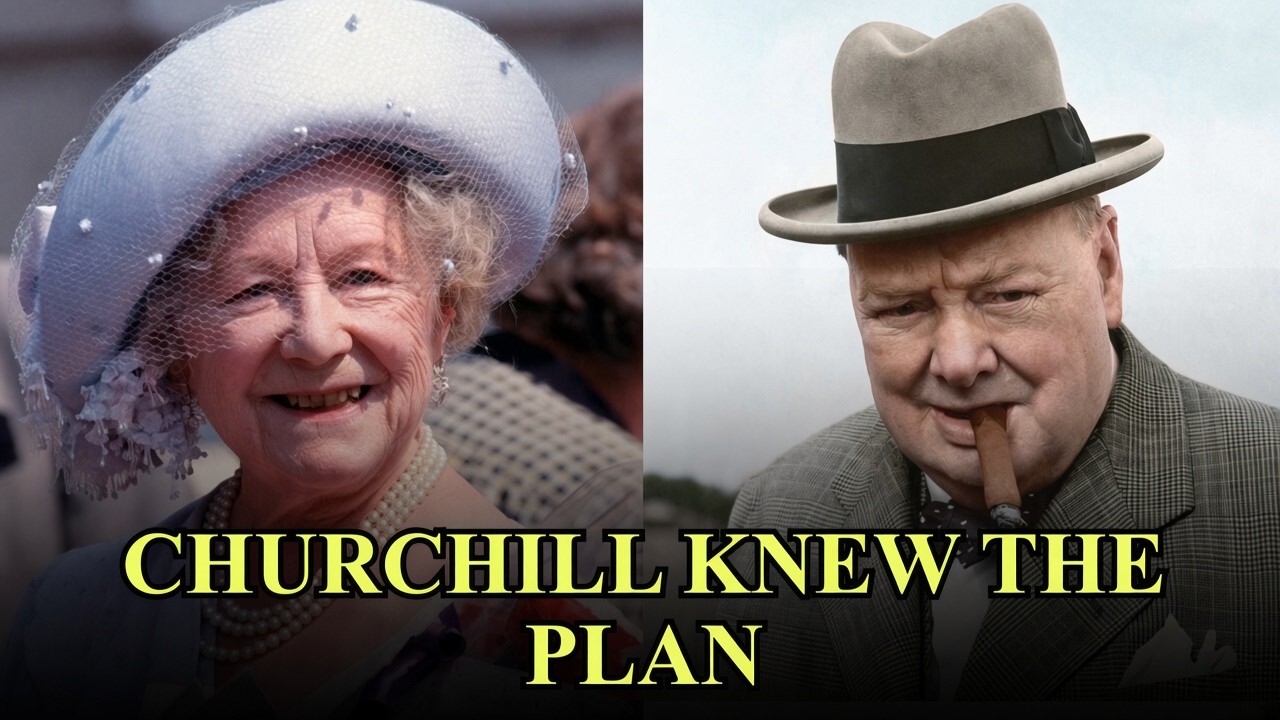
The machinery worked to maintain it.
Newspapers of the era largely played their assigned part. Reports hewed closely to the tone set by the official channels. They spoke of the king’s quiet courage, the queen’s radiant sympathy.
Criticism of the royal family’s wartime role was virtually absent from the mainstream press. This was not entirely a product of deference. It was a consensus, arguably a necessary one, fostered in a time of existential crisis.
Dissent was seen as divisive. The monarchy’s value as a unifying symbol was deemed paramount.
Even figures who privately harbored reservations, like the former foreign secretary, Lord Halifax, maintained a public front of solidarity. His diaries, circulated within his family, sometimes recorded a more nuanced view of events and personalities, but those were private thoughts.
The public record, as shaped by the Court Circular and the cooperative press, showed only unity. It showed only purpose.
The cultivation extended to the youngest members of the family. Princess Elizabeth’s first solo public engagement, inspecting the Grenadier Guards at 16, was meticulously recorded.
Her radio broadcast to the Children of the Empire in 1940 was scripted and vetted. Her photographed work in the Windsor Castle allotment in 1943 was a perfectly framed portrait of patriotic contribution.
These were not the accidents of a girl’s life. They were the deliberate constructions of an heir’s preparation.
Every gesture was magnified. Every word was closely analyzed for its symbolic weight. The machinery ensured that the right gestures were made and the right words were spoken.
The family became, in effect, living monuments to the Blitz spirit. Their continued presence in London, their visits to the East End, their damaged palace, all were transformed from personal experiences into national property.
The process was so effective that the image hardened into indisputable fact. The human reality, the fear during air raids, the personal loss when friends were killed, the strain of constant performance, was sublimated into the icon.
The icon was what the people needed. The machinery knew this. It delivered it with relentless efficiency.
This was not a conspiracy in the dark. It was publicity in the light. It was the conscious stewardship of a national institution during a perilous hour.
The odd detail is in the archive’s very cataloging system. The Queen Mother’s private papers from this period, held at the Royal Archives, are referenced with the code RA CUC/PRIV. The public record, the Court Circulars, the press clippings, exist in another set of boxes entirely.
The two worlds, the private and the performed, were kept separate even in storage. Yet they tell the same story from different angles.
One tells of a life lived. The other tells of a symbol manufactured. Both are true.
The narrative of unwavering courage did not spring fully formed from the bomb craters. It was built day by day, engagement by engagement, in the dry prose of the Court Circular.
It was a masterpiece of wartime messaging. Its architects were a coalition of courtiers and politicians. Its subjects were a family who had vowed to stay.
They now had to perform that vow endlessly under an intense public glare. The performance, history would show, was convincing enough to echo for decades.
It defined a reign. It cemented a legacy. The machinery, once set in motion, was difficult to stop.
The performance began, as these things do, with a carefully chosen stage. It was the 11th of September, 1939. War had been declared just 8 days prior.
London was braced for an attack that had not yet come. The air was thick with anticipation and fear.
On that Monday, King George VI and Queen Elizabeth left the palace. Their destination was not a military headquarters or a cabinet room. It was an underground shelter in the East End of London, and then the streets around it.
They were inspecting the state of civilian preparedness. They were, according to the Court Circular, undertaking one of their first major wartime engagements.
It was a gesture of solidarity. It was also a meticulously planned piece of political theater.
The Royal Standard does not fly by accident. Every movement is choreographed. This one, so early in the conflict, set a vital template.
The king and queen would share the dangers of their people, or at the very least, they would be seen to share them.
The East End, a densely populated area of working-class London, would bear the brunt of the coming Blitz. To be seen there, before the bombs even fell, was a statement of intent.
It was an attempt to preempt any accusation of aristocratic remoteness. The image was potent: a nervous, stammering king and his steadfast, smiling wife walking among the soot-blackened terraces.
It was a picture of unity. It was also a picture that required immense logistical effort to produce.
Security had to be arranged. Routes had to be mapped. The press had to be notified.
The royal couple did not simply decide to take a spontaneous stroll. The machinery of state ensured their presence was noted, documented, and disseminated.
A strange, verified odd detail underscores the calculated nature of these appearances. The official record of royal engagements is called the Court Circular. It is a dry, daily list of appointments and audiences. It reads like a bureaucratic ledger.
On September 11th, 1939, that ledger noted the shelter visit. It formalized the gesture, etching it into the official history.
The circular turned a symbolic act into a matter of permanent record. The monarchy was, in effect, reporting for duty.
The public saw compassion. The system saw an entry in a log book. Both were looking at the same event. They were not seeing the same thing.
The early tours of the East End served a deeper psychological purpose. They were a rehearsal.
The royal family and the government behind them were practicing a new kind of kingship. This was not about pomp and ceremony. It was about proximity and empathy.
The king and queen were learning how to navigate rubble, how to speak to those who had lost everything, how to offer a word or a look that would translate into a newspaper headline of resilience.
They were building a reservoir of public goodwill. They were depositing emotional capital.
This capital would be desperately needed in the months and years to come. When Buckingham Palace itself was bombed, the public reaction was not one of shock at royal peril. It was one of shared experience.
The narrative had been set weeks, months before. The king and queen had already walked the damaged streets of the East End. They had already smelled the dust and the damp.
The palace bombing merely completed a symbolic circle. Now they too had been within the blast radius.
The private letters of the Queen Mother, released decades later in 2009, reveal a personal reaction to danger, but the public reaction was shaped by these earlier deliberate walks.
The government, and Winston Churchill in particular, understood the immense value of this unifying symbol. A divided nation could not withstand the Nazi onslaught.
Class resentment had to be subdued. The sight of the monarch amid the rubble of the poor was a powerful antidote to discontent. It suggested that everyone, from the highest to the lowest, was in this together.
Whether this was entirely true was almost irrelevant. The perception was everything.
Churchill, a historian and a master propagandist, knew this better than anyone. He did not need to explicitly coach the royals. The situation itself was the coach.
The expectation was clear. They had to be visible. They had to be steadfast.
Their every appearance was treated as a broadcast, a bulletin of national morale. And so they performed.
They visited shelters. They toured shattered neighborhoods. They waved. They smiled.
That particular, unwavering smile. The Queen Mother’s smile became a weapon.
It was so effective that Adolf Hitler reportedly considered her a dangerous woman in Europe. The quote is apocryphal, its source murky, but its sentiment reflects the perceived power of her image.
Her danger lay not in strategy or espionage, but in the sheer stubborn fact of her apparent fearlessness. It was a courage that could be photographed. It was hope rendered in hat and pearls.
Let us examine the mechanics of such a tour. Consider the preparation.
Police would sweep the route hours before. Officials from the Ministry of Information might coordinate with newspaper picture editors. The royal dresser would select an outfit suitable for both a dusty, potentially damp environment and for the front pages.
The color of the coat mattered. It had to stand out against gray rubble, but not seem too vibrant, too cheerful. It was a balance.
The Queen Mother mastered it.
Her wave was another studied element. It was not a frantic, excited motion. It was a slow, steady, side-to-side gesture, often with a gloved hand.
It conveyed calm assurance. It suggested she had all the time in the world, even as sirens might soon wail.
The speech of the king was, by many accounts, largely unscripted in its specifics. His struggle with the stammer was well known. This imperfection, ironically, made him more relatable.
When he haltingly asked a woman, “Are you coping? Are you being looked after?” The difficulty of the question lent it greater sincerity. It did not sound rehearsed. It sounded labored, and therefore true.
These human moments were gold. They were also unpredictable.
The entire exercise was a risk. What if they were booed? What if someone shouted an angry question about evacuation plans for the rich? What if the crowd was thin or silent?
The tours of 1939 and 40 were a gamble. The fact that they succeeded so spectacularly speaks to a profound public desire for leadership, for a figurehead.
The royal family fulfilled that need. They provided a face for the war effort that was not Churchill’s bulldog scowl, but something softer, more domestic, more enduring.
They represented the home, the family, the continuity of ordinary life that was being so violently disrupted.
This symbolism was not lost on the prime minister. His own relationship with the king was complex, sometimes strained. Yet, he understood the utility of the crown in wartime.
He played along, not as a conspirator, but as a pragmatic steward of national morale. He supported their visibility. He amplified their bravery.
In return, their popularity bolstered his government. It was a silent, symbiotic partnership.
The shelter visit of September 11th was an early down payment on that partnership. It proved the concept.
The people responded. The newspapers carried the pictures. The narrative of shared sacrifice began to crystallize.
From that point forward, the option of retreat for the royals vanished. They had set their own trap.
Having been seen in the East End, they could never be seen fleeing it. The Queen Mother’s later, famous refusal to evacuate the children was not a sudden burst of heroism. It was the logical, inescapable conclusion of a path chosen weeks earlier.
Once you have publicly walked into the arena, you cannot be seen running for the exit. The machinery, once set in motion, creates its own momentum, and the machine in September 1939 was just warming up.
The path chosen in September was indeed inescapable, but it was also immensely useful to a man who had just entered Downing Street under a cloud of doubt.
Winston Churchill became prime minister in May of 1940. His position was far from secure.
The cabinet crisis that brought him to power revealed a deep fracture. Foreign Secretary Lord Halifax, along with other senior figures, had pushed for a negotiated peace with Hitler.
Churchill stood alone, or nearly so, in his absolute refusal. The diaries of Lord Halifax, circulated privately to his family, captured this tense political stalemate.
The very idea of parley was anathema to Churchill’s conception of the war. He needed a nation steeled for resistance, not one contemplating surrender.
He needed symbols. Unambiguous, powerful, popular symbols.
A monarchy willing to flee would have been a catastrophe. A monarchy determined to stay became the ultimate rebuttal to Halifax’s quiet diplomacy.
The royal family’s position was made clear that same turbulent May. Officials had proposed a plan to evacuate the princesses, Elizabeth and Margaret, to Canada for their safety.
The Queen’s reply, as recorded, was a cascade of refusal. The children would not leave without her. She would not leave without the king, and the king would never leave.
It was a perfect closed loop of resolve.
This was not a private family discussion. It was a statement of policy conveyed through official channels. It reached the right ears at the right time.
Churchill now possessed a living symbol to wield against his political opponents. Here was a king who would not abandon his post, a queen who framed steadfastness as a maternal duty.
Their potential departure had been a topic of serious governmental discussion. Their refusal transformed them into the embodiment of the fight Churchill demanded.
The alternative was unthinkable. Imagine the propaganda victory for Berlin: the British royal family sailing to safety across the Atlantic while their subjects faced the Blitz alone.
Churchill could not allow it. The monarchy’s value was now inextricably tied to its visible peril.
The king understood this new calculus. His official biographer, Sir John Wheeler-Bennett, later noted the king’s acute awareness of his symbolic role.
George VI was not a naturally bellicose man. He was cautious, dutiful, plagued by a stammer that betrayed his nerves. Yet he grasped the necessity of performance.
The performance was one of shared sacrifice. It had to be believable.
So the routines continued. The Court Circular, that dry official record of royal engagements, listed his daily meetings, his inspections, his presence.
The palace windows were sandbagged. The chandeliers were taken down. The king practiced with his revolver in the gardens.
These were small, strange details in a life upended. They were also carefully noted.
Every sign of a monarchy digging in was a political bullet for Churchill’s arsenal. It answered the Halifax faction without a word being spoken in cabinet.
How could anyone speak of treating with an enemy when the king himself was preparing to fight from the steps of his own home?
The imagery was potent. Churchill, the master orator, did not need to embellish it. He merely had to point.
The Queen Mother’s role was crucial. Her charm was a weapon. Her apparent softness disarmed criticism.
Hitler reportedly called her the most dangerous woman in Europe. The quote, though its primary source is elusive, captures the Nazi perception.
Her danger lay not in strategy, but in sentiment. She made the monarchy’s fortitude seem gracious, even gentle.
A bombed palace could be rebuilt. A broken spirit could not. She projected an unbreakable spirit.
This projection aligned perfectly with Churchill’s needs. He required a populace unified not by fear but by a kind of stubborn affection.
The Queen Mother curated that affection. She visited the wounded. She smiled through the rubble. She wrote letters describing close calls with a mix of humility and wit.
After the palace bombing in September 1940, her letter to Queen Mary placed her at the moment of impact. It was a personal account. It also became a public touchstone.
She knew it would be kept. She knew its historical weight.
This was not cynicism. It was a profound understanding of iconography.
Churchill understood icons. He built his wartime rhetoric on them. The island nation, the plucky Tommy, the king and queen in their battered palace.
Each symbol fortified the other. Their interdependence was often implicit yet deeply understood.
No evidence suggests a secret meeting where Churchill and the king plotted this course. Their collaboration was deeper, more intuitive. It was a convergence of interest.
The monarchy needed the prime minister’s political protection to survive a war that threatened the very institution of aristocracy. Churchill needed the monarchy’s traditional, apolitical appeal to sanctify his brutal war effort.
He could not afford a pacifist king. George VI could not afford a prime minister who lost the people’s confidence.
So they performed a duet. The king offered steadfastness. Churchill framed it as the soul of Britain.
The palace bombing provided the perfect crescendo. When the Queen Mother said she was now able to look the East End in the face, she was speaking to the nation.
She was also handing Churchill a finished argument. If the Queen could face the East End, then every citizen could face their own hardship.
The symbolism was now complete. It was also terribly binding.
There could be no retreat. Not for them, not for the country.
Churchill had his unifying myth. The royals were living inside it. Every broadcast, every photograph, every carefully worded letter seemed to tighten the knot.
The performance became reality, and the audience, a nation under siege, had no choice but to believe it.
The myth hardened almost as quickly as it formed. By the autumn of 1940, a peculiar phrase began to circulate in diplomatic circles and later in the press.
Adolf Hitler, it was said, had a name for King George VI’s consort. He reportedly called her the most dangerous woman in Europe.
The Independent reported this in 2009. Other biographers have repeated it.
The quote is vivid. It is also elusive. No definitive contemporary source, no captured German memo or intercepted communication, has ever been produced to verify Hitler said it.
Yet it persisted. It stuck to her public image like a burr.
The question is not merely one of historical accuracy. It is a question of function. Why did this specific legend, true or not, find such fertile ground?
What did it reveal about the perceived threat she now embodied?
The epithet, reportedly from the Führer himself, completed a symbolic transformation. She was no longer simply a queen refusing to leave. She was a strategic asset, an active psychological weapon.
Her danger was not military. It was moral.
Her unwavering presence in London, her visits to the rubble, her calm voice on the wireless. These were acts of profound subversion against Nazi ideology.
They demonstrated a stability Hitler sought to shatter. A nation that could watch its monarchs inspecting bomb damage with a smile was a nation far harder to terrorize into submission.
The legend of the quote amplified that perception. It was a backhanded compliment from the enemy, a certification of her effectiveness.
Churchill understood the power of such stories. He traded in them. The propagation of this particular anecdote, whether he had a hand in it or not, served his ends perfectly.
It cast the war in stark personal terms. It was not just armies clashing. It was the Queen Mother versus the Führer.
Consider the timing. The phrase is said to have emerged after the palace bombing. After her refusal to evacuate became public knowledge. After the images of her walking through the East End had been seared into the public consciousness.
The narrative needed a villain’s acknowledgement to reach its zenith. And here it was.
The greatest danger, in Hitler’s own alleged view, was not a battleship or a squadron of Spitfires. It was a 50-year-old woman in a hat.
The irony was potent. It was also incredibly useful for a government battling isolationist sentiment abroad and occasional weariness at home. It framed the conflict with brilliant simplicity.
The story traveled. The story seemed to reinforce her courage every time it was told.
But let us examine the oddity of the detail itself. The quote lacks provenance.

Historians like Hugo Vickers include it with caution. It lives in the realm of reported speech, a secondhand weapon in the war of images.
Its power derives from its seeming authenticity, from the chilling specificity of the insult. Calling a woman dangerous was a particular Nazi trope, a fusion of disdain and fear.
To plant that phrase in Hitler’s mouth was to subtly accept his frame, then triumph within it. It acknowledged his warped worldview only to show him defeated by the very thing he scorned.
The legend, therefore, tells us less about Hitler’s actual opinions and more about what the British establishment and the public desperately needed to believe.
They needed to believe their steadfastness was noted. They needed to believe it rankled. They needed to believe that a simple act of staying put could unnerve a tyrant.
The quote provided all that was needed.
This manufactured, or at least embellished, reality became a cage of expectations. Every subsequent action was measured against this newly fearsome persona.
Her broadcasts on the BBC, archived in their written archive center, took on a new gravity. Her letters, like the one describing the palace bombing released from the Royal Archives in 2009, were read as bulletins from the front line of morale.
The Court Circular, that dry official record of her engagements, became a chronicle of defiance. She could not step out of the role now. The legend had cemented it.
There is a darker corollary to this agilation. If the Queen Mother was seen as the most dangerous woman in Europe, then her family was a prime target.
The pressure on the king intensified. The value of their symbolic stand increased its real risk.
Churchill’s government was now doubly invested in their safety, and doubly invested in the performance of their normality. The photographs of Princess Elizabeth tending her allotment at Windsor in 1943 were not casual snapshots. They were proof of concept.
The dynasty was carrying on. The danger was being managed.
The legend created a feedback loop. The more it was celebrated, the more inescapable the performance became.
They were living a story written by headlines, amplified by rumor, and sanctioned by the highest levels of state. The weight of that story was immense.
It allowed for no private fear, no moment of admitted doubt. Every public appearance seemed a counterpoint to an apocryphal quote. Every smile was seen as a subtle retort.
The ultimate testament to the legend’s success is how it overshadowed the complex political reality. It simplified a mosaic of difficult choices into a singular epic.
It obscured the earlier cabinet debates, the Halifax peace option that lingered into May of 1940. It framed the royal family’s decision not as one option among many, but as the only conceivable course.
The legend erased the ambiguity. In doing so, it served Churchill’s historical purpose.
It painted the war as a binary fight between good and evil, between a dangerous woman and a dangerous man. Nuance was a casualty.
The persistent anecdote did that work beautifully. It provided a clean, compelling arc. History often prefers such arcs. They are easier to remember than cabinet minutes.
So we are left with an indelible image bolstered by an unverified quote. The Queen Mother forever smiling in the rubble. Hitler allegedly fuming in his bunker.
The dynamic is theatrically perfect. It transforms a constitutional figurehead into a combatant. It makes a housewife in Coventry feel her own perseverance is part of the same battle.
That was the alchemy. That was the point.
The truth of the quote matters less than the fact that it was believed. It was believed because it confirmed what people needed to see in their monarchy at that precise desperate moment.
It confirmed that courage could be a weapon, that presence could be a strategy. That in a war of nerves, a well-timed legend could be as potent as a bomb.
The story of the most dangerous woman in Europe was always about more than just her. It was about the millions who found danger in their own lives and needed a symbol to make sense of it.
She wore that symbol. She had no choice but to wear it until the very end.
The image of the royal family sharing in the nation’s peril was by late 1940 firmly established. But peril alone does not sustain a nation for years.
What follows terror is the long, grinding work of endurance. A new image was required, one not of defiance in the rubble, but of quiet contribution in the fields.
The focus shifted subtly from London to Windsor, from the parents to the children. The narrative of shared sacrifice would now be written in the soil of a castle garden.
Princess Elizabeth was 17 years old in 1943. Her sister Margaret was 13.
They had spent the war largely at Windsor Castle, a fortified and guarded haven. Their existence was one of relative safety, a world away from the East End.
This presented a problem. The symbol of the family in the line of fire was potent. The symbol of the family entirely removed from the war’s reality was not.
A middle ground had to be manufactured, one that spoke of duty, simplicity, and a very British sort of grit.
The solution was an allotment.
In the castle grounds, a plot of land was assigned to the princesses. They were photographed there in 1943.
Elizabeth, in a practical shirt and headscarf, is seen tending to plants. The images are studied in their casualness. They were distributed by the press, a visual bulletin of royal normality.
The message was clear. Even the king’s daughters were doing their bit.
This was not a spontaneous act of teenage horticulture. It was a calculated piece of visibility, part of a broader campaign of curated normality.
The royal household understood the power of the mundane gesture during total war. According to biographer Hugo Vickers, the Queen Mother was deeply conscious of the need for such imagery.
The princesses’ lives were a paradox. They lived behind barbed wire with anti-aircraft guns on the battlements. Their windows were crisscrossed with tape to prevent shattering.
Yet the photographs show sunlit industry. The contrast is the entire point.
It said that even within a fortress, one could cultivate hope. Even for those kept safe, there was work to be done.
The odd detail is in the specificity of the crop. The princesses grew tomatoes.
This was not merely a gardening choice. It was a dietary and symbolic one.
With merchant ships being sunk in the Atlantic, fresh fruit was a luxury. The government’s Dig for Victory campaign urged citizens to turn every scrap of land productive.
Tomatoes grown under glass at Windsor were a small, perfect emblem of self-sufficiency. Each tomato from the royal allotment was viewed as a quiet rebuttal to notions of privilege. It was a tiny, edible piece of propaganda.
Their visibility extended beyond the garden. Princess Elizabeth made her first radio broadcast in 1940 at 14, addressing the children of the empire.
In 1943, the same year as the allotment photographs, she was appointed an honorary colonel. She began to undertake solo inspections of troops.
A newsreel from the period shows her, slight and serious, walking a line of soldiers. She is learning to perform her function.
These were not private moments of maturation. They were public rehearsals for a future role, staged for the cameras and offered to the nation as proof of continuity.
The king and queen were embodying the spirit of the present. Their daughter was being presented as a guardian of the future.
The presence of young Margaret was equally crucial. She provided the necessary note of lightness.
Stories, carefully placed in the press, spoke of her knitting socks for soldiers. She performed in pantomimes in the castle’s Waterloo Chamber.
These were charming, humanizing details. They softened the harder edges of the war narrative.
Together, the sisters presented a complete picture: the responsible heir and the spirited younger sibling. A family, in other words.
And the preservation of the family unit was a central, aching preoccupation for every household. The royal family, seen together at Windsor, offered a mirror to that national longing.
Their intactness was seen as a promise of future stability.
But the curation had its limits, and the limits were absolute. There was no camera follow-up to the allotment photographs. No images showed the barbed wire perimeter just outside the frame.
No photographer captured the subtle social pressures that shadowed their every outdoor moment. The princesses’ world was one of extreme isolation for their own protection.
They had almost no contact with children their own age outside the royal household. The normality they performed was a facsimile.
It was believable because the public needed it to be believable. The reality of their sequestered life, as recorded in the Royal Archives, was a necessary secret.
To show the full truth would have undermined the very symbol they were meant to embody. It would have revealed the fear behind the facade.
The strategy was effective because it was layered. The king and queen in Buckingham Palace represented shared danger. The princesses at Windsor represented shared purpose.
One narrative addressed the immediate trauma of the Blitz. The other addressed the protracted fatigue of the war’s middle years.
The allotment was a perfect set piece. It required no dialogue. It needed no explanation.
A young woman in sensible clothes working the earth conveyed everything. It spoke of a kingdom turning inward, sustaining itself.
It linked their faith directly to the most ubiquitous and humble farming activity, planting. The image transcended class. It was deliberately classless.
This visibility was managed with minute attention to detail. The Court Circular, the official record of royal engagements, listed their activities with the same bureaucratic precision it used for state banquets.
An inspection, a pantomime, a garden visit. Each entry was a brick in the wall of their public personas.
The circular was not widely read by the public. It was read by editors and journalists who then built their stories upon its authoritative scaffolding.
The system created a feedback loop of legitimacy. A simple entry stating, “The Princess Elizabeth tended her allotment,” would blossom days later into a photograph in a national magazine, accompanied by a heartening caption.
The machinery of myth was often quiet and very dry.
We are left, then, with a portrait of a childhood repurposed. The war years for Elizabeth and Margaret were not their own. They were a public resource.
Their growth, their hobbies, their small duties were fashioned into national property. This was not necessarily a cruelty. It was the unspoken terms of their birth.
The war merely magnified the process, sharpened its focus, and stripped away any alternative.
The image of the princess with her tomato plant is, in the end, a war image as potent as any photograph of a bombed street. It is an image of occupation, of holding the line, of insisting on a future harvest while the present burned.
It is a photograph of waiting, and the entire nation in 1943 was waiting with her.
The image was not only for their own community’s consumption. It had a transatlantic audience, a vital one.
American support, both material and moral, was the absolute prerequisite for any continued fight. And so the royal correspondence file expanded. It reached across the ocean.
A particular exchange preserved in the Royal Archives exemplifies this careful stagecraft. In May of 1940, as the cabinet crisis over possible peace negotiations raged in London, a letter arrived at Buckingham Palace from the White House.
First Lady Eleanor Roosevelt wrote to the Queen. She expressed her sympathy. She offered her prayers.
She closed with a specific sentiment. “I shall think of you on Coronation Day and wish you God’s blessing. May your reign be long.”
It was a personal note, undoubtedly, but in the hands of the palace, no correspondence was merely personal.
The Queen Mother’s reply, dated May 27th, was prompt and perfectly measured. “My dear Mrs. Roosevelt,” she began, “I was deeply touched by your kind thought in writing me such a charming and sympathetic letter.”
The language was warm yet formal. It was the language of diplomacy, wearing the clothes of friendship.
This was a calculated performance of shared values. The objective was to solidify an emotional alliance.
The royal family’s decision to remain in London, widely reported in the American press, provided the perfect backdrop. Here was a narrative of common cause, of democratic resilience.
The king and queen were portrayed not as distant monarchs, but as a relatable family facing the Blitz alongside their people. This resonated powerfully in the United States.
It was a human story that transcended politics. The Roosevelt administration understood its value.
Official channels reinforced it. In August of 1943, Eleanor Roosevelt would write in her syndicated My Day column about a campaign to conserve cargo space on planes and ships for soldiers’ mail. She framed it as a patriotic duty.
The themes of sacrifice and connection were identical to those emanating from the palace. The parallel was not coincidental. It was coordinated soft power.
The imagery was consistent. Pictures of Princess Elizabeth tending her allotment at Windsor found their way into American magazines.
They spoke of frugality, of pitching in, of a future being nurtured. It was a potent symbolism. It bypassed arguments over interventionism and spoke directly to the heart.
The correspondence continued throughout the war. Each letter, each photograph, each gesture was a thread in a larger tapestry of persuasion.
The Queen Mother, according to biographer Hugo Vickers, understood the optics of royalty with an instinctive clarity. Her letters to Eleanor Roosevelt were a masterclass in that understanding.
They were never effusive. They were never informal. They struck a precise note of dignified gratitude and steadfast resolve.
This was the image required. America needed to see Britain not just as a strategic ally, but as a courageous kindred spirit. The monarchy became the face of that spirit.
The stage for this performance was vast. It spanned the Atlantic. The audience was millions of American citizens and, crucially, their political representatives.
Every bomb crater at Buckingham Palace, every royal walk through the East End became a story telegraphed abroad. It was propaganda in its most effective form: a narrative that happened to be true, then carefully polished for maximum impact.
The odd detail lies in the archival timing. The Queen’s reply to Mrs. Roosevelt is dated May 27th, 1940.
This was the precise moment when Churchill was solidifying his war cabinet, defeating Halifax’s push for negotiation. The letter exists alongside that immense political struggle.
It is a quiet document, but it is not an insignificant one. It represents a front in the war that had nothing to do with beaches or airfields.
It was a battle for perception, and it was fought with pen and paper and a perfectly chosen phrase.
The shared sacrifice was real. The royal family did endure the Blitz. But the sharing of that story, its deliberate crafting for foreign consumption, was a strategic operation.
It was as vital as any military campaign. The monarchy became a key asset in this effort.
Their perceived authenticity was the currency. The Roosevelt correspondence shows that currency being minted and spent with great care.
Each letter was a deposit in the Bank of American Goodwill. The interest on that deposit would be paid in ships, in planes, in the eventual arrival of Allied soldiers.
The connection was indirect but undeniable. Public opinion mattered. The royal family helped shape it.
They provided a focal point for American admiration and sympathy. This was not an accident. It was a policy.
A quiet, persistent campaign waged from a bomb-scarred palace. The machinery of the state facilitated it.
The Court Circular, the official record of royal engagements, was disseminated to press agencies worldwide. The BBC’s overseas service carried royal speeches. Every tool was used.
The goal was singular: to make Britain’s fight America’s concern.
The human element was the key. And the royal family was the most human element of all.
They were parents. They were victims of bombardment. They were gardeners. Their daughter was a young woman in uniform.
These facts were undeniable. Their amplification was meticulous.
Eleanor Roosevelt, a shrewd political figure in her own right, became a willing participant in this exchange. Her published writings often mirrored the themes coming from London.
She spoke of endurance, of community, of the home front. The synergy was powerful. It created a feedback loop of solidarity.
The Queen Mother’s letters, widely noted for being correct and gracious, fed that loop. They acknowledged the sympathy and reflected it back, strengthened by the example of British fortitude.
It was a dialogue that built a bridge. The bridge was made of words and pictures. It had to bear the immense weight of history.
It did.
The relationship between the two women, documented in the archives, is a case study in wartime diplomacy. It operated in the space between the personal and the profoundly public.
Every word was chosen. Every sentiment was calibrated. The result was an alliance of image.
That alliance preceded and underpinned the military one. It made the idea of shared sacrifice palpable.
When American GIs finally landed in Britain, they arrived with a pre-formed narrative. They had seen the pictures of the princess. They had read about the king and queen visiting the ruins.
They felt, in some collective way, that they were fighting for those people. That feeling did not emerge spontaneously. It was cultivated.
The correspondence was part of the cultivation. The archive holds the proof.
The tone never wavered. The resolve is constant. The humanity is always present.
But it is a formal, broadcast humanity. It is meant to be overheard. The entire world was listening.
The performance had to be flawless. It was.
The private diary is a different kind of performance. It is written for an audience of one, or perhaps a few.
Lord Halifax’s wartime diaries were not meant for publication. They were penned for his family, a circulated record of his thoughts from his post as British ambassador in Washington.
The entries from August 1942, specifically the 10th through the 12th, are a case study. They mix the granular details of diplomatic life with broader, more personal reflections.
One subject of those reflections was King George VI.
The contrast with the monolithic public image is stark. Here the king is not a symbol but a man discussed in a political context.
The distance from London is palpable. Halifax writes from a world of formal dinners and strategic leaks to the press. A world where the war is a matter of cables and reports, not of bomb craters and ration books.
His perspective is invaluable precisely because it is not the official story. It is a view from the outside looking in at the monarchy’s place in a shifting global conflict.
The diaries reveal the mechanics of perception.
On August 10th, Halifax recorded a conversation with the Chinese ambassador. They discussed, among other things, the need for a unified Allied command in the Pacific. The detail is dry, procedural. It is the work of war.
Then the focus shifts. He writes of his efforts to manage American public opinion, to counter what he saw as damaging propaganda. The royal family naturally featured in this calculus.

Their portrayal in the American press was not left to chance. It was a subject of discussion and concern.
Halifax was acutely aware that the king’s symbolic strength, his value to the Allied cause, depended entirely on the narrative. That narrative had to be carefully tended, even from 4,000 miles away.
The diary captures this cold operational reality. The monarchy was an asset. Its morale value was a form of currency. It was spent wisely.
August 11th brings a more intimate glimpse. The entry notes a letter received from an old acquaintance, a reflection on the state of England.
There is a melancholy here, a homesickness. It is followed by political gossip from London relayed through the diplomatic pouch.
The king’s name surfaces in this context. Halifax does not quote the king directly. He reports on the king’s reported views, on his state of mind as conveyed by intermediaries.
The monarch becomes a piece on a chessboard. His movements and moods analyzed for their effect on the game.
This is the unvarnished political view. There is no talk of courage or shared sacrifice. There is analysis. There is assessment.
The odd detail is the diary’s own intended audience. These were not secret parchments locked in a desk. They were written to be circulated to his family.
A curated version of his experience for his private circle. Even in privacy, there is a performance.
A date in mid-August is perhaps the most telling. The entry deals with a speech he is to give, the phrasing of a particular point about postwar aims.
Then, almost as an aside, he records a brief commentary on the king’s recent activities. It is not flattering. It is not damning. It is simply observational, stripped of the obligatory reverence of a public broadcast.
It is the note a manager might make about a valuable but unpredictable employee. The tone is detached.
This is the true contrast. Public broadcasts from the BBC written archive center, like those from the King and Queen, spoke in a language of collective resolve. They use the word “we” with relentless consistency.
Halifax’s diary, even when discussing the same figures, uses the language of “he” and “they.” It is a document of management.
The war effort required both languages. One forged the spirit, the other calculated its utility.
The king himself was living in the space between these two worlds. He was the man discussed in Halifax’s dispatches, prone to anxiety and frustration. He was also the voice on the wireless, steady and calm.
The strain of maintaining that duality was immense. Official biographer John Wheeler-Bennett documented the physical toll.
The stutter returned under stress. The weight of each public appearance was grueling. He and the queen would return from a tour of the shattered East End utterly drained.
The effort was real. The danger, when bombs fell on Buckingham Palace, was genuine.
But the projection of that experience, its transformation into national myth, was a separate process. It was a political process.
Halifax’s diaries from his distant post show that the machinery of that process was understood at the highest levels. The royal family’s courage was not merely personal. It was institutional. It was a policy.
Winston Churchill understood this better than anyone. His own relationship with the monarchy had been fraught. Yet in wartime he recognized the instrument he had been given.
A reluctant king, a queen who refused to leave, princesses photographed with vegetable hoes. It was a propaganda tableau of immense power.
Churchill, according to several biographers, did not necessarily orchestrate every element, but he ensured its spotlight never dimmed. He leveraged it.
When the Queen Mother’s letter describing the palace bombing was finally released to the public in 2009, it contained a telling phrase. She wrote of the incident occurring, quote, “At the moment of the bombing.”
The language is poised, almost clinical in its precision. It is a letter, but it is not entirely private. It is written to Queen Mary, the formidable matriarch.
It is a performance for a royal audience of one.
Every layer of this war had its intended viewer. Halifax’s diaries remind us that the war was fought in drawing rooms and diplomatic suites as much as in skies over London.
The battle for American support was paramount. Here, the royal narrative was indispensable.
It provided a human face for the British cause, one that transcended politics. It softened the edges of imperialism. It made the conflict feel like a struggle for decency.
Eleanor Roosevelt’s columns from her visit to Britain played into this perfectly. She wrote of the royal family’s simplicity, their solidarity. She was an unwitting amplifier of the cultivated image.
Halifax, in Washington, would have read every line. He would have measured its impact.
The diaries contain no celebratory note about this. It is recorded as fact. The monarchy was working. The asset was performing.
The final lesson of the private diary is one of dissonance. While Halifax wrote of strategic concerns and the king’s demeanor, the British public heard none of it.
They heard the king’s Christmas broadcast speaking of a new year that would see the liberation of Europe. They saw the photographs in the press of the family at Windsor.
The seamless narrative of unity was complete. The machinery that produced that seamlessness, the political calculations, the diplomatic assessments, the managed perceptions, remained hidden.
They were confined to the pages of circulated diaries, to cabinet memos, to ambassadorial cables. The two worlds ran parallel.
One was for public consumption. The other was for governing.
The monarchy existed in both: a pivotal figure in the public drama and a discussed variable in the private calculus.
Lord Halifax’s entries from those three days in August 1942 are a brief, clear window into that second world. The glass is cool to the touch. The view is unsentimental.
It reveals a simple truth. In total war, even courage becomes a strategic resource. It is logged, assessed, and deployed.
The archives hold the ledgers.
The dust settled over a changed city. The peace that arrived in 1945 was not the one anyone had imagined in 1940.
A weary nation began the immense labor of rebuilding. Not just its shattered streets, but its sense of itself.
The narrative of unity, of a people and their sovereigns standing shoulder-to-shoulder against the Blitz, had been a powerful tool for survival. Now, with the crisis passed, that narrative required a different kind of preservation.
It needed to be translated from current propaganda into permanent history.
This delicate task would fall not to a journalist or a politician, but to a historian granted unparalleled access. His name was Sir John Wheeler-Bennett.
His assignment was the official biography of King George VI. His work would become the definitive archival bedrock upon which the myth of wartime courage would permanently rest.
Wheeler-Bennett was an establishment figure of a particular type. A conservative historian with extensive diplomatic experience. He moved in the same rarified circles as those he chronicled.
He was not an outsider. He was, in many respects, a custodian.
Appointed by the Queen Mother herself, he was given what few biographers ever receive: unrestricted entry to the Royal Archives. He spent years immersed in the king’s private diaries, his official papers, and his confidential correspondence.
This privileged access came with an implicit understanding. The biography would be thorough. It would be dignified. And it would be authorized.
The story it told would be the one the institution wished to leave for posterity. The raw, unvarnished ledgers of war. The doubts, the fears, the political calculations would be filtered through a lens of respectful consolidation.
His methodology was exhaustive. He compiled a narrative that was rich in detail, scrupulous in its chronology, and reverent in its tone.
From the king’s own hand, he drew the strain of leadership. From the queen’s letters, he extracted her steadfast refusals to consider evacuation.
The bombing of Buckingham Palace was recounted not as a lucky escape, but as a moment of symbolic defiance.
Wheeler-Bennett’s great skill was his synthesis. He wove these individual threads into a seamless tapestry of unwavering royal duty.
The contested cabinet debates of May 1940, where Halifax’s peace faction wavered, were framed as a backdrop against which the king’s quiet support for Churchill’s resolve shone more brightly.
The narrative of spontaneous, instinctive courage was meticulously backfilled with documentary proof. A letter from the Queen Mother to her mother-in-law describing the palace blast and the smell of cordite became a central exhibit.
It was authentic. It was compelling. It was also now presented as part of an official, sanctioned record.
The biography, published after a decade of work, was received as the final word. Reviews praised its scholarship and its depth.
The public, and indeed many historians, accepted its portrait as unassailable truth. It had, after all, been built largely from primary sources.
What it subtly but firmly established was a cause-and-effect relationship. The monarchy’s decision to stay was presented as the primary catalyst for national morale. The people’s spirit was a response to royal example.
This elegantly reversed the engine of the story. It minimized the extent to which the monarchy’s actions were themselves a response to public sentiment, a necessary performance in a democratic war.
The ledgers Wheeler-Bennett consulted were complete. Yet his interpretation privileged one column, the dividend in devotion, over the other, the cost in nerve and political maneuver.
A single strange detail underscores the biography’s curated nature. Wheeler-Bennett chose to omit any mention of a particular royal tour.
In late 1939, the king and queen visited the bomb-damaged East End. It was one of their first major public engagements of the war. The official record of royal engagements, the Court Circular, duly noted it.
But the biographer, with the archives at his disposal, left it out.
The omission is minor yet telling. It suggests a selection process at work, a shaping of the timeline to emphasize certain moments over others.
The East End visit was spontaneous, messy, emotionally charged. The palace bombing later was clean, dramatic, and contained within the royal grounds.
One was a gesture of solidarity with the suffering of ordinary citizens. The other was an attack on the symbol of the state itself.
The latter fit a tighter, more powerful narrative arc.
The Queen Mother, throughout Wheeler-Bennett’s research and writing, remained a guiding presence. She was not a passive subject. She was the commissioner of the work and the guardian of the memory it served.
Her own reflections, shared with the biographer, inevitably colored his perspective. She recalled, for instance, Hitler’s alleged remark that she was the most dangerous woman in Europe.
Wheeler-Bennett included it. It was a perfect anecdote: pithy, memorable, and reinforcing the image of her as a focal point of defiance.
Its veracity is difficult to pin down. It appears in no known German document of the period. It is reported speech filtered through memory and retelling.
Yet, in the authoritative pages of an official biography, it gained the weight of historical fact.
The effect of this monumental work was profound. It froze the fluid, complex events of the war into a solid, respectable tableau.
For decades, any subsequent historian working on the period had to begin with Wheeler-Bennett. His sources were impeccable. His conclusions were reasoned.
To challenge the overarching narrative required not just new information, but a deliberate effort to read against the grain of his impeccable scholarship.
The biography became a fortress built with the very stones of the archive it documented. It allowed the wartime myth to transition seamlessly from propaganda to history without the awkward interlude of reassessment.
The performance of courage was no longer a performance. It was simply what had happened.
Other records existed, of course, in other hands. The diaries of Lord Halifax, circulated privately within his family, offered a different vantage point.
Entries from August 1942, for example, discussed both personal and political matters with subjects including George VI. They were not public. They were not part of the official story.
They represented a parallel ledger, a different column of accounting. Their very existence, private and unsanitized, highlights the selective nature of any historical record.
Wheeler-Bennett’s genius was to make his selection appear total, complete, and definitive.
In the decades that followed, the Queen Mother’s personal mythology continued to grow. The frail, smiling centenarian in pastel hats seemed the living embodiment of the spirit he had chronicled.
The sharp political instincts of the war years were softened into a generalized, beloved fortitude. The dangerous woman became the nation’s grandmother.
This transformation was possible because the harder edges of the story had been smoothed by the official record. The calculations, the staging, the immense pressure from a government fighting for its life. These receded.
What remained was the image of a family who chose to stay.
Wheeler-Bennett’s biography provided the scholarly citations for a national fairy tale. It was a masterpiece of consolidation.
It ensured that the myth, now buttressed by parchment and footnotes, would outlive the woman, the biographer, and the century that forged them.
The final balance of the ledger then was struck not in 1945 but in the quiet reading room of the Royal Archives, with the turning of a page written years before.
The legacy is a paradox. The peril was genuine. The bomb that struck Buckingham Palace on the 13th of September 1940 shattered windows and tore apart a chapel. It sent masonry flying past the king and queen.
That was not stagecraft.
The refusal to evacuate the princesses to Canada, articulated so definitively in May of that desperate year, carried a real and terrifying weight. The children would not go without her. She would not leave without the king, and the king would never leave.
This was a family sharing the physical risk of their subjects.
Yet the presentation of that courage, its amplification, and its careful curation, was an act of political statecraft. It was impeccably managed.
The mechanisms were quiet, bureaucratic, often mundane. They operated within the monumental struggle Winston Churchill was waging for national resolve.
The story that emerged was not a lie. It was a narrative polished until it gleamed.
Consider the official record. The Court Circular is a dry, daily list of royal engagements. It appears in the pages of certain newspapers. It notes audiences held, ceremonies attended, visitors received.
During the war, it performed a subtle, vital function. It placed the king and queen geographically within the heart of the conflict.
An entry might note, “Their Majesties visited a bombed-out street in the East End.” It might record a tour of a munitions factory in Sheffield. It rarely described the emotion, the rubble, or the smell. It simply stated the fact.
This consistent, understated documentation created a rhythm of normalcy amidst chaos. The king was working. The queen was touring. The palace was functioning.
The very banality of the circular made its message profound. The institution endured.
It was a scheduled, deliberate proof of presence.
The press coverage followed a managed line. Photographs were approved. Princess Elizabeth in 1943 was pictured tending her allotment at Windsor Castle.
The image spoke of duty, of contributing to the Dig for Victory campaign. It was pastoral, reassuring.
Newspapers carried reports of the Buckingham Palace bombing. Yes. They focused on the Queen’s now famous remark about feeling she could look the East End in the face.
They did not typically dwell on the logistical discussions that must have preceded every public appearance. They did not detail the security contingencies. The plans to maximize visibility while minimizing undue risk.
The strange, verified detail is this. The Queen Mother’s own vivid letter describing the bombing, written to her mother-in-law, Queen Mary, mere hours after the blast, remained private in the Royal Archives for nearly 70 years. It was released to the public only in 2009.
The immediate raw account was for family. The polished public sentiment was for the nation.
Correspondence, too, played its role. The exchange of letters between Queen Elizabeth and Eleanor Roosevelt in May of 1940 is illustrative.
The First Lady wrote to offer sympathy on the anniversary of the coronation. “I shall think of you on Coronation Day and wish you God’s blessing,” she wrote.
The Queen’s reply was warm, gracious. “I was deeply touched by your kind thought in writing me such a charming and sympathetic letter,” she responded.
It was a diplomatic courtesy, but it also served a broader purpose. It cemented an alliance, personified it.
These letters, potentially public, showed a monarchy engaged with the world, appreciating the support of a powerful democracy.
Even the act of writing itself could be symbolic. Eleanor Roosevelt’s My Day column from August 1943 discussed a campaign to conserve space on planes for soldiers’ mail.
The very mention of such mundane sacrifice in a syndicated column read by millions wove the war effort into the fabric of daily American life. The royal family’s managed visibility operated on a similar principle.
They were a visual, constant reminder of the shared struggle.
Winston Churchill did not need to micromanage this. He understood symbolism instinctively. His own speeches were its apex.
The royal family’s steadfastness served the same end as his rhetoric. It was a pillar in the architecture of never surrender.
His pivotal clash in May 1940 with Lord Halifax, who had floated the possibility of mediation through Mussolini, was a fight over reality itself. Halifax’s diaries, privately circulated to his family, recorded the tension.
Churchill’s victory ensured Britain fought on. In that context, a wavering monarchy, a royal family seen fleeing to Canada, would have been catastrophic.
Their decision to stay was therefore a political necessity as much as a personal choice. Churchill did not play along with a charade. He relied upon a fact.
Their presence, and his government’s machinery, ensured that fact was known, felt, and celebrated. The monarchy became an instrument of policy, its image a national asset.
The paradox deepens when we examine the postwar crystallization of this story. John Wheeler-Bennett, the official biographer of George VI, published his work years after the king’s death.
It is a thorough, scholarly tome. It provides the citations, the dates, the corroboration. It transforms living memory into historical record.
A biographer like Hugo Vickers, writing in 2005, builds upon that foundation. The popular narrative solidifies.
The nuance, the calculations, the staged photographs, the strategic weighing of appearances fades. What remains is the fairy tale, now armored with footnotes.
The Queen Mother herself, living to a great age, became the physical embodiment of the myth. Her smile, her wave were constant echoes of that time.
Even Adolf Hitler reportedly recognized her potent symbolism. He is alleged to have called her the most dangerous woman in Europe.
The quote is apocryphal, its source murky, but its persistence is telling. It acknowledges the power of the image she projected.
So we are left with a balance. The courage was not false. The bombs were real. The fear was real. The choice to share the danger was authentic.
But its translation into national myth was a conscious, collaborative process. It involved the Court Circular, the press officers, the photographers, the biographers.
It existed within the desperate framework of a war Churchill was determined to win. A war where morale was a weapon as crucial as Spitfires.
The Queen Mother’s wartime courage was exactly what it seemed to a watching public. It was also more.
It was a performance of reality, meticulously edited for maximum effect.
The legacy is not one of exposed falsehood. It is an understanding of how history is made, in the moment and in retrospect.
The ledger shows genuine sacrifice on one side. On the other, it shows the immense, silent effort to ensure that sacrifice was seen.