In 1991, a doctor cycled to Kensington Palace with a briefcase in his bicycle basket. Inside were a tape recorder and a list of questions from a journalist. The woman waiting for them was the Princess of Wales, and every question was about her own life.
She clipped the microphone to herself and talked about her marriage, her bulimia, and the woman she believed had taken her husband. A year later, the Queen’s private secretary, who was also her own brother-in-law, asked her to her face whether she had helped with the book. By the author’s account, she looked him in the eye and said, “No.”
So, how many lives was Diana really living, and who was keeping her secrets for her?
The man on the bicycle was called James Colthurst. He had known the Princess of Wales since a ski trip when she was about 17. He was a medical student then. She had twisted her ankle, and he offered to look at it. Out of that came a friendship that would outlast her marriage and outlive her.
Colthurst came from an Irish landed family. His older brother, Sir Charles Colthurst, would come to own Blarney Castle. James became a doctor for most of his life. In October 1986 at St. Thomas’s Hospital in London, he met a journalist named Andrew Morton. Morton wrote about the royal family for a living. What he did not have and could not get was the princess herself.
In the royal world of the early 1990s, the family did not explain itself. A princess did not brief a journalist, did not correct a newspaper, did not tell her side. If she wanted her side told, she would have to find a way that left no trace of her hand in it.
The arrangement was simple. Morton wrote questions. Colthurst carried them. He would arrive at Kensington Palace for what looked like lunch with an old friend. He came on a bicycle. In the basket sat a briefcase, and in the briefcase sat a tape recorder.
Colthurst later described what happened when he arrived. “I pedalled in with a briefcase in the bicycle basket,” he remembered. “She snatched the questions away from me and then clipped the microphone onto herself, and the tape recorder was on.”
Sometimes Colthurst did not even need to stay. He would clip the microphone on and she would finish the recordings alone in the room. He would collect the tapes and carry them back across London to the journalist.
Why the bicycle? Because the method gave her something she valued more than any interview. It gave her distance. Morton never sat in that room. If anyone asked whether she had spoken to him, she could say that she had not. In the narrowest sense, it would be true. Years later, her publisher would use a single word for what the arrangement bought her. The word was deniability.
What she said into the machine was not small talk. Colthurst later listed the subjects that came up as the sessions went on. There were the suicide attempts. There was Camilla. There was the bulimia. These were things no one in her family had ever spoken of in public.
Over the next six years, the Princess of Wales would build a whole second life. There would be men the palace did not choose, carried through doors the palace did not watch. There would be a false name on a hospital switchboard, a wig, a borrowed jacket, a car with a man folded into its boot. And each secret would have a keeper.
Almost none of it was confirmed while she was alive. Some of it she denied to the faces of her own family. The record came out in pieces over decades from people who had sworn to keep quiet and then one by one did not.
Ten years before the bicycle, the same woman had stood at the altar of St. Paul’s Cathedral in front of an audience of hundreds of millions. She was born Diana Frances Spencer on the 1st of July 1961 at Park House on the Sandringham estate in Norfolk. The Spencer family rented it. So, the future Princess of Wales grew up as a tenant of the woman who would one day be her mother-in-law.
The Spencers were one of the oldest families in England with their great house at Althorp. Her father, Viscount Althorp, who later became the eighth Earl Spencer, had served as an equerry to two monarchs. His daughter was raised close to the throne.
Park House itself was a crown house built in 1863 for the household of a Prince of Wales. It was a grand place for a childhood and not a happy one. She was the fourth child born 18 months after the death of a longed-for son, a baby boy named John, who lived about 10 hours.
In 1967, when she was six, her mother left the marriage. The next year, her mother lost a custody case for the children. Society gave Frances a name that stuck for decades. They called her the bolter.
The child at the center of it remembered it in her own blunt words years later on Morton’s tapes. “The biggest disruption was when mummy decided to leave,” she said. People took sides. Morton told her memory of the day in a single image: the sound of a car engine revving and then slowly fading as her mother drove through the gates of Park House and out of her life.
At night, she remembered, she could hear her younger brother sobbing, crying for his mother. “I could never pluck up enough courage to get out of bed,” she said. The nannies, in Morton’s words, changed with alarming frequency and ranged from the sweet to the sadistic.
In 1975, her father became Earl Spencer and the family left Park House for Althorp. She was not raised to sit on a throne. Before the engagement, she shared a London flat with friends and worked at the Young England kindergarten in Pimlico, looking after small children. The press pursued her relentlessly and nicknamed her Shy Di. She was 19.
The courtship was short. The couple are generally reckoned to have met properly in 1977 when Charles was briefly involved with her elder sister Sarah. By the reckoning of biographers, he had met Diana only around a dozen times before he proposed.
The engagement was announced on the 24th of February, 1981 at Buckingham Palace. The ring was a large sapphire encircled by diamonds from the royal jeweler Garrard. That day, in a television interview, the young couple were asked whether they were in love. She said, “Of course.” Prince Charles added a phrase that would follow them both for the rest of their lives. “Whatever in love means,” he said.
She later told Andrew Morton’s tapes about the proposal itself in a voice the public would not hear for more than 20 years. “So he said, ‘Will you marry me?’ And I laughed.”
The wedding came on the 29th of July 1981. Some 3,500 guests filled St. Paul’s Cathedral. An estimated 750 million people watched on television around the world. The bride arrived in the glass coach trailing a train of some 25 feet. She was 20, the groom 32.
Within a year, on the 21st of June 1982, she gave birth to Prince William and on the 15th of September 1984 to Prince Harry. The public saw a fairy tale, and the palace had every reason to keep selling it.
There was one guest that day the cameras did not linger on. Camilla Parker Bowles sat in the congregation dressed in gray and pink. The bride later said she saw her as she came up the aisle.
Behind the doors, by the later accounts of both husband and wife, it was failing almost from the start. On Morton’s tapes, she dated her bulimia to the period of the engagement. “The bulimia was appalling,” she said. “Absolutely appalling.”
The rise in public was dazzling all the same. The tour of Australia and New Zealand in 1983 made her a global star. Through the 1980s, she became the most photographed woman alive. “The whole world were focusing on me,” she said on the tapes. “Every day I was in the front page of the papers.”
Inside the household, a different arrangement was taking shape. By the middle of the 1980s, the Prince and Princess of Wales were living largely separate lives. They kept separate staffs and separate diaries. The marriage became two households sharing an address.
In 1985, a police officer named Barry Mannakee was assigned to protect the Princess of Wales. A protection officer sees more of a royal’s private life than almost anyone, including very often the royal’s own spouse.
By the middle of the 1980s, the Wales household had split into two camps, his and hers. A bodyguard assigned to the princess was in practice one of very few people in the building who spent his whole working day on her side of the divide.
By her own account, she fell in love with him. On recordings she made in the early 1990s, she spoke of being deeply in love with someone who worked in this environment. She never named him on those tapes, but the account has attached itself to his name ever since. “I was only happy when he was around,” she said.
In 1986, Mannakee was moved. He was transferred out of royal protection to the diplomatic protection squad. According to the record, his managers had judged his relationship with the princess to be inappropriate. In her own words, as she later remembered it, he had been “chucked out.”
On the 15th of May, 1987, shortly after 10 at night, Barry Mannakee was riding as a passenger on a Suzuki motorcycle driven by a fellow officer. On the A11 road in Woodford in northeast London, the motorcycle collided with a Ford Fiesta. Mannakee died of a spinal cord injury.
An inquest found that his death was an accident. For the police and for the palace, the matter was closed. On her later recordings, she called his death “the biggest blow of my life.”
In the summer of 1986, the Princess of Wales began taking riding lessons from an officer of the Household Cavalry. His name was James Hewitt. He was born on the 30th of April, 1958, which made him three years older than her.
The lessons gave them a reason to be seen together, and the reason became a relationship. It would last, by the usual reckoning, for roughly five years, from 1986 to 1991. This was the longest secret she had yet kept.
In 1991, Hewitt went to war. In the Gulf War, he commanded a squadron of Challenger tanks. While he was in the desert, she wrote to him. The letters were never meant for anyone else. One line from her correspondence would surface in 2003, read out by Hewitt’s own lawyer. She reportedly wrote about the arrival of his letters: “Boy, oh boy, does the earth shake when I get a letter from my desert friend. Screams of delight, tears, you name it.”
By the end of 1991, the relationship was over. In public, nothing had ever happened. That silence held for three more years, and then it broke in the worst way.
In the early autumn of 1994, a book called Princess in Love was published. Written by the journalist Anna Pasternak with Hewitt’s cooperation, it told the story of the affair from his side. The British press turned on him at once. He was called a cad and a love rat.
She did not deny him in the end. On the 20th of November 1995, a year after the book, she was asked about him directly on the BBC program Panorama. Her answer is one of the most quoted things she ever said. “Yes, I adored him. Yes, I was in love with him. But I was very let down.”
By the account of the actress Cleo Rocos, one afternoon around 1988 began with lunch at the Bombay Brasserie and ended in a South London pub. Everything in this chapter rests on that account. Rocos was the comedy partner of the television star Kenny Everett. She told this story in a memoir called The Power of Positive Drinking, published in 2013.
By her telling, after lunch, the group went back to Kenny Everett’s flat. They watched The Golden Girls on television. The Princess and Everett danced to the Gypsy Kings. Then the talk turned to the evening. Everett and his friends were planning to go to the Royal Vauxhall Tavern, a pub south of the river that had for decades been one of London’s best-known gay venues.
According to Rocos, the princess asked to come. “We were going out to the Vauxhall Tavern,” Rocos told an interviewer. “She tried on a leather cap and put aviators on and tucked her hair up and said, ‘I want to come too.’”
Everett in this account tried to put her off. “It’s full of hairy gay men,” he warned. “Sometimes there are fights outside.” The man who answered him in Rocos’s story was Freddie Mercury, the singer of Queen. “Go on,” he said by her telling. “Let the girl have some fun.”
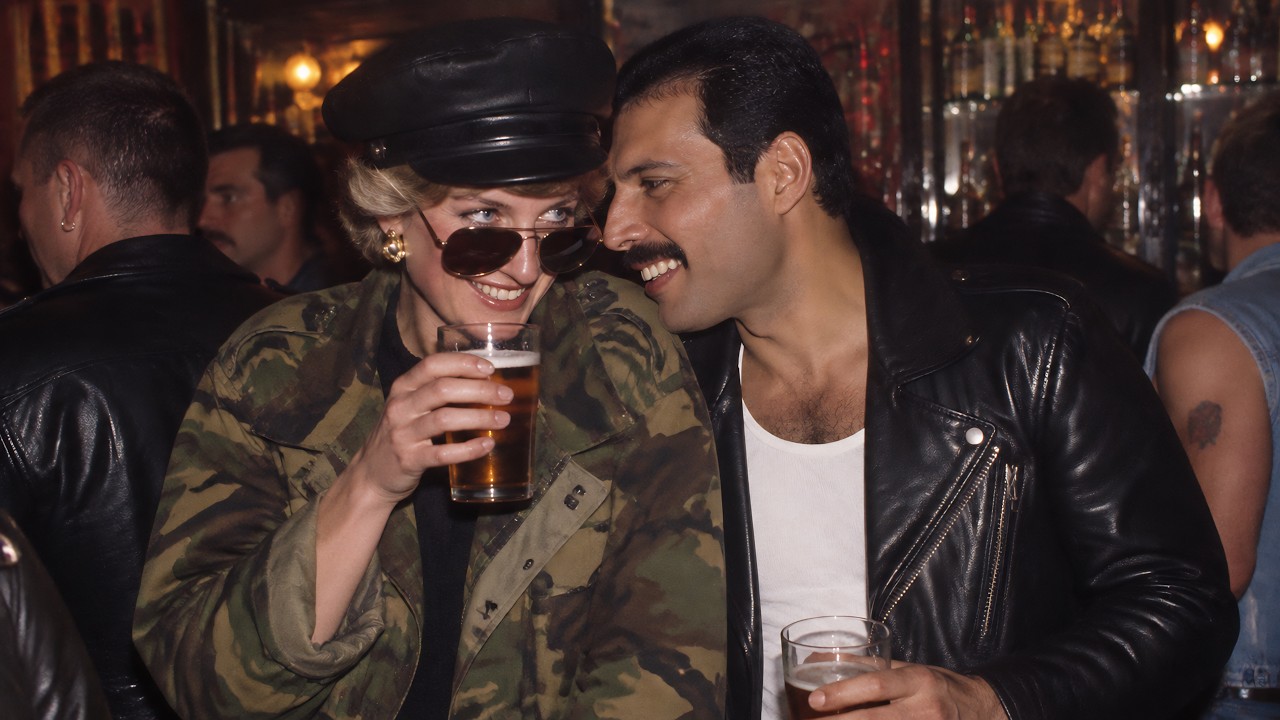
What followed, if it happened, was a costume. Rocos says they dressed her in a camouflage army jacket that belonged to Rocos’s brother, a leather cap, and dark aviator sunglasses with her famous hair tucked up out of sight.
By this account, she did exactly what she promised. The group walked into the Royal Vauxhall Tavern. People recognized Kenny Everett and Freddie Mercury. Nobody recognized the princess. She went to the bar and ordered. After about 20 minutes, they left.
The princess kept the outfit on in the cab back to Kensington Palace, and later she sent the clothes back folded with a note saying she had had a “fabulous time.”
It is a wonderful story. That is part of the problem. Peter Freestone was Freddie Mercury’s personal assistant. He has said plainly that Mercury had very little to do with Kenny Everett after 1980 and that he never actually met Princess Diana. In his view, the tale belongs with the other legends told about Mercury.
The building at least is real. The Royal Vauxhall Tavern was built between 1860 and 1862 and opened its doors in 1863. On the 8th of September 2015, it was listed by Historic England, which makes it a protected building in law. It was the first building in the country to be listed for its importance to lesbian, gay, bisexual, and transgender history.
On New Year’s Eve 1989, the Princess of Wales picked up a telephone at Sandringham and talked to a friend for a long time. The friend on the other end of the line was James Gilbey. He came from the Gilbey family and had known her since childhood. He was speaking that night from a car phone.
The timing matters. At the end of 1989, by the usual reckoning, the relationship with James Hewitt was still going on. The princess’s private life, in other words, was not one secret, but several, held by different people in different places.
He opened the transcript with a question. “And so, darling, what other lows today?” She told him. She had been at lunch and she had nearly cried. “I was very bad at lunch and I nearly started blubbing,” she said. “I just felt so sad and empty and thought, ‘Bloody hell, after all I’ve done for this family.’”
She talked about the Queen Mother. “It’s not hatred, it’s sort of pity and interest mixed in one,” she said. “Every time I look up, she’s looking at me.” She talked about the soap opera EastEnders. She talked about spiritualism. Gilbey called her darling again and again. He called her by a pet name, Squidgy or Squidge, over and over.
If the call had been made by anyone else in the country, it would have been forgotten by the morning. The only extraordinary thing about it was who she was. That and the fact that someone was listening.
Two people later claimed to have recorded this call. One was Cyril Reenan, a 70-year-old retired bank manager from Abingdon in Oxfordshire. His tape of the conversation was made on the 4th of January 1990, which by most accounts means he picked up a rebroadcast of a call that had already taken place days earlier. The other was Jane Norgrove, a 25-year-old woman from Oxfordshire.
Reenan at least did not like what he had. “I didn’t know what to do with it once I’d got it,” he said. “I was stuck with it and I was frightened of it.” He did not burn it. The tape ended up with The Sun, the tabloid newspaper.
There is a second tape that belongs beside this one. 13 days before her call, on the 18th of December 1989, another private conversation was recorded. It was between her husband and Camilla Parker Bowles. Two calls from the two halves of the same marriage, captured within a fortnight of each other.
For more than two years, a recording of the Princess of Wales lay in the hands of a newspaper that did not print a word of it. Through the rest of 1990 and all of 1991, she went on with her official life. She did not know that someone already held a piece of it.
Then, in the summer of 1992, everything changed. A book had been published in June that put the state of the Wales marriage on every front page. On the 23rd of August 1992, The Sun ran the story on its front page. It first called the scandal “Diana.” The rest of the press soon settled on another name taken from the pet name on the tape: Squidgygate.
The newspaper did not only print a transcript. It set up a premium rate telephone line so that readers could hear her voice for themselves. The cost was 36 pence a minute. About 60,000 people called it.
In 1993, a company called Audio Tell International examined the recording. It found something odd. There were short bursts of data on the tape, the kind of electronic pips that mobile phone networks used, but they appeared too fast and too loud. Its conclusion was that the tape might have been doctored and the call rebroadcast.
Two engineers named Nelson and Colucy went further. They argued that the recording could not have been made the way Reenan described by a scanner catching a mobile phone signal. They pointed to a 50 Hz hum on the tape, a sound typical of mains electricity rather than radio. They found frequencies higher than a scanner’s filters would allow. And they noted that the cell site base station that should have carried the call was not operating until the 3rd of March, 1990.
Their conclusion was that the data bursts were not genuine, but were added later to the tape to make what may have been a local telephone tap sound like a radio interception. If that analysis was right, then someone had tapped the line, recorded the call, and then rebroadcast it so that amateurs with scanners would pick it up and believe they had stumbled on it by chance.
Who would do that? Here, the record runs out and speculation begins. Some people pointed at the security services. Lord Rees-Mogg suggested that MI5 might have recorded royal calls while protecting the family against threats from the IRA. The home secretary, Kenneth Clarke, dismissed suggestions of MI5 or GCHQ involvement as wild. None of it has ever been proved.
Ken Wharfe, her protection officer, later said that an investigation had identified all those involved, but that he could not say more for legal reasons. Wharfe wrote that the tape lent credence to the princess’s belief that the establishment was out to destroy her.
The tapes that Colthurst carried home in his bicycle basket held a voice the public had never heard. This was the voice of a woman of 29 and 30 talking about her life to a machine in an empty room in the plain words she used with friends.
She talked about the engagement and the proposal. “So he said, ‘Will you marry me?’ And I laughed,” she remembered. She talked about the illness that had begun in the same months. The honeymoon was spent partly aboard the royal yacht Britannia and there, she said, it had been constant. “The bulimia was appalling, absolutely appalling. It was rife. It was four times a day on the yacht.”
She talked about fame. “The whole world were focusing on me,” she said. “Every day I was in the front page of the papers.” She talked about despair, about Camilla, and about the attempts she had made to harm herself.
Colthurst remembered something else about how she spoke when the questions reached those places. “When she got to the heavy issues,” he said, “there was a sense of release in her, of unburdening.”
There were also things she did not do. She did not go to a newspaper. She did not sell her story. She chose a single author, a single intermediary, and a single book.
Before publication, she wrote to Colthurst, “Obviously, we are preparing for the volcano to erupt.” She told him, “Thank you for your belief in me.” Volcano is her word, and it is exactly the right one.
On the 7th of June, 1992, The Sunday Times began to serialize a book under a headline about five suicide bids. The headline read, “Diana driven to five suicide bids by uncaring Charles.” Nine days later, on the 16th of June, the book itself was published. It was called Diana: Her True Story. Its publisher was Michael O’Mara Books and it ran to 224 pages.
The reaction was ferocious. Critics came, as Morton later put it, from all sectors of society. The Archbishop of Canterbury criticized it. So did members of parliament and newspaper editors. Some bookshops and supermarkets refused to stock it.
The chairman of the Press Complaints Commission, Lord McGregor, publicly condemned the press. In one wording of his attack, the papers were “dabbling their fingers in the stuff of other people’s souls.” McGregor had not come to his anger by himself. He had been assured by the palace that the princess had not cooperated with the book.
The assurance had come through one man. Sir Robert Fellowes was the Queen’s private secretary. He was also married to the princess’s elder sister, Lady Jane Spencer. They had wed on the 20th of April, 1978, at the Guards’ Chapel in London, and the little bridesmaid that day had been Diana.
So when he asked her a question, he was asking as the Queen’s most senior adviser and as her brother-in-law. The question was simple. Had she cooperated with Morton’s book? The answer was no.
By Morton’s telling, she looked Fellowes straight in the eye and told him a bold-faced lie. Fellowes, by the account of his obituary in The Telegraph, chose to believe the Princess of Wales when she assured him that she had not cooperated. He passed her denial to Lord McGregor.
She would keep the secret for the rest of her life. Morton kept it, too. Publicly, the line held that the book came from her friends and family.
What happened to Fellowes when the truth finally emerged belongs to a later chapter after her death. It is enough here to know that it did emerge and that when it did, according to his obituary, he offered to resign.
At 3 on the 9th of December 1992, John Major rose in the House of Commons with a statement from Buckingham Palace. “It is announced from Buckingham Palace that with regret, the Prince and Princess of Wales have decided to separate. Their Royal Highnesses have no plans to divorce and their constitutional positions are unaffected.”
Every phrase was doing a job. “No plans to divorce” because divorce raised the old shadow of 1936 when a king had given up his throne to marry a divorced woman. “Constitutional positions unaffected” because the monarchy needed the country to believe that the marriage could end without anything else changing.
In January 1993, the second tape from that December of 1989 surfaced. It was the recording of Charles and Camilla Parker Bowles made 13 days before her own call with Gilbey. The tape the press called Camillagate humiliated him.
And on the 29th of June 1994, he gave his own account. In a television documentary with the broadcaster Jonathan Dimbleby, he admitted that he had been unfaithful once it became clear, as he put it, that the marriage had irretrievably broken down.
She was now a separated woman living at Kensington Palace, still Princess of Wales, still mother of the future king. And even before the separation was announced, she had begun another set of secret recordings. This time, the man with the recorder was a voice coach named Peter Settelen. He had been hired to help her with public speaking.
Between September 1992 and December 1993, the sessions were filmed on video. On camera, she talked about her life and her marriage. She talked about the protection officer she had loved and lost. She talked about loneliness. “There’s just nobody to physically scream at,” she said. “Or someone to put their arms around me. Just listen when I cry.”
She also gave her account of something she said her husband had told her. In her telling, he said, “I refuse to be the only Prince of Wales who never had a mistress.”
On the 13th of January 1994, the telephone in Oliver Hoare’s London home rang at quarter to 9 in the morning and no one spoke. Four minutes later, it rang again. Five minutes after that, it rang a third time. In the afternoon, it rang again. In the evening, it rang twice more. Each time, by the account later reported, the caller said nothing at all.
Hoare was a dealer in Islamic art. In 1994 he was 48 years old, about 16 years older than the princess. He was a friend of Charles and of Camilla. At some point, he and the princess became close.
The calls by the reported count numbered about 300. At first, Hoare reportedly feared they were linked to terrorism because of his business in Middle Eastern art. The police were brought in and the police, according to the findings later leaked to the press, traced the calls.

They traced them by the published account to telephones inside Kensington Palace, to pay phones near the palace, to the princess’s own car phone, and to the home of her sister, Lady Sarah McCorquodale. In August 1994, the News of the World published the story.
Her response was immediate. She said no. She denied it flatly and with a joke. “I don’t even know how to use a parking meter,” she said, “let alone a phone box.” She produced her diary to show that on some of the dates in question, she had been away.
She had done this before. Two years earlier, she had looked her brother-in-law in the eye about the book. Now she looked the whole country in the eye about the calls. A year later, on Panorama, she would admit that she had in fact called over a period of six to nine months, though not, she insisted, in an obsessive manner.
On the 27th of August, 1995, by his own later account, a heart surgeon at the Royal Brompton Hospital met the Princess of Wales. It was a bank holiday Monday, the last of the summer. She had come to the hospital to visit a friend’s husband.
The friend was Una Toff, an Irish nurse who had been close to the princess for years. Her husband Joe was recovering from a triple heart bypass. The Royal Brompton in Chelsea was Britain’s leading center for heart and chest surgery. The doctor the princess met that day worked in the team of its most famous surgeon, Sir Magdi Yacoub.
His name was Hasnat Khan. He was born on the 1st of April 1958 in Jhelum in Pakistan. The eldest of four children. His father Rashid owned a glass factory and had studied at the London School of Economics. His mother Nahid was a traditional Pashtun matriarch.
Khan had qualified in medicine in 1984, worked in cardiology at Mayo Hospital in Lahore, trained further in Sydney from 1987 and come to London in 1991. By the summer of 1995, he was a registrar at the Royal Brompton under Yacoub. Colleagues remembered him as quiet with a dry sense of humor and entirely unimpressed by celebrity.
Look at the contrast with the men who had come before. The protection officer had been part of her household. The cavalry officer came from the regiment that guarded the sovereign. The art dealer was a friend of her husband’s. Khan belonged to a hospital.
She noticed him at once. According to the biographer Kate Snell, she turned to her friend and said, “Una, isn’t he drop-dead gorgeous?”
Over the following three weeks, by the accounts of those around her, she returned to the hospital almost every day, ostensibly to visit Joe Toff. To her healer, Simone Simmons, she spoke about him almost immediately. “I think I’ve met my Mr. Wonderful,” she said. Simmons recalled her describing his “dark brown velvet eyes that you could just sink into.”
About two weeks after they met, the two of them drove out of London together. The destination was Stratford-upon-Avon, where Khan’s uncle, Professor Jawad Saeed Khan, lived. Khan later described it in a few plain words. “We drove up there, drove back, and found this wonderful connection.” He said she was “very ordinary in many ways, a normal person with great warmth.”
According to the biographer Kate Snell, she said, “I’m no longer lonely. I know what love is now.”
When the Princess of Wales telephoned the Royal Brompton and asked for Hasnat Khan, the switchboard by several accounts heard another name. She left messages by several accounts as “Dr. Armani.” It was a small disguise, almost a joke, the name of a fashion house dressed up as a colleague. But it worked.
She went further. According to one account, she wore a black wig to slip into a jazz club with him. The club has never been securely named.
The real problem was the palace itself. If Khan was to come to her, he could not simply walk through the front door. The solution, according to her butler, Paul Burrell, was the boot of a car. Burrell later said that he drove Khan into Kensington Palace, hidden there, into the private world of apartments 8 and 9.
Khan himself said so years later in a sworn statement. “Kensington,” he said, “was the only place we could have any real privacy, as they could not get to us there.”
By the accounts of Burrell and of the writer Tina Brown, Khan sometimes came straight off long shifts and slept there. The staff were told not to disturb him. Tina Brown’s phrase for it was that Khan “virtually moved in.”
She went to him, too. He lived in a modest rented flat in Chelsea. By the accounts of Burrell and Simmons, she would go there late at night and leave before dawn. They described her doing his washing up and putting away his laundry, a princess delighted by the simple domestic chores of an ordinary life.
Late in November 1995, the Princess of Wales borrowed a photographer’s telephone outside a London hospital and called a Sunday newspaper. It was about 10 days after the most famous television interview of her life. Her face was on every front page, and now a photographer had caught her coming out of the Royal Brompton in the middle of the night.
The obvious question was why. Her answer was to get there first. She took the photographer’s mobile phone and called the News of the World. She spoke to its royal correspondent, and she gave him a story.
She went to the hospital, she said, to sit with patients. “I try to be there for them,” she told him. “I seem to draw strength from them. They all need someone. I hold their hands, talk to them, whatever helps.”
The paper ran it under a headline that would follow her for years: “My secret nights as an angel.”
It was a brilliant piece of misdirection. In a single phone call, she turned a potentially explosive photograph into a story about her compassion. The man she was really visiting, according to her biographers, was never named in it.
Was the story false? Not entirely. And that is what made it work. The record of her hospital visits in these years is real and well documented. At the Royal Brompton, an 8-year-old girl named Danielle Stevenson recovering from heart surgery was visited by the princess five times. A hospital spokeswoman said she came as often as three times a week. She gave the little girl the palace’s direct telephone number.
On the 23rd of April 1996 at Harefield Hospital west of London, she spent two hours in an operating theater in a blue surgical gown and cap watching Sir Magdi Yacoub operate on a 7-year-old boy named Anno Wambo from Cameroon. A Sky News crew filmed it for a documentary about a children’s heart charity called Chain of Hope. It was reported to be the sixth operation she had watched.
The reaction was harsh. The Sun suggested that if she was so interested, she should train as a nurse. The Daily Mirror’s banner asked, “Is Diana off her trolley?”
On the 31st of August 1995, a BBC reporter named Martin Bashir sat down with the Princess of Wales’s brother. Her brother was Earl Spencer, master of Althorp. Bashir was a reporter for Panorama, the BBC’s flagship current affairs program. He wanted something no journalist had ever had: an interview on camera with the princess herself.
What Bashir told Earl Spencer, according to the inquiry that examined it a quarter of a century later, was alarming. In August 1995, he said that Spencer was a target of the tabloids and that there were people in his own household selling information to the newspapers. He had, he claimed, evidence.
The evidence was forged. Bashir had asked a graphic designer named Matt Wiessler to mock up bank statements. The fake documents appeared to show payments to people close to the family. One set named Alan Waller, a former employee of the Spencer household. Another named Patrick Jephson, the princess’s own private secretary, and Richard Aylard.
The documents were designed to suggest that these men were being paid to spy, to leak, to betray. None of it was true. The statements were made up from start to finish.
At a second meeting on the 19th of September 1995, Spencer was told still more. He wrote down what Bashir said, 38 points of it. A long note of claims about the people around his sister. That note would survive, and it would matter enormously decades later.
That September, Earl Spencer introduced his sister to Martin Bashir. The man who led that inquiry, Lord Dyson, would put it plainly. “By showing Earl Spencer the fake Waller and Jephson and Aylard statements and informing him of their contents, Mr. Bashir deceived and induced him to arrange a meeting with Princess Diana.”
Patrick Jephson was her own private secretary, the man who ran her office and her diary. To suggest that he was being paid to betray her was to suggest that the person closest to her working life was a spy.
Years later, Hasnat Khan would say it plainly. Bashir, he said in 2021, had “filled her head with rubbish.” After meeting him, Khan said she became paranoid with talks of bugs and phone tapping.
On the 5th of November 1995, while Britain lit its bonfires, a BBC crew carried equipment into Kensington Palace under the cover of a new hi-fi system. The setting was her own sitting room. Four years earlier, a doctor’s tape recorder had sat there. Now it held the lights and cameras of the national broadcaster.
The crew came disguised as installers of a new sound system. The secrecy around it was extraordinary. The BBC’s own board of governors was kept unaware. So was Jim Moyer, the corporation’s royal liaison. The finished tape was kept under constant watch with security guards present during the editing.
The interview was broadcast with very little warning to the royal family. It went out on the 20th of November 1995. In Britain, nearly 23 million people watched. Worldwide, the estimate was some 200 million across about 100 countries.
She said there were “three of us in this marriage, so it was a bit crowded.” She spoke about depression after the birth of her first son and how it had led her to harm herself and to bulimia. She spoke about James Hewitt and confirmed in the words that would be quoted for decades that she had adored him, that she had been in love with him, and that he had let her down.
She admitted too that she had made the calls to Oliver Hoare over six to nine months, though not in what she called an obsessive manner. And she said that she would like to be “a queen of people’s hearts.”
Look at what this was. For four years, she had told her story in secret through intermediaries behind deniable methods. Now she told it herself with her own face on the national broadcaster. It was the opposite of the bicycle and the briefcase.
And yet the interview was itself built on secrets. It was recorded in secret, edited in secret, and broadcast with almost no warning. It also left one thing out completely. In none of the lines quoted from it since does she speak of the surgeon who by her butler’s account was then sleeping at her palace.
The palace’s response was swift. In December 1995, the Queen wrote to both her son and her daughter-in-law, urging an early divorce. On the 22nd of December 1995, the princess wrote a short note on Kensington Palace paper. In it, she said, “Martin Bashir did not show me any documents nor give me any information I was not previously aware of.” She also wrote that she had agreed to the interview without any undue pressure and had no regrets concerning the matter.
In 1996, an internal BBC inquiry led by Tony Hall cleared Bashir. Much later, Lord Dyson would reach a more careful judgment about her decision. It was his view that she would probably have agreed to be interviewed anyway, whatever Bashir had done.
In 1996, the butler of Kensington Palace walked into a Carmelite church in Kensington with a question no one had ever asked on behalf of a princess. Paul Burrell, by his own sworn evidence years later, had been sent on an errand. The princess wanted to know, he said, if it would be possible to arrange a private wedding.
A Christian princess and a Muslim surgeon. A woman still technically married, or soon to be divorced. Burrell took it to a priest named Father Anthony Parsons. Khan, by Burrell’s account, knew nothing of it.
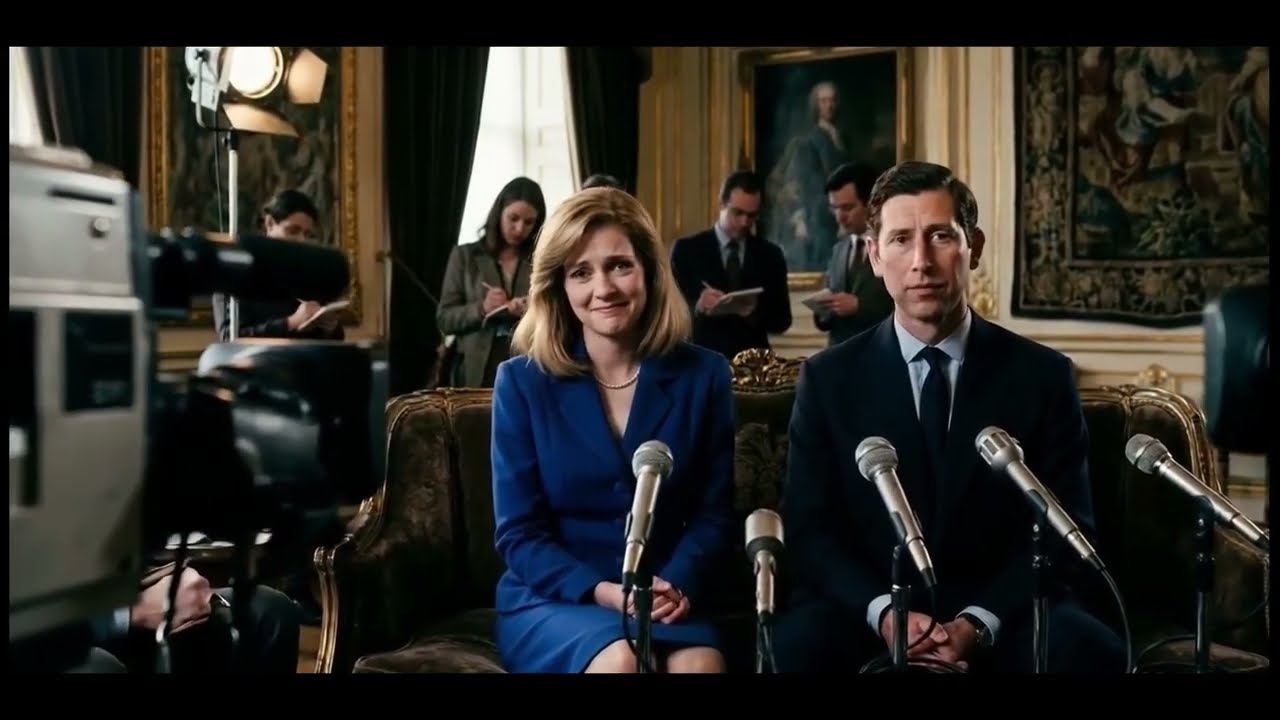
Burrell told the inquest more. She called Khan her “soulmate,” he said, and the one she had, he said, considered giving him rooms at Kensington Palace and a second home in Pakistan.
The secret had already cracked once. On the 26th of January, 1996, The Sunday Mirror ran a front-page headline, “Di’s her driver and a dishy doc.” It reported dinners at a Greek restaurant in Stratford-upon-Avon called the Greek Connection. One of them, the manager, Lazarus Sepharides, told the paper, had lasted four and a half hours over moussaka and strawberries. It was the first time the relationship was named in print.
Even so, the secret went on. She traveled to Pakistan the first time in February 1996 with Lady Annabel Goldsmith. In May 1996, she went again, staying with Jemima and Imran Khan. Imran was a distant cousin of Hasnat. During that visit, she went to the Khan family home in Model Town, Lahore, and took tea with his mother, Nahid, and the elderly women of the family.
Jemima Khan, whose house was the base for those visits, later wrote about it in Vanity Fair. The princess, she said, was “madly in love” with Hasnat Khan and wanted to marry him, even if that meant living in Pakistan. She also explained why it would never happen. “For a son to marry an English girl,” she wrote, “is every conservative Pashtun mother’s worst nightmare.”
Meanwhile, the formal end of her marriage arrived. The decree nisi came in July 1996 and the divorce was final on the 28th of August 1996. She kept the title Diana, Princess of Wales. She lost the style Her Royal Highness. The settlement was confidential, but the press reported a lump sum of about £17 million.
A year and a day after Khan said they had met, she was a single woman. But not a free one. She remained the mother of a future king. She remained the most photographed woman in the world.
His reasons when he finally gave them were simple and devastating. In a statement to police in 2004, later read to the inquest into her death, he said, “My main concern about us getting married, was that my life would be hell because of who she was.” He went on, “I knew I would not be able to live a normal life, and if we ever had children together, I would not be able to take them anywhere.”
In May 1997, she made her third trip to Pakistan. On the 18th of June, she met Mother Teresa in the Bronx for about 40 minutes. In the summer, after a holiday with the Al-Fayed family at Saint-Tropez, she ended it with Khan in two meetings. By his account, she told him there was no one else. “I was surprised when she said there was no one else,” he said later. He learned about Dodi Al-Fayed from the radio.
The new relationship was conducted in full view of the cameras, the opposite of the old one. In late August, aboard the Al-Fayed yacht Jonikal, a photographer named Mario Brenna caught the couple from a distance. The picture that became known as “the kiss” was reportedly sold to The Sunday Mirror for about $2 million.
On the last day of her life, a repossessed ring was bought for about $23,000, by evidence given at the inquest. Rosa Monckton testified that the princess had said any ring from Dodi would go on her right hand.
Her friends read the new relationship in a single way. Simone Simmons believed it was meant to make Khan jealous. Rosa Monckton, her close friend, told the inquest that Dodi was “a distraction from the hurt.”
In the early hours of the 31st of August 1997, she and Dodi Al-Fayed left the Ritz Hotel in Paris at about 20 minutes past midnight in a Mercedes driven by Henri Paul with a bodyguard, Trevor Rees-Jones, in the front. At about 23 minutes past midnight, the car struck the 13th pillar of the Pont de l’Alma tunnel. She was pronounced dead at the Pitié-Salpêtrière hospital at about 4 in the morning.
French investigators found that the driver’s blood alcohol was more than three times the French limit. In 2008, an inquest in London returned a verdict of unlawful killing caused by the driver’s negligence and the pursuing vehicles. It found no evidence of any plot.
She died with almost none of her secrets confirmed. The book was officially her friend’s book. The surgeon was a rumor in one Sunday newspaper. The interview had been freely given. Her denials still stood.
In October 1997, a few weeks after the funeral, Andrew Morton published a new edition with four extra words in its title. The funeral had been held at Westminster Abbey on the 6th of September. About 2,000 mourners filled the abbey. In Britain, 32.1 million people watched on television. Around the world, the audience was put at between two and two and a half billion. More than a million people lined the streets of London.
Among the mourners inside, in dark glasses, was Hasnat Khan. She was buried on the island in the lake at Althorp, the house her family had moved to when she was a girl.
Within weeks, the first of her secrets was out. Morton’s new edition was called Diana: Her True Story – In Her Own Words. Its title said what he had denied for five years. The princess had not merely allowed her friends to speak. She had been the source. The tapes were hers. The voice was hers.
For one man, the revelation was not a matter of literary debate. Sir Robert Fellowes had told the chairman of the Press Complaints Commission in 1992 that she had not cooperated. He had done so on her word. Now her word was publicly shown to have been false. According to his obituary, when the truth came out, he was mortified and felt duty bound to offer his resignation to the Queen. The Queen turned it down flat. He stayed in his post until February 1999, and he died in 2024.
Other keepers began to speak. In 2001, the biographer Kate Snell published Diana: Her Last Love, an account of the relationship with Hasnat Khan. The surgeon, who had been a single rumor in one Sunday newspaper in 1996, now had a book written about him. Khan himself said nothing.
Her healer, Simone Simmons, published her own account, Diana: The Last Word, in 2005, written with Ingrid Seward. It was Simmons who had heard about Mr. Wonderful in the first weeks of the affair.
Paul Burrell’s turn came in a courtroom. In 2002, he was tried at the Old Bailey on charges of stealing her possessions. In November of that year, he was acquitted. The next year, he published a memoir, A Royal Duty. In it, he revealed some of what he had kept for her, including the letter she had written to him in October 1996, describing her fear of an accident in her car. He also told of the errand to the priest and of the man in the boot of the car.
James Hewitt’s turn came the same winter. In January 2003, he tried to sell 64 of her letters. The reported asking price was £10 million.
Notice too who did not speak. Hasnat Khan said nothing. The men who had loved her most or helped her most tended to keep the deepest silence.
In 2004, American television viewers heard the Princess of Wales describe her own proposal seven years after her death. The network was NBC. It had obtained clips from the tapes Colthurst had carried to Morton in 1991, and it broadcast them. “So he said, ‘Will you marry me?’ And I laughed.”
The same year, the same network broadcast extracts from the other secret recordings, the videotapes she had made with her voice coach, Peter Settelen. The program was called Diana Revealed. Britain did not see them for another 13 years.
On the 24th of September 2004, Hasnat Khan gave a statement to the police inquiry into her death. He had kept silent for seven years. The inquiry, known as Operation Paget and led by Lord Stevens, interviewed him once.
That moment came at the inquest in London, which opened in 2007 and heard evidence into the spring of 2008. On the 3rd of March 2008, Khan’s statement was read to the court. The world heard for the first time in his own words why he would not marry her. His life, he said, would be hell because of who she was. He could never have taken their children anywhere.
He refused even then to say anything that might seem to judge her. “Since she is not here,” he said, “it would be very unfair to make a comment about her.” And he explained why he had kept the secret so long. “I’m loyal to her, not because she was a celebrity, but because I’m loyal to all my friends.”
On the 7th of April 2008, the inquest returned its verdict. Unlawful killing caused by the negligence of the driver and the pursuing vehicles. There was no plot.
On Sunday the 6th of August 2017, Channel 4 broadcast the Settelen tapes in Britain under the title Diana: In Her Own Words. Some of her friends had opposed it. It drew an average of three and a half million viewers, the channel’s highest rating of the year. British audiences heard her say at last, “There’s just nobody to physically scream at, or someone to put their arms around me, just listen when I cry.”
That same summer, Morton published a 20th anniversary edition of his book with still more of the original transcripts. Colthurst spoke too in later interviews about the bicycle, the briefcase, the microphone.
On the 20th of May 2021, the BBC published a report it had commissioned into the most famous interview it had ever broadcast. The inquiry had been set up on the 18th of November, 2020, and placed in the hands of Lord Dyson. His report was dated the 14th of May, 2021. It was published six days later.
Martin Bashir, Dyson found, had acted deceitfully. He had commissioned fake bank statements and shown them to Earl Spencer and he had used them to win access to the princess. It was, in the report’s words, a serious breach of the BBC’s producer guidelines.
Of the inquiry led by Tony Hall in 1996 which had cleared Bashir, Dyson was scathing. It was, he wrote, “woefully ineffective.” The BBC’s director general, Tim Davie, did not argue. “The BBC accepts Lord Dyson’s findings in full,” he said. “We can make a full and unconditional apology.”
The money that followed can be counted. In March 2022, Patrick Jephson, her private secretary, received substantial damages reported at about £100,000, which he gave to Tŷ Hafan, a Welsh hospice for children. In July 2022, Tiggy Legge-Bourke received substantial damages too, reported at about £200,000, for baseless allegations. In September 2022, Alan Waller received a settlement reported at £60,000.
That same July, Tim Davie announced that the BBC would never show the interview again and would never license it to any other broadcaster.
Prince William said that the BBC’s failures had contributed to his mother’s “fear, paranoia, and isolation.” Prince Harry spoke about a wider culture of the media and the ripple effect that he linked to her death. And Hasnat Khan, breaking his silence again that January, said that Bashir had “filled her head with rubbish” and that after meeting him she had become paranoid with talk of bugs and phone tapping.
Lay the secrets side by side, from the bodyguard to the bank statements, and a pattern appears that neither she nor the palace ever admitted. The public story of the Princess of Wales is that she was watched. All of that is true. The tapes prove it. The forged statements prove it.
But the private record shows something the public story left out. She was also the keeper of secrets, and a remarkably skilled one. She ran a love affair through a false name and the boot of a car. She dictated a book and denied it to her own brother-in-law. She turned a midnight visit to her lover’s hospital into a story about holding the hands of the dying.
So who deceived whom? She deceived the palace about the book, the press about the calls, the world about the surgeon. The palace deceived the public about the marriage for a decade. Her husband lived a second life of his own. A reporter deceived her brother and through him her. Strangers with scanners and newspapers with premium telephone lines took her private voice and sold it.
Nearly everyone in this story kept something from someone. She was simply the one whose secrets were in the end all published.
What did the double life give her? Perhaps the only privacy she ever had. A woman whose face was on every front page could not have a private life in the ordinary way. So she built one in the gaps: in a bicycle basket, at a hospital switchboard, behind a borrowed pair of sunglasses.
The secrets were not only deceptions. They were the walls of the only room she ever owned.
Look at the keepers once more. A doctor on a bicycle. A butler at a back door. A voice coach with a video camera. A healer who heard about Mr. Wonderful. A brother who believed a reporter. A courtier who believed his sister-in-law. Each held a piece of her life, and almost none of them held the whole of it. That was how she wanted it. A secret divided among many keepers is a secret no single keeper can give away.
Long after her death, James Colthurst described what it had been like to sit with her while she recorded the first of the tapes. When she reached the heaviest subjects, he said, the suicide attempts, Camilla and her bulimia, there was an unmistakable sense of release, of unburdening.
It had all begun with a friend pedalling up to the palace with a tape recorder hidden in his basket and a woman who could not speak freely anywhere else clipping a microphone to herself and starting to tell the truth. It took 24 years after her death for all of it to come out. It began with a friend, a bicycle, and a secret she kept until the day she died.