The most documented killer in the history of the American frontier killed his first man at 15 and his last at 42, and he died from a bullet he never saw coming. John Wesley Hardin sits at the top of any list built from verified records, not legend. The confirmed count of his victims stands between 23 and 27, a number no other gunfighter of the era comes close to matching. Hardin was born in 1853 in Bonham, Texas, the son of a Methodist preacher.
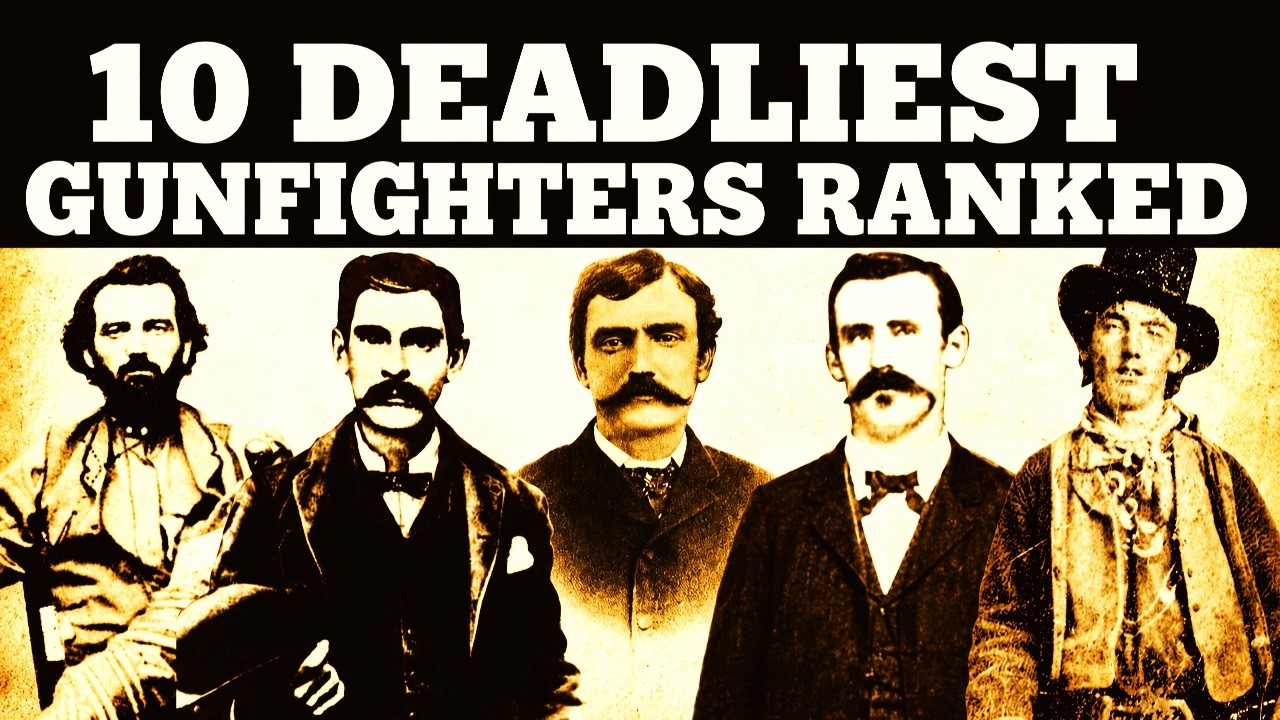
He killed his first man at 15, a former slave named Mage, during a wrestling match he was losing. He settled the argument with a pistol. He then killed three Union soldiers who came to arrest him for the first killing. He was not yet 16 years old and had already killed four men.
The pattern never changed. He did not escalate to violence; he arrived there. The intermediate steps other men went through, the argument, the threat, the warning, did not appear to exist in his process. A situation requiring violence produced violence.
The calculation was that fast and that complete. In August 1871, Hardin was 18 years old and already had six kills behind him when he shot a man through the wall of a hotel room in Abilene, Kansas. The victim was snoring loudly enough to keep Hardin awake. Hardin fired several shots through the wall into the adjacent room, climbed out his window in his underwear, crossed the roof, hid in a haystack until dawn, stole a horse, and left town.
He killed men in gunfights, in saloons, from hotel windows, on cattle drives, during range wars, in jail, and throughout Texas and Kansas. In 1874, he killed Sheriff Charlie Webb in Comanche, Texas, in a face-to-face gunfight. Webb drew first and still lost. Hardin’s bullet struck Webb while Webb’s own shot was still in the air.
Texas Rangers spent three years pursuing him after that. They finally caught him on a train in Florida in 1877. Ranger John Armstrong came up behind him and clubbed him unconscious before he could draw. Even then, taken completely by surprise, the Rangers took no chances on a fair fight.
Hardin served 16 years in prison. He studied law while incarcerated in Huntsville with the same focused intelligence he applied to everything else. He passed the Texas bar exam in 1894. A man who had killed more than 20 people was certified to practice law in the state of Texas.
He moved to El Paso, where he drank, gambled, and practiced law badly. He became a smaller version of what he had been, still dangerous, still capable, but fraying at the edges. John Selman found him at the Acme Saloon on August 19, 1895. Selman was himself a veteran of frontier violence, a killer and a lawman.
He walked in behind Hardin while Hardin was shaking dice at the bar, shot him through the back of the head, and fired three more times into the body on the floor. Hardin fell face forward. He never saw it coming. The man who had killed 23 to 27 men in face-to-face confrontations across four decades died exactly the way Wild Bill Hickok died, shot from behind by a man who understood that a fair fight was not a fight he could win.
Hardin’s autobiography was published the year he died. He listed his kills by name where he knew them, by description where he did not, with the methodical precision of a man who kept records and considered accuracy important. The list contained 42 names. The conservative confirmed count is 23.
The fastest gun in the West was killed from behind while shaking dice. It was the only way anyone was ever going to kill John Wesley Hardin, and the man who finally did it knew that before he fired. The rest of the list behind Hardin includes a wide range of documented figures, from concentrated killers to lawmen who never sought a gunfight. Dallas Stoudenmire arrived in El Paso, Texas, in April 1881 to take over as town marshal in a border town so lawless that three previous marshals had stopped showing up.
He was 6’4″ and wore two pistols butt forward in the cross-draw style, which allowed a faster draw from a standing start than any conventional rig. Three days into his tenure, a dispute at the Acme Saloon spilled into the street and became a gunfight that lasted five seconds. Four men died, three of them shot by Stoudenmire. One was an innocent Mexican bystander caught between the lines.
Within the year he killed two more men. He died in 1882, shot three times in a gunfight with the Manning brothers. He went down with his pistol still firing, found with his teeth sunk into one of his killers’ hands. King Fisher of Texas claimed more than 30 kills.
The documented count is seven. He wore a tiger-skin vest, silver-studded chaps, and a sombrero with a snakeskin hatband. He was 23 years old and had already been tried for murder four times and acquitted four times. He put a sign on the road to his ranch that read, “This is King Fisher’s road.
Take the other one. ” People took the other one. He killed his first man at 17 and continued along the Texas-Mexico border in raids that produced both horses and bodies. By 1884 he had begun to settle, with a ranch, a wife, children, and a deputy sheriff position in Uvalde County.
On March 11, 1884, he went to a vaudeville theater in San Antonio with his friend Ben Thompson. Both were ambushed by multiple gunmen firing 13 shots. Fisher was 29. Ben Thompson was assessed by contemporaries as the most technically skilled gunfighter who ever lived in Texas.
Bat Masterson, who romanticized nothing, said Thompson was the most dangerous man with a pistol he had ever encountered. Born in England in 1843, he fought for the Confederacy, then in Mexico, gambled professionally, and managed saloons. He was appointed chief of police of Austin in 1880, not because he was conventionally qualified, but because Austin calculated that having the most dangerous man in Texas on their side was worth more than any alternative. He died alongside King Fisher in San Antonio in 1884.
The fact that his killers chose ambush rather than confrontation is the most accurate testimony to his reputation the record contains. Bass Reeves was born into slavery in 1838. He escaped during the Civil War, ran into Indian Territory, and spent years living among the Creek and Cherokee nations, learning their languages. In 1875, Judge Isaac Parker recruited him as a Deputy US Marshal because he knew the territory and the people in it better than any white officer Parker could hire.
Over a 32-year career, Reeves arrested more than 3,000 criminals in territory so vast and lawless that most law enforcement declined to enter it. He killed 14 men during those 3,000 arrests. The ratio shows the patience and strategy of a professional who preferred bringing men in alive. He was never convicted of a crime and was never shot by a man he was pursuing.
His hat was shot off twice. He died in 1910 as a Muskogee city patrolman at age 72, still working, still arresting people on a beat where crime reportedly ceased because of whose beat it was. Clay Allison of New Mexico and Texas was different from the others. The rest were professionals, controlled and purposeful.
Allison was unpredictable in the terrifying way of a man who genuinely enjoyed what he did. He once beheaded a convicted killer, stuck the head on a pole, rode 15 miles to a saloon, and deposited it on the bar before ordering a drink. He stripped naked after gunfights and danced in the street. He pulled his own tooth with pliers, decided the dentist was doing it wrong, and shot the man in the mouth, not fatally but pointedly.
He fought in the Civil War and returned with what modern medicine would identify as traumatic brain injury from a head wound that left him with seizures and volcanic unpredictability. His kills were documented in real gunfights, not ambushes. He was tried for murder multiple times, acquitted every time. He died in 1887, not in a gunfight, but when he fell off a wagon and a wheel ran over his head.
His tombstone, written before the accident, reads, “He never killed a man that did not need killing. ”
Wild Bill Hickok claimed to have killed over 100 men. The documented number is between 7 and 11. The gap itself was his weapon.
The reputation was the gun, and he understood this with a clarity that made him one of the most tactically sophisticated gunfighters in frontier history. Born James Butler Hickok in 1837, he killed Davis Tutt in Springfield, Missouri, in 1865, in one of the only genuine stand-up quick-draw duels in documented frontier history. Tutt drew first. Hickok killed him from 75 yards, one shot, one bullet.
He carried his revolvers butt forward in a red sash. He always sat with his back to the wall. He was going blind by 1876. The eyes that had aimed those revolvers at 75 yards were failing.
He came to Deadwood anyway and sat in a poker game on August 2, 1876, in a seat with his back exposed, something he never did, because someone else had taken the wall seat and he was too tired to insist. Jack McCall walked in behind him and shot him in the back of the head at contact range. The cards in his hand, aces and eights, have been called the dead man’s hand ever since. Doc Holliday was already dying when he picked up a gun.
That fact changes everything about his legend. He left Georgia in 1873 with a tuberculosis diagnosis and a one-way ticket west. Everything that followed, the gambling, the drinking, the OK Corral, happened inside the parentheses of a terminal illness that should have killed him years before it finally did. He earned a degree in dentistry in 1872.
At 20 he was already coughing blood. He opened a practice in Dallas and discovered two things simultaneously: patients did not want a consumptive dentist, and he had a remarkable talent for cards. The practice closed. The gambling started.
The confirmed kill count that holds up under historical scrutiny is between one and three. What he had instead was a reputation and the specific fearless quality of a dying man who has genuinely stopped caring whether he survives the next 30 seconds. Masterson said Holliday was the most dangerous man he knew, not because of the kills, but because of the indifference. You cannot intimidate a man who wakes up every morning reconciled to his own death.
On October 26, 1881, in 30 seconds of gunfire in Tombstone, Holliday stood beside the Earp brothers and killed Tom McLaury with a shotgun and possibly Frank McLaury with a pistol. He died in bed in Glenwood Springs, Colorado, on November 8, 1887, at age 36. He looked down at his bare feet and said his last words: “This is funny. ” The most feared man in Tombstone was killed by tuberculosis in a bed with clean sheets and his boots off.
Kid Curry, born Harvey Logan, received from William Pinkerton the verdict that he had not one single redeeming feature. Pinkerton had tracked Jesse James and chased Butch Cassidy across two continents. He said of Curry that he was “the only criminal I know of who does not have one single good point. Not one.
A blank where the human qualities should be, filled in entirely with violence. ”
Logan was born in Iowa in 1867. After his brother Johnny was killed in a land dispute, something contained in Logan became permanently uncontained. He killed Pike Landusky in a saloon fight in 1894 when Landusky’s gun jammed and Logan’s didn’t.
He joined the Wild Bunch, an organization remarkably non-lethal in its methods. Fast horses, good planning, clean getaways. And then there was Kid Curry. He killed Sheriff Joe Hazen after the Wilcox train robbery, two deputies in Arizona, Sheriff Jesse Tyler in Utah.
He killed men during robberies, escapes, pursuits, personal disputes, and a campaign of revenge against men connected to his brothers’ deaths. He escaped from a Tennessee prison in 1903 by fashioning a wire hook from a broom, retrieving a shoebox containing two pistols, putting the wire around a guard’s neck, and walking out. He was caught after a train robbery in 1904, wounded badly enough that running was no longer viable. He said, “I’m hit.
I will put an end to it all,” and shot himself in the head. He is buried one cemetery over from Doc Holliday. Billy the Kid was 21 years old when Pat Garrett shot him in the dark. The documented number of his kills is between four and nine, not the legendary 21.
Born Henry McCarty in New York City in 1859 or 1860, he moved west with his widowed Irish immigrant mother, lost her to tuberculosis at 15, and was left entirely alone in a world not organized for the survival of teenage boys. He was small, 5’7″, 130 pounds, with unusually light and calm eyes. By multiple contemporary accounts he was likable, smiled easily, and laughed genuinely. He was not sullen or cold-eyed.
He was just very fast, and the world he lived in kept presenting him with situations where fast was what was needed. He took part in the Lincoln County War, a commercial dispute between two rival business factions that hired private armies and shot each other for 18 months. He picked the losing side, from loyalty, the quality the frontier punished most efficiently. His second escape from custody in April 1881 was his most documented moment of lethal violence.
Shackled and under guard, he obtained a pistol, shot a guard on the staircase, pulled a shotgun from an armory, and shot Deputy Bob Ollinger from a second-floor window as Ollinger came running across the street below. He said “Hello, Bob” before he fired. Garrett found him on the night of July 14, 1881, in a dark bedroom at Pete Maxwell’s ranch. The Kid walked in barefoot, holding a knife, having come for meat.
He sensed someone in the dark and asked, “Quien es? Who’s there? ” Garrett fired twice. The first shot killed him.
His tombstone reads “Pals,” the three men buried together, the Kid, Tom O’Folliard, and Charlie Bowdre, all dead within months of each other. He died in the dark, asking who was there. He never found out.