In the winter of 1869, a family of six drove a wagon into a hollow in the Missouri Ozarks, seeking a fresh start on cheap land. Josiah Redfern, a blacksmith from Boone County, had filed a homestead claim on forty acres in Neland Hollow, Burr County, hoping to escape the grief of his brother Enoch’s death two years earlier. Enoch had fallen from a barn roof onto frozen ground, and Josiah, standing below, had watched him die in silence. The hollow seemed like a place to begin again.
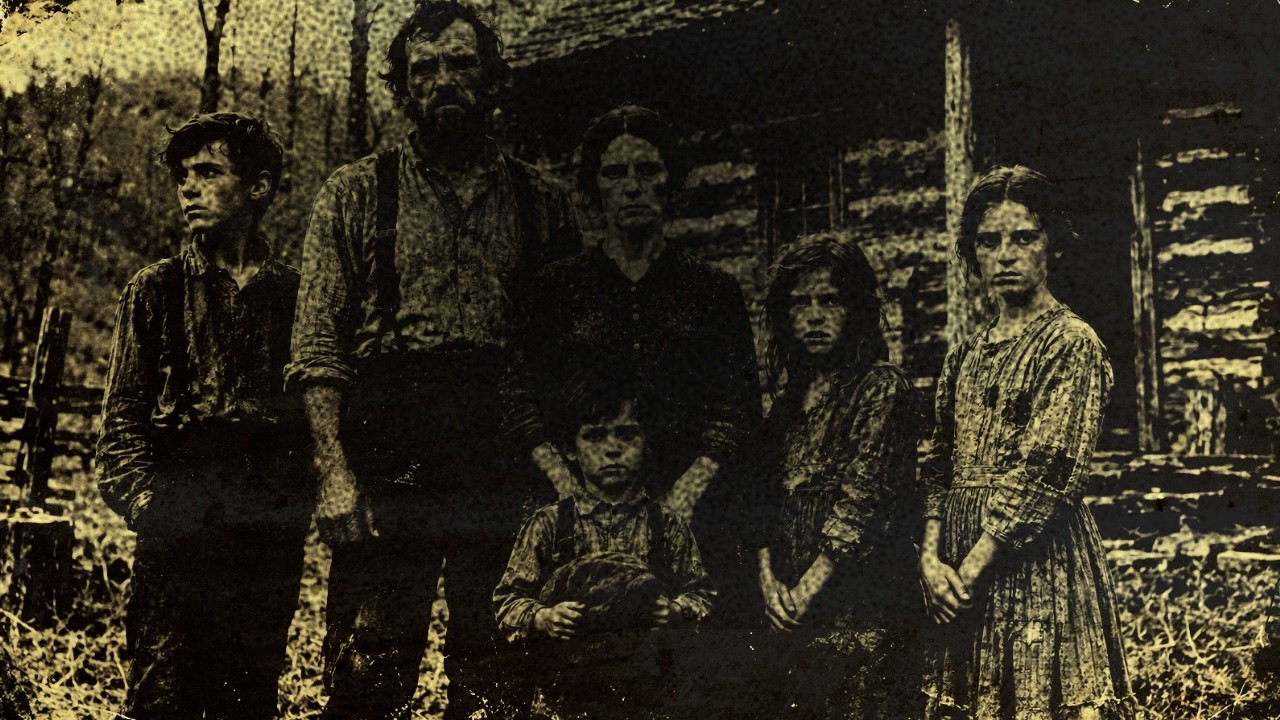
But the land office records held a warning Josiah did not understand. Next to the name of the hollow in the survey book was a strange symbol: a small circle with a vertical line through it. The same symbol appeared in deeds and tax rolls for sixty years, unexplained. When Josiah asked the county recorder for directions, the man simply said, “If it asks you anything, do not answer.
” Josiah thought it was a joke. His wife, Constance, did not laugh. The cabin that awaited them had been built in 1841 by a man named Hosea Neland, who had vanished from the records in 1850 without a sale, a death entry, or a word. Inside was a standing desk, cold to the touch, and a clearing where the grass grew unnaturally even.
The family of six settled in on the 28th of March, 1869. That night, as the hollow fell into a silence that felt deliberate, a voice came from outside. It asked, “Is anyone in there? ”
Constance, remembering the recorder’s warning, did not answer.
The voice asked twice more, then fell quiet. At midnight it returned with new questions: “Are you cold? I could help with the fire. ” “Are the children asleep?
” It knew things it should not have known. It called the children by name, though it had never seen them. It knew that Ransom slept with his left hand in a fist. It knew that Sila, the nine-year-old, was missing a tooth.
It knew the names of the family in the wrong order, spoken backward as though reading from a memorized list. When a supply man named Arville Shanks came to the edge of the hollow, he told Josiah three things: bar the door at sundown, leave no opening bigger than a thumb, and never answer any question after dark, no matter who it sounds like. His father, decades earlier, had gone into the hollow once and heard two questions: “Are you alone? ” and “How long can you stay?
” He never went back. Shanks said the hollow asked like a doctor, one question at a time, each building on the last. Constance alone bore the weight of the nightly questions. She did not tell Josiah, knowing he would answer to any voice.
He was a man who responded to questions the way a bell responds to a hammer. Instead, she sat in the chair each night, holding silence as her only weapon, while hour after hour the voice worked the walls. Each unanswered question seemed to teach it something new. Within weeks, it was speaking in the voice of Enoch, Josiah’s dead brother, calling out “Brother Joe” in the exact cadence of the man in the ground.
The questions escalated through the spring and summer. By June, the voice was returning Constance’s own words back to her through the walls. By August, it used the voice of a lost child, asking if there was a mother inside. By September, it was entering the children’s dreams, learning secrets they had never spoken aloud.
Piety, who had never said her preferred name, heard it called to her from the window. In October, the voice addressed Ransom, who was five, in his sleep. The boy sat up, eyes closed, and said yes. The word was not enough to open the door, but Constance realized the mechanism required a waking, present answer.
The sleeping yes was a reflex, not a choice, and it left something behind: a connection. By December, the voice spoke in Ransom’s voice from outside the cabin while Ransom lay asleep inside, his right hand curled in a fist, a hand that never curled. On the thirteenth of December, Constance used the one weapon she had been given by an old woman at the bridge, the question that could stop the mechanism for a single breath. She said, “Who are you?
” The voice stopped. Ransom’s hand uncurled and returned to its proper form, and the hollow fell silent for a time. The turning point came on the fifteenth of January, 1870. The cold was severe enough that the family had to keep the chimney open, and the voice came down through it, inside the cabin at last.
It spoke in a chord of every voice it had learned: Enoch, the lost child, Ransom, Constance herself. It asked her to name her children in order, to call the roll as she did every morning, and to hear them answer. It said that if she did this, it would leave them forever. Constance understood the trap.
The voice could say the names backward, but it could not say them in the true order, because that order belonged to the mother alone. It could not force its way in. It needed the roll call, the mother’s voice and the child’s answering here, to open the final door. She refused.
She asked again, “Who are you? ” And in the one breath of silence that followed, Ransom sat up, awake, and said, “Here. ” But the word that came out of his mouth was in the voice of Enoch Redfern, and the answer belonged not to Constance but to the hollow. She held him, saying his name over and over until his own voice returned.
The next morning, she told her husband they were leaving. They walked out of the hollow carrying what they could, taking Theta Neland’s ledger, a book found hidden in the wall that recorded six years of questions and answers in two columns: asked and answered. The Neland woman had held for three hundred sixty questions before the silence broke. Then fifty-two answers in a row, and silence of a different kind.
The family never returned. Josiah Redfern never spoke after dark for the rest of his life, forty-one years of silence until the night he died, when he opened his mouth and said his brother’s name. Constance lived until 1914, and on her deathbed she called the roll one last time in the morning light, in the correct order, and then closed her eyes. Sila never married and never spoke after sundown, known in her town as an eccentric.
Piety changed her name and erased the one the voice had stolen from her dreams. Ransom, the child who had said yes in his sleep, worked as a clerk keeping ledgers for the rest of his life. When he died on his birthday in 1931, his right hand curled as he spoke in a voice that was not his own, asking to be let in. He answered with a single word: no.
Then the hand uncurled, and he died. The hollow is still there. A surveyor in 1972 found the cabin with the cold desk and the spring that never rippled, and he wrote that the hollow felt occupied, patient, like being waited for. A hiker in 1984 heard a voice past the first bend ask if she was looking for someone.
She walked backward out of the hollow and never returned. The asking, by all accounts, has not stopped. The mechanism and the questions continue, patient and patient, waiting for the next family to answer.