In the summer of 1980, nineteen-year-old Tim Hacker and his girlfriend Kelly Drew were the kind of couple everyone expected to marry. Tim was a young farmer from Hebron, Wisconsin, who drove a tractor he had nicknamed “The Lonely Loser,” a melancholy joke born of the rural Midwest. Kelly had just finished beauty school in Fort Atkinson. They had been together since high school, and their families lived only a few miles apart.
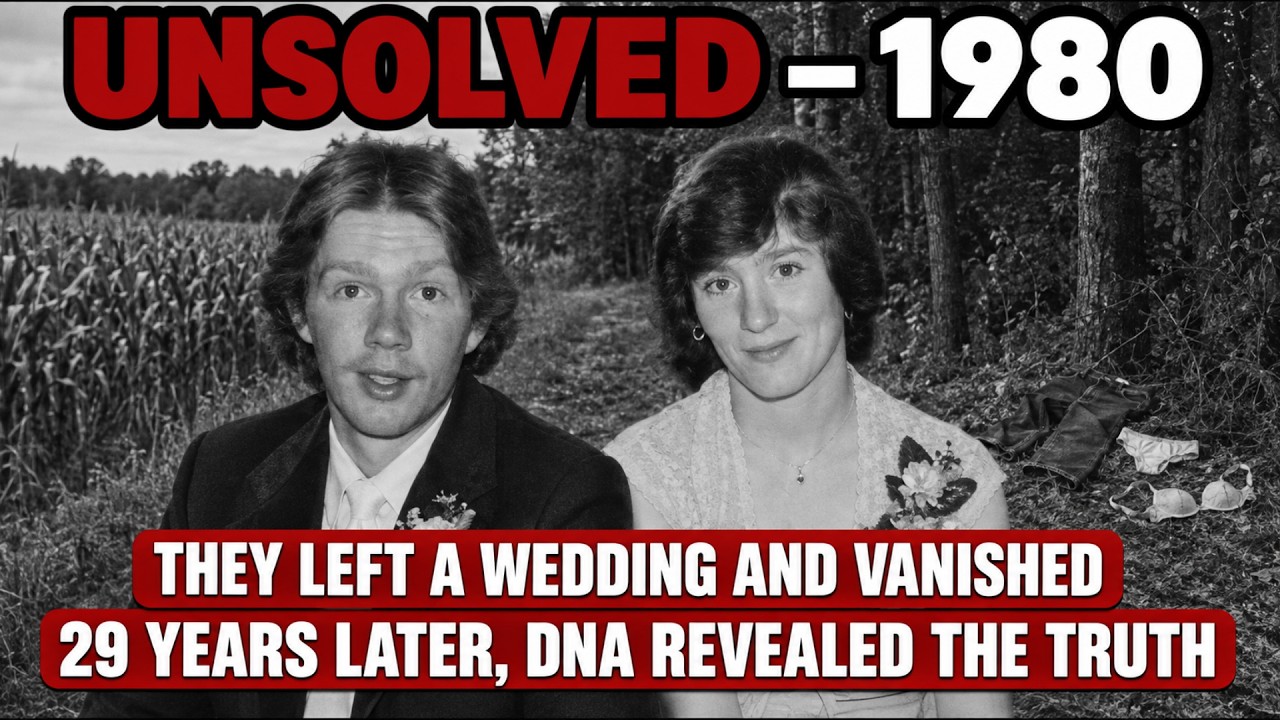
Their future seemed as predictable as the crop cycles that governed their small farming community. On the night of August 9, 1980, they drove Tim’s brown Oldsmobile to a friend’s wedding reception at Concord House, a wooden dance hall and campground in the rural town of Concord, about forty miles west of Milwaukee. It was a place where the community gathered for weddings and weekend dances, surrounded by pasture, cornfields, and dark country roads. The plan was simple: attend the reception, then meet friends at Fort Fest, a local fair in Fort Atkinson.
They were seen leaving Concord House around 11:00 p. m. They never arrived at the fair. They never came home.
The next morning, Tim’s father, David Hacker, found the Oldsmobile still in the parking lot, locked, with Tim’s coat, checkbook, wallet, and sixty-seven dollars inside. There were no signs of a struggle and no witnesses. Two people had simply vanished. Five days later, police found Kelly’s trousers, underwear, and bra torn and scattered along a road three miles from Concord House.
The discovery turned a missing persons case into a tragedy. Jefferson County launched one of the largest search operations in Wisconsin history, involving volunteers, state police, search and rescue teams, and tracking dogs. For seventy-two days they combed cornfields, forests, riverbanks, and abandoned barns, without finding a trace of the couple. On October 19, 1980, two squirrel hunters from Milwaukee were walking along the edge of a forest next to a cornfield about eight miles from Concord House when they found Kelly’s body.
The next day, searchers found Tim’s body in the same patch of woods. The remains were badly decomposed after more than seventy days in the open, but the medical examiner could still read what had happened. Kelly had been bound before her death, and the cause of death was strangulation. Tim had been stabbed.
The killer had used a different method on each victim, which suggested a deliberate, controlled violence rather than a crime of impulse. A semen sample was found on Kelly’s trousers, adding a sexual motive to the picture. The distance from Concord House to the site where the bodies were found indicated the killer had transported them by car. Tim and Kelly were buried side by side under a shared headstone shaped like two intertwined hearts.
Beneath their names and dates, the families had engraved the words “Kidnapped” and “Murdered. ” It was meant as a permanent accusation, a reminder that someone had done this and had not yet paid. The police had a suspect: Edward W. Edwards, the maintenance man at Concord House and the adjacent campground.
He was not a guest at the wedding but a hired worker who knew the property, the parking lot, the exits, and the dark roads around it. Witnesses remembered one detail from the weekend of the disappearances: Edwards had a bloody nose. When questioned, he said he had been injured while deer hunting, but Wisconsin deer season did not begin until September. Police interviewed him, but in 1980 DNA technology did not exist in the criminal justice system.
The semen sample could not be matched to anyone. In September 1980, just weeks after his first interview, Edwards and his family left Wisconsin without notice and without a forwarding address. The case went cold. What police did not know at the time was that Edwards had killed before and knew how to disappear.
Born in 1933 in Akron, Ohio, he had grown up in an orphanage where, he later wrote, he was abused by nuns. He went from the orphanage to a reform school, then to the United States Marine Corps, from which he was discharged dishonorably. He robbed gas stations across several states in the 1950s and early 1960s, often without disguising his face, telling reporters later that he had wanted the attention. He escaped from prison repeatedly.
In 1961, he was placed on the FBI’s Ten Most Wanted list. Captured in Atlanta in January 1962, he was sentenced to sixteen years in federal prison. Then came what seemed to be a remarkable turnaround. Edwards claimed a kind prison guard had changed his life.
He participated in vocational training, expressed remorse, and was released on parole in 1967. He remarried, had children, and became a motivational speaker, touring the country talking about rehabilitation. In 1972, he published an autobiography titled Metamorphosis of a Criminal, and appeared on national television programs such as To Tell the Truth and What’s My Line, where celebrity panels tried to guess which contestant was the reformed former fugitive. America wanted to believe in redemption, and Edwards gave audiences exactly what they wanted to hear.
But he had not changed. In 1977, three years before Tim and Kelly were killed, a young couple, twenty-one-year-old William “Billy” Lavaco and nineteen-year-old Judith Straub, were murdered in a suburb of Akron, Ohio. The case went cold. Edwards was not linked to it at the time.
His family lived a nomadic existence, moving at least once a year, often in the middle of the night with no explanation. His daughter later recalled that he beat his wife, punched her in the stomach while she was pregnant, broke her jaw, and threw his daughter across a room. He was also capable of being affectionate and charming, a father his children wanted to love. He had a morbid obsession with murder investigations and often volunteered as an informant for local police, inserting himself into cases to learn what the authorities knew.
After leaving Wisconsin in September 1980, Edwards appeared in Pennsylvania, where he was convicted of arson in 1982 and served more than two years in prison. He later settled in Louisville, Kentucky, where he lived quietly in a mobile home park for over a decade. An old man with diabetes and a weak heart, he believed his secrets would die with him. He was wrong.
In 2009, nearly twenty-nine years after the murders, Wisconsin reopened the case. DNA technology had advanced enough that the semen sample from Kelly’s trousers could be analyzed to produce a complete genetic profile. Investigators had the killer’s DNA; they just needed to find its owner. They publicized the case in hopes that someone, somewhere, would remember something.
Hundreds of miles away, a forty-eight-year-old woman named April Balascio sat at her computer. She was not a journalist or an investigator. She was Edwards’s daughter. For years, she had searched online for cold cases in the towns where her family had lived.
This time, she found the story of two teenagers who disappeared after a wedding at Concord House in Wisconsin in 1980. She recognized the name. Her father had been the maintenance man there. Her family had lived in Watertown, Wisconsin, that summer, and she remembered with terrifying clarity that they had fled the town two days after the teenagers disappeared.
She later described the moment: “I started reading, and I started shaking. I was shaking because I knew immediately who committed the murders. ” She also remembered that her father had once taken her as a child to the area where the bodies had been found. April called Investigator Chad Garcia, who was working the reopened case.
She told him she might be wrong, that he might think she was crazy. Instead, she became the breakthrough. She gave police the name they needed. In June 2009, investigators went to Louisville and interviewed Edwards.
He initially denied everything, claiming he had never heard of Tim Hacker or Kelly Drew. When pressed, he changed his story, admitting he may have been at Concord House that night drinking beer, but he was unsure. The investigators took a DNA sample. Edwards agreed.
The results were a complete match to the semen found on Kelly’s trousers. He was arrested at his mobile home in Louisville in July 2009. A seventy-six-year-old man was handcuffed and placed in a police car without a chase or a scene. After twenty-nine years of freedom, his escape ended with the sound of steel handcuffs.
Returned to Wisconsin, Edwards told detectives he had consensual sex with Kelly Drew that night and then claimed he had watched a group of men stomp the couple to death. The forensic evidence contradicted his account. Kelly had been tied up and strangled; Tim had been stabbed. This was not the work of an unruly crowd but of a single person controlling his victims.
Once arrested, Edwards began confessing to other murders. He admitted to killing Lavaco and Straub in Ohio in 1977. He also admitted to killing his adopted son, Danny Boy Edwards, in 1996, after taking out a $250,000 life insurance policy on him. In total, Edwards confessed to five murders spanning nearly twenty years across two states.
Tim’s father, David Hacker, then seventy-one, told the press: “I’m glad it’s over. ” He added, “All I want to know is why he picked my son and his girlfriend. Why Tim? Why Kelly?
”
Edwards was charged with two counts of first-degree intentional homicide for the deaths of Tim Hacker and Kelly Drew. At trial in Jefferson County, he sat in a wheelchair, handcuffed, his head down, showing no emotion. Kelly’s mother, Norma Walker, looked directly at him and said: “You are a lying, evil murderer, and God has a special place in hell for you. ” Kelly’s sister Wendy read a statement: “I’m glad Wisconsin doesn’t have the death penalty, because I want this bastard to rot in prison for as long as possible.
” The court sentenced Edwards to two consecutive life sentences. Ten days before the Wisconsin trial, Edwards had already been sentenced in Ohio to two consecutive life terms for the murders of Lavaco and Straub. For the murder of Danny Boy Edwards, he received the death penalty. Edwards wanted this.
He told the Associated Press from prison that he had confessed to Danny Boy’s murder specifically to receive a death sentence, because Ohio had capital punishment and Wisconsin did not. Even at the end, he was trying to control the story of his own death. Danny Boy’s half-sister, Jayden Copley, pleaded with the sentencing board not to give him what he wanted. Her request was denied.
An execution date was set for August 31. Edwards never saw it. On April 7, 2011, a month after the death sentence was imposed, he died of natural causes in an Ohio prison medical center, brought down by leukemia, heart disease, and diabetes. He was seventy-seven years old.
Even death did not come on his terms. April Balascio lived with the emotional weight of reporting her father. She wrestled with guilt, wondering if she could have acted sooner and stopped him. She loved him too.
She later said: “He was still very affectionate, and I still remember the good things. And I choose to remember the good over the bad. ” In 2014, she published a memoir titled Raising a Serial Killer, about her family’s nomadic life, the violence, and the love she still felt for the man who caused so much pain. The Tim Hacker and Kelly Drew case became the subject of an episode of Cold Case Files on A&E.
The gravestone in Fort Atkinson still stands, two intertwined hearts, engraved with the words “Kidnapped” and “Murdered. ” It has weathered more than four decades of rain, sun, and snow, and it remains readable. So does the story of Tim and Kelly.