For decades, Richard Kuklinski moved between two worlds that should have been incompatible. By day, he was a devoted husband and father living in a quiet suburb of Dumont, New Jersey, known to neighbors as a hardworking family man who attended church and kept his lawn immaculate. By night, he was one of the most feared contract killers in the American underworld, a figure so coldly efficient that mobsters on the East Coast knew him by a single rule: never cross the Iceman. Kuklinski’s career in murder began not with passion or rage, but with a detached, almost corporate approach to human life.
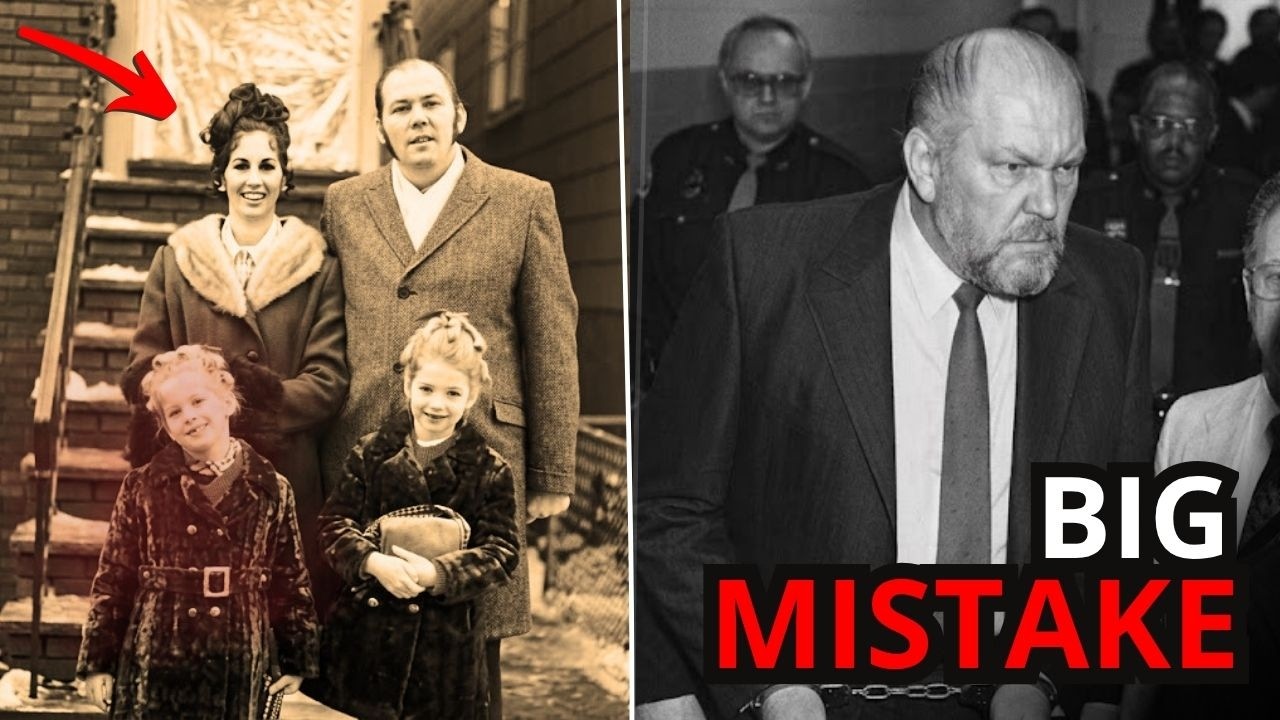
He treated each killing as a problem to be solved, a transaction to be completed cleanly. That efficiency attracted the attention of organized crime’s highest circles, and he eventually worked alongside the notorious Roy DeMeo crew of the Gambino crime family, handling assignments that required absolute certainty and no loose ends. It was during this period that he earned the nickname the Iceman, a name born from a chilling innovation in forensic deception. Kuklinski understood that his greatest enemy was not the detective, but the biological clock inside a fresh corpse.
When a body was found quickly, investigators could pinpoint the time of death from liver temperature and tissue degradation, then use that information to break alibis and trace movements. Kuklinski found a way to stop that clock entirely. He transported his victims to remote warehouses and placed their bodies inside industrial walk-in freezers, suspending the natural process of decomposition for months or even years. When he eventually dumped the frozen remains in ditches and roadsides, the sudden thaw scrambled all biological evidence.
In one case from 1983, medical examiners estimated a victim had been dead only days when, in truth, the murder had occurred years earlier. Police hunted suspects with alibis for the past week while the real killer had already moved on to other contracts. His double life was a masterpiece of compartmentalization. When he crossed the bridge back into New Jersey, the cold-blooded phantom dissolved and the domestic protector returned.
His wife, Barbara, and their children were not a cover story to him. They were his prized possessions, the only things in his violent universe that belonged to him alone, and he guarded them with a quiet, suffocating intensity. That devotion to his family is what ultimately triggered one of the most brutal chapters of his criminal history. A rival faction operating on the fringes of local drug networks found itself in a serious financial dispute with Kuklinski.
They knew his reputation as an enforcer and they knew his physical stature, a towering figure of more than six feet tall with a granite build. But they made a fatal miscalculation. They mistook his desire for a quiet family life as a sign of softness, assuming a man with a wife and children could be pressured into submission. They began following him through the suburbs, watching from unmarked cars as he drove through residential streets.
On a freezing winter night, they crossed a line that should have been unthinkable. They approached his property, stood on his lawn while his children slept upstairs, and left a direct, physical threat at his doorstep, a classic street tactic designed to warn a target that his loved ones were within reach. When Kuklinski returned home and discovered their presence, there was no outburst, no shouting, no panicked calls for backup. There was only a heavy, absolute silence that seemed to lower the temperature of the entire house.
He stood in the dark hallway and looked out at the fresh tire tracks in the snow. In that moment, his mind smoothly transitioned back into the role of predator. He knew with certainty that no law could protect those men from what he was about to do. The hunt that followed was not a war.
It was a systematic liquidation. Kuklinski gathered no crew and carried no heavy weapons. He moved through the underworld alone, visiting gambling dens, pool halls, and industrial bars where informants gathered. He did not offer money for information.
He simply grabbed men by the throat until the lack of oxygen forced names and addresses from their lips. Within 48 hours, he had located the men who had threatened his home. They were hiding in a cramped apartment on the industrial edge of the district, drinking cheap liquor and laughing about the leverage they believed they held over the quiet family man from Dumont. They heard no warning.
The front door frame splintered under the force of a single heavy boot. Expecting a standard police raid, they found themselves staring up at the massive, unblinking form of Richard Kuklinski. There were no demands and no negotiations. He moved through the room like a machine, using chemical sprays to blind and disable them before they could reach for weapons.
He bound them with steel chains and loaded their unconscious bodies into his vehicle like scrap metal. He did not take them to a torture chamber. He drove to a secluded commercial warehouse containing his private industrial freezers. When the men regained consciousness, they found themselves stripped of clothing and chained to the frozen concrete floor in darkness.
The first sensation was not pain, but the razor-sharp sting of extreme cold. Kuklinski did not shout at them. He showed no anger. He stood outside the insulated glass door, watching with wide, dead eyes, then reached for the temperature dial and turned it all the way down, far below zero.
For hours, he remained a silent spectator while frost crystallized over their skin, their panicked breath turned to white mist, and their screams for mercy slowly faded into absolute silence. He had chosen this death deliberately, one with no passion and no heat, a death that would turn them to stone while they remained fully aware that their final hours were being consumed by the machinery of the man they had dared to threaten. Years later, when federal authorities and the FBI finally dismantled Kuklinski’s network, they uncovered a hidden ledger of crimes that defied conventional investigation. The men who had targeted his home were never officially found.
They were given no traditional burial, and their names never appeared in casualty reports of mafia turf wars. They simply ceased to exist. Richard Kuklinski proved to the entire American syndicate a lesson that echoed for decades. Some lines carry a permanent sub-zero cost that no street power can repay.
When you cross the private boundaries of the Iceman, you do not simply lose your life in a burst of gunfire. You disappear entirely into the unforgiving cold.