In the spring of 1956, a ninety-six-year-old man from Maryland became the final living link to one of the most devastating moments in American history. Samuel J. Seymour had agreed to appear on a nationally televised game show, and as he settled into his seat on the set, the audience could see he had recently taken a hard fall in his hotel, leaving him with a bruised eye. The show’s hosts had tried to persuade him to cancel, even consulting his doctor, but the doctor left the decision to Seymour himself.
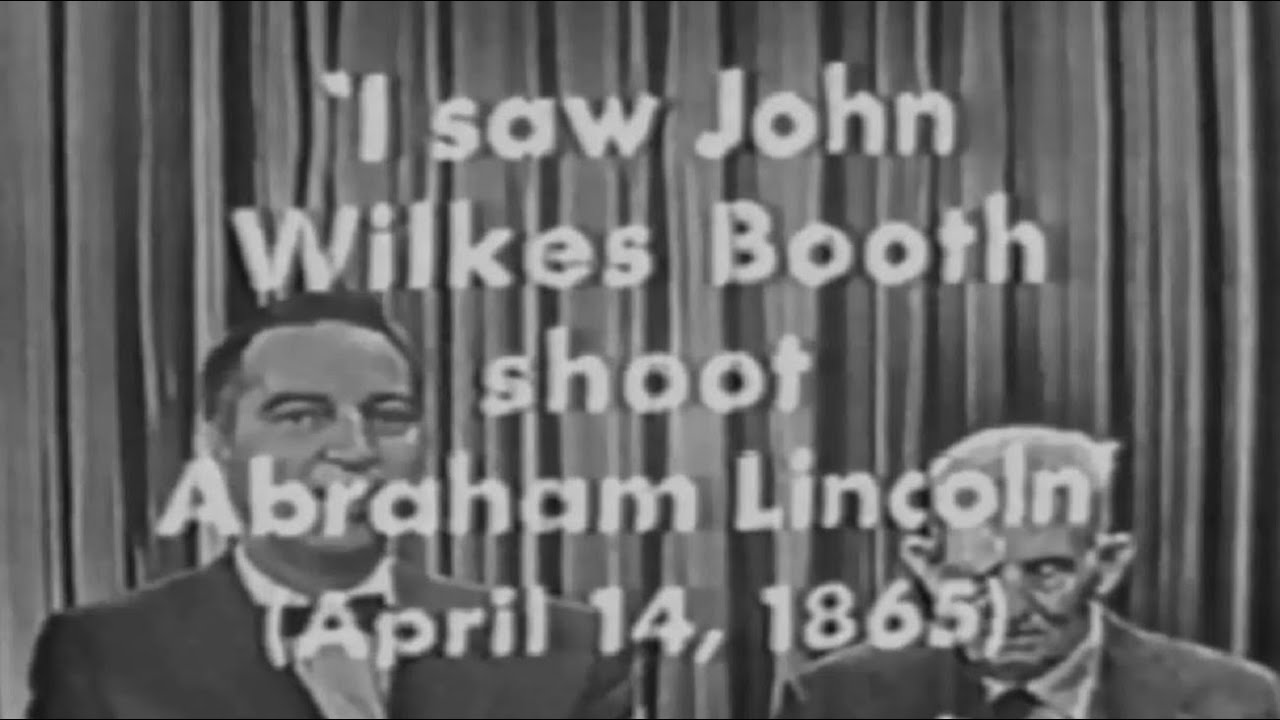
He chose to go through with it, determined not to miss the appearance. The panelists began their usual guessing game, trying to uncover the secret behind Seymour’s presence. They asked whether the thing he had witnessed held historical significance. He said yes.
They asked whether it involved a famous person in American history. Again, yes. They asked whether that person had held political office, and whether he had been president of the United States. Seymour confirmed each step.
Finally, the question came: was it Abraham Lincoln? It was. Then came the heavier question: had Seymour witnessed something connected to President Lincoln’s death? Unfortunately, yes.
What emerged was an account that had remained largely unknown to the public until a recent magazine article brought it to light. Samuel Seymour had been just five years old when he was taken to Ford’s Theatre in Washington on the night of April 14, 1865. He had gone there with family friends, too young to fully grasp the significance of the performance or the presence of the president in the box above the stage. What he remembered, and what stayed with him for more than ninety years, was not the shooting itself.
He did not recall seeing John Wilkes Booth fire the fatal shot, nor did he initially understand that the president had been struck. What he saw, and what fixed itself in his memory, was a man leaping from the presidential box and falling to the stage below. In that fall, Booth broke his leg. But to the five-year-old boy watching from the audience, it was simply a man tumbling from a balcony.
His only concern at that moment was for that poor man who fell. He had no idea that the president had been shot, or that the fall was part of a larger, horrifying event that would change the course of the nation. The child’s memory of that night remained narrow and personal. He remembered going to the theater, and he remembered seeing a man fall.
That was the extent of it. He did not carry the weight of the assassination in the way the adults around him must have. For him, it was a frightening and confusing sight, nothing more. As he grew older, he came to understand what he had actually witnessed, and the meaning of that evening settled upon him gradually.
By the time he was introduced to the television audience at nearly a century old, he had become a living piece of history, the last surviving witness to the murder of Abraham Lincoln. The show’s hosts, having uncovered the full story, treated him with a measure of awe and reverence. They acknowledged the courage it took for him to appear, especially given his recent injury and his age. They waived the usual game rules and awarded him the full prize money simply for coming forward and sharing his account.
The audience applauded, and Seymour, a man who had carried a small boy’s memory of a terrible night for more than nine decades, received a moment of recognition that he likely never expected. His testimony served as a reminder of how history is preserved not only through documents and photographs, but through the lived experiences of ordinary people. Samuel Seymour had not been a witness in the way that other accounts of the assassination describe. He had not seen the gun, the struggle, or the moment of death.
He had seen only the aftermath, a man falling from a box, and that image had remained with him his entire life. In his old age, he offered that memory to the public, closing a small but significant gap between the modern world and the events of 1865. After the broadcast, Seymour returned to Maryland. He died later that same year, at the age of ninety-six.
With him passed the last human link to the night Lincoln was shot. His account, simple and incomplete as it was, added a personal dimension to an event that had been studied and retold endlessly. It was the memory of a child, preserved into old age, and it gave a final, human voice to a moment that had helped shape the nation’s history.