In the spring of 1864, the Army of the Potomac marched into Virginia with a new and unfamiliar figure at its head. Ulysses S. Grant, recently promoted to command all Union armies, had chosen to make his headquarters not in Washington but with the Army of the Potomac itself. Technically, Major General George Gordon Meade commanded that army, but through the spring, summer, and fall, and eventually at Appomattox, Grant was the one calling the shots.
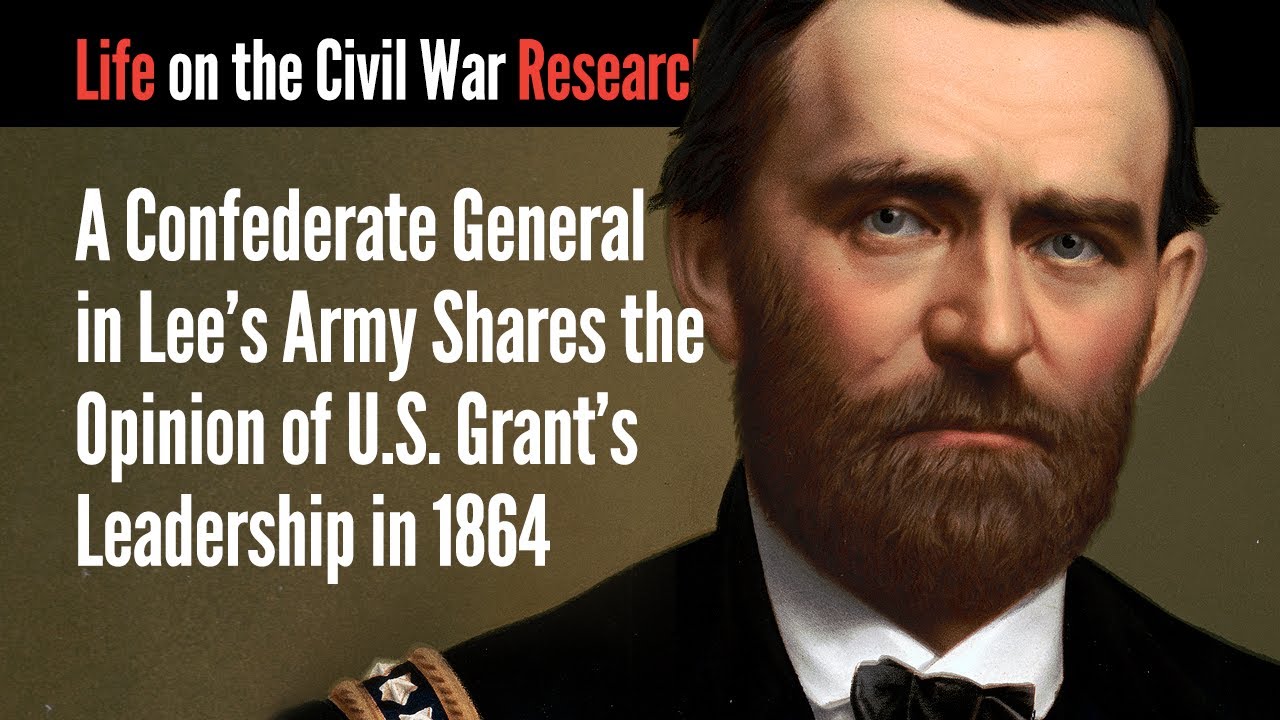
The Confederates facing him, Robert E. Lee’s Army of Northern Virginia, knew very little about this man. Grant was relatively new to the Eastern Theater, and even his reputation from the West had not traveled well ahead of him. Brigadier General Evander M.
Law, one of Lee’s subordinates, was surprised at how little his fellow officers knew about Grant. Even the officers of the old army, the pre-war United States Army, that close circle of West Point graduates who had served together for years, had almost nothing to say about Grant’s past. What they did know about his campaigns in 1861, 1862, and 1863 generally failed to impress them. Law recorded his recollections of how Lee’s army viewed Grant in an article he wrote in 1884, twenty years after the Overland Campaign.
Titled “From the Wilderness to Cold Harbor,” it appeared in the Battles and Leaders of the Civil War series published by Century Magazine. In it, Law offered his own words on the Confederate view of Grant, providing a revealing glimpse into what the men of the Army of Northern Virginia thought they were up against. When Grant was appointed to the command of the Union armies and established his headquarters with the Army of the Potomac, Law wrote, the Confederates knew very little about his character and capacity as a commander. Even the old army officers, who were supposed to know about anyone who had ever served before the war, seemed to know as little as anyone else.
The opinion was freely expressed, however, that Grant’s Western methods would wither in the climate of Virginia. His name was associated with Shiloh, where it was believed he had been outgeneraled and badly beaten by Albert Sidney Johnston, and saved only by Don Carlos Buell. The capture of Vicksburg and the Battle of Chattanooga, which had given Grant a brilliant reputation at the North, were believed by the Confederates to be due more to the weakness of the forces opposed to him and the poor generalship of their commanders than to any great ability on Grant’s part. That Grant was bold and aggressive, they all knew.
But they believed it was the boldness and aggressiveness that arose from the consciousness of strength, since he had generally managed to fight his battles with the advantage of largely superior numbers. That he would pursue a policy of force when he took command in Virginia, they had no doubt. What they were not prepared for, Law admitted, was the unparalleled stubbornness and tenacity with which Grant persisted in his attacks under the fearful losses his army sustained at the Wilderness and at Spotsylvania. Among the Confederates, Grant’s method of conducting the campaign was frequently discussed.
The universal verdict, as Law recorded it, was that Grant was no strategist and that he relied almost entirely upon the brute force of numbers for success. Such a policy, Law maintained, was not characteristic of a high order of generalship and seldom won unless the odds were overwhelmingly on the side of the assailant. In this instance, he argued, it failed, as shown by the result at Cold Harbor, which necessitated an entire change in the plan of campaign. What at least part of Grant’s own men thought about his methods was shown by the fact that many of the prisoners taken during the campaign complained bitterly of the useless butchery to which they were subjected, some going so far as to prophesy the destruction of their army.
Interestingly, Law himself conceded that even President Lincoln had sized up Grant in two words. When a deputation of influential politicians urged Grant’s removal from command of the army, Lincoln’s pithy reply was simply, “He fights. ” To Law, those two words embodied perfectly the Confederate idea of Grant at that time. Law’s assessment was understandably biased.
He characterized Grant as a useless butcher, a charge that has echoed through Civil War history ever since. Students of the war have heard it said countless times that Grant was a butcher who used his overwhelming numbers against the Confederates in attack after attack. Cold Harbor, of course, is well known, and it was there that Grant later regretted having made additional attacks when he should have stopped and learned his lesson after the initial failure. But Grant did learn.
And in the end, he won. The Overland Campaign that began in the Wilderness in May 1864 was unlike anything the Confederate army had faced before. Lee had long been accustomed to outmaneuvering and outfighting Union commanders who, after a bloody engagement, would retreat, regroup, and hesitate. Grant would not.
After the horrific fighting in the Wilderness, where the dense woods caught fire and the wounded burned to death, Grant did not retreat. He sidestepped to the southeast, always advancing, always pressing. At Spotsylvania, the fighting was so brutal that for days the armies fought along the same blood-soaked lines. Grant kept moving south.
At Cold Harbor, he ordered a direct assault on entrenched Confederate positions that failed catastrophically in a matter of minutes, producing some of the most lopsided casualties of the war. It was his worst mistake of the campaign. But instead of withdrawing across the river to safety, Grant again moved south, crossing the James River and marching on Petersburg, forcing Lee into a siege that would last nine months and eventually break the Confederacy’s last great army. The Confederates had underestimated him at the start.
They saw a man whose successes they could explain away, whose methods they dismissed as brutish and unimaginative. They were wrong about what his tenacity would mean. What they had not prepared for, as Law himself admitted, was the unparalleled stubbornness with which Grant persisted in his attacks under fearful losses, refusing to stop, refusing to turn back, and refusing to give Lee the kind of breathing room earlier Union commanders had allowed. Grant’s strategy was not subtle, and it was costly beyond anything the nation had yet seen.
But it was, in its relentless way, effective. The Army of Northern Virginia, bled white by the Overland Campaign, was pinned at Petersburg and finally broken at Appomattox. The man they had dismissed as no strategist, relying on brute force, had accomplished what no other Union commander had been able to do: he had beaten Lee. Law’s commentary, written twenty years after the fact, stands as a revealing document of how the Confederates sized up their new adversary in the spring of 1864.
They saw a butcher, a man without finesse, who simply hurled men at them until they broke. They were half right. Grant did accept staggering casualties, and his frontal assaults at Cold Harbor were a terrible mistake. But they were wrong to conclude that his persistence would fail.
In the end, the stubbornness they had not prepared for carried the Union to victory, and it was that same relentlessness that brought Lee to surrender at Appomattox in April 1865.