Alejandrina Gutiérrez Guzmán Salazar, the eldest daughter of imprisoned drug lord Joaquín “El Chapo” Guzmán, has built a commercial empire around her father’s name, registering trademarks that have remained beyond the reach of U. S. forfeiture orders. For three decades, Guzmán led the Sinaloa cartel, building what federal prosecutors described as the most sophisticated drug trafficking operation ever documented.
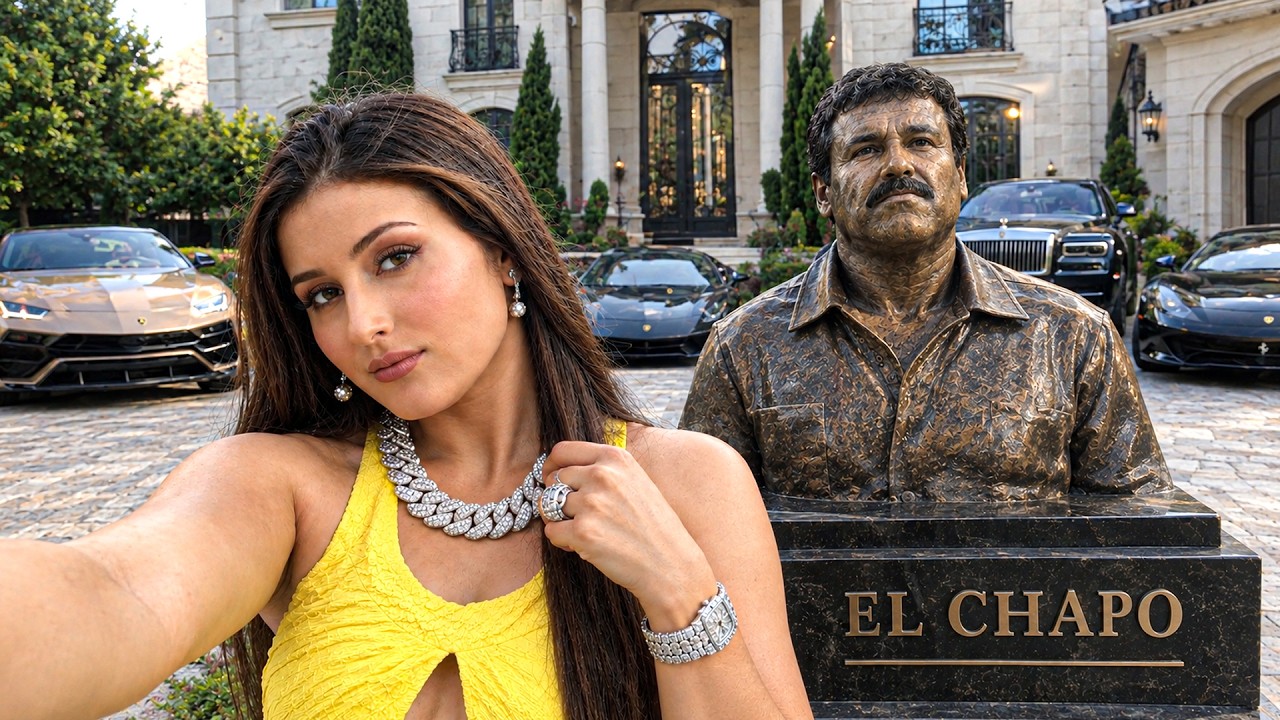
His network moved cocaine, heroin, methamphetamine, and marijuana into the United States through underground tunnels, semi-submersible vessels, and distribution networks spanning cities from Chicago to New York. In 2009, Forbes placed Guzmán on its list of global billionaires, estimating his net worth at roughly $1 billion and assigning him the ranking position 701. The number became a cultural phenomenon in Sinaloa, appearing in tattoos, murals, clothing, and narcocorridos — traditional ballads chronicling cartel history. Starting in 2010, while her father was still a fugitive, Alejandrina quietly filed trademark registrations in Mexico covering the names El Chapo, Joaquín El Chapo Guzmán, and El Chapo 701, along with his likeness and associated logos across multiple product categories.
On July 10, 2019, the same week a federal judge in Brooklyn sentenced Guzmán to life in prison plus 30 years, she launched a clothing brand called El Chapo 701 at Intermoda, Mexico’s premier fashion trade event in Guadalajara. The booth featured a large portrait of her father and drew some of the heaviest crowd traffic of the show. The collection included shirts, hoodies, leather jackets, belts, wallets, caps, and accessories priced from 701 pesos to 15,000 pesos. Exactly 701 units of each design were manufactured — 700 embroidered with silver thread and one single unit in gold thread, auctioned separately with proceeds going to a charitable organization.
Significantly, some of the embroidered goods were handcrafted by inmates at Puente Grande maximum security prison in Jalisco — the exact facility El Chapo escaped from in January 2001. In January 2020, Alejandrina expanded the brand with El Chapo Mexican Lager, a craft beer brewed from malt, rice, and honey at 4% alcohol content, priced at 70. 10 pesos per bottle — a deliberate nod to the 701 number. She also previewed a tequila line at the same event.
Days before the beer reveal, on January 25, 2020, she married Édgar Cázares in the Cathedral Basilica of Nuestra Señora del Rosario in Culiacán, the oldest Roman Catholic cathedral in Sinaloa. The cathedral was completely sealed to the public with yellow security tape, and armed cartel members provided security along the perimeter. Luxury armored SUVs lined the front, and Alejandrina arrived in a bulletproof white limousine wearing a princess gown and tiara. Among the documented guests was Ovidio Guzmán López, one of El Chapo’s sons, whom Mexican military forces would later arrest in a bloody operation.
Her husband, Édgar Cázares, is the nephew of Blanca Margarita Cázares Salazar, a woman designated by the U. S. Treasury Department in 2007 as an alleged financial operative for the Sinaloa cartel. Journalist Dolia Estévez wrote that an event of that scale in front of Culiacán’s oldest cathedral could not have taken place without institutional approval.
The bishop of the diocese publicly denied any cartel connection, but photographs of the fully sealed cathedral and armed perimeter became the story. In April 2020, as COVID-19 lockdowns gripped Mexico, workers from El Chapo 701 distributed cardboard boxes door-to-door to low-income and elderly families in Guadalajara. The boxes contained food, cooking oil, and household supplies, and every one was printed with the El Chapo 701 logo and Guzmán’s face. Analysts placed the move within the tradition of narco-philanthropy, in which criminal-connected families build public loyalty through visible charitable giving.
The U. S. government secured a $12. 6 billion forfeiture judgment against Guzmán at his sentencing, described as a conservative estimate of the cartel’s criminal proceeds.
His defense team publicly stated that the government had never located a single dollar of that money. The judgment carries no jurisdiction over Alejandrina’s businesses, which operate under Mexican corporate law. Because she filed her trademark claims in 2010, years before her father’s conviction, her commercial rights are legally prior to competing claims. When Emma Coronel, Guzmán’s wife, attempted to launch a competing venture under the entity El Chapo Guzmán JGL LLC in 2019, Alejandrina’s decade-old filings had already established the prior legal claim.
Roughly one year after its debut, the El Chapo 701 website went dark without explanation. The trademarks remained registered in her name, but the visible commercial operation ceased public activity. The withdrawal came as the Sinaloa cartel fractured following Guzmán’s extradition, with her brothers — known publicly as Los Chapitos — declaring war against the faction aligned with Ismael “El Mayo” Zambada. In September 2024, the conflict erupted into open urban combat in Culiacán, killing dozens, displacing civilians, and freezing the city for days.
Zambada was brought to the United States in July 2024, leaving the cartel’s structure in violent transition. Alejandrina is not documented as an operational figure in the cartel, with public records describing her as a legitimate businesswoman managing intellectual property and commercial interests. But the designation that follows her is cartel royalty, and in an active war where both factions trace their origin to her father, visibility became a liability. There is one more permanent boundary to her life: she cannot enter the United States.
In October 2012, six months pregnant, she attempted to cross at the San Diego port of entry using a fraudulent non-immigrant visa issued under a false name. During questioning, she voluntarily disclosed that El Chapo was her father and that she wanted to travel to Los Angeles to give birth. She pleaded guilty to fraud and misuse of visas, was deported to Mexico in December 2012, and has been effectively barred from the U. S.
ever since. Today, the El Chapo 701 trademarks remain registered in her name through Mexico’s National Intellectual Property Office, covering the commercial scope of the identity, branding, her father’s likeness, and associated logos across product categories. No court has established a verifiable current net worth figure, and no documented asset seizure has targeted her outside the 2012 immigration matter. The actual accumulated fortune from three decades of running the most profitable criminal organization in the world’s history remains officially unlocated by every government that pursued it.
Whether any portion reached Alejandrina through arrangements no court document captures is a question no public record has ever answered. El Chapo is now confined to ADX Florence, a supermax facility in Colorado so restrictive that inmates go years without natural light or meaningful human contact. The man who escaped two maximum security prisons will never leave that cell.
But his daughter took the number a magazine assigned to his slot on a billionaires list and turned it into streetwear embroidered in the prison he escaped from, craft beer priced to the decimal, pandemic relief boxes that put his face on doorsteps across Mexican cities, and a commercial structure that two governments’ legal systems have no jurisdiction over.