On the evening of October 23, 1935, Dutch Schultz walked into the men’s room of the Palace Chop House in Newark, New Jersey. He was washing his hands when two gunmen entered through the front door. They did not speak. They did not hesitate.
Charles “The Bug” Workman moved left toward the restroom. Mendy Weiss raised his gun toward the back table. Three of Schultz’s most trusted men were seated over plates of liver and onions: Otto Berman, Abe Landau, and Bernard “Lulu” Rosenkrantz. They never finished their meals.
The first shot tore through Berman. Landau emptied his revolver into the wall. Rosenkrantz staggered, bleeding from multiple wounds, and somehow made it to the phone to call for an ambulance. Workman pushed open the bathroom door and fired a single rusted .45 round into Schultz’s stomach.
Mob legend claims the bullet was dipped in garlic, an old superstition believed to cause infection. Whether or not that was true, the wound would do exactly that. This was not a poor man dying in a back alley. Arthur Flegenheimer, the kid from the Bronx who renamed himself Dutch Schultz, was at that moment one of the highest-earning gangsters in the United States.
He controlled Harlem’s illegal numbers racket, New York’s beer trade, restaurant extortion, and a private army of killers operating from the Bronx to upstate New York. He had just beaten the federal government in a tax trial. His wealth was estimated by the IRS in the tens of millions. He was one of the few mob bosses in American history the National Crime Syndicate formally voted to kill.
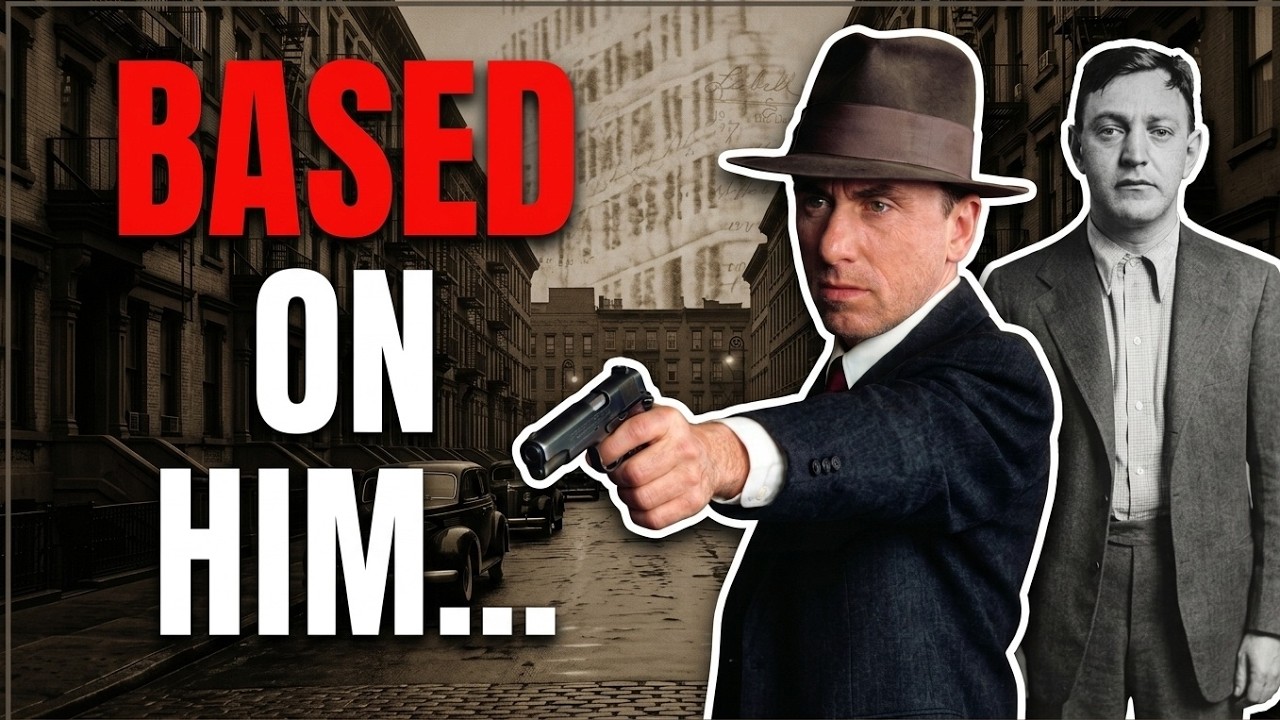
This is the story of how a German-Jewish kid from a tenement on Bergen Street built one of the most profitable criminal empires of the Prohibition era. He declared war on a Black female drug dealer in Harlem, challenged Lucky Luciano before the entire Commission, and tried to assassinate federal prosecutor Thomas Dewey. This is the real story behind the man the film *Hoodlum* only partially showed.
But here is what the movies never tell you: Dutch Schultz was not killed because he was crazy. He was killed because he was right. And by the time the Commission realized he was right, it was too late.
Arthur Simon Flegenheimer was born on August 6, 1901, in a modest Bronx apartment to German-Jewish parents. His father Hermann ran a saloon and worked as a plumber. His mother Emma was listed as divorced when Arthur was a boy, after Hermann abandoned the family. Arthur quit school in the eighth grade and took odd jobs, including hauling goods for a trucking company by day. At night, he joined a Bronx street gang.
He earned the nickname “Dutch Schultz” from an old Bronx gangster who admired his reputation. He kept it for the rest of his life because, as he said, it was short enough to fit on a tombstone. He served 17 months in prison for burglary, the only sentence he ever did. He came out stronger and more connected.
By 1928, Schultz was 26 and working as a bouncer at a small speakeasy called the Hub Social Club. The owner was a quiet, broad-shouldered gangster named Joey Noe. Noe saw something in Schultz that other bouncers did not have. He did not just enforce. He planned for the future. Noe made him a full partner.
Together, they did something no one else in New York had done. They stopped being customers of the beer trade and became the beer trade itself. They bought their own trucks and planned their own deliveries. They forced every speakeasy in the Bronx to buy Schultz beer or be burned down. Within two years, they were clearing millions annually.
Then came the war that made Dutch Schultz a legend. Jack “Legs” Diamond ran the liquor trade out of Manhattan and did not welcome Bronx newcomers into his territory. On the night of October 16, 1928, Joey Noe was shot outside the Chateau Madrid Hotel on West 54th Street. Gunmen in a car opened fire as he stepped out. Noe took bullets in the chest, spine, and hand. He emptied his guns at the speeding vehicle, then collapsed. He lingered in the hospital for weeks and died on November 21, 1928.
Schultz did not grieve. He went hunting. He inherited the entire operation as sole boss. He was 27 years old. No partner. No equal. Three years later, in December 1931, Legs Diamond himself was shot to death in an Albany rooming house, a murder often attributed to Schultz, though never proven. By then, the Bronx beer empire belonged entirely to him.
Here is what no one in the press understood about Dutch Schultz: he was not careful with money. He was cheap. He wore the same brown suit for weeks. He drove a beat-up car. He ate at automats. Other bosses mocked him. Luciano said Schultz looked like a man who delivered ice for a living. But behind that cheap suit was a mind that thought in spreadsheets.
The man running those spreadsheets was named Otto Berman. Otto “Abbadabba” Berman was a quiet accountant with metal-rimmed glasses and a slide rule in his breast pocket. Schultz paid Berman roughly $10,000 a week, the equivalent of about $230,000 today. For what? For rigging the Harlem numbers racket from the inside.
To understand the racket, you have to understand how it worked. It was a popular lottery. Skin color, origin, nationality, race did not matter. You picked three numbers and bet five cents. The winning number was drawn from the last three digits of the day’s total pari-mutuel handle at the racetrack. Its appeal was that it could not be manipulated. The track handle was public, and the numbers were printed in the morning paper.
Then Abbadabba Berman figured out the method. In the final hour of each day, the track handle was still changeable. Berman calculated which three-digit number had the least money bet on it. Then, in the last minutes before the final race, he had Schultz’s men place huge bets at the track, enough to shift the last three digits of the total handle to whatever number Berman wanted. The winning number appeared. Almost no one had bet on it. The house kept everything.
Berman could do the math mentally in seconds and never wrote it down. That was the engine. That was the money machine. By the early 1930s, Schultz’s Harlem numbers operation was estimated to bring in between $12 and $20 million a year, tax-free. Untouchable.
There was one problem. Schultz did not invent the Harlem numbers racket. He stole it.
Stephanie St. Clair, known as “Madam Queen,” was born on the French Caribbean island of Guadeloupe. Sources place her birth in either the 1880s or late 1890s. She arrived in Harlem in 1912 with nothing. By the early 1920s, she ran her own bank with $10,000 in starting capital. Within a few years, she was clearing a quarter-million dollars annually. She employed her own staff, operated from Edgecombe Avenue, and wrote public letters to newspapers denouncing police corruption. She was one of the few Black women in America running a million-dollar criminal enterprise, and she did it with absolute nerve.
Schultz looked at Harlem in 1931 and saw money lying in the streets. He sent his men in. They beat policy brokers and burned insurance banks. They threatened Black bankers with a simple choice: pay Schultz his cut or die. Most paid. St. Clair did not.
She went to the newspapers. She went to City Hall. She paid for full-page ads naming the police officers on Schultz’s payroll. She testified before the Seabury Commission, which was investigating police corruption in New York. Her complaints helped expose corrupt officers, some of whom were punished or dismissed. Schultz responded the only way he knew how: he sent men to kill her.
She survived multiple attempts, once by hiding in a coal cellar and once by walking into a police station and surrendering herself for protection. Then St. Clair did something no one expected. She recruited a quiet, intelligent Harlem man named Ellsworth “Bumpy” Johnson. He was sharp-dressed, self-educated, read poetry, history, and philosophy, and could recite Shakespeare and the Bible from memory. Johnson became her right hand, her deputy, and eventually her successor.
Bumpy Johnson, the criminal portrayed by Laurence Fishburne, was real. He was cunning, deadly, and studied Schultz the way a chess player studies an opening. The Harlem war ran from 1931 to 1933 and claimed more than 40 men. Both sides used straight razors, sawed-off shotguns, and dynamite. Bumpy Johnson hit Schultz’s banks. Schultz hit back. Bumpy ambushed Schultz’s collectors. Schultz’s men killed Bumpy’s men.
The Harlem police, half of whom were on Schultz’s payroll, looked the other way. But public pressure kept building, and the press celebrated Madam Queen. They hated the cheap white gangster from the Bronx who had barged into a Black neighborhood. By 1933, the situation was untenable. And Schultz had a much bigger problem.
The federal government had finally noticed him. His name was Thomas Dewey. Quiet, methodical, and entirely honest. In 1933, Dewey became the U.S. Attorney for the Southern District of New York. He looked at Schultz’s tax returns. There were none. Millions a year, untaxed. The feds indicted him.
Schultz spent nearly two years on the run. He hid in upstate New York. He grew a beard. He moved between safe houses in Connecticut, Pittsburgh, and the Catskills. During those fugitive years, he committed a crime that became one of America’s greatest unsolved mysteries. He took nearly $7 million, said to be cash, gold-backed thousand-dollar bills, diamonds, and uncashed Liberty Bonds. According to the story, he sealed it in a specially made iron strongbox, drove to a spot in the woods near Phoenicia in the Catskills, and buried it.
Only two men supposedly knew the location: Schultz and his bodyguard Lulu Rosenkrantz. By the end of 1935, both were dead. Treasure hunters have been digging in the Catskills for nine decades. Estimates of the buried fortune today range from $50 million to $150 million. Geophysicists have used ground-penetrating radar. No one has found it.

In late 1934, after nearly two years as a fugitive, Schultz surrendered to face tax evasion charges. His lawyer was the famed defense attorney Dixie Davis. The first trial in Syracuse ended in a hung jury. The retrial was moved to a small upstate town called Malone, population 6,000, far from the press, far from the city, far from the corruption Schultz was used to buying.
What Schultz did next was either genius or madness, depending on who you ask. He moved to Malone weeks before trial. He paid bar and restaurant tabs. He attended Mass at the Catholic church and spoke publicly about converting. He sponsored a local baseball team. He attended games with the mayor. He handed out toys to sick children at the local hospital. By the time trial began, half the jury knew him personally.
On August 1, 1935, a Malone jury acquitted him. Judge Frederick Bryant publicly insulted the verdict from the bench, telling jurors their decision shook public confidence in the integrity of the law. It did not matter. Dutch Schultz had beaten the federal government. He walked out of that courthouse as one of the most untouchable gangsters in America. That was when his real problems began.
Schultz returned to New York to find that Lucky Luciano and the new National Crime Syndicate had reorganized everything in his absence. Luciano had founded the Commission, the governing body of the Italian families, and placed himself at its head. He parceled out rackets. He brought in Meyer Lansky as financial brain, Albert Anastasia for enforcements, Louis Lepke Buchalter for labor racketeering, and a centralized murder bureau later called Murder, Inc.
Schultz was a baron of the beer world, and the beer world was over. Prohibition ended in 1933. The future was gambling, labor racketeering, and drugs. The future did not include a Jewish gangster from the Bronx running things his own way.
Bo Weinberg was Schultz’s right-hand man. Smart, loyal, the man who ran the operation while Schultz was on the lam. While Schultz was hiding, reports said Bo was secretly negotiating with Luciano to hand over Schultz’s territories. Schultz heard the rumors. A month after his acquittal, in early September 1935, Bo Weinberg walked out of a midtown Manhattan nightclub. He was never seen again.
Whispers around the waterfront persisted for years that Schultz stabbed Bo personally in the chest, then had him cemented and dumped off a pier in the East River. The body never surfaced. At that moment, Luciano realized what they were dealing with. Dutch Schultz did not respect the Commission, or territorial agreements, or anyone.
Then Dewey came back. By July 1935, Dewey had been appointed special prosecutor for organized crime in New York County. He kept coming. He had a new strategy. He stopped chasing tax returns and started chasing restaurant extortion. Schultz controlled New York’s restaurant industry through a front called the Metropolitan Restaurant and Cafeteria Association. Mandatory membership. Mandatory payments. Dewey had willing witnesses, wiretaps, and a case that could put Schultz away for decades.
Schultz did the math. Fifteen years. Twenty years. Thirty years. He was 34 years old. He was not going to die in prison. He decided to kill Thomas Dewey.
He went to the Commission in October 1935. Present were Lucky Luciano, Lansky, Albert Anastasia, Joe Adonis, Vito Genovese, and Louis Lepke. Schultz made his case. Dewey was a general threat. He would come for all of them eventually. Schultz had the operation planned. Anastasia would handle surveillance. The hit would go down outside Dewey’s apartment building on Fifth Avenue in the early morning. Two gunmen with silencers. Dewey walked alone most mornings without protection. The job would take 90 seconds.
Luciano refused. He said killing a federal prosecutor would bring massive federal pressure that would destroy them all. The bigger the man killed, the bigger the heat. He refused. The Commission voted against the proposal. Schultz stood up. He looked at Lucky Luciano and spoke the words that cost him his life. He said he would kill Dewey anyway. Then he walked out of the room.
Albert Anastasia felt the tension. He was the one assigned to scout Dewey’s apartment. If Schultz killed Dewey without Commission approval, Anastasia would be the most exposed man in the room. Anastasia went to Luciano. He told him everything. Schultz was not joking. He had surveillance reports. He had shooters ready. He was going to do it.
The Commission met again. Hours of deliberation. This time the vote was about whether to kill one of their own to protect the entire organization. They voted yes. They voted to kill Dutch Schultz. The contract went to Louis Lepke Buchalter and Murder, Inc.
The hit team was assembled quickly. Charles “The Bug” Workman, the most brutal killer in Brownsville. Emanuel “Mendy” Weiss, a Lepke loyalist. And the getaway driver, known as “Piggy,” generally believed to be Seymour Schechter, who would himself be killed by Murder, Inc. shortly afterward.

They tracked Schultz for days. Schultz had moved his operation to Newark, believing New Jersey was outside Dewey’s jurisdiction. He held nightly meetings at the Palace Chop House. He always sat at the same back table. The Murder, Inc. team studied every angle.
On October 23, 1935, at 10:15 p.m., Workman and Weiss walked through the front door of the Palace Chop House. Workman headed for the bathroom. He saw a man at the sink. He did not recognize him in the dim light. He fired one shot into the man’s lower abdomen. Rumors say the bullet was rusted and dipped in garlic to ensure infection. Then Workman entered the back room to help Weiss finish the rest.
Weiss had already opened fire on the table. Berman, Landau, and Rosenkrantz scrambled for their guns. Berman was hit by a shotgun blast. Landau emptied his revolver and hit nothing. Rosenkrantz took bullets in the belly but somehow stayed conscious. The two killers turned and walked out. The whole operation took no more than two minutes.
Before leaving, Workman returned to check Schultz’s pockets for cash. When he got outside, the getaway car was gone. Piggy had panicked. Workman had to walk back to New York alone in a bloodstained coat through the New Jersey swamps. He got paid for the job. He was eventually convicted in 1941 and sentenced to life. He served 23 years and was paroled in 1964.
Schultz did not die on the floor of the Palace Chop House. He staggered out of the bathroom clutching his stomach and sat at a table near the bar. He was conscious when police arrived. They took him to Newark City Hospital. His temperature rose to 106 degrees. Peritonitis. Blood poisoning. The infection had done its work.
Dutch Schultz spent most of the day delirious in his hospital bed. A police stenographer sat beside him and recorded every word. The transcript runs over two thousand words. It is one of the strangest documents in American crime history. He talked about his mother. He talked about a French-Canadian girl. He talked about a man named Frenchie. He said, “Please, Mama, take me now.” He said, “A boy never cried and wasted a thousand kims.” He said, “Turn your back to me, please, Henry.” He said, “Oh, oh, dog biscuits.” None of it made sense. He never told anyone where the treasure was buried.
He also asked for a priest and was baptized Catholic on his deathbed. Dutch Schultz died on October 24, 1935, at 8:35 p.m., at age 34. Otto Berman died the same night. Abe Landau and Lulu Rosenkrantz died of their wounds within about a day. Rosenkrantz never told anyone where the strongbox was buried.
But what happened next changed everything. Thomas Dewey, the prosecutor Schultz tried to kill, used the publicity surrounding Schultz’s death as a political platform. He took down Lucky Luciano on prostitution charges. Within a year, he was governor of New York. He was then nominated by the Republican Party for President of the United States twice, in 1944 and 1948. The famous headline “Dewey Defeats Truman,” the most wrong headline in journalism history, was about the man Dutch Schultz once contracted to kill.
Stephanie St. Clair, the Queen of Harlem’s numbers racket, lived another 34 years. She sent Schultz a telegram on his deathbed that read: “As you sow, so shall you reap.” The papers printed it. She died in 1969. Bumpy Johnson took over Harlem and remained a dominant figure there for decades, alternating between prison and freedom, until he died of a heart attack in Wells Restaurant in 1968.
Schultz’s time in Harlem lasted barely four years. Lucky Luciano served about ten years in prison, was deported to Italy, and died of a heart attack in 1962 at Naples airport. Charles Workman got out of prison in 1964 and lived quietly in New Jersey, never giving a statement. Louis Lepke Buchalter became the only American mob boss ever executed by the U.S. government. He died in the electric chair at Sing Sing in 1944.
The money was never found. The iron box in the Catskills is still there, if it exists at all. Treasure hunters have been searching for 90 years. The woods around Phoenicia are full of holes.
Here is what this story tells us about organized crime in America. Dutch Schultz was not killed because he was a criminal. He was killed because he was an individualist. The Commission Luciano built was based on consensus, discipline, and the slow accumulation of power across generations. Schultz wanted to move fast. He wanted to kill the prosecutor. He wanted to keep Harlem. He wanted to work without a boss.
In 1928, that made him a king. By 1935, it made him a corpse. The American Mafia survived for the next seventy years not because it produced more men like Dutch Schultz, but because it killed them. The men who killed Schultz, Luciano, Lansky, and Lepke, became the architects of modern organized crime. They built something institutional. Something that outlived them.
Dutch Schultz built something that died the night he died. The Palace Chop House is gone. The Bronx tenement where Arthur Flegenheimer was born is gone. The brewery is gone. The numbers racket was absorbed into the state lottery. Even the Catskills treasure, if it exists, has been swallowed by the forest.
The question remains: was Dutch Schultz a visionary who tried to do what Luciano was too cautious to do? Or was he simply a violent, greedy man who picked the wrong fight at the wrong time? The Mafia voted. They chose Luciano. And history chose Luciano. But Dewey came for all of them anyway, just as Schultz said he would.
In the end, Dutch Schultz was right about everything except his ability to survive being right.