At dawn on April 24, 1987, helicopters came out of the sunrise over the Rio Grande near the small village of Santa Elena in Chihuahua. The Mexican federal police were on board, reportedly escorted through U.S. airspace by an FBI helicopter so they could cross the river and strike from the American side. It was a raid launched inside Mexico from Texas against a man the Mexican state had spent years protecting.
In the adobe house below, a man in his fifties wearing a bulletproof vest understood what that sound meant. His name was Pablo Acosta Villarreal, nicknamed “El Zorro de Ojinaga,” the Fox. For most of the decade, he had controlled smuggling along a 200-mile stretch of this border: marijuana and heroin, and eventually Colombian cocaine that was flown into his airstrips by the ton and shipped north into the same empty West Texas desert where, seven years earlier and only in fiction, a man named Llewelyn Moss would stumble upon a failed drug deal and a bag full of money.
Acosta did not flee, even though he could have crossed the river into the country whose agents were attacking him. A DEA agent had been trying for weeks to bring him in alive as a witness. Instead, he fortified himself in the mud-brick house and fought for an hour with Teflon-coated ammunition his organization had purchased to pierce police armor. At the end of that hour, the Fox of Ojinaga was dead in a village of 300 people, killed by his own government’s police, transported by American aircraft, on the bank of the river that had been his entire fortune.
The deeper truth is that Pablo Acosta knew this would happen. He had said so publicly to an American journalist months earlier. He said that when they came for him, he would not surrender quietly, and that the corridor he controlled would not die with him. He was right about the second part. Within a day, the corridor had a new owner, his assistant, and the cocaine kept moving.
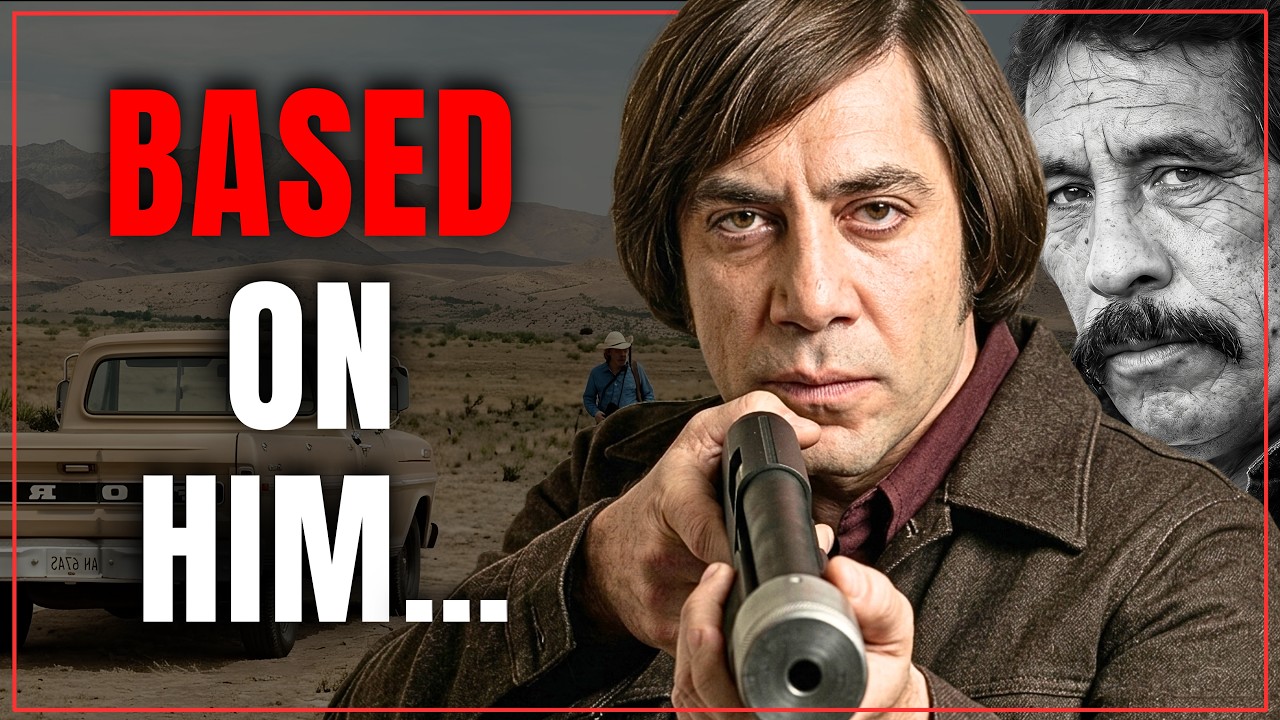
The film “No Country for Old Men,” directed by the Coen brothers in 2007 from the Cormac McCarthy novel, is fiction. It is set in 1980 in this same border region of West Texas. The characters Anton Chigurh, Llewelyn Moss, and the $2.4 million in the bag are inventions. But the framing is accurate. Acosta was not the real Chigurh, and the story does not claim that. He was the reality on which the fiction was built. He was the actual drug lord who controlled the actual corridor through the actual desert the film depicted, in the actual decade in which it is set.
The border became a smuggling route because of geography. The Rio Grande stretch around Ojinaga and Presidio is one of the most remote places on the North American border. It is a desert of vast distances, few roads, and fewer people, the Big Bend region. The river runs through canyons, towns are hours apart, and law enforcement on both sides is so thin it is almost theoretical. It is beautiful and nearly ungovernable, and those two facts are one fact. That is why McCarthy and the Coen brothers chose this place for a story about the limits of the law, and why Pablo Acosta built his empire there in the same years.
The system that made Acosta powerful was called the plaza. In the Mexican drug trade of that era, the border was divided into plazas, territories each controlled by a boss who did not rule by defeating the state but by paying it. The plaza boss bought protection through the mordida, the bribe paid to the federal judicial police, state police, the army, and above all the Federal Security Directorate, Mexico’s police and intelligence agency. Their badges, as the record of that era shows, functioned practically as smuggling permits.
For these payments, the state protected the boss, warned him of operations, and enforced his monopoly. Any independent smuggler who tried to move goods through the plaza without paying was arrested or killed by police on behalf of the bosses. Pablo Acosta was not a fugitive from the Mexican state for most of his career. He was its business partner. The drugs crossing into Texas passed with paid permission from Mexican federal agencies.

The record of Acosta’s life exists because one man went to Ojinaga and asked questions. Terrence Poppa was an El Paso journalist covering the border. In the mid-1980s, he did what almost no American reporter had done. He crossed into Ojinaga and sought out the plaza boss himself. Near the end of his life, Acosta granted him access and interviews, telling the story of the drug trade in the words of the trafficker himself. Poppa turned that into the book “Drug Lord,” the definitive account that documented the plaza system for the outside world.
Acosta began as a small smuggler, served time in a Texas prison, then returned to Ojinaga to take over the plaza. He ran it with an iron hand, according to a DEA report on his organization, eliminating anyone who leaked information or failed. The report linked his organization to at least 20 murders, possibly twice that number. He started with marijuana and heroin, the traditional products of Chihuahua. Then in the mid-1980s, the Colombians came to him because his corridor was perfect for their new product.
Acosta began moving cocaine by air, reportedly tons per month. Turboprop planes flew from Colombia to the Ojinaga airport or dirt runways on ranches along the river. The cocaine crossed into Texas over the same routes as the marijuana. The money flowed south to restaurants and hotels that laundered it. At the height of his power, according to Poppa and the DEA, he was one of the major godfathers of Mexico, moving 60 tons of cocaine a year for the Colombians on top of his own trade.
His organization was a training ground for the men who would inherit the Mexican drug world. His assistant, student, and business partner was a young smuggler named Amado Carrillo Fuentes, who took everything Acosta built and expanded it into the Juarez Cartel. In the 1990s, Carrillo Fuentes became the “Lord of the Skies,” the most powerful drug lord in Mexico. The Ojinaga corridor was not a dead end. It was a school, and the principal was the Fox.

By 1986, Acosta was in trouble within the system. His relationship with the dominant forces in Guadalajara had soured, and his protection was fading. He did the thing that seals the fate of any smuggler in the records. He talked. He gave a recorded interview to Terrence Poppa describing the trade, the protection, and the politics. An American journalist documenting the Mexican drug world in the words of one of its bosses.
The interview made Acosta a liability to everyone above him. A DEA agent working on a broader investigation into the Mexican trade saw Acosta as a potentially valuable witness and tried to arrange his transfer alive across the river in exchange for what he knew. The cruelest part of the record is that this hastened his death. According to accounts of the operation, the FBI wanted Acosta dead rather than testifying in an American courtroom about the protection the Mexican state and its intelligence service had given the trade.
The cross-border raid that followed involved Mexican federal police transported behind the border by an FBI helicopter. Its purpose, according to this interpretation, was to silence a voice more than to capture a fugitive. Commander Guillermo Gonzalez Calderoni, the federal police chief who led the raid, was himself part of the plaza system, a man whose story would later end with his murder in Texas. He brought around 60 men to the village of Santa Elena at dawn.
Pablo Acosta, who knew it was coming, fought his last battle and died in that adobe house. His body was thrown back and left lying. The townspeople who had lived under his authority honored him. The plaza passed within a day to his lieutenant, then to Amado Carrillo Fuentes. The cocaine trade did not stop. The Fox was dead. The corridor remained.
The convergence between the film and the record is not accidental. “No Country for Old Men,” behind its hitman and its bag of money, is a film about a man who realizes that what he is fighting has no head and no end. Sheriff Bell surrenders at the end of the film because he understands that the violence crossing his desert is not a criminal wave he can contain but a permanent economy he cannot touch. Stopping one Chigurh or recovering one bag changes nothing. The desert will produce more because the money does not run out and the demand is on his side of the river.
The record of the Ojinaga plaza proves him right in every detail. Pablo Acosta controlled that corridor for a decade. The Mexican state protected him. American agencies killed him. The corridor did not close for a single day. It passed to his deputy, then to the greatest drug baron Mexico ever produced, and after Amado, to the cartels that fight over Chihuahua to this day. The same desert, the same river, the same crossings, but larger quantities and worse violence.
Pablo Acosta was not Anton Chigurh. He was the thing Sheriff Bell feared. He was proof that the desert had become a trade the law could not close. He told an American journalist before his death the truest sentence in the entire story. They might kill him, he said, but they would not kill the plaza. They killed him at dawn on the riverbank. The plaza is still open.