In 1938, in a register office in Westminster, a 20-year-old woman was married. The boy who walked her down the aisle in place of her dead father was a teenage naval cadet named Philip of Greece.
It was the first time he would stand at a turning point of her life. He would later stand godfather at the christening of her children, who were born with no named father. He would pay her son’s school fees at his own old school. And when the whispers came, as they always came, that the boy was his, this woman chose for 40 years to say nothing.
Her name was Hélène Cordet, and her story keeps its secret all the way to the end.
Before either of them had a country, a girl in a rented villa in the south of France was told to be kind to a small boy who had arrived with almost nothing. She was born Eleni Fufuni in 1917 in Marseilles into a wealthy Greek family whose loyalty ran to the Greek crown. The family money had come from cotton, and the grandfather had backed the monarchy and paid for it when the monarchy fell.
In the upheavals of the early 1920s, fortune and throne sank together. The Greek royal house was driven out, and the Fufuni went with it, part of a scattered court of exiles that gathered along the French coast and around Paris.
Into that same broken circle came a boy from Corfu. Prince Philip of Greece and Denmark had been born in 1921 and carried out of the country as an infant in a cot made from a fruit crate when his uncle lost the throne. He arrived among the exiles with even less than they had.
For much of his boyhood, Philip lived on the charity of his formidable aunt, Princess Marie Bonaparte, at a villa on the western edge of Paris. He spent some seven years there in a home that was hers and not his. The pattern of his early life was borrowed rooms and other people’s money.
The Fufuni, moving between Paris and the coast, were part of that same borrowed world. The two families holidayed together, and on those long shared holidays the friendship set hard.
Then the little that Philip had came apart. In 1930, when he was not yet nine, his mother suffered a severe breakdown and was removed to a sanatorium. His father drifted to a quiet life on the French Riviera. His four elder sisters married into German princely houses within roughly a year of one another.
The boy was left to be raised by relatives, by his schools, and by his Mountbatten uncles in England. He described that time later without a trace of self-pity, saying only that the family had broken up and that he had simply had to get on with it.
Set a childhood like that beside the Fufuni household, and the appeal is obvious. Here was a family that had also lost a country but had stayed together and had room in it for a stray prince. He and Eleni’s younger brother became inseparable. An older girl watched them, roughly three years their elder, half-sister and keeper to both.
She remembered long afterwards that her own mother seemed to pay the little prince too much attention. She allowed in the same breath that he was a very nice little boy.
These two were not strangers who later found each other useful. They were raised in and out of the same rooms inside the same loss.
In time, the Fufuni came to England, and their name attached itself to a Mayfair restaurant called the Hélène, named after the daughter. By then, Eleni had grown into a striking and cosmopolitan young woman, at ease in several languages and several countries, with the particular confidence of someone who has already lost everything once and survived it.
The world that produced both of them explains how a future British consort came to have his oldest friends among the cabaret and nightclub people of France. The early 1920s had shattered the Greek monarchy. A disastrous war with Turkey and the collapse of a Greek campaign in Asia Minor sent the royal house and everyone bound to it into flight.
Whole families who had lived at the center of a court found themselves stateless, moving between rented rooms on the charity of grander relations. The Fufuni were part of that migration, and so was the infant Philip. The two families were folded into the same loose, anxious colony of exiles.
It was a strange nursery for a friendship. The children of the fallen Greek court grew up between countries and between languages, belonging fully to none of the places that housed them. For Eleni, it bred the adaptability that would later look so much like talent. For Philip, it bred a hunger for the settledness he had never had.
They were not playmates who happened to drift apart. They were survivors of the same shipwreck.
By the time she came to be married, the man who should have given her away was dead, and the boy who took his place was still in his teens. The wedding was in 1938. She was 20 years old, and the groom was an Englishman named William Kirby.
The ceremony was at Caxton Hall in Westminster, the register office where fashionable London married when it married quietly. What made it strange was the young man standing in the father’s place. Eleni’s own father had died.
By the accounts that survive, it was Philip who walked her down the aisle. He was 16 or 17, a naval cadet, still years from the war that would make him and decades from the marriage that would define him. He gave away a bride some three years his senior.
Some accounts call him the best man rather than the one who gave her away, and the record genuinely divides on the point. What no account disputes is that the future Duke of Edinburgh was there at the front of the room in a role reserved for family.
A teenage boy who gives a grown woman away at her wedding is not standing there as her lover. He is standing there as her family because there is no one else with the right to. The exile had made them kin.
The marriage to Kirby did not last, though its ending was slow, and the war hurried it along. Kirby was posted abroad, and the divorce laws of the time made a quick, clean parting almost impossible. The marriage lingered on paper long after it had ended.
Philip, for his part, was about to disappear into the Royal Navy. He would enter the college at Dartmouth, train as an officer, and go to sea in a war that was barely a year off, serving with genuine distinction and being mentioned in dispatches after a fierce night action off the coast of Greece.
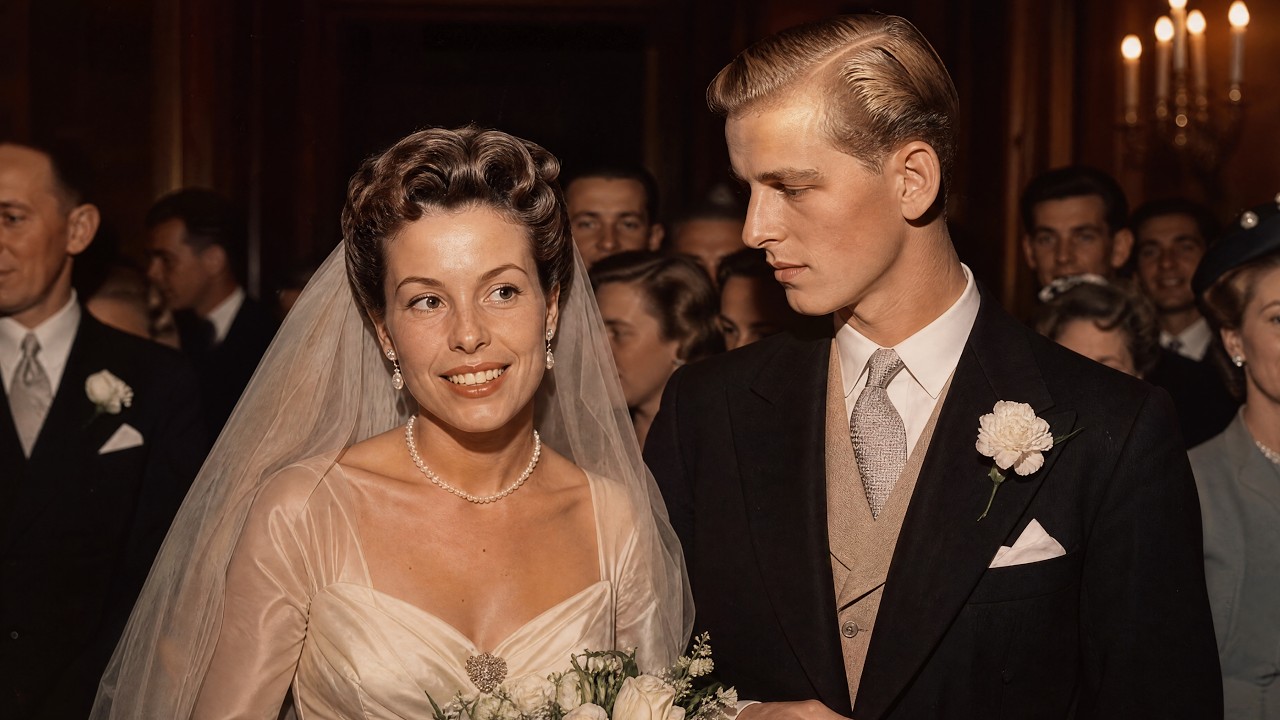
When he came back into her story, he would be a decorated officer on his way to marrying the heir to the British throne. The gap between the schoolboy at Caxton Hall and the Duke of Edinburgh would only make the friendship stranger to outside eyes.
While Britain was still rationing its butter, a woman with a French accent and an evening gown became one of the first faces it invited into its living rooms. After the war, British television was a strange and tiny thing, a novelty for the few households that owned a set.
Eleni was discovered by the BBC and made the live hostess of a program called Café Continental. It presented continental cabaret, the glamour of a continental capital that austerity Britain could not afford to visit. She stood at the center of it, chic and worldly and faintly foreign.
She became one of the first women in Britain to front a television program, a genuinely pioneering thing for a woman to be in the late 1940s. The program ran across the late 40s and into the 1950s, during which she was quite simply a household name.
Picture the Britain she was broadcasting into. The war was barely over. Rationing still governed the kitchen. The cities still carried their bomb scars. Into that gray and careful country came a woman in a gown with an accent that suggested somewhere warmer, offering half an hour of the life austerity had taken away.
She was not the mistress of a prince or the mother of a rumor. She was the lady from the television, and for a while the whole country knew her face.
She had a brief run in film to go with it, a handful of pictures in the early 1950s with titles like The Limping Man, Three Steps in the Dark, and Tale of Three Women. The film career never caught the way the television had, but it hardly needed to.
She had already done the harder thing. A refugee’s daughter, once nearly forgotten, had built a public self out of nothing but poise and a good camera in a country not her own in a medium that barely existed.
When her son was born in the middle of the war, the space on the register where a father’s name should go was left blank. The Kirby marriage had become a technicality. William Kirby was posted abroad, and Eleni was in England tied on paper to an absent husband while the war rearranged every private life it touched.
It was in that stretch of limbo that Eleni had her two children: a son, Max, born on the 11th of November 1943, and a daughter, Louise, born on the 8th of February 1945. Two babies born some 15 months apart, arriving into a marriage that had already ended in every way but the paperwork. Both were registered with no father named.
That blank space is the small, dry, documentary fact that the whole later storm blew out of. A birth certificate is a legal record, and a legal record with a gap in it invites the world to fill the gap.
The man who should have been named, and who Max would insist all his life was his father, was a Frenchman called Marcel Boussac. Boussac was a captain in the Free French Air Force. In 1940, answering the call from London after France fell, he flew a training aircraft out of Meknès in Morocco to Gibraltar with no navigation equipment and no maps to reach the side of the war that was still fighting.
He was, by every formal record, the father of Eleni’s children, and he was a brave and serious man. She married him in 1947, and both children took his surname: Max Boussac, Louise Boussac.
In a rational world, that would have been the end of the matter. A divorced television hostess remarried to a French airman. Her children given their father’s name. The world was not rational about Hélène Cordet, because the world had noticed who kept appearing at the edges of her life.
What existed was a timeline. Max was born in November 1943, in the years of Philip’s bachelorhood before his engagement to Princess Elizabeth. The register named no father. Marcel Boussac, the man Eleni later married, was named on the formal records as the father.
There was no letter, no witness, no admission, no document pointing anywhere but at Boussac. The case against the innocent version was built entirely out of timing and proximity.
In 1947, Eleni became Madame Boussac. That same November, Philip of Greece, by then a naturalized British naval officer, married Princess Elizabeth, the heir to the throne, and was created Duke of Edinburgh the day before the wedding.
The two children of the exile had both married within the same 12 months, and only one of those marriages would be remembered by history. What links the two events is the christenings. The newly made Duke of Edinburgh agreed to stand as godfather to Eleni’s children. To her daughter, Louise, the record is clear and undisputed. To her son, Max, by many accounts the same.
A man who becomes godfather to a friend’s children is not thereby confessing to be their secret father. He is doing what close family friends have always done. But loyalty at that altitude does not go unwatched.
Then in February 1952, everything around that friendship changed. King George VI died, Elizabeth became queen, and overnight her husband’s every association was reweighed for scandal. A naval officer could keep a wide and bohemian circle. The consort of the sovereign could not.
The pressure on him to let such friendships lapse was real. Philip had arrived in Britain a stateless, near-penniless prince, and the establishment had never quite stopped regarding him as foreign. A man in that position had every institutional reason to shed the glamorous divorce from his exile years.
He closed nothing down. That is the fact that has to be sat with. A guilty man, or merely a prudent one, protects himself. Philip behaved as though the friendship was simply not up for negotiation.
He did not give up Hélène. He kept her, and he kept her children.
Of everything he did for her family, one act would be pointed at for the rest of the century, and it was the quietest of them all. Philip is reported across many accounts to have paid the school fees for Max to attend Gordonstoun.
To weigh why that single fact carried more than all the rest, you have to know what Gordonstoun was to Philip. It was his own school, the place that had shaped him after his fractured childhood, the nearest thing the exiled boy had ever had to a settled home of his own. In time, he would send his own sons there.

So when Philip paid for Max Boussac to go to Gordonstoun, he was not simply being generous with money. He was routing another woman’s son through the single institution most bound up with his own identity.
The precise figures do not survive in any reliable form. What survives is the shape of it. A Duke of Edinburgh, across the schooling years of the 1950s, quietly funding the education of a divorcée’s son at the most personally significant school in his own life.
A more cautious man, a man with something to hide, or even a man with nothing to hide but a reputation to guard, would have kept his distance. Philip did the reverse. He paid the fees, sent the boy to Gordonstoun, and never explained why.
The story needed only one thing to catch fire, and in the late 1950s, it found it in a young man’s photograph. As Max Boussac grew into a young man, the papers began to run his photograph beside photographs of the young Philip and to invite the reader to see what they wanted to see: the same long jaw, the same deep-set eyes, the same high forehead and fair hair.
Whether the likeness was real or the ordinary coincidence of two fair-haired men of the same northern European stock hardly mattered. Once a resemblance is asserted in print beside two photographs, it becomes very hard to unsee.
No paternity was ever established. Philip never confirmed it. He never denied it either, which is a different thing and a crucial one. The palace never issued a statement. Max himself, when he was old enough to speak for himself, rejected the whole idea outright.
The rumor did not catch fire in a vacuum. In the middle 1950s, Philip’s reputation had taken on a particular color in the newspapers. He was cast as a man with a roving eye, a former naval officer who kept fast company.
The center of that campaign was 1956 and 1957. Philip spent long months away on a Commonwealth tour aboard the Royal Yacht Britannia, and in his absence, the newspapers filled the silence with rumor. There was talk of wild evenings at the Thursday Club, the lunch and dinner society in Soho that Philip attended with his private secretary, Michael Parker.
The affair reached such a pitch that the palace took the rare step of having the queen’s press secretary deny that there was any rift between the queen and the Duke. Notice what was denied and what was not. The palace denied a rift in the marriage. It said nothing whatever about Hélène Cordet or about the boy at Gordonstoun.
On the one morning the whole country was watching, the Duke’s oldest friend was not in the abbey, and afterwards she said only that she had overslept. The coronation of Queen Elizabeth II took place on the 2nd of June 1953 in Westminster Abbey before a congregation of roughly 8,000 people.
It was exactly the kind of grand, glamorous, once-in-a-lifetime national event to which the Duke of Edinburgh’s glamorous old friend, herself a television star of that same young medium, might have expected an invitation. She was not there.
According to the writer Christopher Wilson, the exclusion was deliberate and it was the work of palace courtiers who were unwilling to have the Duke’s glamorous old friend on display at the sacred centerpiece of the new reign. There is no record of what the queen thought about Cordet in this or in anything else.
Hélène’s own account of the day was a small masterpiece of dignity. She said in effect that she had overslept and missed it. To anyone who knew the truth, the line read as exactly what it was: a proud woman covering a snub.
The empty chair is the clearest single sign of where the palace drew its line. Philip could keep his childhood friend. He could stand godfather to her children and pay for her son’s schooling. What he could not do, what the institution would not permit, was to have her present at the ceremonies where the monarchy displayed itself to the nation.
In 1961, she wrote her own life down, and the one subject everyone wanted was the one she circled and never landed on. The book was called Born Bewildered, published in 1961 by Peter Davies.
It was on its surface exactly the memoir a woman of her fame might be expected to produce: the exile childhood, the rise to television, the glamour and the reinvention, and running through all of it, the lifelong friendship with the boy from the exile who had become the Duke of Edinburgh.
What the book did not do was answer the question. It circled the friendship, wrote of it warmly, dwelt on the childhood closeness, and then declined gracefully and completely to address the rumor.
Philip’s biographer John Parker judged the book bluntly. “Far from quelling the innuendo,” he wrote, “Miss Cordet’s autobiography merely fanned it.” A memoir that might have killed the rumor instead fed it.
At an age when the story had already hardened around her, she opened a nightclub off Park Lane and reinvented herself one final time. The year was 1961, and the place was the Saddle Room, a little off Park Lane in Mayfair.
It is remembered by those who chart such things as London’s first true disco, the room where the modern nightclub, built around records rather than a live band, first took hold in the capital. Hélène opened it with a business partner and reigned over it as its hostess.
The club had a horse and tack theme, with sober hunting and showjumping decor on the walls. There was a real brougham carriage kept on hand to ferry favored guests home. By the founder’s own telling, the whole enterprise began with a starting stock of just 50 records.
Early Beatles and Rolling Stones spun for a crowd that was learning night by night how to dance to a machine instead of an orchestra. It became, in the phrase of the time, the place where better-off London began to swing.
She sold her interest in the club in 1969 and tried to franchise the idea across Europe, a venture that failed. The original Saddle Room ran on without her until 1983.
In 1986, a royal car pulled up outside a business school in Beijing. And the man who had spent his life denying the story was forced to defend it again.
By the middle 1980s, Max Boussac had become a management thinker of real standing. He had gone to China, helping to run a European-Chinese business school in Beijing at a moment when China was only beginning to open to the West.
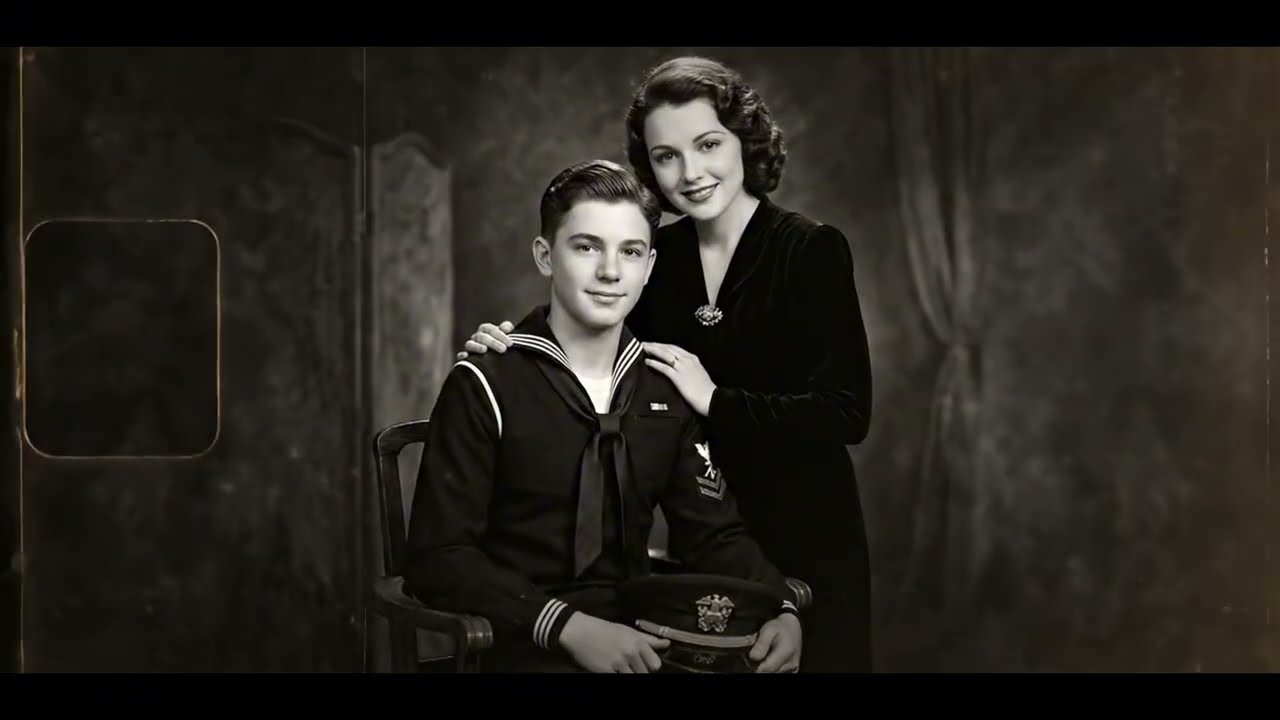
Prince Philip was in China. It was the first state visit by a reigning British monarch to the People’s Republic. And while he was there, Philip went to see Max.
A royal visit in the middle of a state occasion to the very man the world had spent 30 years calling his secret son. To the watching press, it was irresistible.
Max Boussac, who had spent his whole life refusing to feed the story, reached his limit. In the aftermath of the Beijing visit, he gave the words that stand as the emotional center of this entire story.
He said that he had heard these rumors all his life, but that they were ridiculous. His father, his real father, he said, lived in Paris, and it was silly to say otherwise. All of it, he said, went back to Philip and Hélène’s childhood friendship, and there was nothing more to it than that.
A man in his 40s, an accomplished scholar, forced by a royal courtesy visit to stand up in public and insist on the ordinary fact of his own parentage. He should never have had to say it.
Every single act that fed the rumor was an act of loyalty. Giving the fatherless bride away. Standing godfather to her children. Paying the boy’s fees at his own beloved school. Crossing the world in old age to call on a friend’s son.
Each gesture was generous. Each gesture was on any innocent reading exactly the sort of thing a devoted family friend would do. And each gesture, in the eyes of a watching press, deepened the very rumor that wounded the boy it was aimed at.
She could have named a price for the truth at any point across 40 years, and she never once did. For four decades, the single most valuable piece of gossip in Britain concerned her son, and she held it. Any number of newspapers would have paid a fortune for a confession in either direction.
A woman who had known money and lost it, who had built and sold a nightclub, who understood better than almost anyone alive the commercial value of a story, sat on the most sellable secret of the age and sold none of it.
Her later years were quiet. The television work was long behind her, the nightclub sold, the great reinventions finished. She withdrew from the public eye by degrees.
She died on the 30th of April 1996 in Switzerland aged 78. The cause was not made public. There is something fitting in the geography of it. A woman who had begun life in the exile of the south of France, ending it in the discretion of another foreign country, private to the last.
Whatever she knew went into the ground with her. The story was never really about whether Philip was Max’s father. The story was about a woman who was handed by circumstance a secret that the whole country wanted, and who decided that it was hers to keep and no one else’s to have.
The boy at the center of it all answered the whisper in the only way that could defeat it: with a life too serious to be a footnote. Max Boussac did not spend his life protesting his parentage. He said his piece once plainly in the aftermath of Beijing, and then he built a body of work so substantial that the rumor could only ever be a strange asterisk beside it.
He went from Gordonstoun to Cambridge, where he studied architecture. He went from there to the Massachusetts Institute of Technology to study city planning and then took a doctorate at Imperial College London. He practiced as an architect before turning to the field that would make his name: the study of management and of how knowledge moves through the world.
He served as director and dean of a European-Chinese management institute in Beijing through the 1980s. He became a professor of strategic management at a school in Barcelona and held fellowships and posts associated with Oxford, Cambridge, and Wharton. His book, Knowledge Assets, published by Oxford University Press in 1998, won the Ansoff Award as the best strategy book of its year in the year 2000.
He died of cancer on the 7th of September 2011, aged 67, only weeks after his diagnosis, still working, still respected, still his own man.
His sister carried the family’s gift for reinvention into a different world. Louise Boussac, Philip’s documented goddaughter, became a pop singer under the name Louise Cordet. In 1962, her record, “I’m Just a Baby,” reached number 13 on the British charts, and she toured alongside the Beatles and Roy Orbison.
Her own eldest son is the singer and songwriter Alexi Murdoch. The musical thread of the family runs on into the present, generations away from the rumor that once defined the household.
Prince Philip died on the 9th of April 2021, aged 99, having never in his long life said a single public word about Hélène Cordet or Max or the rumor that had trailed him for more than half a century. With his death, the last of the three people who could have settled the question was gone.
A silence is never neutral. Where Philip offered no explanation, the public supplied a motive. Where the palace offered no denial, the country supplied a verdict. A single sentence from any one of them might have closed it. The sentence never came.
The bill for that silence was not paid by the powerful. It was paid by the boy.
There remains the tender reading, the one the documented record actually supports. A boy was carried out of Greece as an infant and left in effect without parents. Displaced families took him in, and one of them was the Fufuni, and among them was a girl, three years his elder, who became the nearest thing he had to a sister.
He never let that go. He gave her away when her father was dead. He christened her children. He schooled her son. He called on that son in old age at the far end of the earth.
What the country read as the trail of an affair may have been all along the fidelity of a lonely child to the family that once gave him a home.
Return at the last to two children in a rented villa in the south of France. A girl and a small boy who had both lost their country before they were old enough to understand what a country was. Everything that followed grew from that first accident of exile.
She could have answered. She never did. And when she was asked privately across all those years what the truth of it was, the most she would ever offer was that Philip and the Frenchman had both been wonderful to the children.
It settled nothing. It was meant to settle nothing. And it is in the end the only honest epitaph the story has, spoken by the one person who knew and who chose to the very last to keep it.