At the very end of Owl Fork, an old woman sat in the open doorway of a cabin built from chestnut logs, thin as a post and dressed in black. Her name was Sarah Ann Nancy, but no one in that hollow or anywhere near it ever called her anything but Granny. In truth, Granny Nancy had no schooling at all. She could not read the calendar that hung on her wall, could not write her own name on a piece of paper, and could not make sense of the writing on a sack of flour.
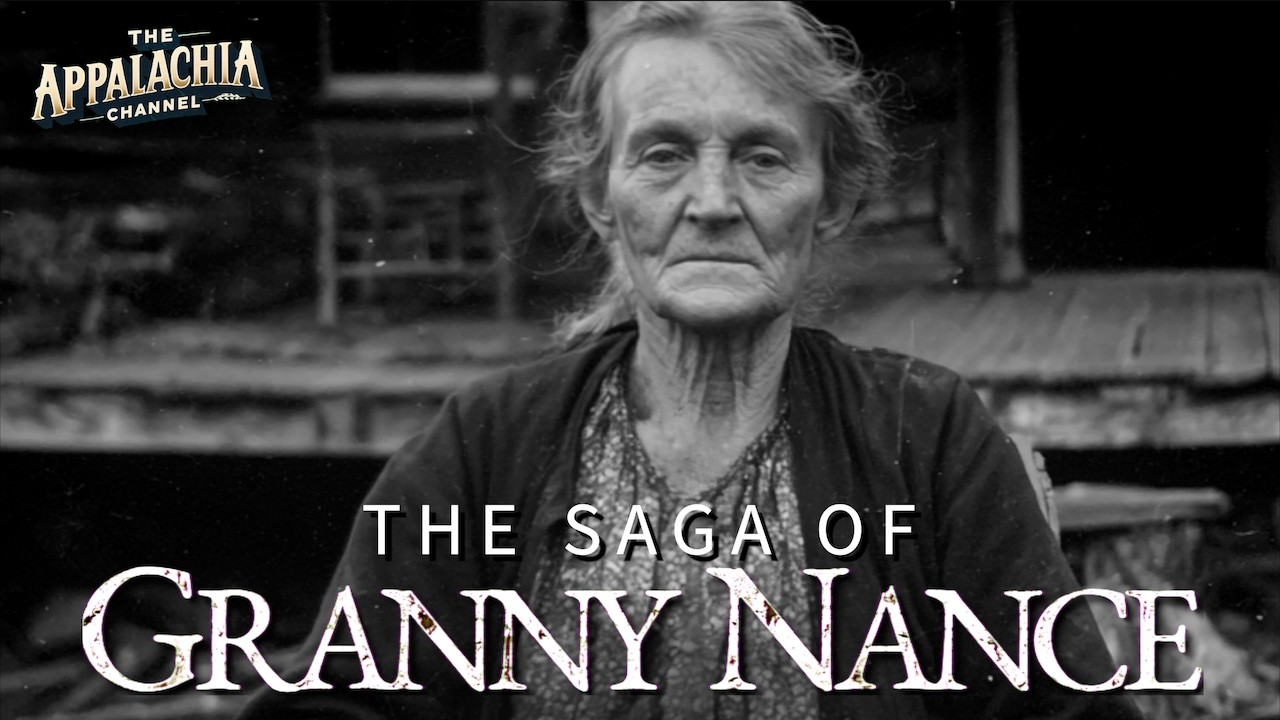
She owned no papers from the state of Kentucky, and no living doctor had ever taught her a thing. But the people of Owl Fork had been calling for her since the turn of the century, and there was not a grown man in that hollow who had come into this world without her hands. On that particular morning she sat working on her only possession of value: a pair of iron scissors with heavy blades, their hinge repaired once by a blacksmith in Buckly. They had belonged to her mother and her mother’s mother before her, and now Granny Nancy oiled them with a rag every few weeks, whether they needed it or not.
She was still doing that when Tod Combs rode up on a mule and hitched it at her gate, the way everyone did who passed by. He had come from Camp Nine, and he brought news. A woman had arrived on the train on Tuesday, a state woman, and everyone was calling her the city nurse. She had ridden up the fork on a mule with saddlebags, and the company had given her an empty house next to the commissary.
Word was she would doctor the women and children from now on. When Granny Nancy heard this, she laid the scissors across her knee, and her voice carried an edge. She said she figured the nurse was some young thing who bought her clothes in a store and carried a degree from a college, but she would wager the girl knew nothing that was not printed in a book. Tod agreed warmly and said outside schooling was no use to him or his family.
Then he spurred his mule and disappeared around the bend. The old woman sat with the scissors in her lap and the oily rag cooling in her hand, and she understood that she was disturbed. In truth, she had been disturbed for two years and had told no one. To understand why, you have to know what had happened to Owl Fork by the spring of 1927.
For fifty years the hollow had been as it always was: twenty or twenty-five families, one church, a school that stayed open three months a year. Now there was a road all the way to the Gap, a tipple at the mouth of the creek, ninety company houses on both sides, and a store that sold flour on credit against scrip. There was even a whistle that blew at six in the morning and could be heard on a quiet day as far as Granny Nancy’s gate. She had been against all of it, the cursed road and the mail cars that came with the new automobiles.
She even opposed the government teacher who came to tell the children that the earth went around the sun and that folks ought not to drink from common dippers. But this was different. This girl had come to her very doorstep. For fifty years Granny Nancy had been the medicine for Owl Fork, and now there was a woman in a company house at the mouth of the creek with the state’s seal in her satchel, and the whole matter was turning over in the old woman’s chest like a stone in a plowed field.
Two days later, a paper was nailed to the wall of the store. It was signed by the Commonwealth of Kentucky, and it said that every midwife working in the county had to register her name, submit her kit for inspection, and attend instructional meetings on the second Tuesday of each month. Granny Nancy could not read a single word of it, yet she stood before it with her arms folded for a long time while a boy read it to her twice. The nurse’s name was Iva Gettersson, and she was twenty-six years old.
She came from Louisville with an appointment paper in her pocket and a list of duties. She was neither arrogant nor foolish. Her people were from outside Adair County, and she knew right from wrong. She had two working hands and plenty of stubbornness, though she had little idea of the situation she was walking into.
She rode a borrowed mule named Pilot, and in her bag she carried a thermometer, an enamel basin, silver nitrate for the eyes of newborns, a bottle of medicine for women who were bleeding, and registration forms with lines for signatures at the bottom. The first birth in Owl Fork after the nurse arrived was at Tot Combs’s house, where she went to observe, for that was what the state had sent her to do. Granny Nancy stood in the doorway and did not move an inch. The nurse introduced herself and said she had come to help in any way she could.
Granny answered sharply that her help was not needed. That was the whole of the conversation. It rained all night, so the nurse could not go home. Instead she stood in the yard in the corner of the porch, her coat pulled over her bags, until first light, when she heard from beyond the chestnut walls the first cry of a newborn.
She took out her book and wrote in her report that the delivery had been normal and the mother was doing well. What turned the local people against the new nurse was not that she was a government person, nor that she worked for the company. It was the drops she carried in her bag. There was no telling who would put silver nitrate in the eyes of every newborn she got her hands on.
When she gave the drops, the child’s eyes stung, and you never heard a baby cry and twist its face so hard. Then the new mother would sit straight up off the pillow, and no amount of explaining would ever convince her that such a thing should have been done to her child. Granny Nancy never said the city nurse was a bad woman. She was smarter than that.
What she would say, sitting by the fire with three or four other women, was that she had birthed three thousand babies in that hollow and never put a thing in any of their eyes, and they all could see fine. By evening, the drivers would have spread the news up the creek, and soon it was rumored that the city woman was putting salt in babies’ eyes to blind them. By the end of May, only four women in Owl Creek would let the nurse through their doors, and three of them lived in company-built houses. In July, dysentery broke out in Camp Nine.
The nurse walked along the creek on a Sunday afternoon to find the cause, and it did not take her long. The company had built privies on the hillside above the upper row of houses, and the whole camp drank water from that spring. On Monday the nurse went to the superintendent and explained what she had seen, how much it would cost to move the privies, and, worst of all, what harm would come if they were not moved. The company foreman laughed at her and dismissed the idea of spending money to improve the drinking water.
So now the whole hollow and the company were united against the city nurse. In the lower row of houses, eleven people came down with dysentery. By August eighth, Brother Henry Sturgill’s granddaughter had died of it, while the nurse was seven miles away at the head of the fork tending to a child who had overturned a boiling kettle on himself. Brother Sturgill was not a cruel man.
He was a preacher in the local Methodist church. That Sunday he stood in the pulpit and said, without naming names, that life in the hollow had been better before educated people from the flatlands came bringing their new and strange ways. When Iva Gettersson heard of it, she returned to her company house that afternoon and wrote out a letter of resignation to the state board in Frankfort, and sealed it in an envelope. But she never got the chance to mail it, because a few days later she was called to the Tate farm on Trace Branch, and there she was surprised to find she was not the only one providing care.
Granny Nancy had been sitting with the baby off and on since April, and the child was almost five months old and still did not look at the lamp light, which had them worried about its sight. In the dark cabin the old woman held the baby in her arms and slowly moved her hand in front of its face, two or three times, and she understood this was a bad sign. When the new nurse arrived, she stood inside the door, rain still dripping from her coat, and looked at the child in the old woman’s lap. In the lamplight the baby’s eyes were clearly open, but when Granny moved the light slowly back and forth, the eyes did not follow.
They were fixed elsewhere, beyond the light, the way the eyes of a blind child are fixed. Sensing the visitor, Granny spoke. She said she knew what the nurse was thinking, that she should have given the drops. Iva set her bags down carefully on the puncheon floor and said she had not been thinking that.
Granny said she could think it if she wanted, but she had never put that silver stuff in the eyes of anyone in this hollow and did not intend to start now. The child had seen the light of the world just the way others see it: clean cloth, hot water, some time, and her sitting there. The young mother, a thin girl of no more than nineteen, sat anxiously in the corner of the bed, looking from one woman to the other without a word. Iva walked across the room and knelt.
She took from her bag a small electric torch, which Granny had never seen before, and she shone it into one eye and then the other. The pupils did not contract, so she tried again more slowly, and still there was no response. Granny watched the nurse the way a person watches a snake that has not yet decided whether to strike. Granny said the drops had not failed the child, and whatever God had written on its forehead would come to pass.
Some children were born marked, and it had always been so. The young nurse sat back on her heels as the rain beat harder on the roof. For a long minute, the only sound in the cabin was the baby’s soft, even breathing. At last the nurse found the courage to speak.
She said she was sorry, but this was not something the child was born with. Even with poor sight, the pupils should react to light. Something had happened later. Granny’s face hardened and she asked whether the nurse was calling her a liar in this woman’s house.
The nurse said no, she was saying the damage had come from an infection that had gone untreated. That was what happened when it was not prevented early, and silver nitrate was what prevented it. Behind them, the young mother made a small sound and covered her face, and Granny Nancy rose suddenly and, without looking at anyone, returned the child to its mother’s arms. She said she had birthed three thousand babies and had never put poison in a child’s eyes, and she had never sent a child into the world blind because of anything she had done or left undone.
The nurse could come with her bags and her papers and her government seal and put strange notions into people’s heads. With those eye drops she had turned half the country against her, and now she stood in a woman’s cabin telling her that this child was blind because of Granny. The young nurse also stood. She said she was not telling her that.
She was telling her what the child’s eyes said, and she was telling them both that if this child had received those drops at birth, they would not be having this conversation. The rain let up a little, and somewhere far off across the creek a dog barked. Granny looked at the woman, then at the child, and then at the nurse. She asked whether the nurse thought she was the first to come into this country with new rules.
No, she was not. The company had come first, then the road, then the schoolteacher. Every one of them had said the old ways were killing them off, inch by inch. Maybe they were right about some of it, but she would not stand here and let the nurse use this child’s sickness as a lesson against every woman she had ever helped.
The nurse said she understood. Then she asked Granny to help her now, at this moment, to examine the child properly and to let her write a letter to an eye specialist in Louisville. There might still be something to be done, a lens or training or maybe surgery, but it would only be possible if they began. Granny looked at the child again.
Its face was turned toward their voices, but the eyes still stared into the empty air. Slowly, as if her bones had grown heavier in the past few minutes, the old woman sat back down. She said to go ahead and do what she had come to do, and she would not stand in the way. For the next hour the young nurse examined the child by lamplight, and Granny sat in the corner watching every movement of her hands.
The new mother answered questions almost in a whisper, and when the nurse packed her bag, the rain had stopped entirely. Outside, in the dark yard, the two women stood, and Granny spoke first. She asked whether the nurse was still thinking of leaving. The young nurse was startled.
She wondered how the woman could have known about the letter. Granny said she knew the look of someone who was already half gone, that it had been on the nurse’s face the day Brother Sturgill gave his sermon, and that she had been carrying it ever since. The nurse admitted she had never mailed the letter. Granny straightened her black shawl on her shoulders and told her not to mail it.
She said that, truth be told, every time she had been against something, a good deal of what had come to the hollow had turned out to be needed, whether she had wanted it or not. Maybe she was needed more than she knew. Then, without waiting for an answer, she turned and walked off toward the main road. The young nurse stood a while longer, listening to the spring water running and the mule shifting its weight where it was tied.
Then she went back into the cabin, opened her notebook, and began to write. It was not her resignation. It was the careful first page of a letter to an eye clinic in Louisville. And beneath it, another letter, asking the state board for more silver nitrate, more basins, and permission to stay through the winter.
She did not know whether the people of that country would ever accept her, but for the first time since she had come to Owl Fork, she felt hope.