The engagement was announced on February 24, 1981. Lady Diana Spencer was 19, a kindergarten helper sharing a flat in London. Prince Charles was 32, the heir to the throne, and had been for nearly three decades. When a reporter asked whether they were in love, Diana said yes. Charles added five words that would follow them for the rest of their lives: "Whatever in love means."
The mismatch was not merely one of temperament. It was one of power. Charles had a household, staff, and a decade of adult life behind him. Diana had no advisers, no armor, and a childhood marked by her parents' bitter divorce. She came into the marriage wanting to be chosen and cherished. The institution needed a suitable bride of proven family, young enough to be shaped. The qualities that made her suitable were the same qualities that left her defenseless.
Charles had met Diana perhaps a dozen times before he decided she would do. There was no long romance. There was a decision. Pressure to marry had grown relentless from his father, the press, and a public that wondered aloud what was wrong with him. Diana was available in a way the woman he truly wanted was not. That woman was married to someone else.
The world saw a fairy tale. The press called her Shy D and camped outside her flat. Behind the romance, the arrangements were coldly practical. Courtiers assessed her suitability in ways that reached into the most private corners of her life. She was reduced to a set of qualifications to be checked against a list. She passed every test. That was the tragedy. She was perfect for the institution and wrong for the man.
The wedding took place on July 29, 1981. Three and a half thousand guests filled the cathedral. An estimated 750 million people watched on television. The train of her dress ran 25 feet behind her, the longest in royal wedding history. The cathedral was chosen because it was larger than the abbey, with a longer aisle for the cameras. Everything about the day was engineered for the watching world.
The balcony kiss produced the single image that defined the marriage for a decade. The monarchy was selling continuity, the promise that the line would go on. The joy was real, but it was staged. The couple at the center of it were, in truth, strangers. Among the congregation sat a woman in gray and pink, the wife of a cavalry officer. Diana would later say she saw her as she came up the aisle and understood what she was walking into.
Within a year, Diana had eclipsed her husband completely. Crowds groaned when Charles walked toward them instead of her. She learned the cameras with astonishing speed. A tilt of the head, a well-chosen dress, could command every front page in the world. The monarchy had released the most magnetic public figure it would produce in a century.
Prince William was born in June 1982. Prince Harry followed in September 1984. On the surface, here was the family the wedding had promised. Beneath it, the balance of the marriage had begun to poison. Charles had been raised to be the center of every room. He found himself the less interesting half of a double act. The crowds came for her. The resentment did nothing to warm a marriage that was already cooling.
Diana dated the onset of her eating disorder to the period of the engagement. In the first years of the marriage, she was often in real distress. The most photographed woman alive was in private a young wife in serious trouble. Almost no one outside the household knew, because the household's whole purpose was to ensure that no one did.
By the time the second son was born, the couple were sleeping on different floors of the same palace. Their home at Kensington Palace became two establishments that happened to share an address. They kept their own sitting rooms, their own friends, their own schedules. Messages that a husband and wife would ordinarily carry themselves were passed through members of staff. The marriage had been partitioned.
The same pattern held in the country. Highgrove was Charles's creation and refuge. Diana spent less and less time there. Two houses, and in each of them a line drawn quietly through the middle. The children moved between the two halves, loved by both. Diana was determined they should have a childhood with warmth in it. She took them to fairgrounds and fast food counters. The warmth she poured toward the boys only made the cold between the parents more visible.
The old aristocracy had made a quiet art of the marriage that looked whole from the outside and was hollow within. What was new was the scale of the watching. This marriage was conducted in front of the entire world. The partition became simply the shape of the world for William and Harry. They grew up moving between the two halves of a divided household.
In public, the fiction held. The couple appeared together at the events the calendar demanded. They stood side by side on balconies and in cathedrals. The separation was total in private and invisible in public. The effort required to keep it invisible fell hardest on the person with the least power. Diana was required day after day to perform a marriage that had emptied out in front of more cameras than any woman alive.
When a husband and wife will not speak, someone has to carry the message. At a palace, that someone wears a uniform. The household of the prince and princess of Wales arranged itself into two camps. One gathered around the prince, one around the princess. Each was loyal to its own principal, each increasingly wary of the other.
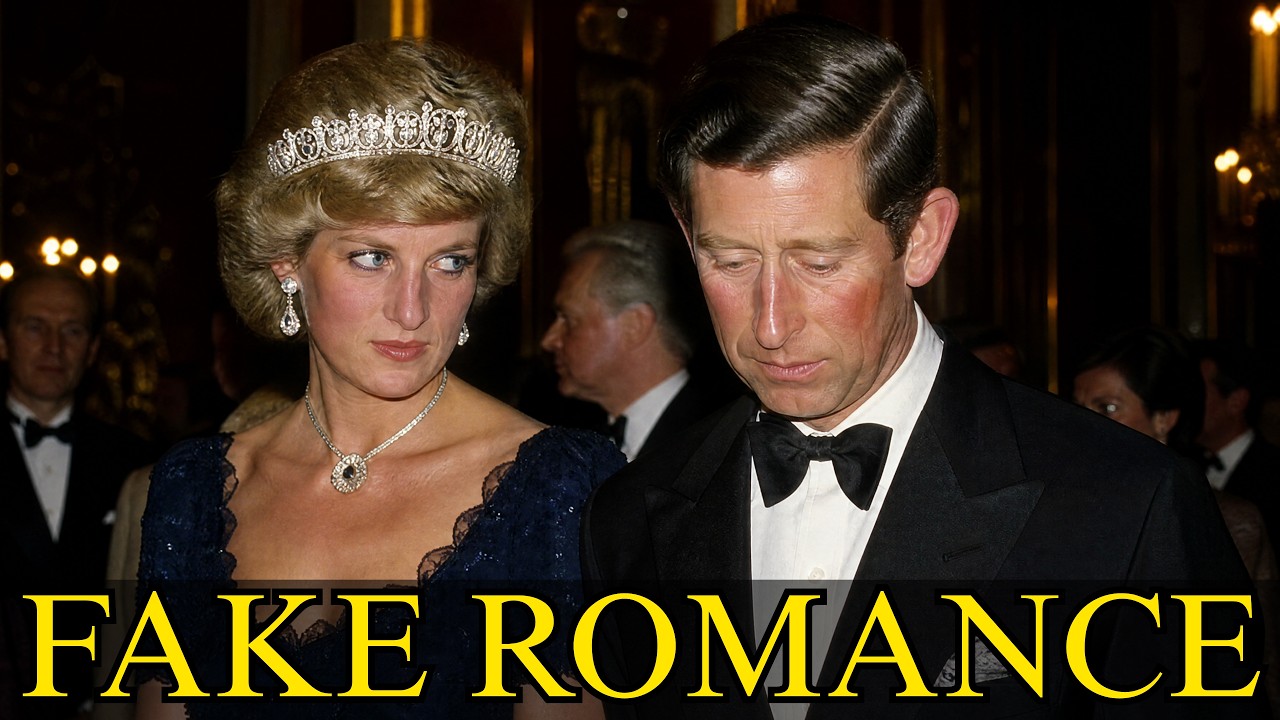
The staff knew which bedrooms were used and which were not. They carried the messages the principals would not carry themselves. They knew the moods, the tears, the silences. They were bound by the deepest conventions of royal service to say nothing. For years, an entire household held the secret of the most watched marriage in the world.
As the decade wore on, the two camps began to work against each other. A story that flattered the princess at the prince's expense was noticed on the other side and answered. Journalists found they could get one version from people close to Diana and a contrary version from people close to Charles. The machinery built to hide the failure of the marriage was becoming the machinery through which that failure would eventually be exposed.
Diana found in a cavalry officer the warmth the marriage had never given her. His name was James Hewitt, and he came into her life in the mid-1980s as a riding instructor. What began as lessons became, by her own later admission, a love affair. It ran for roughly five years, from about 1986 to about 1991, in the shadows behind the public marriage.
Diana was a young woman in her mid-20s, married to a man who kept to another floor of the house, starved of affection at home. Into that loneliness came a man who paid her attention, who was kind to her, who made her laugh. She would say years afterward that she had adored him and had been in love with him. She would also say she had been let down.
In 1994, a book appeared under the title "Princess in Love," written with Hewitt's cooperation, laying out the affair in detail. Later, private letters Diana had written to him became the subject of attempts to sell them for very large sums. The man who had given her comfort in her loneliest years became one more person who turned the marriage's private wreckage into money.
On his side, the private truth had a name he had used since long before the wedding. Camilla Parker Bowles was not a discovery Charles made during the marriage. She was a constant he had carried into it. The relationship predated Diana by nearly a decade and had never fully ended.
Camilla had come into Charles's life in the early 1970s. The two were easy together, suited in temperament and taste. She married her own cavalry officer in 1973. Charles married Diana in 1981. The attachment between them proved durable beyond the reach of either marriage.
For Diana, this was the central wound. She could have borne a husband who was cold or distant. What she could not bear was the sense of a third presence in the marriage. A woman who had been there before her and remained after her. She had felt it before the wedding. She had seen the woman in the cathedral. The suspicion itself was the defining agony of her marriage.
Charles had been placed in an impossible position by the institution he was born to serve. He had loved a woman his family judged unsuitable to be the wife of a king. He had been steered into marrying a suitable young bride he barely knew. His later account was that he had honored the marriage until it had irretrievably broken down. Diana's account placed the return to the old attachment far earlier.
The institution's calculation had been made by serious people in good faith. They judged that a suitable marriage would settle him, that duty would do its work. It rested on a belief that turned out to be false. The belief that duty could manufacture love where love had been displaced. That falseness is the engine of the whole tragedy.
The marriage that had ended in private still had a public schedule. The calendar of the monarchy does not pause for a broken heart. The two offices would agree that husband and wife should appear together at a premiere, a state occasion, a foreign tour. They would step out of the car together into the flashbulbs. For the duration of the event, they would stand close and produce the image of a marriage.
It was acting in the plainest sense. The stage was the front page of every newspaper in the world. The great family gatherings were the hardest theater of all, because there the audience included the family itself. Diana had to smile through them beside a husband who wished to be elsewhere, watched by relatives who knew or half knew the truth.
To be unhappy in private is one kind of suffering. To be required to perform happiness in public on command while unhappy in private is another and sharper kind. Diana was not merely trapped in a cold marriage. She was conscripted into advertising it. The performance was not a favor she did the monarchy. It was an obligation enforced upon her.
A single overseas tour could occupy the two offices for the better part of a year. Every joint appearance was choreographed. Nothing was left to chance. The monarchy's formidable apparatus of image had become an apparatus of concealment. The photographers learned to read the small signs that the performance was a performance. The distance between two figures who should have stood close. The smile that did not reach the eyes.

In February 1992, the prince and princess of Wales were on tour in India. The schedule brought them to Agra, to the Taj Mahal. Charles was elsewhere in the country on official business. Diana went to the Taj Mahal without him and sat down alone on the bench before it. She was photographed there, a solitary figure in front of the world's grandest symbol of married love.
She knew exactly what she was doing. The image said everything. A monument to a husband's devotion, and before it, alone, the most famous wife in the world. The newspapers ran the picture across their front pages. The public, sold a fairy tale 11 years before, began at last to doubt it.
There was worse to come on the same tour, at a polo match. As Charles moved to kiss his wife, she turned her head. The kiss meant for her lips landed awkwardly, half on the cheek and half on nothing. The photograph of the miss ran beside the image of the lonely bench. Together they told the world in a single week what the household had spent years concealing.
Later that same year, in November, the couple traveled to South Korea. They arrived looking miserable and stayed looking miserable. The traveling press settled on a name that stuck. They called it the Glums. It was their last overseas tour together. The performance that had held for the better part of a decade had finally, publicly, and irreversibly failed.
While the cameras were catching the missed kiss and the lonely bench, Diana had already done something far bolder. She had recorded in her own voice the full private story of her marriage. The recordings were smuggled out of the palace. The man who carried them, an old friend named Dr. James Colthurst, is reported to have cycled the cassettes across London by bicycle.
The writer was Andrew Morton. The book, "Diana: Her True Story," appeared on June 16, 1992. Here, for the first time, was the marriage told from the inside. The separate lives, the third presence, the unhappiness that had driven the princess to the edge. The palace reacted with fury and denial. What almost no one knew was that the book was, in its essentials, her own testimony.
That same summer, another private truth forced its way into the open. An intimate telephone conversation between Diana and a close male friend named James Gilbey had been intercepted from the air by an amateur with a scanner. The contents surfaced in the press in August 1992. The episode was christened Squidgygate. Privacy, already thin, was now gone entirely.
On December 9, 1992, the prime minister, John Major, stood at the dispatch box and told the House of Commons that the prince and princess of Wales had decided to separate. The separation, he said, was amicable. There was no reason, the house was assured, why the Princess of Wales should not in due course be crowned queen alongside her husband.
Almost no one believed it. A separated couple whose marriage had been exposed in a book and an intercepted call were being asked to be understood as a pair who might yet be crowned together. The government was performing in Parliament the same act the household had performed for a decade. The performance fooled no one.
In January 1993, a second intercepted telephone call reached the press. This one, recorded like the other in December 1989, was between Charles and Camilla. Its contents were intimate in a way that left nothing to the imagination. It became known as Camillagate. It did to Charles what Squidgygate had done to Diana, and worse.
Charles went first with his version of events. In the summer of 1994, he cooperated with a long television documentary and an authorized biography with the writer Jonathan Dimbleby. He was asked directly about his faithfulness in the marriage. He admitted that he had committed adultery, adding the careful qualification that he had done so only after the marriage had, in his words, irretrievably broken down.
Diana answered in November of the following year. In an interview for the program "Panorama," recorded in secret and broadcast on November 20, 1995, she spoke in a low and deliberate voice about her marriage, her unhappiness, her illness, and the presence that had haunted the union from the start. She spoke of the third person in it with a line that would outlive everyone involved. "There were three of us in this marriage," she said, "so it was a bit crowded."
She admitted her own affair, saying of James Hewitt that she had adored him and had been let down. She questioned gently whether her husband was suited to the role of king. She offered in place of the crown a different ambition: to be a queen of people's hearts. The interview was watched in the United Kingdom by an audience of around 23 million. It settled in a single evening whose version of the marriage the public would believe.
Days after the broadcast, a letter arrived from the one person who could close the matter. It came from the queen and went to both her son and her daughter-in-law. An early divorce, she advised, was the right course. The word of the sovereign settled what years of failure had left unresolved.
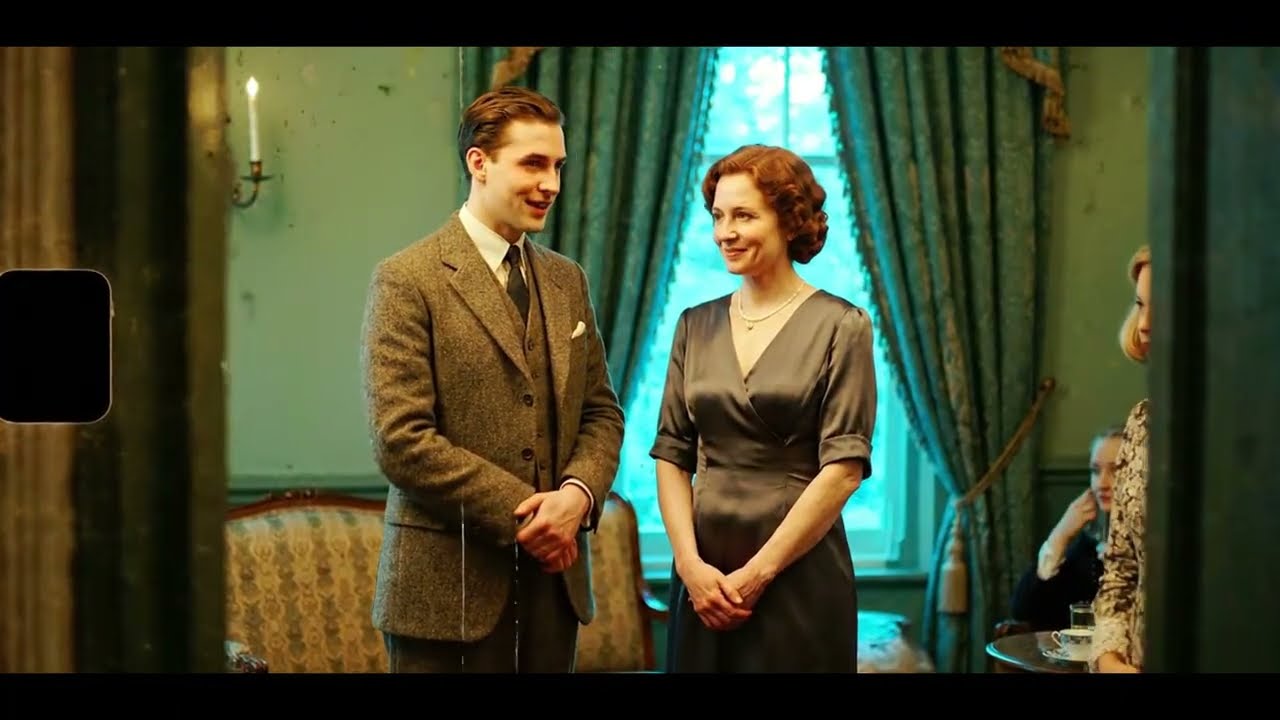
On August 28, 1996, the marriage of Charles and Diana was formally dissolved. Fifteen years and one month after the wedding that 750 million people had watched. Diana retained the title by which the world knew her, Diana, Princess of Wales. She kept her apartments at Kensington Palace. She was stripped of the style Her Royal Highness, the mark of full royal rank.
To those who understood the codes of the palace, it was a demotion of real severity. The institution that had chosen her for her suitability, that had required her to perform a hollow marriage for a decade, released her at the end with the least it could decently allow. She walked out of the marriage into a freedom she had wanted for years and would be allowed to enjoy for barely one.
Almost exactly a year after the divorce was final, the story ended. On August 31, 1997, Diana was 36 years old. She died in the small hours of the morning in a car crash in an underpass beside the river in Paris. The most photographed woman in the world was gone suddenly and violently.
The cruelty of the timing was almost too much to take in. She had endured the marriage and the performance for the better part of 15 years. With barely a year of freedom behind her, a year in which she had begun at last to build a life of her own choosing, she was gone in an instant.
What followed was an outpouring of public grief without precedent in modern British memory. The gates of Kensington Palace disappeared beneath a sea of flowers. Crowds gathered and stayed, weeping openly. The mourning had in it something more than sorrow, a kind of anger, directed at the press that had hunted her, and at the royal family itself, which was felt to have treated her coldly in life and to be too silent now in death.
The monarchy found itself confronted by a public mood it could not control. There were demands that the family return, that the flag fly at half mast, that the queen speak. In the end, remarkably, it bent. The queen returned and spoke. At the funeral, watched once again by much of the world, the two boys walked behind their mother's coffin through the silent streets of London. William and Harry, 15 and 12 years old.
The scale of that farewell matched the scale of the wedding that had begun the story. The same woman, the same worldwide audience, the same institution at the center. But the coach replaced by a hearse, the wedding dress by a coffin, the cheering by tears. The story had come full circle in the most terrible way.
The woman Diana had named as the third person in the marriage would in time be crowned queen in the same abbey where the crown had once seemed destined for someone else. It is the ending almost no one watching the fairy tale in 1981 could have imagined. It is the truest measure of how completely the institution outlasts its own scandals.
The rehabilitation was slow and deliberate. In the immediate aftermath of Diana's death, any public role for Camilla was impossible. But time is the institution's great ally. Year by year, Camilla was made visible, introduced by careful degrees. In the spring of 2005, she and Charles were married at last. When the long reign of his mother ended and Charles became king, the woman who had once been the most reviled figure in Britain became queen and was crowned beside him.
Set that image beside the one the story began with. The balcony kiss of 1981, the golden prince and his young bride sealing a fairy tale before three-quarters of a billion people. And the crowning of 1981's third presence, the woman in gray and pink from the cathedral congregation, raised at last to the throne.
Between those two images lie a broken marriage, a decade of performance, a young woman's despair and testimony and death, and an institution that endured all of it. The cruelty of the story was never one cold moment, one act of betrayal, one villain to be blamed. It was the machine. The long, patient, expensive effort to keep a dead marriage smiling for the cameras, and the human cost that effort exacted from the person least able to bear it.
An institution built for permanence can absorb almost any scandal if it is only patient enough. The people caught inside the scandal are not always so durable. The monarchy came through the crisis of this marriage and emerged with the arrangement it had wanted at the start. The young woman at the center of it did not come through at all.
At the center of it all, unreachable now, is the young woman who walked into a cathedral at 20 because a machine larger than herself required it. Who was chosen for her suitability and required to perform a marriage that had emptied out. Who found what warmth she could outside it and had even that sold back to the world. Who told her own truth at last in a low voice on the nation's television.
"There were three of us in this marriage," she said. "So it was a bit crowded." It is the line that survives. The whole tragedy compressed into a single dry sentence spoken by the person who paid the most to learn its truth. The world had watched the dress and the coach and the balcony kiss and believed it had seen a fairy tale. What it had seen was the beginning of a performance. And the performance in the end had cost far more than Britain was ever told.