In December 1812, a young Shoshone woman lay dying in St. Louis. She was only twenty-four years old. Her name was Sacagawea, and she had already crossed an entire continent at the side of Lewis and Clark, carried a newborn through the wilderness, and saved the expedition’s most important papers from a river.
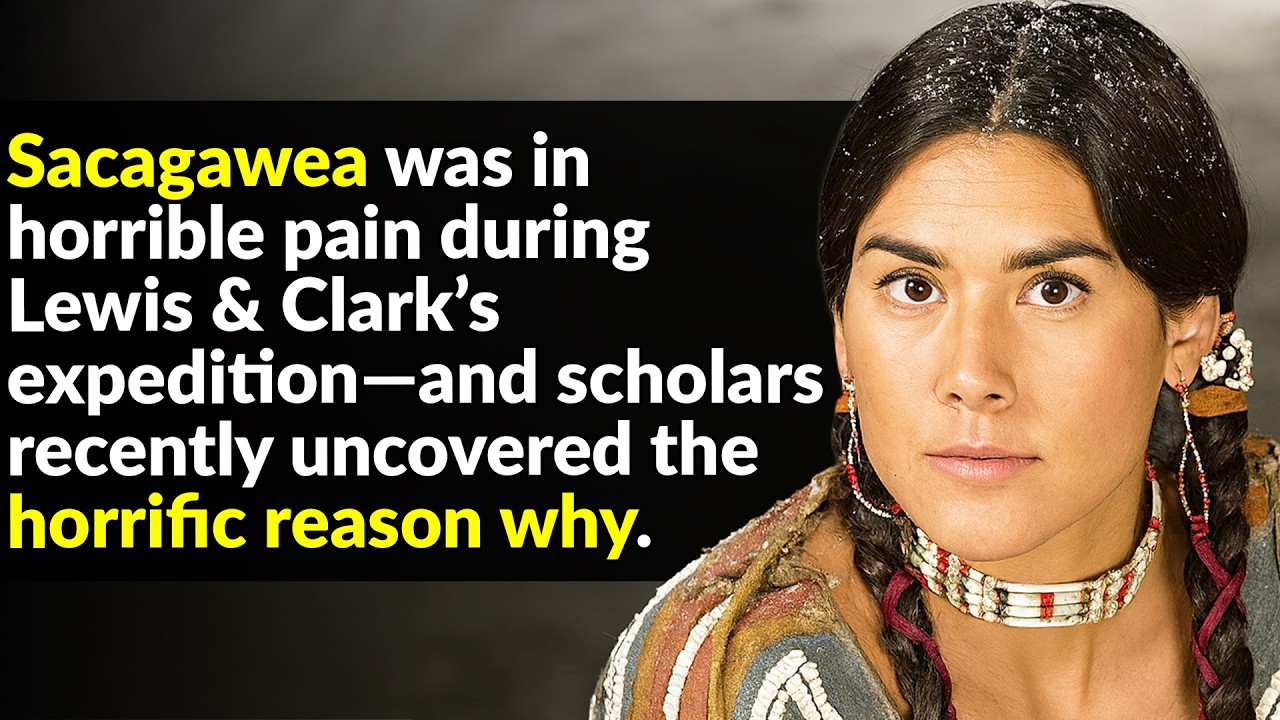
Now, gravely ill with what historians believe was typhus or a putrid fever, she could not fight her way through one last ordeal. She died on December 20, 1812, leaving behind a daughter barely a few months old and a legacy that would outlast every man who had ever tried to control her life. Sacagawea was born in 1788 in the mountainous country along the border of present-day Montana and Idaho, into the Shoshone people. Her childhood ended violently when she was about twelve years old.
A raiding party from the Hidatsa tribe attacked her village. Several of her people were killed before her eyes. She was taken captive and carried off to Hidatsa lands, where she spent three years as little more than a servant. When she turned sixteen, her captors decided she was worth more as a bride than as a slave, so they sold her to a French Canadian trader named Toussaint Charbonneau.
Some accounts say he won her in a gamble. Either way, the transaction was not made with her consent. Charbonneau was roughly thirty years older than she was, had a reputation for violence against women, and had reportedly made money selling women into slavery. He was already married to another Shoshone woman, and Sacagawea became his additional wife.
She was one of at least several women he would claim over his lifetime. In November 1804, two men arrived who would change her life. Captains Meriwether Lewis and William Clark were leading an expedition across the newly acquired lands of the Louisiana Purchase. They needed maps, guides, and interpreters to make sense of a vast continent that the young United States barely understood.
They had little respect for Charbonneau, but they recognized the value of his wife, who spoke Shoshone. They hired Charbonneau as an interpreter, with Sacagawea expected to do the real work of translating when the expedition reached Shoshone country. Shortly before the journey began, she gave birth to her first child, a boy named Jean Baptiste Charbonneau. According to some accounts, she ate crushed rattlesnake during labor to speed up the birth.
Whether that is true or not, the story reflects the toughness that defined her life. Weeks after giving birth, she set out with the Corps of Discovery in April 1805, carrying her infant son on her back. The journey was brutal for everyone, but particularly for a teenage mother with a newborn. Sacagawea did far more than translate.
She cooked, foraged for food, gathered medicinal plants, cleaned camp, and kept the expedition running. Her baby proved useful as well. Clark nicknamed the boy Pomp, and his presence reassured the tribes they encountered that the expedition came in peace, not war. Sacagawea, meanwhile, remained composed even when the landscape turned deeply personal.
As the group approached the territory where she had been kidnapped years earlier, she recognized the land. She did not weep. She simply kept moving. On May 14, 1805, her courage was tested in a way that nearly cost the expedition everything.
Charbonneau was steering one of the boats when a sudden gust of wind sent him into a panic. He lost control, and the boat nearly capsized. Papers and equipment tumbled into the water. While her husband sat paralyzed with fear, Sacagawea dove into the river and rescued the documents and tools that the expedition could not afford to lose.
Lewis later wrote that Charbonneau was a man of no peculiar merit and the most timid waterman in the world. The contrast between the two spouses could not have been starker. A month later, Sacagawea fell dangerously ill. She became so sick that she lost her senses.
Historians now believe she had contracted gonorrhea from her husband. Clark was furious at Charbonneau’s behavior during her illness and wrote that if she died, it would be the fault of her husband, as he was now convinced. She recovered enough to continue, and the expedition pressed on toward Shoshone territory. When they finally reached the land of her people, Sacagawea’s composure broke.
She sang and danced with joy, startling the other travelers. She met a girl who had also been taken captive by an enemy tribe but had managed to escape and return home, a reminder of the life Sacagawea might have lived if she had not been sold to Charbonneau. Then she met the Shoshone chief, Cameahwait. He was her own brother.
When she recognized him, she threw her blanket over him in a sign of affection and burst into tears. Clark recorded that she danced for the joyful sight, and Lewis noted that everyone present was moved by the reunion. The siblings spoke privately that night, and Sacagawea could not stop crying. In some versions of the story, she also encountered the man she was supposed to have married, to whom her family had promised her when she was young.
The expedition was not without its darker moments. Clark’s journal records that Charbonneau beat Sacagawea badly for speaking to another Indian woman, and that the explorers reproved him severely for his brutality. Yet despite the hardship, Lewis and Clark consistently praised her. They described her as plucky, determined, intelligent, cheerful, resourceful, tireless, and faithful.
Clark summed her up in a simple phrase: she inspired us. The travelers reached the Pacific coast after a long and dangerous journey. When Sacagawea heard that a beached whale had washed ashore, she insisted on seeing it, a rare demand from a woman who asked for little. She marveled at the enormous animal and at the Pacific Ocean stretching before her.
It would be one of her last genuinely happy moments. The return journey was difficult. For weeks, her young son fell dangerously ill, and the entire expedition rallied to help him recover. He survived.
By late 1806, more than a year after the journey began, Sacagawea and her husband returned to the Hidatsa people. Clark had grown so attached to little Pompey that he wanted to adopt him. Sacagawea and Charbonneau lived among the Hidatsa for three years before accepting Clark’s invitation to meet him in St. Louis.
The family settled in the city, but both Sacagawea and Charbonneau seemed to prefer the wilderness. Before they could leave again, Sacagawea made a devastating decision. She realized that Clark, with his wealth and his genuine love for her son, could give Jean Baptiste a better life than she ever could. In 1809, she and her husband left the boy in St.
Louis with Clark, where he attended school and eventually grew up to become an explorer, just like his mother. By then, Sacagawea was pregnant with her second child. The pregnancy was brutally hard. She was weak and ill, but in 1812 she gave birth to a daughter named Lisette.
She would not have long to know her. On December 20, 1812, she died. Some historians have questioned this ending. In the early twentieth century, a scholar claimed that Sacagawea lived until 1884 and died in Wyoming.
Most modern historians reject that claim, believing that the woman in Wyoming was a different person, now known as the Wind River Sacagawea. After her death, Charbonneau accepted Clark’s offer to formally adopt Lisette while he returned to his old fur trading ways. John Baptiste inherited his mother’s restless spirit. Lisette’s fate is unknown, but she likely died during childhood.
Charbonneau went on to marry at least five wives. His last marriage came when he was seventy years old and his bride was fourteen. Sacagawea’s story did not end with her death. She became an American and Shoshone icon.
Her face has appeared on United States currency, and the river where she saved the expedition’s papers now bears her name. Popular books and films have sometimes imagined a romance between her and William Clark, but most historians doubt it. The two cared deeply for each other, and Clark adored her son, but the evidence for a secret love affair is thin. Everything known about Sacagawea was written by other people.
She left no letters, no diary, no words of her own. What survives is a portrait drawn by the men who watched her endure, rescue, and inspire them across a continent. Her name, depending on the translation, means boat launcher or birdwoman.
In either case, seeing the world was part of her destiny.