In the early hours of July 8, 1943, a tropical storm lashed the island of New Providence in the Bahamas. Inside Westbourne, the beachfront mansion overlooking the shore, the richest man in Canada lay dead in his bed. Sir Harry Oakes had been struck four times in the skull, doused with a flammable liquid, and set alight. The pillow above him had been torn open, feathers still drifting through the room when his body was found.
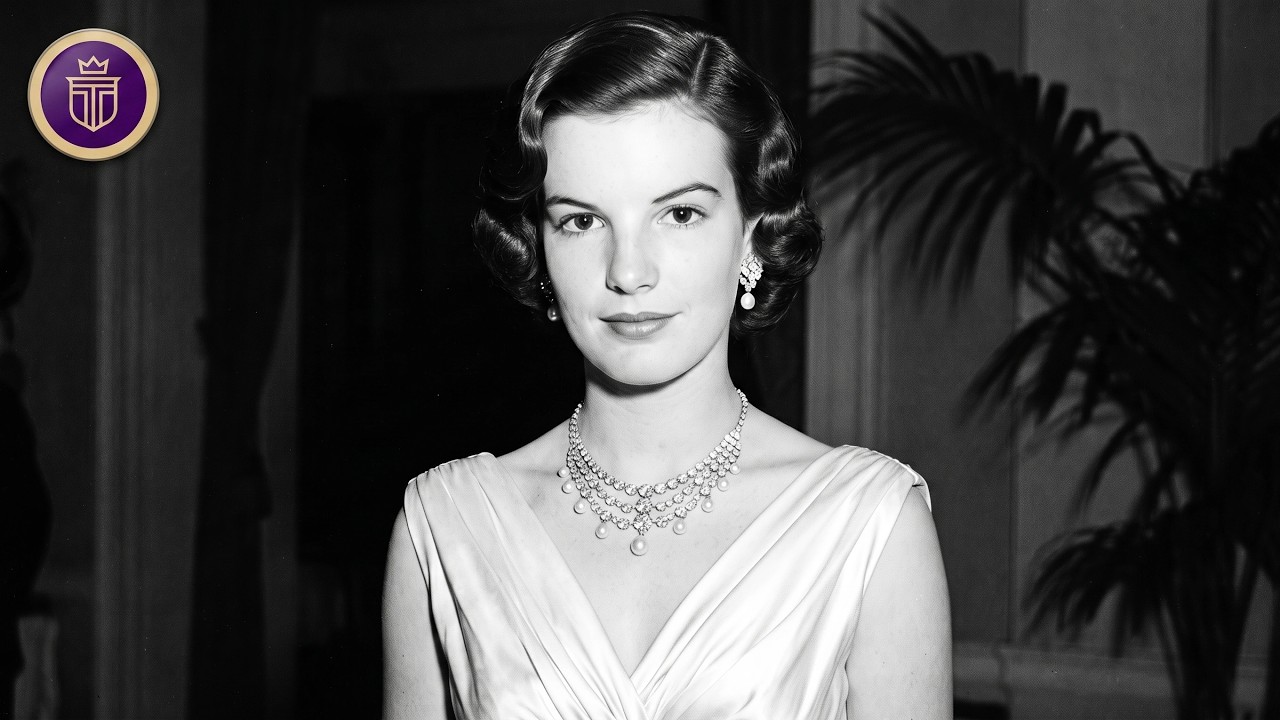
Within thirty-six hours, the colony’s governor had directed the investigation toward a single suspect, a French count who had secretly married Oakes’s eighteen-year-old daughter the year before. The daughter was nineteen now, studying at a Vermont college, and she had returned home to face a choice no child should have to make. Her murdered father lay in a grave, her husband sat in a cell awaiting the gallows, and the island had already decided which one she should abandon. She looked at the waiting journalists and said, “Freddie would not have done this.
I am the only person who can help him. ”
Harry Oakes was born on December 23, 1874, in Sangerville, Maine. The third of five sons of a justice of the peace, he grew up in a respectable but not wealthy family, eventually attending Bowdoin College and then Syracuse medical school, not out of passion but because it was a respectable path his family expected him to take. Then, in the summer of 1896, he heard the first rumors out of the Klondike, the gold fields of Canada’s far northwest.
From that moment, he never intended to become a physician at all. He abandoned medical school without graduating and headed north at twenty-two, carrying little more than his clothes and a firm belief that gold was there for anyone stubborn enough to find it. The Klondike gave him nothing, by the time he reached the Yukon in 1899, the great rush had ended. His two years of medical training turned out to be the most valuable thing he carried north, and he spent part of that first brutal winter treating other prospectors for frostbite and injuries.
What followed was one of the most stubbornly futile prospecting campaigns in North American mining history. Over the next twelve years, Oakes prospected through Alaska, New Zealand, Australia, the Philippines, Mexico, West Africa, the Belgian Congo, California, Nevada, and Colorado, chasing rumors from one end of the mining world to the other. Two things he noticed during his travels would eventually make him one of the richest men in the world. In the gold fields of Western Australia, he saw that gold often hides inside a green mineral called telluride, a mineral so easily mistaken for worthless pyrite that untrained eyes simply ignored it.
In Colorado, he found the same tellurides locked inside a volcanic rock called porphyry, a granite that cools late and seeps into cracks in older rock, hardening there. Most prospectors dismissed it as useless red granite and walked past without a second look. Oakes did not. By 1910, he heard of gold and silver discoveries in Northern Ontario and hurried back to Canada, learning of granite formations east of a small settlement called Swastika.
In June 1911, at thirty-six, he stepped off the train with his tools and about $2. 65. Within days of pitching his tent on the south shore of Kirkland Lake, Oakes found exactly what he had spent fifteen years training himself to recognize: clean ground laced with thin quartz veins, studded with the green telluride grains every other prospector in the region had looked at and walked past. In the local store, he announced to a skeptical shopkeeper that he had come north to build a single mine.
When the man said he had never heard of such a thing in his life, Oakes simply told him to wait and see. When his money ran out completely, he made a financing deal with two brothers named Tom and George Tough, surrendering a stake in a second promising mine in exchange for funds to keep working. That mine, which the Tough brothers helped him open, became the first working mine in the entire Kirkland Lake district. By the end of 1912, it was producing rich telluride ore, and the first shipment of 101 tons brought more than $46,000 from the metal smelter.
Oakes reinvested those early profits directly into the ground he had staked for himself, sinking a shaft into a claim he called Lakeshore and betting everything on what lay beneath. Early results were weak, and raising money to continue drilling became harder. He was convinced, without evidence that could persuade cautious investors, that the real riches lay deeper than anyone had yet dug. He told everyone who would listen, and many who would not.
He incorporated a public company to raise the capital to drill and find out what lay underground. In early 1918, seven years after he first entered Kirkland Lake, a deep underground cross-cut tunnel hit a structure that became known as the Main Break: a continuous wall of gold-bearing rock, 100 feet wide at its richest, ultimately mined to a depth of 8,000 feet. The ground he had nearly abandoned held the richest gold in the district. Over its operating life, the Lakeshore mine produced more than 8 million ounces of gold and was, in its time, the largest single gold producer in the entire Western Hemisphere.
By 1927, nine years after the mine’s discovery, it had paid Oakes $28 million in share dividends alone, and continued to give him nearly $3 million more each year. By the early 1940s, his fortune was estimated at around $200 million, a sum that, by common calculation, made him the richest man in the country. The man who amassed the fortune was no easier to deal with than the ore was to reach. He dressed like a miner long after he had lost the need, carried a gruff and demanding manner, and held deep suspicion of governments, banks, and lawyers, whom he believed were constantly conspiring to seize what he had earned.
By the early 1930s, his relations with the Canadian state had deteriorated into open hostility. The Conservative administration imposed taxes he calculated were costing him $17,500 a day, nearly 85 percent of his gold revenue. It was bitter as well, because he had aspired to a seat in the Canadian Senate in recognition of his earned wealth, and he was never given it. In 1934, he left Canada for good, moving first to England and then, in 1935, to Nassau in the Bahamas, a British colony where the tax on his enormous income dropped to just 5 percent.
His marriage came late, as it often does for men who spend their youth alone in mining camps. He married Eunice McIntyre in 1923, when he was forty-eight and she was thirty, and their marriage proved loyal and lasting. They had five children, the eldest a daughter born in 1924 named Nancy, the girl who would one day stand between her murdered father’s memory and her husband’s life. In the Bahamas, Oakes applied the same driving energy he had once spent on Ontario to his adopted island.
He donated generously to build the Nassau airport, bought the largest hotel in the Bahamas and expanded it, and invested heavily in island real estate alongside a developer named Harold Christie. He won a seat in the Bahamas House of Assembly, and one of his closest business relationships on the island was with Christie, the developer whose name would become entangled with the mystery of his death. When the Duke and Duchess of Windsor arrived in 1940, the duke to serve as governor of the colony, the Oakes family became socially close to them almost immediately, the royal couple even staying at Westbourne while Government House was prepared. In June 1939, the King granted Oakes a baronetcy, largely in recognition of his donation of £50,000 to a London hospital, and the gruff former prospector became Sir Harry Oakes, first baronet of Nassau.
Into the glittering, gossip-filled world of the Oakes family came a tall man from Mauritius who owned a yacht, a borrowed title, and a talent for marrying wealthy women. Born Marie Alfred Fouquereaux de Marigny in Mauritius in 1910 to a wealthy French Creole family, he was known as Count de Marigny, a courtesy title he had given himself. Nassau society mocked or dismissed the claim, but the man himself was hard to ignore. He stood 195 centimeters tall, his skin tanned deep from days at sea, and he sailed a yacht he provocatively named The Conch.
The Duke of Windsor, who loathed him, described him as a reckless adventurer with a bad reputation for immoral conduct with young girls, almost the harshest thing a governor could say about a man in his colony. He arrived to Nancy Oakes after two previous marriages, neither casting a flattering light on him. His first wife, a wealthy Alsatian woman he married in Paris in 1937, he left after about four months, reportedly without returning the large dowry she brought. The pattern was so clear that Nassau knew it by heart: a beautiful woman, a quick marriage, her money, then a departure leaving her poorer.
His second wife left her husband and traveled to Reno for a divorce, then married de Marigny on the very day the decree was granted. Her money funded his life in Nassau, his sea voyages, and a chicken farm he managed with notable success. Problems with the legal procedures of an earlier divorce would, years later, threaten to unravel his marriage to Nancy. This time, the bride was an eighteen-year-old girl whose father owned the largest gold mine in the hemisphere and was considered the richest man in Canada.
De Marigny began courting Nancy Oakes passionately when she was seventeen, still living with her parents at Westbourne. On May 19, 1942, two days after her eighteenth birthday, they eloped and married secretly without telling her parents in advance. They appeared that night at the Colony restaurant in New York, where Nancy announced the marriage to everyone nearby, and the news swept through Nassau with lightning speed. Her father raged, her mother wept, and every brow on the island rose.
The groom was thirty-two, the bride eighteen, twice divorced, nearly penniless except for the fortune of his new wife, and known for marrying wealthy women and leaving the marriages burdened with debt. The governor of the colony despised him. The couple left immediately for Mexico City, where the marriage nearly ended before it truly began. Nancy contracted typhoid fever and a severe oral infection at the same time and nearly died.
Her parents traveled to her side, and de Marigny was there every day, sometimes twice, donating his blood for transfusions. By all accounts, he was devoted to his young sick wife. When Nancy told her mother she was pregnant, doctors advised she was too weak to carry the child, and the pregnancy was terminated for medical reasons, with her father strongly pressing for the decision. It was another wound in a relationship that never had a real chance to heal.
Then Sir Harry barred his son-in-law from the house entirely, and both he and Lady Oakes amended their wills. Oakes instructed his lawyer that de Marigny was not even permitted to write letters to Nancy, and described the young man to at least one acquaintance as a sex pervert. De Marigny was heard describing his father-in-law as a stupid old man that nobody could reason with, and Oakes’s own mine manager would testify that the young man once threatened to kick him. By the spring of 1943, the marriage had drifted into an unsettled separation, Nancy enrolled at Bennington College in the hills of Vermont, de Marigny was left in Nassau with his chickens and yacht.
Sir Harry intended to travel north to join his family in early July. Then, for reasons no one fully explained, he changed his mind and stayed. On the evening of July 7, 1943, Sir Harry hosted a small, quiet dinner at Westbourne while his wife and five children were at the family summer home in Maine. Among the guests was Harold Christie, his oldest friend in Nassau, who spent the night in a bedroom on the same floor, leaving with others around eleven o’clock.
In the early hours, a fierce summer storm swept the island, heavy rain, continuous thunder, and strong winds, cover enough for almost anything a person might want to do unseen. Somewhere in that eastern wing between roughly two and five in the morning, while the storm drowned every sound, Sir Harry Oakes was beaten to death in his bed. In the morning, Harold Christie knocked on the bedroom door to ask about breakfast and received no answer, so he pushed the door open and found what remained of his oldest friend on the island. Oakes had been struck four times behind the left ear with something pointed and multi-pronged.
The wounds were small and clustered, not the result of bludgeoning. Investigators would argue for years over whether the weapon was a small pick, a four-pronged tool, or an ice awl, but no weapon was ever found. After death, someone had soaked the body in a flammable liquid and set it alight, but the fire did not burn completely, leaving a charred but identifiable corpse. A torn pillow had thrown feathers over the bed and body, and the ceiling fan was still spinning, so some feathers remained hanging in the air when the first people entered the room.
Bloody handprints were visible on the painted Chinese screen beside the bed, on the walls and doors, and these prints would become the focus of the upcoming trial. Christie, by his account, did not initially realize his friend was dead and tried to revive him, wiping his bloodied head with a towel and lifting water to his lips. He touched the body and the bed before any police officer set foot in the room. Christie, by his account, called several people that morning before it occurred to him to call the police.
By the time the first Bahamian officers arrived, people had passed in and out of the room repeatedly, handprints smudged, objects displaced, the crime scene already fading before everyone’s eyes. The news reached the Duke of Windsor at Government House early that morning, and the governor moved quickly and strangely in ways that have puzzled historians ever since. He imposed a press blackout, but reporters broke through it within hours. He ordered his Bahamian investigators to stand aside, and most strangely of all, he did not summon Scotland Yard, the usual procedure for serious crimes in British colonies.
Whether Scotland Yard was truly unavailable in wartime, as was later claimed, or whether it was an excuse, most accounts regard his refusal to summon it as a deliberate choice rather than an emergency. Instead, he picked up the phone and called Miami. He contacted his own acquaintances and brought in two officers of the Miami police: Captain Edward Melchen, formerly the duke’s personal bodyguard during his visits to Florida, and Captain James Barker, Melchen’s colleague and a fingerprint expert, whose work would soon become the center of the case. The two traveled to Nassau the same day.
What they did upon arrival was not an investigation so much as demolition. The crime scene was not properly sealed. People wandered through, touching what they pleased, and the bloody handprints on the screen and walls were not photographed in place before being wiped away. By the evening of July 9, about thirty-six hours after Christie pushed open the bedroom door, the Miami investigators had settled on a suspect and needed to look no further.
De Marigny fit the profile perfectly. He was known to despise the dead man, had driven him near Westbourne in the early hours, had admitted the hatred himself, and had burn marks on his arms and beard, which he attributed to lighting cigars and candles at a dinner party he had hosted. He had even walked into the police station that morning, reportedly in an agitated state, and asked whether his car could be searched, a move his defenders later described as the act of a man hiding nothing, while the prosecution interpreted it differently. On the evening of July 9, thirty-six hours after the body was found, they arrested him.
Nancy Oakes de Marigny was nineteen, sitting in a dormitory at Bennington, when the news of her father’s death and her husband’s arrest reached her. She returned immediately to Nassau to find herself in a situation that would have staggered someone twice her age with ten times her experience. Her father had died in a way that was almost impossible for anyone to absorb at once. Her mother sat in mourning, convinced that the young husband she had never wanted was the murderer.
Island society had already condemned him privately and was busy building public pressure, waiting for the trial to make its verdict official. Her husband sat in Nassau prison, awaiting a trial most of the island expected to end in his execution by hanging. Into this wall of hostility walked a teenage girl with no legal background and no allies among the island’s rulers, carrying only her certainty about her husband and a shrewdness no one expected from her. From the moment she stepped off the plane, Nancy told everyone who would listen that Freddie had not done this, that she was absolutely certain of his innocence, and that she was the only living person who could help him.
She was nineteen, standing amid the wreckage of her family, and she did not weep for the cameras or surrender to her mother’s certainty. She simply stated her position and set about proving it. Her first real move was the smartest of the entire case, and it came from a nineteen-year-old with no experience in criminal law. She hired Raymond Schindler, then one of America’s most famous private investigators, a man seasoned by celebrated cases, and put him to work conducting a parallel investigation alongside the defense, casting a cold, expert outside eye over everything the two Miami men had done.
Schindler went to Nassau and ran his own inquiry in parallel with the defense team. His findings, delivered secretly to the defense lawyers, would ultimately dismantle the prosecution’s case in court. The man to whom he delivered those findings was a local lawyer named Godfrey Higgs, who, despite being theoretically outmatched, was about to prove himself far more effective in practice. The trial opened on October 18, 1943, in the Supreme Court of the Bahamas in Nassau before a notably fair chief justice, Sir Oscar Daly.
The case fed newspapers around the world for three months, the courtroom packed every day. Among the reporters was Erle Stanley Gardner, creator of Perry Mason, who arrived expecting a sensation and instead found a slow, methodical display of how a murder case collapses when the evidence it rests on has no real weight. The prosecution was led by Sir Alfred Adderley, the most prominent lawyer in the Bahamas, who had been retained for the defense by de Marigny’s own attempted request and instead ended up working to convict him. On paper the deck was heavily stacked, but the entire battle would come to rest on a small cluster of physical facts that no reputation on either side could obscure.
The prosecution’s case on paper was strong. Here was a man who had publicly declared his hatred for the victim, a history of marrying wealthy women and parting with them over money, and no clear account of his movements near Westbourne during the crucial hours of the night. Everything Oakes had said about him, the sex pervert language, the barred door, the instruction about letters, was now recycled as background for murder. But what the prosecution had not yet realized was that the physical case, the only part that would matter once passions cooled, rested entirely on a single fingerprint lifted by one Miami investigator.
Captain James Barker swore he had lifted it from the painted Chinese screen beside Sir Harry’s bed and identified it as the right little finger of Alfred de Marigny. It was the only piece of physical evidence in the entire case placing the accused inside the dead man’s room, logged as Exhibit C. It was meant to be the final nail. Over several days of cross-examination, Godfrey Higgs, aided by Schindler’s technical knowledge and a fingerprint expert brought in from New Orleans, drove that nail out, problem by problem.
Barker had not photographed the print on the screen before lifting it, so his claim about its origin rested on nothing but his own unsupported word. The lifted print carried none of the raised grain of the screen’s painted background, the slight texture that any genuine print lifted from that surface should have borne, and the edges. Other prints Barker took from the same screen carried that pattern clearly; Exhibit C did not. Captain Maurice O’Neill, the visiting fingerprint expert from New Orleans, testified that the absence of that pattern was completely inconsistent with the print having come from the screen at all.
Pressed repeatedly, Barker could not identify where on the large screen the alleged print had been located, something no honest expert who had lifted it should have had the slightest difficulty answering. Then the case split apart. Barker and his partner Melchen contradicted each other outright under oath on the simplest of questions: when the crucial print was identified. Barker dated the identification to July 9, the day after the murder; Melchen swore he heard nothing of any print until July 19 or 20, ten or eleven days later.
Two investigators on the same case, ten days apart on the timing of the only crucial evidence, and the prosecution offered no explanation. Higgs laid his theory before the jury steadily. On July 9, as he claimed, the two investigators had questioned de Marigny informally upstairs at Westbourne, a session Melchen denied, but four witnesses confirmed, during which de Marigny touched a glass of water and a cigarette case. Higgs alleged that Barker had taken the print from one of those objects and then produced it as though it had come from the crime scene.
Barker denied the theory forcefully but could not explain the missing background pattern and could not identify any point on the screen where the print was supposed to have been. He was caught in a plain lie on the witness stand, swearing he had fingerprinted everyone who entered the room, then admitting he had not. Photographing a print in place before lifting it is the first rule of the field, because it proves the print’s location and orientation beyond doubt, and Barker had simply neglected to do it. The chief justice described Barker’s methods as incomprehensible and Melchen’s admissions as extraordinary, and he told the jury plainly that the fingerprint, the physical foundation of the case against de Marigny, was not reliable evidence.
With the only physical evidence collapsed, the prosecution leaned increasingly on the testimony of Harold Christie. But Christie’s account was not coherent enough. He said he had slept in the house, heard nothing through the storm, and found his friend dead in the morning. Then the defense called Captain Edward Sears of the Bahamas Police, who swore under oath that around one in the morning, from the very window of the crime scene, he had seen Christie being driven in a station wagon through downtown Nassau.
This was not rumor but the sworn testimony of a serving police officer with no apparent reason to invent it. Christie flatly denied leaving the house. The two accounts could not be reconciled, and the contradiction was never resolved in court or anywhere else. A more shadowy thread ran outside the courtroom entirely.
A night watchman had reportedly told investigators he had seen Christie with an unidentified man aboard a strange boat in the harbor the night of the murder, and that watchman drowned under mysterious circumstances before he could testify. The defense also pointed out that Christie had parked his car at a distance from Westbourne on the night of the dinner, a strange choice for a man intending to sleep under that roof. None of these threads proved Christie had done anything, and no conclusive evidence was ever reached, but together they made the prosecution’s tidy story look far less tidy than it had seemed at the outset. The Duke of Windsor, who had personally chosen every turn of the investigation, arranged to be in the United States for the entire trial.
He was never called to testify and never returned to Nassau to answer for any of the decisions that had shaped the case from its first morning. De Marigny took the stand in his own defense, composed to the point of arrogance, presenting the jury the spectacle of a man who openly admitted the hatred and flatly denied the crime. He acknowledged that he had been barred from the house, that her parents had hated the marriage, and that none of it meant he had driven through a storm to kill the old man in his bed. The burned hair, he said, came from candles and cooking at his party, and the guests who were there could testify for him.
The defense called Nancy as its last witness. She had spent weeks at the heart of the most watched trial in the world. She testified for her husband while running a fever and nearly fainted once in the dock while her mother sat in the room, still believing he was guilty. The report of her collapse spread through newspapers around the world, read by millions as the spontaneous act of a faithful wife.
Whether spontaneous or carefully planned, no gesture in the entire trial was more effective with the watching public. When the prosecutor rose to give his closing address, Nancy stood up, said she could not sit and listen to such vile accusations against her husband, and walked out of the courtroom in front of everyone. The jury withdrew on November 12, 1943, and was gone for barely two hours. The foreman rose and announced a verdict of not guilty by a vote of nine to three, exceeding the clear majority the Bahamian courts of the time required for acquittal.
The courtroom erupted, and de Marigny was lifted onto the shoulders of the crowd, many of them Black Bahamians who had watched the white colonial establishment fumble and distort the case from the start with a contempt they no longer hid. Nancy had done exactly what she had set out to do the moment she stepped off that plane in July, and her husband walked out of court a free man. Then the same jury added a condition to its verdict. The jury unanimously recommended that Alfred de Marigny be deported from the Bahamas as an undesirable alien, so the acquittal and the deportation came at the same moment.
Freedom and exile in a single judgment. Four days after his acquittal, the duke’s own executive council confirmed the order, and he was sent from the island forever. Freed from the charge of murder and expelled from the island in nearly the same breath, de Marigny left. Nancy, without apparent hesitation, chose to follow her husband into exile.
In the end, the case was not closed with an answer but with a deportation. The murder of Sir Harry Oakes was never reinvestigated. No one else was ever arrested. No other theory was ever tested in court.
The four small wounds behind the old prospector’s ear remained unexplained for nearly a century. Historians have focused on Harold Christie, the developer, because of his strange movements that night and the sums of money that passed between him and Oakes, and on the Duke of Windsor’s frantic mishandling of the case, but no one has ever succeeded in solving it. The rope that was said to have been ordered for de Marigny was never needed. Harold Christie lived on and prospered for decades, his contradictions in the case unresolved, never seriously pursued by anyone in authority.
The Duke of Windsor finished his term and was never asked under oath about the choices that shaped the case from its first morning. Nancy Oakes, nineteen years old, had stood between her murdered father’s memory and her husband’s life. She chose her husband without hesitation and never publicly looked back. The choice cost her her grieving mother’s closeness, bound her to a man the world would always regard with suspicion, and shaped the rest of her life.
She had bet her own judgment against her father’s memory, her mother’s grief, and the opinion of every respectable person on the island, and she had been proven right in the only place that mattered. She lived for nearly eighty years, and the choice she made at nineteen in a crowded courtroom beneath a slowly turning ceiling fan followed her through nearly every year that followed.