On October 20, 1968, Jacqueline Kennedy married Aristotle Onassis in a small chapel on Scorpios, his privately owned island in the Ionian Sea. It rained. There were roughly two dozen guests, including her two children, while his private security and the Greek Navy kept the press off the island. She was thirty-nine.
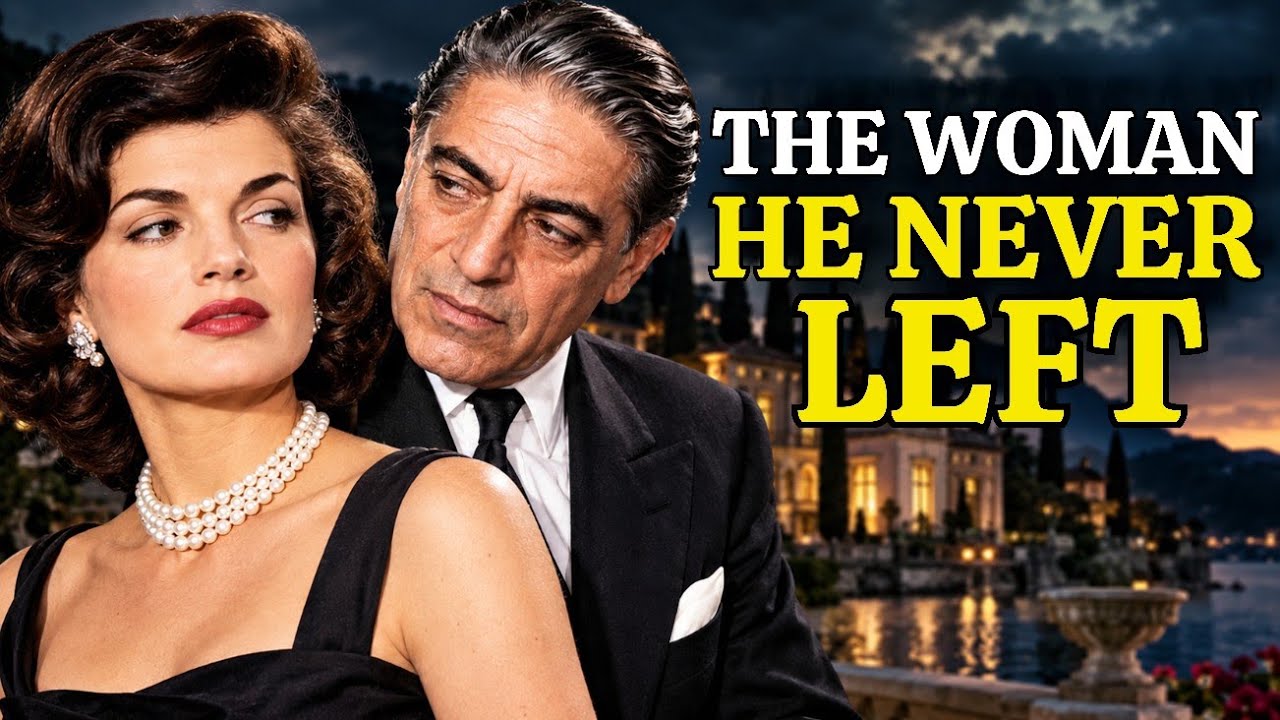
He was sixty-two. She was the widow of a murdered American president, the most admired woman in the Western world, who had walked behind her husband’s coffin in front of a watching planet. He was a Greek shipping magnate with a complicated reputation, a divorce behind him, a decades-long relationship with opera singer Maria Callas, and a business career that had brushed against American authorities more than once. The reaction was immediate and, in large parts of the world, hostile.
The American press treated it as something close to a defection. A German newspaper ran a headline about America losing a saint. There was open speculation about whether the Catholic Church would take action against her for marrying a divorced man, though that speculation eventually came to nothing. In Greece, the reaction was closer to national triumph: a boy from Smyrna who had arrived in Argentina with almost nothing had married the widow of an American president.
What is usually missed is how rational the decision was on her side, and how little it had to do with romance. She had watched her husband murdered beside her. She had watched his brother Robert murdered five years later, four months before this wedding. She had two young children carrying the Kennedy name, and she had said privately that she believed her family was being hunted.
In the summer of 1968, that was not paranoia. Onassis could offer a private island, a private airline, private security, and the financial capacity to make two American children genuinely difficult to reach. The marriage was, from the beginning, a transaction both parties understood perfectly. Before the wedding, they signed a prenuptial agreement that biographers describe as running to somewhere between 170 and 173 separate clauses.
It reportedly covered how much time the couple would spend together, financial provision in the event of divorce, an annual income guaranteed to her if he died, property rights, and, most important to her, comprehensive lifelong protection for her and her two children. That security clause was, by every account, the part she genuinely cared about. Onassis approached his own marriage the way he approached a shipping charter: cap the exposure, define the liabilities in advance. Under Greek law at the time, a surviving spouse was entitled to a substantial statutory share of an estate regardless of what a will said, and a good deal of the 1968 negotiation was about structuring around that.
For roughly four years, the arrangement more or less worked. Onassis was, by most accounts, delighted at first, almost boyish about it. He had acquired the most photographed woman alive and showed her off constantly to friends, to rivals, to anyone who came aboard the yacht. He bought her extraordinary jewelry, including a ruby set that made international news.
Scorpios gave her something unavailable to her since 1960: privacy. No crowds, no cameras beyond the perimeter. Her children could behave like children without a flotilla of photographers offshore. For the first time in a decade, she had no public role, no campaign, no state funerals, no obligation to be a symbol of anything to anybody.
By several accounts of friends, she was having the most relaxed years she had experienced since her twenties. The marriage broke suddenly over something that had nothing to do with either of them. On January 22, 1973, Alexander Onassis, Aristotle’s only son, twenty-four years old and the designated heir to the shipping empire, was aboard a small amphibious aircraft taking off from Athens, seated beside a new pilot he was helping check out. The plane banked sharply and came down within seconds of leaving the ground.
His father chartered a neurosurgeon from London overnight. It made no difference. Alexander died the following day. The decision to withdraw support fell to Aristotle.
His father never recovered. Business associates who had dealt with him for thirty years described a different man afterward, someone who had aged a decade in months. He refused to accept the crash had been an accident, spending enormous sums on private investigations into sabotage, convinced his son had been killed as an attack on him personally. Investigators were hired, engineers consulted, rewards reportedly offered.
Nothing was ever substantiated. He pursued it anyway for the remaining two years of his life. Somewhere in the middle of that grief, he turned on his wife. This part is documented across multiple biographies and by multiple people who were around him at the time.
After Alexander’s death, Onassis began telling friends and employees that Jacqueline had brought misfortune into his life. He used the language of curses, referring to her with a Greek word carrying connotations of a woman who brings ruin on a household, more than once, to more than one person. He was not a superstitious man; he had built a shipping fleet from nothing in a business that punishes mysticism. But he had lost his son and needed the loss to have a cause.
The cause he settled on was the American woman he had married four years earlier. Underneath it sat a piece of grim arithmetic everyone around him understood. Alexander’s death meant the empire would now pass to his daughter Christina, who had no interest in running it and who Onassis did not believe capable of it. The thing he had built his life around had lost its purpose inside thirty-six hours.
Christina was twenty-two when her brother died. She had never warmed to her stepmother, and the feeling was mutual. After Alexander was gone, she was in her father’s company constantly through his decline, and by every account, she did not keep her opinion of Jacqueline to herself. It would be too simple to say she turned him against his wife; he was managing that fine on his own.
But a grieving man being told daily by his only surviving child that the American woman was the problem is not a man likely to arrive at a balanced view. There was a second, more organized front. Costa Gratsos, one of Onassis’ oldest associates, ran a significant part of the operation out of New York and had disliked Jacqueline from the start. In the final years of the marriage, by multiple well-sourced accounts, he began feeding unflattering stories about her to journalists with his employer’s knowledge and approval.
The husband was using his own organization to brief the press against his own wife, not during a divorce, but during the marriage, while she still lived under his name and his protection. The stories that surfaced in this period about her spending, her coldness, her calculation did not appear from nowhere; a number came directly out of his own office. It also explains why the public image of Jacqueline Onassis turned so sharply in this period. A good deal of the portrait of a cold, calculating woman who had priced herself and sold was manufactured by people being paid by her husband.
There is a detail about the final two years that explains how the marriage actually dissolved. It did not end in an argument. It ended in geography. Scorpios had been the center of the arrangement, the one thing he had that no one else could offer.
After Alexander died, Onassis stopped going. He buried his son in the same chapel he had been married in five years earlier and found the place unbearable afterward. She kept using it. He did not.
The couple lost their only shared ground. He was in Paris, Athens, hospital rooms. She was in New York with two teenagers. What had always depended on both of them being in the same small number of places became two separate lives connected by a legal document.
Money was the other fault line, and it predated Alexander’s death. Reports from the period put her annual spending north of a million dollars, and it was the pattern that irritated him as much as the total: shoes and coats ordered by the dozen, much of it never worn, some of it quietly returned. He raised it with her directly for years and largely tolerated it as the cost of the arrangement. After Alexander died, by multiple accounts, he cut her monthly allowance by roughly a third.
Not a financial measure at that level of wealth, but a message. He also went back to the woman he had never really left. Onassis began his relationship with Maria Callas in 1959. She had left her husband for him and expected to marry him, even renouncing her American citizenship in 1966, which under Greek law dissolved her prior marriage and cleared the legal path.
He married Jacqueline instead without telling her; she reportedly found out the way the rest of the world did. The relationship did not end there. By multiple accounts, Onassis resumed contact with Callas during his marriage, appearing at her Paris apartment in his final years, and on at least one occasion was turned away at the door and left standing outside, whistling up at her window. In the last year of his life, Onassis decided to end the marriage.
He hired Roy Cohn, a New York attorney with a reputation for being the most aggressive and least scrupulous lawyer in the city, who had made his name as chief counsel to Senator Joseph McCarthy in the 1950s. Cohn was not hired for expertise in matrimonial law; he was hired because everyone in New York understood what retaining him meant. According to biographer Ariane Stassinopoulos, Onassis instructed Cohn to make the process as humiliating and punishing for his wife as the law would legally allow, and by multiple accounts hired private investigators to follow her. Nothing useful was ever found.
Jacqueline had been under some form of surveillance for fifteen years and had become very good at giving nobody anything. He did not get to finish it. His body ran out first. Onassis had been diagnosed with myasthenia gravis, an autoimmune condition that progressively weakens the muscles.
By late 1974, it had advanced considerably. The most frequently cited detail is that his eyelid muscles had failed to the point where he taped his eyes open to see. In February 1975, he was flown to a hospital outside Paris for gallbladder surgery and never really recovered. He spent his final weeks in that city, the same city as Maria Callas.
Jacqueline was in New York for much of that time. She came when things worsened, then returned to New York shortly before the end. Her defenders have always pointed out that she had been told he was stable, and that transatlantic travel in 1975 was no casual undertaking with two teenagers still at home. Her critics have always pointed out that she was not there.
On March 15, 1975, Aristotle Onassis died in Paris at sixty-nine. His wife was not in the country. His daughter Christina was at the hospital, and it was her face that ran in the papers the next morning. The marriage had lasted six years and five months.
At the funeral on Scorpios, Christina and Jacqueline were photographed together, and the coverage at the time focused almost entirely on the visible coldness between them. The clearest evidence of what Onassis actually felt is in the document he left behind, because a final will is the one statement nobody can talk a man out of. Onassis left the overwhelming majority of his fortune to Christina and to a foundation in Alexander’s memory. What he left his wife of six years was, relative to the estate, modest.
He had revised the will in his final period specifically to reduce her share, with a careful eye on the Greek statutory entitlements that would otherwise have given a widow considerably more. What followed was a legal dispute between Jacqueline and Christina running roughly two years, conducted mostly out of public view. By several accounts, Christina wanted to give her stepmother nothing at all and had to be persuaded by lawyers that Greek statutory law made that impossible. In 1977, they settled.
Jacqueline accepted a reported twenty-six million dollars and formally relinquished any further claim, with Christina reportedly insisting on a provision that her stepmother renounce all rights to the Onassis name permanently. Jacqueline agreed without argument, took the money, and never used the name publicly again. Measured against a fortune in the high hundreds of millions, it was a fraction, considerably less than she would have received had her husband not spent his last year working specifically to prevent it. After his death, Jacqueline released a public statement, short, gracious, entirely generous.
She described a man who had come into her life when everything around her felt engulfed in shadow, who had brought her back into the light, and who had given her a happiness she would always be grateful for. That was the woman whose husband had spent his final year hiring the most aggressive lawyer in New York to humiliate her and detectives to follow her. Whether she knew the full extent of it is genuinely unclear; much of it only emerged through biographies published years later, but she almost certainly knew a substantial part. She knew about the allowance.
She knew about the separate cities. She knew about Callas, because everybody did. She wrote that statement anyway and never publicly said anything else about him for the rest of her life. There are two ways to read the statement, and they are not mutually exclusive.
One is that it was simply gracious, that a woman who had already buried two husbands understood how little was gained by settling scores in public. The other is that it was strategic. The estate settlement was still two years from being agreed when she wrote it, and saying anything unkind about a dead Greek shipping magnate while negotiating with his daughter over his money would have been an extraordinary tactical error. Most likely it was both.
So did Aristotle Onassis regret marrying Jacqueline Kennedy? The evidence points toward yes, and it is behavioral rather than confessional. He never said it in an interview. Instead, he cut her allowance, briefed against her through his own staff, hired the most aggressive lawyer in New York to end the marriage as painfully as the law permitted, put investigators on her, spent his final months in another country, and rewrote his will to limit what she would inherit.
The more interesting question is what he was actually regretting. He married her in 1968 at the height of his powers: the ultimate acquisition, the most famous widow, final proof for a stateless refugee from Smyrna who had once been nobody that there was nothing left on earth he could not obtain. Five years later, his son was dead, his body was failing, and the acquisition was in New York spending his money. It had cost him Maria Callas, who he appears to have genuinely loved.
A man in that position does not necessarily regret the person he married. He regrets what he traded to get her and what he got in return. Whether he was right about that is a separate question, and the answer is probably no. Jacqueline did not kill his son.
She did not lose him Callas; he managed that on his own by marrying without telling her. She had held up her side of a contract both of them signed with their eyes open, while being publicly attacked for six years for the crime of wanting her children to survive. She was called a traitor. She was accused of selling herself.
She never answered any of it. She took the settlement, went back to New York, and took a job as a book editor for a modest salary, working at it seriously for the rest of her life. But Onassis needed the loss of Alexander to have a cause, and she was the thing in his life that had changed. Not infidelity, not incompatibility, not money, though all three were present.
A man lost the only thing he had built his life for, could not accept it had happened for no reason, and spent his last two years assembling a case against the nearest available defendant.