In 1950, a 27-year-old man stepped off a train at Broad Street Station in Philadelphia. Leon Howard Sullivan, six feet four inches tall with a master’s degree from Columbia University, had been invited to pastor Zion Baptist Church on North Broad Street. The congregation waiting for him had 600 members. The surrounding neighborhood held thousands of unemployed young Black men and women.
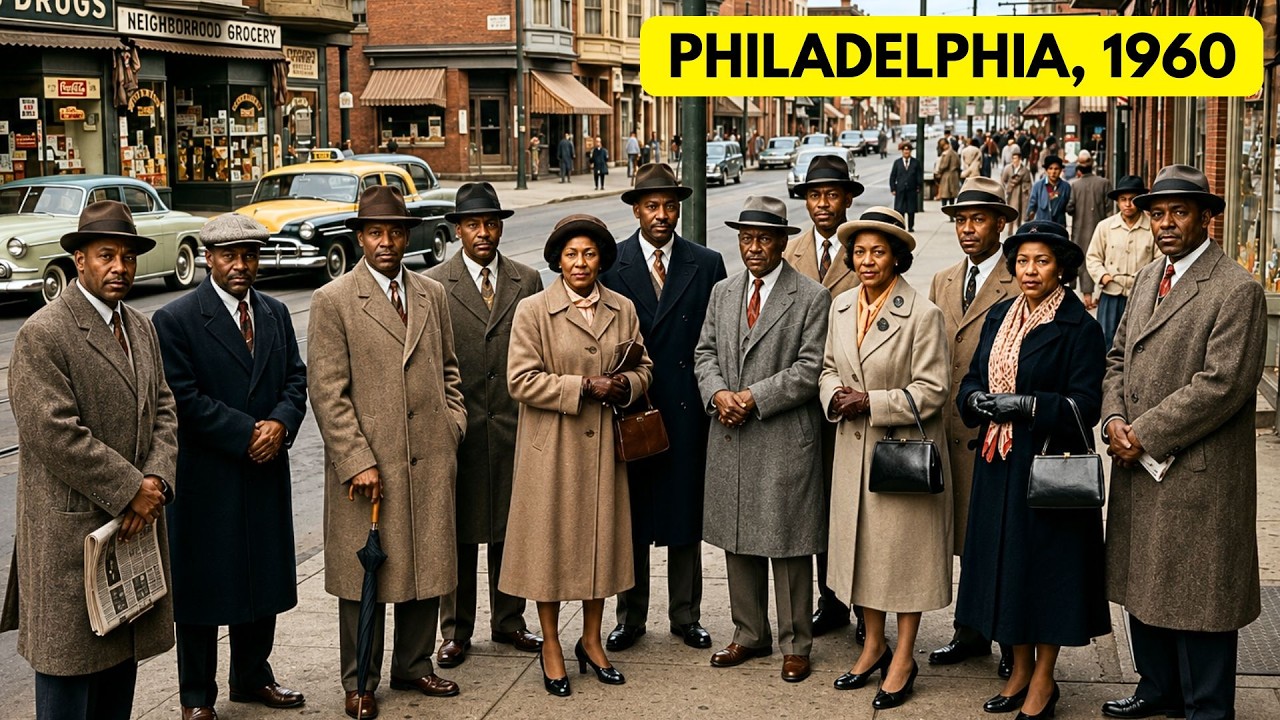
Sullivan walked those streets and counted the numbers himself. Philadelphia in 1950 was a city with a functioning economy—factories, oil companies, retail chains, bakeries, and banks. Those companies needed workers. Black residents needed jobs.
The equation looked simple. It was not. Philadelphia companies in 1950 were not hiring Black workers in any meaningful way—not in skilled positions, not in customer-facing roles. Less than 1 percent of private-sector jobs involving customer contact, such as clerks, bank tellers, and salespeople, were held by African Americans.
Skilled factory jobs were nearly impossible to obtain. The doors were closed by practice, policy, and the comfortable belief that no one with real power would force them open. Sullivan was not the first person to notice this. Black Philadelphians had noticed it for decades.
The difference was what Sullivan would do about it and how he would use the one institution that already had people, organization, and the ability to create change. The Black church in Philadelphia in 1950 was not just a place of worship. It was the central organizing institution of Black community life. Sullivan had access to 400 such churches.
He was about to discover what 400 churches coordinated around a single economic demand could do to a company’s profits. What happened next took eight years to complete. It changed the city. It changed the civil rights movement.
It began with a question simple enough to fit on a sign. In 1958, after eight years at Zion Baptist Church, Sullivan had grown the congregation from 600 to several thousand members. He had helped found the Citizens’ Committee Against Juvenile Delinquency, a community organization that mobilized volunteers around housing, employment, and youth issues across North Philadelphia. He watched young Black men stand on street corners without hope while factories and offices a mile away posted signs seeking workers.
That year, Sullivan decided to test the system directly. He contacted companies throughout the Philadelphia area and asked them to do one specific thing: agree to interview young African American applicants for open positions. Not hire them. No quota commitments.
Just agree to interview. The response documented what every Black resident of Philadelphia already knew from experience but had never seen confirmed so clearly in a business context. Of all the companies Sullivan contacted, only two agreed to interview Black applicants. Two.
Sullivan recalled this moment in his 1969 autobiography, “Build, Brother, Build. ” The number was not a surprise in the sense that he expected generosity. It was a precise, documented confirmation, now impossible to deny, of what the Philadelphia job market really was for Black workers. In 1958, the door was not slightly ajar.
It was closed. The companies behind it had just told him so in writing through their non-response. This was the moment that produced the Selective Patronage campaign. Not a theory, not an ideology, but a specific number.
Two out of the entire Philadelphia business community made the next step inevitable. Sullivan understood something that proved decisive. The companies in Philadelphia that refused to hire Black workers were often companies whose products Black consumers bought. Tastykake snacks were sold in Black neighborhoods.
Sun Oil operated gas stations used by Black drivers. The revenue those companies collected from Black customers was real money—money that could be redirected or withheld. Companies had power over Black employment. Black consumers had power over company revenue.
Sullivan’s task was to organize the second power and aim it at the first. He had two years to build the machinery before launching the campaign. Two years and 400 churches, 400 ministers organized around a single slogan: Don’t buy where you don’t work. By 1960, Sullivan had organized 400 African American ministers from churches across Philadelphia into a coordinated body called the Four Hundred Ministers.
Its purpose was not theological. It was economic. The strategy Sullivan devised was specific in its mechanics and deliberately restrained to avoid legal liability. A formal commercial boycott was technically illegal.
Sullivan structured the campaign differently. Each week, one of the four hundred ministers would announce from the pulpit that a particular company, naming its products, did not employ Black workers in professional or skilled positions. The minister would then encourage the congregation, as a matter of personal conscience, to consider withholding patronage from that company until it changed its practices. The slogan was five words: Don’t buy where you don’t work.
It was not a picket line. It was not a formal union action. It was a minister speaking to his congregation about where they chose to spend their money. Sullivan argued it was the exercise of the same freedom of conscience that American companies exercised daily when choosing whom to hire and whom to exclude.
In 1960, the system was ready. The first company on the list was a Philadelphia institution, a bakery whose products were sold on every corner of the city, including every corner of North Philadelphia. Tastykake was the first company to lose that fight. The Tasty Baking Company had been making Tastykake products since 1914.
By 1960, its snack cakes, butter cakes, peanut butter cakes, and chocolate cupcakes were sold throughout Philadelphia, including in grocery stores and lunch counters in every Black neighborhood in the city. The company’s trucks traveled through North Philadelphia every week. The company’s revenue came partly from Black consumers who bought its products. The company did not employ Black workers in professional or skilled positions.
The Four Hundred Ministers presented Tastykake with what Sullivan described as reasonable demands. The company was asked to hire Black workers in positions beyond basic labor categories, to open skilled and customer-facing jobs to qualified Black applicants. The demands were specific. They were documented.
They were presented in person. Tastykake resisted. Over several weeks, the company refused to respond to the ministers’ terms. During that period, 400 ministers in Philadelphia told their congregations from pulpits on Sunday mornings that Tastykake products were made by a company that refused to hire Black workers in skilled positions.
The congregations of those four hundred churches stopped buying Tastykake products. The effect on revenue was tangible and immediate. Tastykake sales in Black neighborhoods, a significant part of its Philadelphia market, declined. The company faced a choice: maintain its hiring practices and keep losing revenue, or negotiate with the ministers and open jobs to Black workers.
Tastykake relented because it was losing money. Sullivan’s recollections of the results were equally precise. After the Tastykake victory, he recalled that Black people walked with pride through the streets of Philadelphia. The phrase captured something specific: not just satisfaction with the outcome, but the experience of seeing economic power work for the first time in the memory of most who witnessed it, in favor of Black workers rather than against them.
The Tastykake campaign established the model. One company faced with specific demands, given time to respond, then subjected to organized consumer withdrawal until it complied. The model was then applied to the next company on the list. Over the next three years, 29 more companies hired Black workers or faced the same fate.
From 1960 to 1963, the Selective Patronage campaign continued for three years after the Tastykake victory. Later targets included Sun Oil, Gulf Oil, and other companies across multiple industries in the Philadelphia area. Some companies, after watching what happened to Tastykake, reached agreements with the Four Hundred Ministers before any public announcement—the threat of the campaign was enough to move them. Other companies required the full process: demands, refusal, Sunday announcements, revenue decline, then negotiation.
By the end of 1963, 29 companies had hired or promoted Black citizens in Philadelphia as a direct result of the Selective Patronage campaign. The total number of skilled jobs opened was approximately 2,000. Two thousand jobs in three years without a single piece of legislation, without a single lawsuit, without any form of federal enforcement. The Civil Rights Act of 1964, which would legally prohibit employment discrimination nationwide, had not yet been passed.
What Sullivan and the Four Hundred Ministers achieved operated entirely outside the legal framework because the legal framework at that time provided Black workers in Philadelphia with no real protection. In 1960, Sullivan and the other ministers estimated that less than 1 percent of private-sector customer-contact jobs in Philadelphia were held by African Americans. By 1963, 2,000 of those jobs had been provided through a campaign that cost taxpayers nothing, required no government agency, and operated through the established institution of the Black church. The New York Times published the story.
Fortune magazine followed. The coverage made the Selective Patronage campaign visible nationally at a moment when the civil rights movement was searching for economic strategies that worked in Northern cities—cities with no formal legal segregation, but where the color line in employment was enforced just as effectively through hiring practices that needed no sign on the door. In 1962, the New York Times ran a front-page story about the Selective Patronage campaign in Philadelphia. Fortune magazine published a feature article that brought the program to the attention of the national business community.
For the first time, what Leon Sullivan and 400 ministers in Philadelphia had built over two years was visible to an audience beyond the city. The coverage arrived at a specific moment in the civil rights movement. By 1962, the movement’s campaigns in the South, the sit-ins, the freedom rides, and the Albany Movement had proven that nonviolent direct action could force legal change in officially segregated institutions. What the movement had not yet developed was a repeatable economic strategy for Northern cities where the targets were different.
There were no signs on lunch counters saying “whites only” in Philadelphia. The discrimination was in the hiring office, the promotion decision, and the unstated policy of not calling back Black applicants. Sullivan’s campaign solved that problem with a mechanism that was direct, measurable, and scalable. Identify a company.
Measure its Black employment. Present demands. Apply economic pressure through organized consumer withdrawal. Measure the revenue impact.
Negotiate the outcome. Document the result. The New York Times story made this sequence visible to organizers in every Northern city facing the same color line in employment and searching for tools to address it. The Fortune coverage reached a different audience—corporate executives and business leaders who could read what happened to the companies targeted by Sullivan’s campaign in the language of revenue and market share.
The business press translation of the Selective Patronage story was not a moral one. It was practical. A company that excluded Black workers from its payroll while selling its products to Black consumers was creating a vulnerability that organized community action could exploit. The coverage led to an invitation.
The Southern Christian Leadership Conference, Martin Luther King Jr. ‘s organization, reached out to Sullivan. In the fall of 1962, Sullivan traveled from Philadelphia to Atlanta at the invitation of the SCLC. He sat with Martin Luther King Jr.
and local Atlanta ministers and explained the Selective Patronage campaign: the organization of 400 ministers, the process of presenting demands, the mechanism of consumer withdrawal, the impact on revenue, the sequence of negotiation, and the 2,000 jobs provided in Philadelphia in two years. King had been looking for exactly this. The SCLC’s campaigns in the South focused on legal segregation, the formal Jim Crow structures that could be challenged in courts and dismantled through legislation. The economic dimension of racial inequality, especially in Northern cities, required a different tool.
Sullivan had built that tool and proven it worked. The program that resulted from Sullivan’s presentation was named “Operation Breadbasket. ” The SCLC launched it in Atlanta in 1962 under the leadership of local ministers who applied Sullivan’s Selective Patronage model to Atlanta companies. The Atlanta campaign secured promises of 5,000 jobs at local businesses.
In 1966, King expanded Operation Breadbasket into Chicago as a core element of the SCLC’s Chicago Freedom Movement. He appointed a young seminary student named Jesse Jackson to lead the Chicago chapter. Under Jackson’s leadership, Breadbasket targeted five companies in the dairy industry. Three companies negotiated immediately.
Two resisted and only complied after boycotts. The Chicago chapter moved on to target Pepsi-Cola and Coca-Cola bottling plants, then supermarket chains. The Martin Luther King Jr. Research and Education Institute at Stanford University documented the results.
In the first fifteen months of Breadbasket’s work in Chicago, the campaign achieved 2,000 new jobs worth $15 million annually as new income for the Black community. King described Operation Breadbasket at the time as the SCLC’s most spectacularly successful program in Chicago. Every one of those results traces directly to a Sunday morning announcement in a North Philadelphia church, and to a six-foot-four-inch minister from Charleston, West Virginia, who had asked Philadelphia companies to interview Black applicants in 1958 and received only two responses. By 1963, the 29 companies had agreed.
Two thousand jobs had been opened. The Selective Patronage campaign had achieved what it was designed to do. Then Leon Sullivan discovered the second wall. Companies that had signed agreements with the Four Hundred Ministers began reporting a recurring complaint.
They were willing to hire Black workers. They had committed to it. But when they posted the jobs and reviewed applicants, they found a skills gap. There were not enough qualified Black candidates for the technical and skilled positions—sheet metal workers, electronics assemblers, laboratory technicians, and draftsmen—that the agreements required.
This was not an accident. It was the product of decades of deliberate exclusion from the training programs and apprenticeships that produced those skills. The same system that closed the factory door had also closed the vocational school, the union apprenticeship, and the technical training program. A young Black man growing up in North Philadelphia in 1960 had attended underfunded schools, lived in a neighborhood without skilled trades, and been trained by the economy for the jobs it was willing to give him—which were not the jobs the Selective Patronage agreements sought to open.
Sullivan’s response was immediate and characteristic. He did not accept the company portrayal as a reason to slow the campaign’s demands. He accepted it as a step toward identifying the next problem to solve. If Black workers did not possess the skills, he would build the institution to train them.
He had won 2,000 jobs. Now he had to build the pathway that would fill those jobs and every future job the campaign would open. The answer Sullivan arrived at was as unconventional as everything else he had done. He decided to open a vocational training center in an abandoned prison, leased from the city of Philadelphia for one dollar a year.
On January 24, 1964, the temperature outside was near zero degrees Fahrenheit. The building at 19th and Oxford Streets was an old prison with narrow cells and institutional walls in a North Philadelphia neighborhood the city was content to leave to decay. Sullivan leased it from the city for one dollar per year. Eight thousand people attended the opening.
The Opportunities Industrialization Center (OIC) opened its doors that January day with a mission Sullivan described in language free of abstraction: Help people to help themselves. The center offered training in sheet metal work, architectural drafting, machine operation, power machine operation, chemical laboratory techniques, electronics assembly, teletype printing, and restaurant work. The curriculum was designed around what the Philadelphia business community had told Sullivan it actually needed—the specific technical skills the Selective Patronage agreements identified as the gap between jobs now available and workers ready to fill them. Sullivan funded the operation through a mix of sources that reflected the same community resources that built the Selective Patronage campaign.
He secured a loan guaranteed by his own home. The congregation at Zion Baptist Church donated. Fidelity Bank provided a grant of $13,000. The Ford Foundation, through the Philadelphia Council for the Advancement of Community, contributed $200,000.
Equipment was donated by regional industries. The training curriculum was developed in consultation with local corporations and the Philadelphia Chamber of Commerce. The choice of a prison was not accidental. Sullivan recognized the symbolism of converting a building designed to confine Black men into a building designed to equip them.
Within two years, the OIC model attracted national and federal attention. By the time Sullivan was done, the OIC had expanded to 76 centers across the United States and 33 centers in 18 other countries, training more than two million people worldwide. The programs offered at the center at 19th and Oxford Streets became a global model for workforce development. It began with one dollar a year and a building the city no longer wanted.
By 1965, Sullivan had received the Philadelphia Award, the city’s highest civilian honor, for what the Selective Patronage campaign and the Opportunities Industrialization Center had produced. He was 42 years old. The congregation at Zion Baptist Church had grown from 600 members to several thousand. The OIC was one year old and already expanding beyond North Philadelphia.
The accounting of what Sullivan built between 1958 and 1965 was specific and required no embellishment. Four hundred ministers organized into a coordinated economic action body. Twenty-nine companies brought to the negotiating table through organized consumer boycotts. Two thousand skilled jobs provided in Philadelphia in three years.
A job training center established in an abandoned prison leased for one dollar a year, which would eventually train more than two million people worldwide. A campaign model adopted by Martin Luther King Jr. and the Southern Christian Leadership Conference, replicated in Atlanta and Chicago, credited with achieving $15 million in new annual income for Chicago’s Black community in its first fifteen months of operation. None of this required any federal legislation.
No part of it waited for a court ruling. It relied entirely on institutions that already existed—the Black church, organized ministry, and community congregations with connections to every Black family in North Philadelphia. In 1971, Sullivan was appointed to the board of General Motors, becoming the first African American to hold a seat on the board of a major American corporation. He used this position to develop what became known as the Sullivan Principles, a code of conduct published in 1977 requiring companies operating in South Africa during the apartheid era to provide equal pay for equal work, disregard the South African government’s segregation laws, and provide training and promotion opportunities for Black workers.
The Sullivan Principles was presented in global form at the United Nations in 1999. Sullivan died of leukemia on April 25, 2001, in Scottsdale, Arizona. He was 78 years old. The OIC still operates today in more than 20 states.
The International Arrivals Hall at Philadelphia International Airport bears his name. The man who arrived at Broad Street Station in 1950 with a master’s degree and a congregation of 600 left a record that stretched from a church in North Philadelphia to the United Nations.