The Wendel sisters were among the wealthiest women in American history. They controlled a real estate empire worth over $100 million by 1930. They owned entire blocks of Fifth Avenue, hundreds of tenements, and properties stretching from the Battery to Harlem.
Yet when Ella Wendel died alone in 1931 at the mansion at 739 Fifth Avenue, police found something shocking. The rooms were piled floor to ceiling with newspapers dating back to 1880. The furniture was coated in decades of grime. Hidden inside cracker boxes, stuffed into mattresses, and sewn into the linings of rotting coats, they discovered over $2 million in cash and securities.
The richest women in America had lived like paupers and died like ghosts.
The fortune began with John Gottlieb Wendel. He arrived in New York from Germany in 1838 with nothing but mason’s tools. While other immigrants dreamed of going home, Wendel studied the city like a general studying a battlefield. He saw that Manhattan had finite land and infinite ambition.
Buy dirt. Hold it. Never sell.
By 1850, he owned his first plot, a muddy corner lot in Lower Manhattan that cost him $800. He mortgaged everything to buy it. Then he did nothing with it. No development, no buildings, no profit. Just dirt sitting there waiting.
People thought he was foolish. But within 10 years, that corner lot was worth $10,000. He still did not sell. Within 20 years, it was worth $50,000. He still held on.
Wendel bought every parcel he could. Always with cash. Always under market value. Always from desperate sellers. He kept two sets of books. One for tax collectors, full of undervaluation and omissions. One for himself, locked in a safe only he could open.
He trusted no one. Every lease was negotiated personally. Every rent payment was collected by his own hand. By 1870, he owned over 300 properties scattered across Manhattan. The rents flowed in every month like clockwork.
But wealth did not soften him. It hardened him. He saw thieves everywhere. Lawyers were vultures. Bankers were criminals with licenses. Business partners were parasites. He fired anyone who asked too many questions about his holdings.
He lived in a modest townhouse on Fifth Avenue. He wore the same suit for years until it frayed at the cuffs. He ate simple food and drank nothing stronger than water. Extravagance was waste, and waste was sin.
Then there were his children. Six daughters and one son. The boy, John Jr., was the heir. But he died young at 16 from tuberculosis. The loss shattered something in John Wendel that never healed. With his son gone, the dynasty had no male heir. So he turned his daughters into guards.
The daughters grew up in the Fifth Avenue mansion their father finally built. It was a granite fortress with bars on the windows and locks on every door. From the outside, it looked like privilege. Silk dresses, private tutors, expensive furniture. But privilege without freedom is just a prettier prison.
His rules were absolute. No visitors. No friends. No suitors. No socializing beyond the bare minimum. The sisters attended church on Sundays, always together, always chaperoned, always silent. They took brief carriage rides through Central Park, but only on weekdays when the paths were empty.
Education was permitted, but only at home. Literature that discussed romance was forbidden. Philosophy that questioned authority was banned. Their father curated their minds the way he curated his properties.
The mansion became their universe. Five stories of marble and mahogany. Thirty rooms filled with furniture so expensive it was never used. The sisters wandered the halls like ghosts.
Their father watched them constantly. He inspected their correspondence. He monitored their spending. He controlled their wardrobes, insisting on dark colors and modest cuts. He even controlled their meals.
The cruelest rule was about marriage. It was never stated explicitly, but it was understood with absolute clarity. The Wendel daughters would never marry. Suitors were turned away at the door. Any man who showed interest was investigated, his finances scrutinized, his motives questioned.
Perhaps some suitors did want the money. The Wendel fortune was legendary by the 1880s. Estimates placed their wealth at over $20 million. But John Wendel saw every potential husband as a thief.
So the sisters remained unmarried. Rebecca watched her 20s pass, then her 30s, then her 40s. Josephine stopped asking about dances and dinner parties. Ella stopped looking out the window at couples walking in the park. Georgiana stopped imagining a life beyond the mansion walls.
They became experts at smallness. They embroidered. They read approved books. They played piano for each other. They took tea at 4:00 every afternoon in the same parlor, using the same china, discussing the same topics.
They learned to live inside the boundaries their father had drawn. After enough years, they forgot the boundaries were even there.
When John Gottlieb Wendel died in 1894 at age 81, his daughters stood around his deathbed and felt something they could not name. Relief, perhaps, or terror. Freedom, when it comes too late, does not feel like freedom at all. It feels like falling.
The will was read three days later. The estate was valued at approximately $23 million. Over 400 properties across Manhattan. It all went to the daughters. Equal shares. No conditions.
The lawyer waited for their reaction. Shock, perhaps. Gratitude. Relief. But the sisters sat in silence. Finally, Rebecca, the oldest at 52, spoke. “What do we do now?”
The lawyer blinked. “You manage the estate. Or you hire managers. You collect the rents. You live your lives.”
Rebecca looked at her sisters, then back at the lawyer. “We will continue as father would have wished.”
And that was that. No celebration. No discussion of change. The sisters simply absorbed the fortune into their routines and kept living exactly as they had before.
They became their father. They took over the management of the properties with the same obsessive control. They reviewed every lease personally. They collected rents themselves. They kept the same two sets of books.
But where their father’s control came from ambition, theirs came from fear. He had wanted to build. They wanted to protect. Every tenant was a potential thief. Every repair request was an attempt to defraud them. Every business proposal was a scheme to steal what was rightfully theirs.
The paranoia became a shared delusion. They stopped trusting the banks, withdrawing large sums of cash to keep at home. They stopped trusting the postal service. They stopped trusting the household staff, firing long-time servants on suspicion of gossip.
By 1896, the mansion had become a fortress. New locks were installed on every door. Windows were fitted with additional bars. The sisters began sleeping in shifts, convinced burglars were watching the house.
They stockpiled food. They hoarded newspapers, saving every edition. The piles grew taller each month.
Their lawyer, Thomas Bennett, tried to intervene. He suggested they hire a property management firm. He recommended they invest some of the cash reserves. He gently proposed they consider moving to a smaller residence.
They listened in silence. Then Rebecca stood and showed him to the door. “We are managing perfectly well,” she said. “We do not require your advice.”
The sisters had made their choice. They would preserve their father’s legacy by becoming living monuments to his philosophy. Frugality. Distrust. Control. They would guard the fortune, not by using it, but by freezing it in place.
Mary Wendel was the only one who dared to dream of a life beyond the mansion walls. She was the youngest, born in 1868, 20 years after Rebecca. Youth carries hope the way old age carries resignation. Mary still believed she could be different.
She met him at church. His name was Thomas Fanning, a clerk at a shipping company. He had kind eyes and a quiet voice. They never spoke. But their eyes met again and again, week after week.
In those brief glances, Mary constructed an entire alternate life. She imagined walking beside him on Sundays. She imagined dinners with his family. She imagined a small house, modest and warm, filled with ordinary happiness.
In the spring of 1889, Thomas Fanning made his move. He sent a letter to the Wendell mansion requesting permission to call on Mary. It was formal, respectful, careful.
John Wendell intercepted the letter. He read it twice. Then he summoned Mary to his study.
Her father did not yell. He simply explained that Thomas Fanning earned $1,200 per year. A decent wage for a clerk, but a pittance compared to the Wendell fortune. What did Mary think such a man wanted? Love, or access to millions of dollars he could never earn on his own?
Mary tried to defend him. She said Thomas was kind, honest, hard-working. She said he did not know about the family wealth.
Her father asked her a single question. “If we had nothing, would he still want you?”
Mary could not answer because she did not know. In that silence, her father won. He forbade any contact. He stopped taking Mary to church, keeping her confined to the mansion for three months.
When they finally resumed their Sunday attendance, Thomas Fanning was gone. He had taken a position with a shipping company in Boston. Mary never learned whether he left because he was discouraged or because her father had paid him to leave.
Her chance at escape had closed. Mary stopped embroidering. She stopped playing piano. She spent hours in her room staring at the walls.
When their father died in 1894, Mary was 26 years old. Young enough to still dream. She asked Rebecca for permission to travel. To Boston, perhaps. To see something beyond the walls.
Rebecca said no. The family had to stay together. If Mary left, what would stop the others from leaving? And if they scattered, who would protect the fortune?
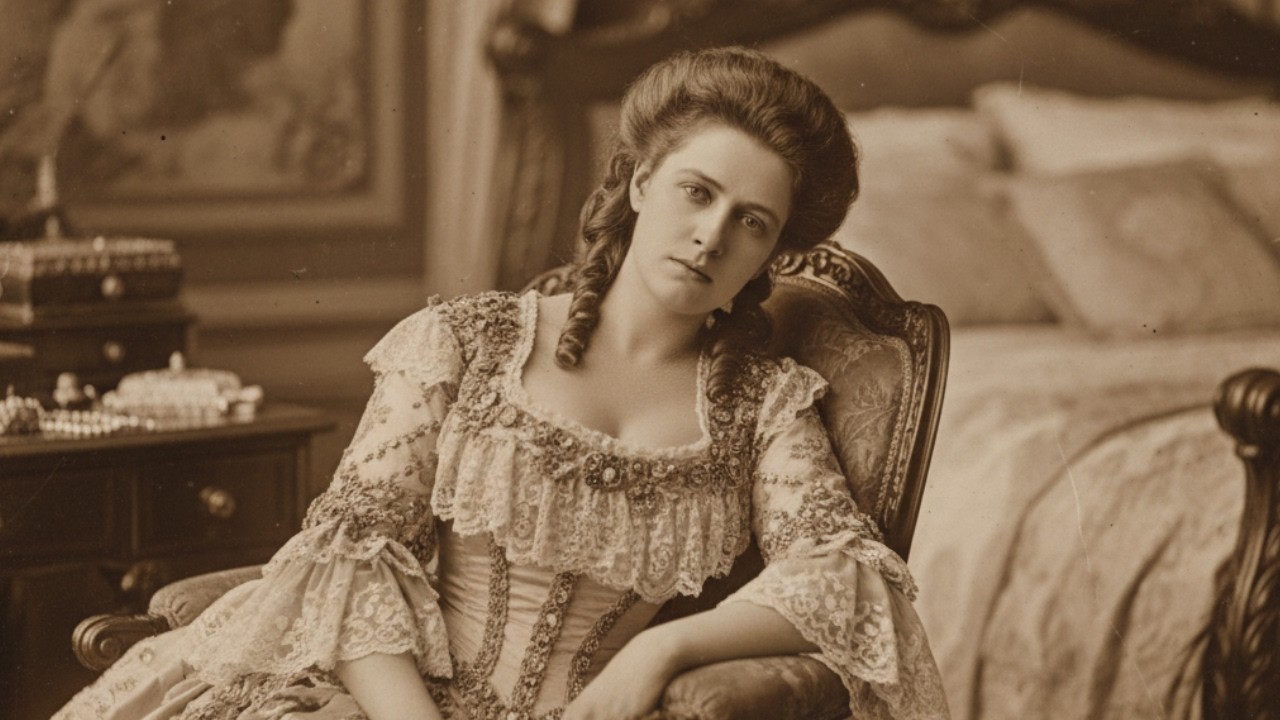
Mary was outvoted, outnumbered, and something inside her broke. Not dramatically. Just a quiet, final surrender. She stopped asking for permission. She stopped imagining alternatives.
In 1912, Mary Wendell died of pneumonia. She was 44 years old. She had never married, never traveled beyond New York, never kissed a man or held a child. On her deathbed, delirious with fever, she called out a name. Thomas. Just once. Then she was gone.
By 1900, the Wendel mansion was no longer a home. It was a monument to fear. The building was still magnificent from the outside. But inside, the mansion was rotting.
The sisters had stopped maintaining it. Hiring repairmen meant letting strangers into the house. Strangers meant risk. So they let the house decay around them.
The roof developed leaks. Water stains spread across the ceilings. The plumbing failed in the third-floor bathrooms. Instead of calling a plumber, they simply stopped using those rooms. The heating system broke down one winter. Rather than repair it, they burned coal in fireplaces and wore their coats indoors.
The sisters divided the mansion into territories. Rebecca controlled the ground floor parlor. Josephine claimed the library. Ella took the second-floor drawing room. The upper stories were left empty.
And then there were the newspapers. The sisters had always saved newspapers, a habit inherited from their father. But after his death, the saving became hoarding. Every morning, the papers were stacked in the hallways. Every day, the piles grew taller.
By 1900, there were newspapers from 1890 stacked floor-to-ceiling in the second-floor hallway. By 1910, the stacks had spread to the third-floor landing. By 1920, entire rooms were filled with nothing but yellowing paper.
The hoarding extended beyond newspapers. They saved everything. Broken furniture. Clothes they no longer wore. Scraps of fabric. Lengths of string. Empty jars and bottles. Receipts from purchases made 20 years earlier.
But the most disturbing hoarding was the money. The sisters began withdrawing large sums of cash. Bringing it home in locked cases. Hiding it throughout the mansion. $50,000 in a bedroom closet. $30,000 in a kitchen cupboard. Securities worth hundreds of thousands stuffed into mattresses.
They could not remember where they had hidden it all. So they hid more. Creating layers of concealment. A fortune scattered through the house like Easter eggs no one would ever find.
Their paranoia about theft became all-consuming. They fired the remaining household staff. They stopped answering the door. They refused deliveries. They even suspected each other.
By 1910, the sisters rarely left the mansion. The outside world ceased to exist for them. It was a threat, a source of danger.
Inside the mansion, their routines became rituals. They ate meals at the same times every day, consuming the same bland food prepared on a coal stove because the gas had been disconnected to save money. They reviewed their property ledgers at the same hour each afternoon.
The scale was impossible to ignore. The Wendel sisters owned over 600 properties across Manhattan by 1910. Their rental income exceeded $1.2 million per year. The estimated value of their real estate holdings was $80 million.
They were among the 10 wealthiest families in America. And they lived in squalor. No running water on the upper floors. No heat in half the rooms. No electric lights because they refused to allow electricians inside.
They ate stale bread and canned soup. They wore clothes until they fell apart. They lived in darkness and filth, surrounded by millions they were too terrified to use.
The neighbors noticed. Complaints reached the police. The house smelled. Garbage piled up in the back courtyard. Rats were seen entering and leaving through broken basement windows. But when officers knocked on the door, the sisters refused to answer.
While the Wendel sisters locked themselves away, New York City exploded into the 20th century. Automobiles appeared on Fifth Avenue. Electric streetlights illuminated the night. Skyscrapers rose around them.
The Flatiron Building went up in 1902. The Singer Building in 1908. The Woolworth Building in 1913. The skyline transformed, reaching upward.
The Wendel sisters owned land beneath these monuments to progress, but they refused to develop it. Empty lots sat idle while the city built around them.
The Jazz Age arrived. Flappers danced in speakeasies. Hemlines rose. Women cut their hair and smoked cigarettes and voted. The economy boomed.
But the Wendel sisters did not dance, did not vote, did not celebrate. They did not even know there had been a war until it was over.
Their properties generated enormous revenue, but they refused to modernize. Tenants complained about broken pipes, peeling paint, faulty wiring. Some moved out. The sisters did not care. New tenants always appeared.
Their lawyer sent monthly reports that went unread. He suggested investments. The stock market was soaring. But the sisters sent no reply. They wanted no changes, no risks, no growth. Just preservation.
Preservation without maintenance is just slow destruction. By 1920, several of their properties had been condemned by the city. Fire hazards. Structural damage. Health code violations. The sisters paid the fines rather than make the repairs.
Then the deaths began. One by one. A slow procession toward extinction.
Rebecca died first in 1912 at age 70. She collapsed in the front parlor, alone, while reviewing a ledger. Her sisters found her hours later. They buried her quietly. The newspapers did not notice.
Josephine followed in 1916 at 68. Pneumonia brought on by living in an unheated house during a brutal winter. She died in her bedroom on the third floor, wrapped in blankets, shivering until she stopped.
Georgiana, the sister whose name was spelled differently for reasons no one remembered, died in 1918 during the influenza pandemic. She was 63. The sisters had stopped reading current newspapers, preferring to reread old editions from the 1880s.
By 1920, only three sisters remained. The mansion had become a mausoleum. The smell of decay permeated everything. Mold grew on the walls. The plumbing had failed completely. The sisters used chamber pots that they emptied into the garden.
And still, the fortune grew. By 1925, the Wendel estate was valued at over $90 million. The sisters were worth more than ever. Sitting on mountains of cash they would never use, surrounded by properties they would never see.
By 1920, only Ella and Georgiana remained. Two elderly women guarding a fortune they would never use. Ella was 78. Georgiana was 75.
The mansion had become unlivable in any conventional sense. The front parlor was piled with newspapers from floor to ceiling. The dining room table was buried under account books, property deeds, and scattered bundles of cash.
They no longer slept in bedrooms. The stairs had become too difficult to climb. Instead, they slept in chairs in the ground floor sitting rooms.
The cash was everywhere. Ella and Georgiana could not remember where they had hidden it all. $50 bills stuffed into coat pockets. $100 certificates sewn into the linings of old dresses. Bonds worth $10,000 folded inside cracker boxes. Gold coins scattered in drawers.
They were worth over $90 million, but they lived in conditions worse than their poorest tenants. No running water. No heat. No light after dark except candles. They wore the same clothes until they fell apart. They washed nothing, including themselves.
Their paranoia had reached clinical levels. They believed the neighbors were spying on them. They believed the city government wanted to seize their properties. They believed the banks were waiting for them to die.
They stopped going outside entirely. Groceries were delivered and left on the front steps. They waited until dark to retrieve them.
By 1922, Ella and Georgiana were no longer just afraid of thieves. They were afraid of each other. They slept in separate rooms with locked doors. They kept separate caches of cash. They checked their hiding places obsessively, convinced the other was stealing.
They communicated in whispers and accusations. They counted their money daily, searching for discrepancies that proved betrayal. They found none. The missing money was imaginary. But imagination, when fed by isolation and paranoia, becomes indistinguishable from reality.
The outside world occasionally intruded. Tax collectors sent notices. The sisters paid, but resented it. The city sent inspectors to investigate complaints about the property’s condition. The sisters refused to open the door.
Neighbors watched with a mixture of pity and disgust. Children dared each other to approach the mansion. Adults complained about the smell, the rats, the declining property values. But no one could penetrate the fortress.
Inside, time stopped meaning anything. Days blurred into weeks, weeks into months. The sisters lost track of dates, of seasons, of years. They knew only routine. Wake, count money, check hiding places, eat, count money again, sleep, repeat.
By 1924, the estate was worth $95 million. Over 600 properties. Annual income exceeding $1.5 million. But the numbers were abstractions. They meant nothing.
Georgiana was the first to begin failing. Her mind remained clear, but her body was giving out. She could barely walk. She refused to see a doctor, convinced physicians were con artists who wanted to steal her jewelry. She had no jewelry. She had sold it all decades earlier.
Ella watched her sister decline and felt nothing. Not pity. Not grief. Just a distant awareness that soon she would be alone. Truly alone. The last Wendel.
When Georgiana Wendel died in her sleep in 1924, Ella did not call for help for three days.
It happened on a Tuesday morning in March. Ella woke in her chair in the front sitting room. She called out to her sister. No answer. Slowly, painfully, she shuffled to the back parlor where Georgiana slept.

Her sister was in her chair, head tilted back, mouth open. She looked asleep, but Ella knew the stillness was absolute. Georgiana was gone.
Ella stood in the doorway for a long time. She did not cry. She did not scream. She just stared at the body of the last person in the world who had known her, really known her.
Then she turned and walked away. She did not cover the body. She did not close Georgiana’s eyes. She simply went back to her chair in the front room, wrapped herself in her blanket, and sat, waiting.
Three days passed. The body remained in the chair. Ella remained in hers. She did not eat, did not sleep, did not move except to use the chamber pot.
The smell began on the second day. By the third day, it was unbearable. Finally, on Friday morning, Ella stood. She walked to the front door, unlocked it for the first time in months, and stepped outside.
The sunlight hurt her eyes. A neighbor saw her and gasped. The old woman looked like a ghost. Skin pale as paper. Hair wild and matted. Clothes hanging off a skeletal frame.
“Are you all right? Do you need help?”
Ella’s voice was a rasp. “My sister is dead.”
The neighbor called the police. Within an hour, officers arrived. They entered the mansion and found Georgiana in her chair, three days dead.
They found the newspapers piled to the ceilings. They found the broken furniture, the rotting food, the chamber pots overflowing in corners. They found bundles of cash stuffed into drawers, securities hidden in coat pockets, gold coins scattered across the floor.
They found squalor that defied comprehension in a house owned by one of the richest families in America.
A doctor was called. He examined Ella and declared her physically frail, but mentally coherent. Severely malnourished. Dehydrated. Suffering from neglect. But not legally incompetent.
The police wanted to remove her from the mansion. But Ella refused. “This is my home,” she said. “I will not leave.”
And because she was lucid, because she owned the property, because there was no legal grounds to force her, they let her stay.
The funeral for Georgiana was small. A handful of distant relatives attended. They stood in the cemetery and said polite things about family and legacy and loss. Then they approached Ella and asked careful questions about the estate. Who would inherit? Had Georgiana left a will? Was Ella planning to sell any of the properties?
Ella stared at them with eyes that had seen too much and felt too little. She said nothing. She turned and walked away. She took a taxi back to the mansion, climbed the steps, locked the door behind her, and never left again.
The death of Georgiana broke something fundamental in Ella. Not her mind. Not her body. Something deeper. The thread that connects a person to the world. The belief that existence matters.
Georgiana had been her last witness. The only person who remembered their childhood, their father, and the years before the fortune became a prison. With her gone, Ella’s entire life became unmoored.
The neighbors watched the mansion with renewed concern. No one came or went. Weeks passed. Months. The house seemed abandoned. But occasionally someone would see movement behind a window. A shadow. A flicker.
What they did not see was the descent. The complete withdrawal from even the pretense of living. Ella stopped eating regularly. Stopped washing. Stopped changing her clothes.
She wandered the mansion like a ghost, moving from room to room, checking her hiding places, counting her money, talking to sisters who were no longer there. She had conversations with Rebecca about property management. Debated with Josephine about whether to repair the roof. Asked Mary if she was happy.
The mansion filled with ghosts. Not supernatural. Just psychological. The accumulated presence of a lifetime spent in the same rooms with the same people until the walls absorbed their voices.
For seven years, Ella Wendel lived as the sole heir to $100 million. And she lived like a beggar.
Without Georgiana, Ella stopped even the minimal maintenance they had performed together. Pipes burst and flooded rooms. She walked around the puddles. Windows broke in storms. She ignored them. The roof leaked so badly that rain poured through the ceiling.
The newspapers continued to pile up. Deliveries arrived daily, left on the front steps. Ella retrieved them at night and added them to the towers that now filled every room.
By 1928, the ground floor was almost impassable. Narrow pathways wound between walls of yellowing paper. The smell of mildew and rot was suffocating. But Ella did not notice.
She hoarded cash with increasing desperation. Every month she walked to the bank, a journey that took hours because she moved so slowly. She withdrew large sums. $10,000. $20,000. $50,000.
She carried it home in a satchel, terrified that someone would rob her. Then she hid it in cracker boxes, in the linings of coats, in mattresses, in jars buried in the garden.
She forgot where she hid it. The mansion had become a treasure map with no key. Hundreds of thousands of dollars scattered throughout the house, hidden so well that even she could not find it.
By 1930, the Wendel estate was valued at over $100 million. Over 600 properties across Manhattan. Rental income of nearly $2 million per year. She was one of the richest women in the world.
And she lived in filth. No running water. No electricity. No heat. She wore the same dress for months until it was black with grime. She ate spoiled food from cans she could not open properly, using a rusty knife to pry off the lids.
She stopped bathing entirely. Her hair became a matted nest. Her skin developed sores. Her teeth fell out. Her body shrank until she was skeletal.
The isolation was total. She had not spoken to another human being since Georgiana’s funeral in 1924. Seven years of silence.
She talked to herself, to her dead sisters, to her father. Long conversations about property values and tenant complaints and the best places to hide cash.
The neighbors called the police periodically. The smell was unbearable. Rats infested the property. The city sent inspectors, but Ella refused to open the door. She screamed through the walls that they were thieves.
A lawyer attempted to visit. Thomas Bennett had died years earlier, but the firm he had worked for still managed the Wendel accounts. They sent a young attorney to check on Ella. He knocked on the door for 30 minutes. No answer. He returned the next day and the next. Finally, he gave up.
Inside the mansion, time ceased to function. Days were indistinguishable. Seasons changed, but Ella did not notice. She lived by candlelight because she had run out of lamp oil years ago.
Her mind deteriorated. Not Alzheimer’s. Not dementia in the clinical sense. Just the slow erasure of a self that had never fully formed. She forgot her own name sometimes. Called herself by her sister’s names. Believed she was her father and spent hours reviewing property ledgers from 1880.
But beneath the madness, a part of her remained aware. A small, trapped voice that understood what had happened. That voice whispered sometimes, late at night. You did this to yourself. You chose this. You could have left.
But that voice was always drowned out by the louder one. Her father’s voice. Protect the fortune. Trust no one. Never sell. Never spend. Guard what we built.
In March 1931, Ella Wendel stopped moving. She sat in her chair in the front room, wrapped in her filthy blanket, and simply stopped. Not a heart attack. Not a stroke. Just a cessation.
She died alone. No one held her hand. No one spoke words of comfort. No one even knew she was dying.
It took three days for anyone to notice. The smell, already terrible, became unbearable. A neighbor finally called the police. Officers forced the door open and found her.
Ella Wendel, heiress to $100 million, dead in a chair in a mansion that looked like it had been abandoned for a century.
When police entered 739 Fifth Avenue, they found a mansion that looked like it had been abandoned for 50 years. The first officer through the door gagged on the stench. They tied handkerchiefs over their faces and moved carefully through the front hall.
Newspapers were piled floor-to-ceiling. The walls were stained with water damage. The floor was sticky with something unidentifiable. Rats scattered at their approach.
They found Ella in the front sitting room, dead in her chair. Her body was skeletal, clothed in rags.
Then they began exploring the rest of the house. What they discovered would make headlines across the nation.
Every room was filled with newspapers. Not stacks. Towers. Mountains. Decades of daily editions compressed into geological layers. The oldest papers dated to 1880. Fifty-one years of accumulation. The weight of the paper had caused structural damage. Floors sagged. Ceilings bowed.

And then they found the money.
It started with a drawer in the kitchen. An officer opened it looking for identification and found bundles of cash. $50 bills. Hundreds. $1,000 notes.
They searched systematically. Every drawer. Every closet. Every coat pocket. Every tin. The money was everywhere. Sewn into mattresses. Hidden in the linings of coats. Stuffed into old shoes. Buried in flower jars. Concealed inside hollow bedposts.
The final tally took weeks to compile. Over $2 million in cash and securities were recovered from the mansion. $2 million in an era when the average worker earned $1,500 per year.
But that was just the beginning. The real wealth was in the properties. The Wendel estate owned 607 parcels across Manhattan. Entire blocks of Fifth Avenue. Hundreds of tenements in the Lower East Side. Commercial buildings in Midtown. Warehouses near the docks. Undeveloped land in Harlem.
The properties alone were valued at $98 million. Add the cash, the securities, the personal assets, and the total exceeded $100 million.
Ella Wendel had been one of the five richest women in America. And she had died in squalor that shocked even the police officers who worked in the worst slums of the city.
The newspapers exploded with the story. Front-page headlines. Photographs of the mansion’s interior. Descriptions of the filth, the hoarded cash, the wasted life.
Journalists invented narratives. Ella had been insane. Paranoid. A victim of her own greed. None of them understood the truth. She had not been greedy. She had been terrified. Fear, not greed, had driven her into isolation and madness.
Within days of the discovery, the claims began. Letters arrived at the law firm handling the estate. Telegrams. Phone calls. People claiming to be relatives. Distant cousins. Descendants of forgotten aunts and uncles. Childhood friends of the sisters.
By the end of the first month, over 500 claims had been filed. By the end of the year, over 2,000. People came from across America, from Europe, from as far away as Australia.
The vast majority were fraudulent. Con artists. Opportunists. People who had never met the Wendels, never visited the mansion, never even heard the name until they read about the fortune in the newspaper.
The legal battle lasted nearly a decade. The Surrogate’s Court of New York became a circus. Lawyers for the estate faced an endless parade of claimants.
The most infamous case was Morris Wendel. He appeared in court in 1932 claiming to be the long-lost son of a brother the Wendel sisters never had. He brought documents, photographs, witnesses. He was articulate, convincing, desperate.
The court listened for weeks. Then investigators dug deeper. Morris Wendel was actually Morris Petalowski, a failed actor from Pennsylvania who had fabricated the entire story. He was arrested for perjury and fraud.
The legitimate heirs, the actual distant relatives who could prove their connection through genealogy and documentation, numbered around 30. Most had never met the Wendel sisters. Some did not even know the sisters existed until the news broke.
These legitimate heirs divided the estate. But not before the lawyers took their share. Legal fees consumed over $20 million. Twenty million spent arguing over who deserved the money.
The properties were sold, block by block, building by building. The Wendel empire, accumulated over 80 years, was dismantled in less than five. Developers bought the land and tore down the old structures.
The mansion at 739 Fifth Avenue was sold to a real estate company. They gutted it, removed the newspapers by the truckload, scraped the filth off the floors. Then they demolished the entire structure.
In its place, they built a glass and steel office tower. Modern, efficient, profitable. No trace of the Wendells remained. Not a plaque. Not a marker. Just empty air where a family had died.
The money that had been hidden throughout the mansion was distributed among the heirs. Most of them spent it quickly. New houses. New cars. Vacations. Business ventures that failed. Investments that collapsed.
Within 20 years, most of the heirs had burned through their inheritance and returned to ordinary lives. The fortune that had taken three generations to build and one generation to guard was gone in less than one.
The final accounting of the estate came in 1940. After legal fees, taxes, and distribution to heirs, the Wendel fortune had been completely dispersed. $100 million gone. Divided among strangers. Spent by lawyers. Absorbed by the state.
The empire John Gottlieb Wendel had built with ruthless discipline, and his daughters had guarded with pathological devotion, had vanished as if it had never existed.
But the story survived. Newspapers revisited it periodically. The mad heiresses who died in filth. The hidden fortune in cracker boxes. The mansion filled with newspapers.
It became a cautionary tale. A parable about greed. Except it was not about greed. It was about fear. About control. About the prison that wealth can become when it is guarded instead of used, protected instead of shared, hoarded instead of lived.
Today, the Wendel mansion is gone, replaced by a glass tower where tourists pass without knowing the story beneath their feet. The building at 739 Fifth Avenue is anonymous. Steel and glass. Offices and conference rooms.
Thousands of people enter and exit every day. None of them know that beneath the marble lobby, six women once lived and died in isolation so complete it erased them from history.
The city has no memory. New York devours its past and builds on the bones. The Wendel fortune left no mark. The properties were sold and redeveloped. The mansion was demolished. The money was spent. Even the graves of the sisters are neglected, overgrown with weeds in a cemetery no one visits.
But their story persists. Not because it is unique. Families destroy themselves with wealth all the time. But because it distills a universal truth into its purest form.
Inheritance without purpose is a curse. Control without joy is imprisonment. And safety pursued to its logical extreme becomes indistinguishable from death.
John Gottlieb Wendel built an empire. His daughters inherited it, and the empire devoured them. Not through cruelty or malice, but through the simple mechanism of their own fear.
They believed the fortune needed protection. They were right. But what they did not understand was that protecting the fortune meant sacrificing themselves. In the end, the thing they protected consumed them entirely.
They wanted to be secure, untouchable, protected from the world’s dangers and betrayals. So they built walls. Physical walls around the mansion. Psychological walls around their hearts. Financial walls around their wealth.
They built and built until the walls became a prison, and the prison became a tomb.
And what did they gain? Nothing. They owned 600 properties and lived in one. They controlled millions and spent nothing. They had the resources to do anything and chose to do nothing.
The psychological inheritance was more powerful than the financial one. John Wendel did not just pass money to his daughters. He passed paranoia. Distrust. The conviction that the world was hostile and everyone was an enemy.
They could have sold the properties, taken the money, and lived free. But freedom required trust. And trust was the one thing their father never gave them.
The tragedy is not that they were rich and unhappy. Plenty of wealthy people are miserable. The tragedy is that they were never allowed to try anything else.
From childhood, they were trained to be custodians. Guards. Protectors of a legacy that was never theirs to enjoy. They inherited not opportunity, but obligation. Not possibility, but duty. And they fulfilled that duty so completely that it killed them.
The sisters were human. They were lonely. They were afraid. And they did not know how to be anything else.
If you walk past 739 Fifth Avenue today, you will see nothing unusual. Just another building in a city full of buildings. But if you stop for a moment and close your eyes, you can almost see them. Six women standing at the windows, looking out at a world they owned but could never touch.
Trapped behind glass. Behind money. Behind the walls of their own making.
One cracker box survived. It sits in a museum now. A small cardboard box with faded printing, displayed behind glass with a placard that explains its significance. This box once contained $2,000 in cash, hidden by Ella Wendel in the kitchen of her mansion. It was discovered after her death in 1931.
People walk past it without stopping. It is just a box. But for those who know the story, it is something more. It is a symbol. A relic of American madness. Proof that you can own everything and possess nothing. That wealth without joy is poverty by another name. That the greatest fortunes can produce the loneliest lives.
The final question hangs in the air like a ghost. If you own everything but live like nothing, what do you really possess?
The Wendel sisters could not answer because they never asked. They inherited the question along with the money, but they were too afraid to examine either. So they just held on and held on until their fingers went numb and they forgot what they were holding and why.
And when they died, the fortune they had guarded so desperately scattered like dust. Consumed by strangers. Spent by lawyers. Absorbed by a city that never pauses long enough to remember.
The empire is gone. The mansion is gone. The sisters are forgotten.
All that remains is the story. And the question. And the cracker box, empty now, sitting in a museum, asking everyone who sees it the same thing.
What are you holding on to? And is it worth your life?