In the autumn of 1895, a marriage contract was signed in New York. A young English duke received a trust of $2. 5 million and a guaranteed annual income of $100,000. In exchange, he received an 18-year-old bride who did not want to marry him.
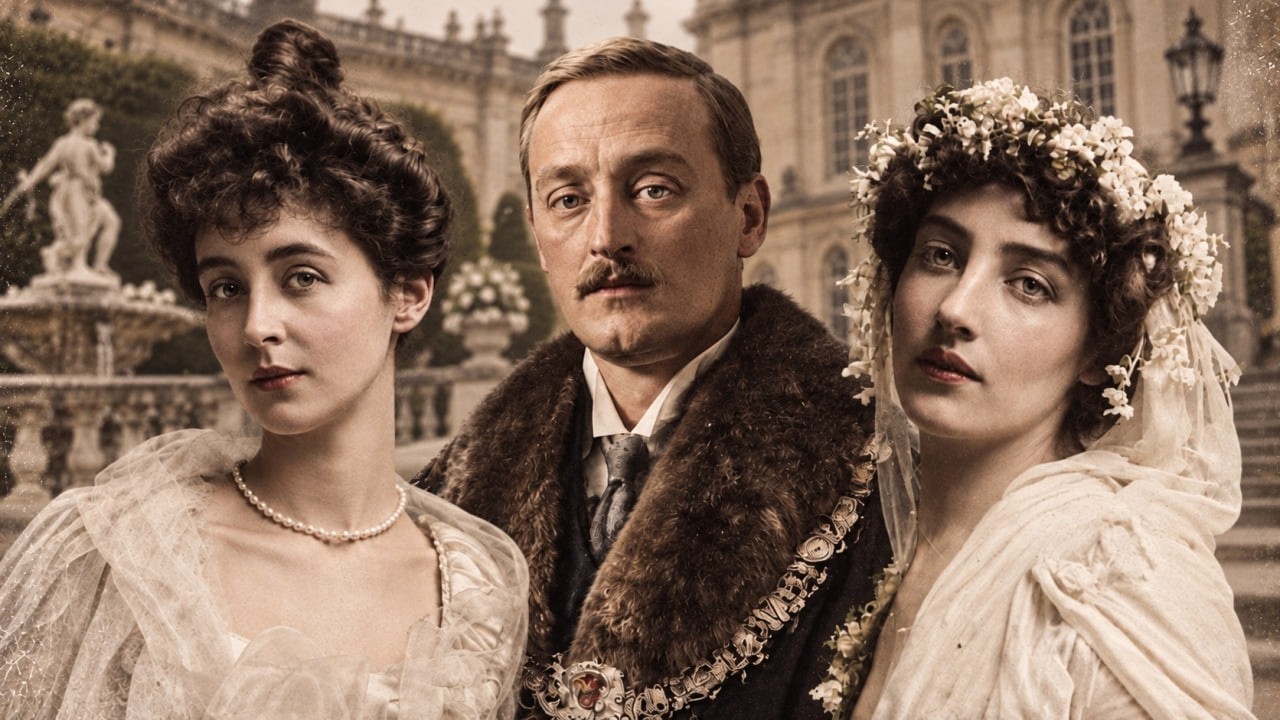
Her name was Consuelo Vanderbilt. Her mother had arranged everything. The duke was Charles Spencer-Churchill, 9th Duke of Marlborough, and he needed money for Blenheim Palace, the vast baroque estate that was quietly crumbling around him. She was one of more than 100 American heiresses who married into the British nobility during those decades.
The newspapers called them “Dollar Princesses. ” Theodore Roosevelt described the arrangement more bluntly, calling it the sale of a girl in exchange for her money. But there is a part of this story that is rarely told. Twenty-six years later, the same duke married a second American woman.
She had desired the title since she was 14. She was not sold to Blenheim. She pursued it for most of her adult life, and the first time she crossed its doors, she came as a friend of Consuelo. On the morning of the wedding, guests began arriving at St.
Thomas Church on Fifth Avenue before 9 a. m. Outside, the crowd grew to several thousand people. Women climbed onto carriage steps to get a better look.
Police kept a path clear to the doors. Upstairs, a few streets away, the bride was still crying. Her face was swollen. A servant stood outside her door, taking shifts with others for days, keeping watch.
Consuelo Vanderbilt was 18 and about to marry a man she barely knew, in front of 400 guests who had come to watch. Her veil was of fine Brussels lace and covered her face. It hid what her face was doing. She walked down the aisle in tears, and almost no one in the church could see it.
To understand how she arrived at that morning, you have to understand her mother. Alva Vanderbilt had married into a railroad fortune and discovered that old New York society did not consider railroad money entirely respectable. So she declared war. She built a mansion on Fifth Avenue large enough to hold 1,000 guests.
In 1883, she held a costume ball said to cost $250,000, forcing the most important hostess in the city to acknowledge her. In Newport, she built a marble summer residence inspired by a queen’s retreat at Versailles. Consuelo was tall, dark-eyed, and elegant, the kind of beauty French artists wanted to draw. She was raised to be the ultimate ornament of it all.
But Consuelo had fallen in love with someone else. His name was Winthrop Rutherford. He was wealthy, well-born, and perfectly acceptable by any standard except Alva’s. He had no title.
Consuelo became secretly engaged to him. In her own account, written half a century later, she said she told her mother she had the right to choose her own husband, calling those the bravest words she had ever spoken. They did not survive contact with Alva. Consuelo wrote of a storm of reproaches.
Her mother threatened to kill Rutherford, and declared that her daughter’s disobedience would be the death of her. Historians still debate whether Alva actually locked her daughter in. Some accept Consuelo’s account of confinement at Marble House. Others believe the threats alone were enough.
Either way, the result was the same. The girl gave in. On November 6, 1895, she became the Duchess of Marlborough. She set sail for England with a title, a husband, and a house with 400 rooms and a leaky roof.
She hadn’t been there a week when she realized what she had really been bought for. During the honeymoon, her husband, known as Sunny, sat her down and explained. He had not married her out of affection. He had married her, he said, because he felt obligated to save Blenheim.
According to one version, he told his new wife he was in love with another woman in America. Consuelo was 18, had crossed an ocean, given up the man she loved, and received a ducal coronet. Now the man she had been sold to was explaining that the transaction had been about the masonry. She did not flee.
Instead, she learned to run the household and the names of the tenants. She became an extraordinarily competent duchess, admired in England, sought after in London, photographed in her pearls and sable. Behind the image, the two lived separate lives under the same massive roof. For 11 years she held that arrangement together.
The woman who would eventually take her place was not even near Blenheim yet. In 1895, she was 14 years old. She lived in Europe and had just told a family friend exactly which English duke she intended to marry. She had chosen the same one.
Three years before that wedding in New York, on a February night on the French Riviera, another young American woman learned a different lesson about marriage. Gladys Deacon was born in Paris in 1881. Her parents, Edward and Florence, had long since stopped pretending they got along, and the family wandered between the grand hotels of Paris, Rome, and the Riviera. On the night of February 18, at the Hotel Splendid in Cannes, Edward Deacon forced his way into his wife’s rooms.
He found a Frenchman named Émile Abeille there and shot him to death. Gladys was 10 or 11 years old. She was somewhere in that hotel while it all happened. The gunshots, the screams, the police on the stairs, and then the newspapers of two continents splashing the family’s private life across their front pages for weeks.
Edward was tried in France and imprisoned, though only for a short time. Courts of that era tended to look with sympathy on a husband provoked by an unfaithful wife. The marriage did not survive, nor did anything resembling a stable childhood. The girls were placed in a convent school outside Paris.
When Edward was released, he took the older children across the Atlantic. Florence fought to keep them. There were reconciliations that crumbled, separations that hardened, and at least one occasion where one parent took the children from the other without warning. Edward’s mind never recovered, and he died in an asylum in 1901.
Gladys learned early that a family’s reputation could collapse overnight, through no fault of the children, and that the world would judge her for it anyway. She deduced that love was unreliable, that parents would bargain over you, that anything given to you could be taken away tomorrow. She began to look for something permanent, legal, and hers. By her teens, she had found it and named it aloud.
When the Duke of Marlborough married an American heiress in New York, Gladys announced that she regretted the marriage, because she herself had intended to marry that duke. She said it lightly, the way a girl says something scandalous at a dinner table. She never gave up on it. In her early twenties, Gladys Deacon was one of the most talked-about young women in Europe.
She read voraciously in several languages and could hold her own in rooms full of men three times her age. Marcel Proust wrote that he had never seen a girl with such beauty, such magnificent intelligence, such kindness, and charm. Rodin sought her out. Bernard Berenson considered proposing to her.
According to her biographer, the Crown Prince of Prussia was so fascinated by her that he gave her a ring, and the Kaiser himself reportedly demanded she return it. The sculptor Jacob Epstein modeled her head in stone. Winston Churchill would later call her “a strange and resplendent being. ”
She was not a woman who needed a duke.
She could have had practically anyone. The sons of kings wrote to her. So why would a woman with so much freedom pursue precisely the cage that another woman had entered in tears? Because she was not looking at the same building.
Consuelo saw Blenheim as it was for her: a cold, enormous house owned by a man who had bought her to save his roof. Gladys saw a fortress, a title that no court, no parent, and no scandal could ever take away. She had seen her family destroyed in a single night. Blenheim was 900 years of permanence with a ducal crown on top.
There is a detail from those years that sums up the rest. Around the age of 22, at the peak of her beauty, Gladys became convinced that her nose was not quite perfect. She sought out one of the new cosmetic treatments becoming fashionable among wealthy women, injecting hot paraffin wax under the skin to reshape a feature. The wax did not remain where it had been placed.
It softened at body temperature and slowly descended under its own weight, hardening into thick lumps under her cheeks and jaw. There was no procedure in the world capable of extracting it. The face that had fascinated Proust was undoing itself silently, a little more with each passing year. By 1897, she had taken her first step toward Blenheim.
She had been invited, and the invitation came from the Duchess of Marlborough herself. In September 1897, Consuelo gave birth to her first son at Spencer House in London. She was ill afterward and recovered slowly. According to her own account, it was during that convalescence that her husband met Gladys Deacon.
Consuelo’s memoirs present Gladys as a friend, not a rival. She writes of her charm, her intelligence, and the pleasure of her company. Gladys came to Blenheim not once, but repeatedly over the years, staying in the house as the Duchess’s guest. The two women talked for hours.
The woman who would end up taking Consuelo’s title, her house, and her husband did not force her way through a locked door. She walked in through the front door, holding an invitation written by the woman she would replace. In 1906, the Marlboroughs separated. Consuelo left Blenheim, not because of Gladys.
The marriage had been dying since the honeymoon confession, long before Gladys appeared. But the position had become vacant. The marriage was over in every way except the legal one. Consuelo and the Duke were separated, not divorced.
Gladys waited. She waited through her thirties, the decade in which most women of her class were expected to have secured their future. She waited as the wax in her face slowly descended and her beauty began to deform in private. She waited as the world she had dazzled entered a war and never took the same shape again.
Consuelo, meanwhile, settled between Paris and London, raised her two sons, and began to build the independent life she would later describe as the happiest surprise of her maturity. She traveled, she read, and she began to speak in public. The divorce became effective in 1921. A week later in Paris, Gladys finally married the Duke.
She was 40 years old. She had wanted him since she was 14. Consuelo remarried in July 1921, quietly and deliberately. Her new husband was Jacques Balsan, a French aviator and decorated war hero.
He had proposed to her once when she was 18 and already engaged to another. She rejected him then because there was nothing else she could do. She married him after Blenheim. By all accounts, it was a happy marriage.
They lived between France and the United States. Consuelo became a philanthropist, raising funds to build hospitals and maternity wards for the poor in rural northern France, and later received a decoration from the French government. She became a public speaker and a defender of women’s suffrage, testifying before a Congressional committee in Washington. Her salons were filled with writers, not aristocrats.
Her mother eventually changed her attitude. Alva Vanderbilt spent her final years living in the shadow of her daughter’s home. And in 1926, when the Marlborough marriage was formally annulled by the Catholic Church, Alva gave a sworn statement admitting exactly what she had done: that she had forced her daughter to marry by using threats to obtain her consent. Gladys, meanwhile, set about making Blenheim her own.
She designed new gardens and had herself painted again. She had two stone sphinxes carved for the water terrace, each with her own face. In 1928, she commissioned a painting of her pale greenish-blue eyes on the ceiling of the grand north portico, beneath which every visitor entering Blenheim would pass. The marriage deteriorated almost immediately.
He had wanted a conventional duchess. She had wanted the title, and once it was around her neck, there was nothing left to pursue. He became devout and distant. She became mocking and strange.
There were three miscarriages in four years, and after that, the possibility of having children was gone. She filled the house with dogs. Guests remembered her sitting at dinner with a revolver next to her plate. When a nervous guest asked what it was for, her biographer records her answer: “Oh, I don’t know.
I might see a rat I want to shoot. ”
In 1927, an American magazine published an advertisement for a face cream featuring the Duchess of Marlborough, posing in her wedding dress and praising the product. She was 46. By then, the wax had been shifting around her face for over two decades, and there was nothing capable of stopping it.
At the beginning of the 1930s, the Duke wanted his second wife to leave. He did not want a divorce, which had already cost him a fortune and public humiliation. In 1933, he had the gas and electricity at Blenheim Palace cut off. The heating turned off during an English autumn, hallways fell into darkness, kitchens cooled down, and one room after another became uninhabitable.
He was making the house expel her for him. When she retreated to her London home, he had the electricity cut there too. The Duchess of Marlborough, whose face had been carved into the sphinxes and whose eyes watched the house from the portico ceiling, was cast out of the palace she had spent her entire adult life acquiring. She did not leave in silence, but she left.
The stone kept her face. The house did not keep the woman. The Duke never finished what he had started. In 1934, a year after plunging his own palace into darkness to expel his wife, Charles Spencer-Churchill died suddenly.
Gladys was not divorced. She was widowed. She remained legally and by title the Dowager Duchess of Marlborough for the next 43 years. She kept the ducal coronet she had pursued since she was 14, living on a farm in Northamptonshire among a colony of cats, retreating year after year from the world that had once compared her to Greek statuary.
In 1962, against her will, she was taken from there and admitted to a Northampton hospital ward, the same kind of institution where her father’s mind had faded away 60 years earlier. Consuelo Vanderbilt Balsan lived until 1964, dying at 87 in New York, having outlived her mother, her Duke, her second husband, and almost everyone who had arranged her wedding. During her final decades she was a writer, hostess, philanthropist, and the wife of a man who desired her. She is buried in the churchyard of Bladon in Oxfordshire, within walking distance of the gates of Blenheim Palace.
Of the two American duchesses, only one chose where she would end up. In 1953, Consuelo sat down to write her account of her own life. The title she chose was “The Glitter and the Gold. ” The glitter was Blenheim, the jewels, the 400 rooms, and all the magnificent apparatus her mother had traded her for.
The gold was Jacques Balsan and the gardens of Normandy, and 35 years of being wanted by someone who had asked for nothing except herself. In her memoirs, a book that told the truth about her mother, her marriage, and the price of a ducal crown, Consuelo wrote of Gladys Deacon only as a dear friend. She never explained what happened after that. Years after the book’s publication, a young writer stood in the grand entrance of Blenheim Palace looking up.
There were two eyes painted on the ceiling above him. No one could tell him whose they were. The search ended in a geriatric ward in Northampton, where he found a 94-year-old woman who had once been the most photographed beauty of the era. Hugo Vickers returned to visit her again and again for two years.
The old duchess kept a cloth over the lower part of her face. She had worn a bridal veil for a marriage she had wanted more than anything, and a photographer’s soft focus for an ad about perfect skin. Now, a simple piece of hospital linen. Then one day she lifted the cloth.
Beneath it was a ruined face, but set into it, completely intact, were still the eyes from the ceiling. Two young Americans, born four years apart, married the same man and received the same house and the same ducal crown. The one who was dragged there in tears saved herself. She lost the house and died at 87 with a garden and a husband who adored her.
The one who spent her whole life fighting to get in received everything she had asked for, and it consumed her. Being forced into Blenheim is what saved Consuelo Vanderbilt. Choosing it is what destroyed Gladys Deacon.