In late March 1865, with his army starving and deserting in growing numbers, Confederate General Robert E. Lee faced his final desperate gamble. He turned to the young and trusted General John B. Gordon, asking for options to break the Union stranglehold on Petersburg, Virginia.
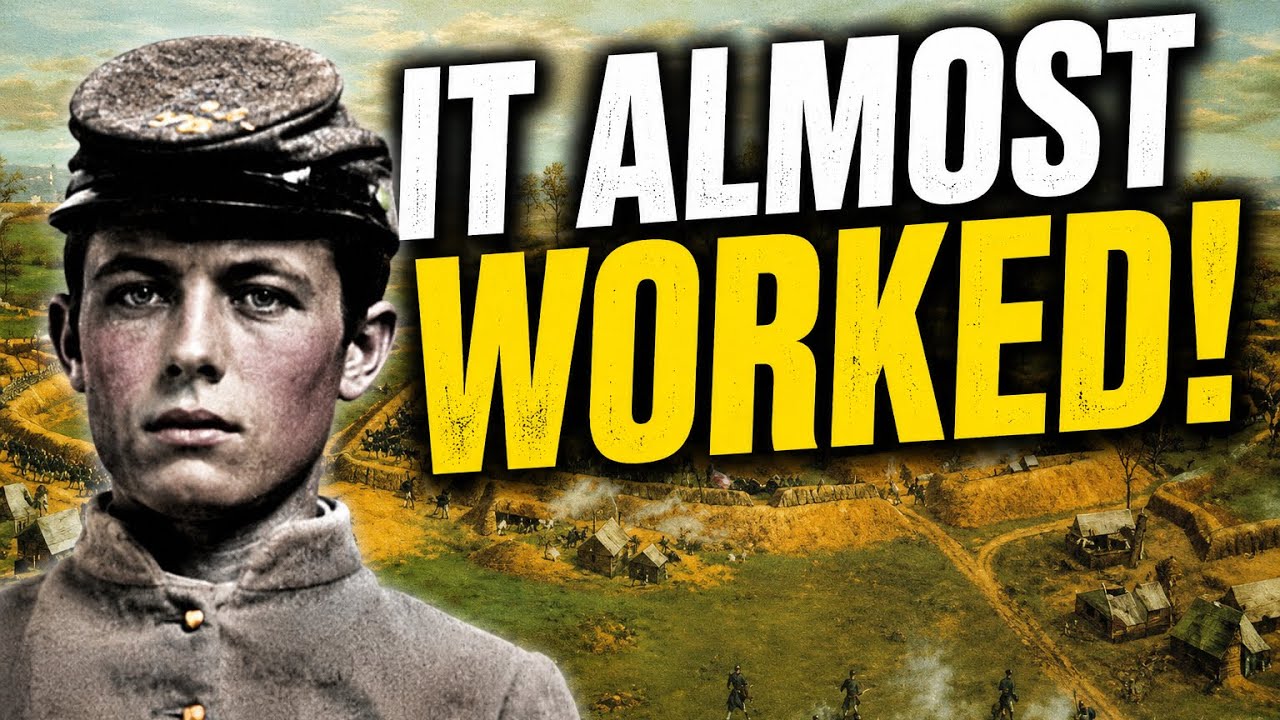
Gordon presented three possibilities: negotiate peace with General Ulysses S. Grant, abandon the trenches and Richmond to link up with General Joe Johnston in North Carolina, or launch a surprise attack on a weak point in the Union lines. Confederate President Jefferson Davis rejected the first two immediately. The only option he would accept was an attack.
That weak point was Fort Steedman, a small Union stronghold positioned within roughly 200 yards of the Confederate-held Colquitt Salient. The position was so dangerously close to Confederate lines that Union soldiers inside could barely repair the fort without drawing enemy fire. Gordon saw an opportunity and devised a plan built on deception. Around 4:30 a.
m. on March 25, 1865, the Confederates moved out into the cold darkness. A select group of men approached the Union picket lines pretending to be deserters seeking to surrender. When the Union soldiers let their guard down, the Confederates turned on them.
Meanwhile, roughly 50 men with axes cleared the wooden obstacles in the way, opening a path for the main force. The initial attack worked. The Confederates overwhelmed the forward positions and captured Fort Steedman quickly, with Gordon himself stepping inside the captured works. For a brief moment, the Confederate army tasted victory for the last time in Virginia.
But the success unraveled almost immediately. Inside the dark fort, a Union officer began shouting orders that confused the Confederates, who were unsure who to listen to until they realized he was a Union soldier and took him prisoner. Federal artillery at Fort Haskell began lobbing shells into the position, and the Confederates found themselves trapped inside their own captured prize. The advance stalled.
Confederate units got lost in the darkness and could not find the secondary Union lines they expected to exploit. Union reinforcements, including several Pennsylvania regiments, arrived and counterattacked, pushing the Confederates back. The fight degenerated into chaos as thousands of Confederate soldiers jammed into the tiny fort, creating what one account described as their own crater. By 7:30 a.
m. , the Confederates began retreating toward Colquitt Salient. Some units, including the 49th North Carolina, did not receive word of the retreat and remained isolated. A brave courier volunteered to reach them and guide them back, but the cost was heavy.
At 8:00 a. m. , Fort Steedman was back in Union hands. The battle ended with the Confederates losing roughly 2,600 men, including many taken prisoner, while Union losses were about half that.
Lee’s last offensive in Virginia had failed. The attack briefly seemed to threaten the Union supply line. The railroad depot at City Point had kept Union soldiers well supplied with shoes, clothing, ammunition, and abundant food, while Confederate soldiers were deserting in large numbers simply because they were hungry. But the plan to sever that supply line never came close to succeeding.
After the failure at Fort Steedman, Lee was left with no real options. Within weeks, Richmond fell, and Lee’s army began its final retreat, leading to the surrender at Appomattox. Today, the grounds of Petersburg National Military Park preserve the remnants of Fort Steedman, the Colquitt Salient, and the earthworks where the battle unfolded. The fort itself remains mostly a large pile of earth, with its walls still visible more than 150 years later.
Visitors can walk the same ground Confederate soldiers crossed in the dark that March morning, from the Colquitt Salient toward the fort and the fields beyond. The park has faced challenges in recent years. A sinkhole has closed a major road through the park, forcing visitors to reach Fort Steedman on foot. Some exhibits, including a log cabin recreated to show Union soldiers’ winter quarters, have fallen into disrepair, with holes in the roof, mold, and buckling wood.
A roadside audio exhibit at the fort no longer works. Park staff and volunteers hope repairs can be made so the story of this pivotal battle can continue to be told.