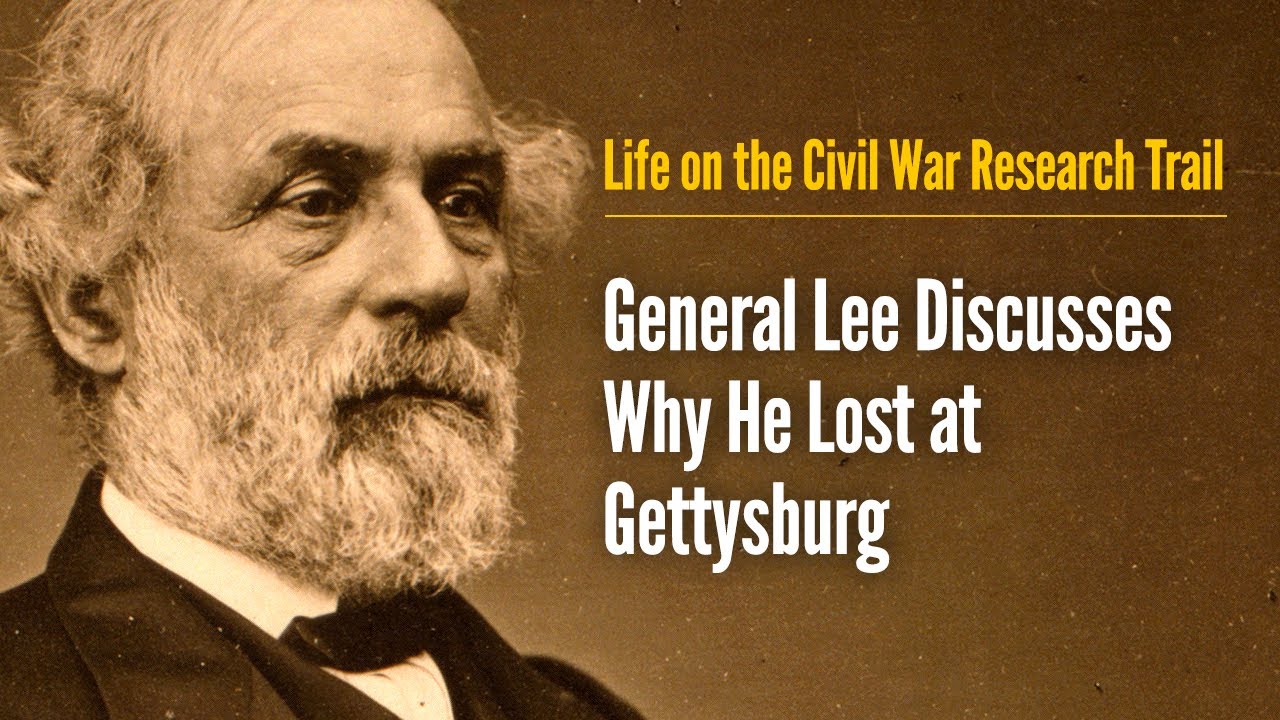
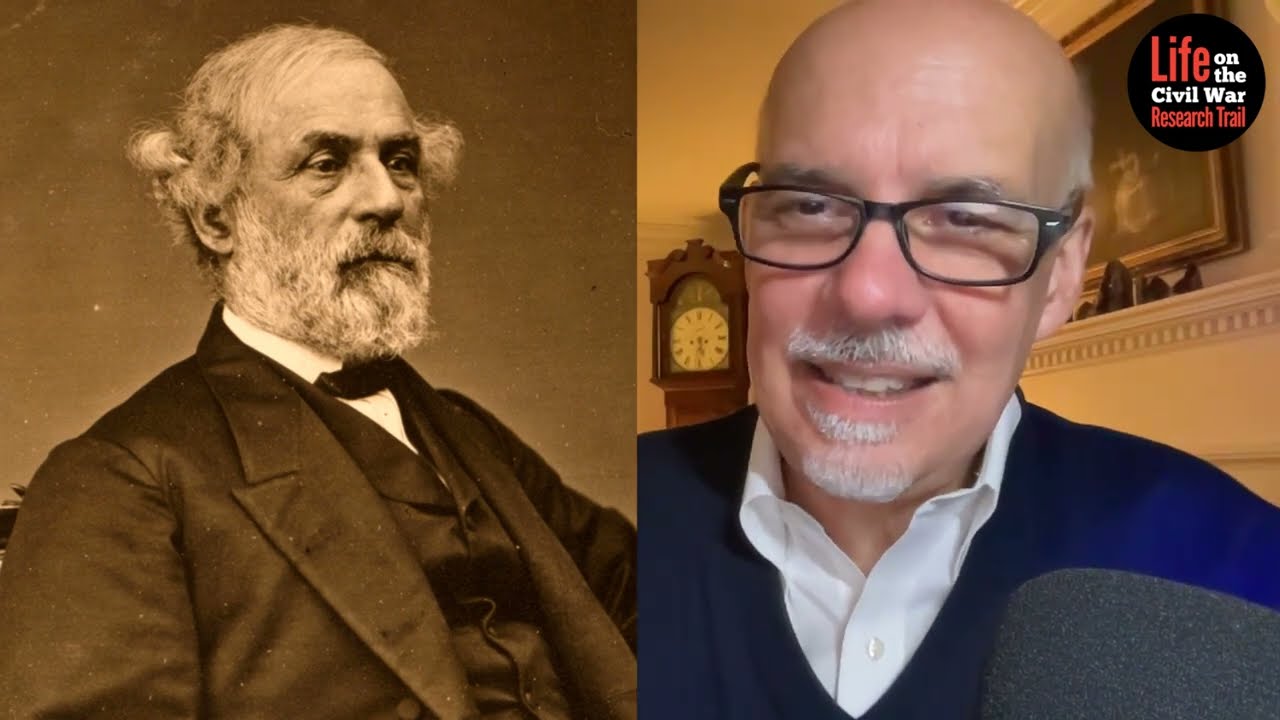
In the years after the Civil War, General Robert E. Lee shared his personal reflections on the Confederate defeat at Gettysburg in conversations with a trusted colleague. Those conversations were recorded in memoranda that offer a rare glimpse into Lee’s own assessment of the campaign.
The notes were made by William Allan, an educator and former staff officer who served under Stonewall Jackson and Jubal Early. Allan later became a professor at Washington College, where Lee served as president after the war. His notes on Gettysburg were compiled in two memoranda, one dated 1868 and another from February 1870, just months before Lee’s death.
In the 1870 memorandum, Lee spoke feelingly about Gettysburg and defended his decisions. He acknowledged that his movements were risky but insisted that everything in the war carried risk. Lee said he often played a bold game because it was the only possible one.
Lee also discussed his plan to have troops brought to Manassas to threaten Washington while he moved north into Pennsylvania. He said President Jefferson Davis promised to do so, but it was never carried out. Lee believed even a small force there would have created a diversion and a significant moral effect.
Davis, according to Lee, did not like the movement northward and feared the enemy would attack Lee’s army. Lee said he had no fears about getting away, though he was concerned about Richmond. He believed he could conceal his movements and get far enough north to threaten Washington before the enemy could check him.
Lee succeeded in that goal but failed at Gettysburg for several reasons. He said cavalry commander J.E.B. Stuart failed to provide information, which deceived him into fighting a general battle. Lee also noted that he never could achieve a simultaneous attack on the enemy’s position. He often thought that if Jackson had been present, he would have succeeded.
The 1868 memorandum provides more detail. Lee said he did not intend to give general battle in Pennsylvania if he could avoid it. The South was too weak to carry on a war of invasion, and his offensive movements were only parts of a defensive system.
Lee did not know the federal army was at Gettysburg. He could not believe it, because Stuart had been specially ordered to cover Lee’s movement and keep him informed of the enemy’s position. Stuart sent no word, and Lee found himself engaged unexpectedly.
Once battle was determined, Lee believed victory would have been won if he could have gotten one decided simultaneous attack on the whole line. He tried for three days and failed. He said Early could not act decisively, and Rodes and Johnson attacked and were hurt in detail. Longstreet, Hill, and others could not be gotten to act in concert.
Because of these failures, Lee said the federal troops were able to oppose each Confederate corps or division in succession. Still, he believed he inflicted more damage than he received and broke up the federal summer campaign.
After retiring from Gettysburg, Lee wanted to cross the Potomac at once, but the river was swollen and delayed him. That led to his fortifications at Hagerstown. He would not have been sorry if Meade had attacked him there, but he did not stop to invite an attack. The river was simply too high to cross. Meade’s failure to attack showed how much he had suffered.
Lee also explained why he went into Pennsylvania at all. He thought it was far better than remaining at Fredericksburg. He had been attacked there twice and succeeded, but he did not want to risk another attempt. The position was too easily flanked, and the plan Grant later pursued in 1864 might have been tried at any time.
By going north, Lee said he drew the enemy away from the Rapidan, excited their fears for Washington, and got ample supplies for his army. He did not want to fight unless he could hit the enemy in detail. He expected he might need to give battle before returning in the fall, as retreat without it would have been difficult.
Lee had no idea of permanent occupation of Pennsylvania. He planned to maneuver, alarm the enemy, threaten their cities, and hit blows without risking a general battle. Then, toward fall, he would return near his base.
Lee blamed Stuart’s failure to carry out instructions for forcing the battle of Gettysburg. He also blamed the imperfect and halting way his corps commanders, especially Early, fought the battle. Lee said victory trembled in the balance for three days before finally going to the foe.
Lee recalled that on the second day he consulted Early and suggested moving the Second Corps to the right of Longstreet to threaten the enemy’s communications with Baltimore. But Early and Edward Johnson said the line then held could be carried. Johnson rose early, attacked in succession, and was not able to hold any advantage.
Lee also spoke feelingly about the criticism he faced after the battle. He said critics talked much about what they knew little about. He insisted he had fought honestly and earnestly to the best of his knowledge and ability for the cause and had never allowed his own advantage or reputation to come into consideration.
He referred to a reported conversation in which Longstreet said Lee was under a promise to his lieutenant generals not to fight a battle in Pennsylvania. Lee said he did not believe Longstreet ever said that and called the idea absurd. He had never made such a promise and had never thought of doing so.
The memoranda show how closely today’s narrative about Gettysburg matches Lee’s own account. They also highlight Lee’s plan to remain in Pennsylvania until the fall, threatening cities like Washington, Baltimore, Harrisburg, Philadelphia, and Pittsburgh. That possibility remains one of the more intriguing what-ifs of the Civil War.