On the night of October 27, 1880, past midnight in Tombstone, Arizona Territory, the saloons along Allen Street were still lit. Somewhere in the dark beyond them, men were shooting at the moon. Pistol flashes jumped between adobe walls and half-built frame houses. Town Marshal Fred White heard the shots and walked toward them, a man of about thirty who had worn the badge for less than a year and was well liked by the town.
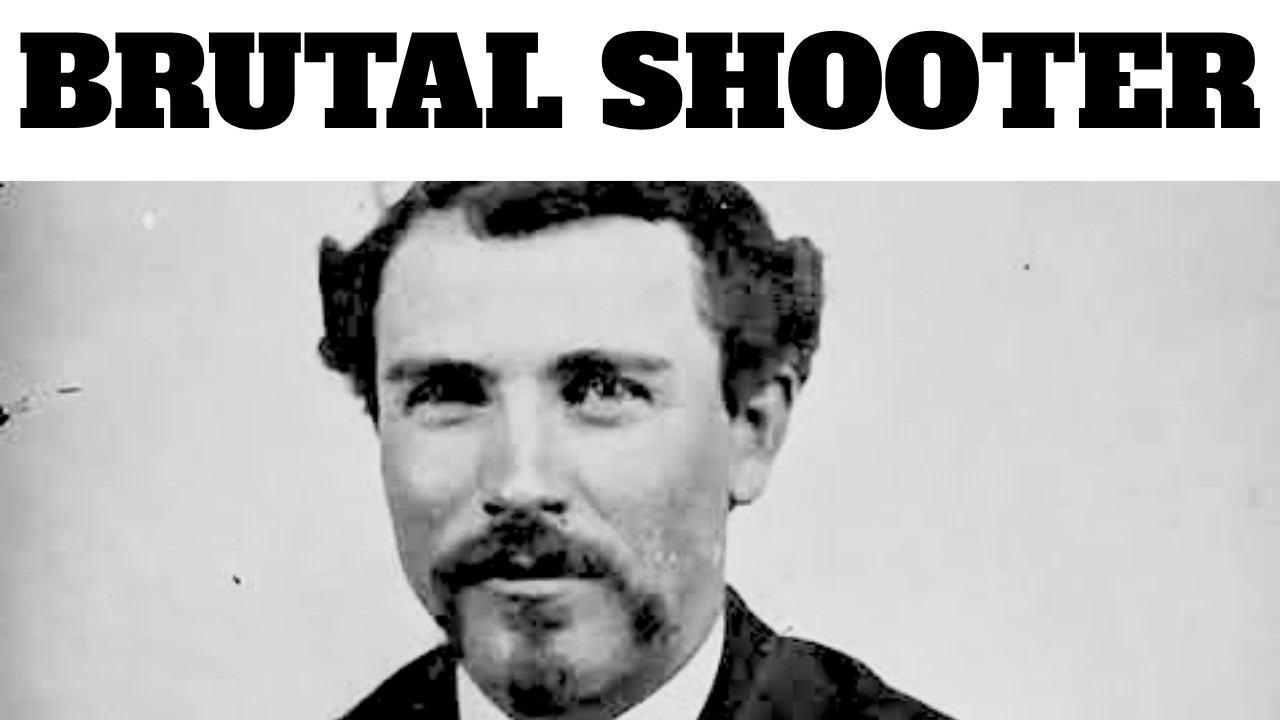
He stepped into a vacant lot where the lamplight did not reach. A big man with dark curly hair stood there, a revolver in his hand. White did not draw his own gun. He reached out, closed his fist around the barrel of the other man’s pistol, and told him to give it up.
For a second, the two men were joined by the same piece of steel. Then the gun went off. The bullet tore into the marshal low in the groin, fired so close that the muzzle flash set his clothes burning. White dropped into the dirt, his coat smoldering.
Out of the dark came another man, tall and quick, who brought the barrel of his own pistol down hard across the head of the shooter. That man was Wyatt Earp. The curly-haired man on the ground was the outlaw the territory called Curly Bill. Within weeks, Curly Bill would stand before a judge and walk out the door a free man.
The one who made certain of it was the man standing over him in that lot. This is the story of an outlaw Tombstone could never convict and a system built to let him go. No one has ever settled Curly Bill’s real name. The name history gives him, Brocius, may be nothing more than a newspaper spelling of something else.
Researchers have chased at least two candidates, a William Graham and a William Breakenridge, a name that surfaces in Texas court records in the late 1870s, but neither has been proven. He was probably born sometime in the 1840s, most likely in Missouri or Texas. Beyond that, the record goes blank. No baptism entry, no family bible, no census line ties cleanly to him.
He came of age in the years after the Civil War, when Texas and the border country were full of young men like him, armed, restless, and owning nothing. A young man who drifted out of one county could become someone new in the next, and nobody would write it down. If the Breakenridge identification is right, the first hard trace of him appears in 1878 near El Paso, when a man named William Breakenridge and a partner attacked a United States Army ambulance on the road. They were caught.
Breakenridge was convicted. Before his sentence ran its course, he broke out of jail and vanished. It was a small crime next to what came later, but it repeated a shape: a lonely road, a government wagon, a gun, and a cell that could not hold him. By 1879, a curly-haired Texan was riding in the far southeast corner of Arizona Territory, the San Pedro Valley.
Silver had been found in the hills above the river in 1877, and Tombstone rose out of the desert almost overnight. In the mountains to the east, at a rough camp called Galeyville, a loose band of riders gathered around the cattle trade. The newspapers called them the cowboys. In that country, in those years, the word did not mean an honest ranch hand.
It meant a rustler. Their business was plain enough. They crossed into Sonora, drove off Mexican cattle, and sold the beef cheap to mining camps that needed meat. In these camps, the man with no settled name became the man history remembers as Curly Bill.
Every drifter needs a door that opens. In the San Pedro Valley, that door belonged to Newman Haynes Clanton, an old gray-bearded rancher in his sixties who had moved west through Missouri, Texas, and California until he settled on the river bottom of southeastern Arizona. He had sons: Ike, the loud one, Phineas, called Finn, and Billy, the youngest, still a teenager. The Clanton ranch was adobe and pole corral, but for the riders who came through, it was the closest thing to a home most of them would ever have.
Old Man Clanton bought, held, and moved Mexican stock north across the line. His ranch was a way station in the cattle trade. No letter or diary describes a close personal bond between Curly Bill and Old Man Clanton, but the sources show a patriarch who gave an entire outfit a home base and a kind of standing. Curly Bill rode in that outfit and became one of its leading men.
Until early 1881, Tombstone sat inside Pima County, whose county seat was Tucson, a long ride to the west. The sheriff there was Charles Shibell, and for a time one of his deputies in the mining district was Wyatt Earp. In November 1880, Shibell stood for reelection against Bob Paul, a former Wells Fargo shotgun messenger with a reputation for honesty. The count went to Shibell, but the returns from San Simon, a tiny precinct deep in cowboy country, were wildly out of proportion to the few people living there.
Paul took the election to court, and months later the courts gave him the office. In the meantime, Wyatt Earp resigned as deputy. Shibell handed the Tombstone deputy job to a smooth, likable former lawman named John Behan. Then in February 1881, the territory carved out a brand new county, Cochise, with Tombstone as its seat.
Its first sheriff was appointed by Governor John C. Fremont, who gave the job to Behan. In Arizona Territory, the sheriff did more than make arrests. He collected the county taxes and kept a percentage of everything he collected in a silver county booming like Cochise.
That made the sheriff one of the best paid men in the territory. And some of the men who owed taxes in the back country were the cowboys themselves. Deputy Billy Breakenridge, who worked under Behan, wrote about it in his old age. He rode into rustler country with a tax ledger, and he took a companion along for safety.
The companion was Curly Bill. Breakenridge told it as a funny story decades later. Curly Bill rode beside the deputy from one ranch to the next, and the rustlers paid. A county deputy with a ledger in his saddlebag, and at his elbow the most notorious rustler in Arizona making sure the county got its money.
By the summer of 1881, the border began to bleed in both directions. In late July, a party of Mexican traders coming north was ambushed near Skeleton Canyon and several were killed. Their silver and mules were taken. Some accounts put Curly Bill at the head of the attackers; others doubt he was there at all.
The evidence has never been settled. The cowboys were blamed on both sides of the line, and across the border, the patience of the Mexican authorities ran out. In the gray dawn of August 13, 1881, a small cattle camp lay in Guadalupe Canyon, the rough corner where Arizona, New Mexico, and Sonora meet. Old Man Clanton was among the men there, moving a herd north.
So was Jim Crane, wanted by the Earps and by Wells Fargo for the stage robbery near Benson that March. With them were Dixie Lee Gray, Charlie Snow, and Billy Lang. As the breakfast fire caught, Mexican soldiers opened fire from cover at close range into the sleeping camp. It was over in minutes.
Old Man Clanton died there on the ground. Jim Crane, Dixie Lee Gray, Charlie Snow, and Billy Lang died. Billy Buyers was wounded and lived. Harry Ernshaw ran for his life through the brush and got out to tell what happened.
The herd was driven off. Nobody was charged. Nobody could be. The killers wore the uniform of another nation, and Washington had no wish to make an international quarrel out of dead rustlers.
Think about what that morning did to the cowboys. Their patriarch was gone. Jim Crane was gone too, and with him went a secret deal that could have changed everything in Tombstone. Back in May, in Galeyville, Curly Bill had quarreled with a man named Jim Wallace, who drew and shot him in the head.
The bullet went in at the neck and came out through his cheek. By every expectation, he should have died. He did not. He healed and kept riding, and the story only added to the legend that he was hard to kill.
Meanwhile, in the summer of 1881, Wyatt Earp made a quiet arrangement with Ike Clanton. Wells Fargo was offering a reward for the Benson stage robbers, Bill Leonard, Harry Head, and Jim Crane. Wyatt wanted the arrests because they would help him win the sheriff’s office at the next election. Ike wanted the money.
Wyatt would get the credit. Ike would get the reward. And nobody in the cowboy crowd could ever know that Ike had sold out his own. Then the deal fell apart.
Leonard and Head were killed in New Mexico that June by other men. Crane died at Guadalupe Canyon. What remained was a secret, and Ike Clanton became terrified that Wyatt would let it slip. Through the fall, Ike drank and made threats against the Earps on the street.
On the afternoon of October 26, 1881, it came to guns. In a narrow lot on Fremont Street near the back of the O. K. Corral, Virgil Earp, now chief of police, walked down with his brothers Wyatt and Morgan, and Doc Holliday beside them.
About thirty seconds of shooting followed. When the smoke cleared, Billy Clanton lay dying at nineteen. Tom McLaury and Frank McLaury were dead. Ike had run.
Curly Bill was not there that day, but the dead were his people. Sheriff Behan arrested the Earps and Holliday for murder. After a long hearing, Justice Wells Spicer released them, ruling that the evidence did not justify a trial. Half the town cheered the decision.
The other half never forgave it. Up to that point, everything had worn at least the costume of law: badges, warrants, hearings, reward posters. What came next did not. On the night of December 28, 1881, Virgil Earp crossed Allen Street toward his hotel.
Men waiting in the dark of an unfinished building opened up with shotguns. Buckshot shattered his left arm and tore into his side. He lived, but that arm would hang useless for the rest of his life. Nobody was convicted.
Three months later, on the night of March 18, 1882, Morgan Earp was playing billiards at the Campbell and Hatch Saloon when someone fired through the glass of a back door. The bullet passed through his body. He died within the hour on the floor of that room with his brothers around him. He was thirty.
No document places Curly Bill at either ambush, but the men named were his crowd, and Wyatt Earp was no longer waiting for a jury. When Virgil was crippled, United States Marshal Crawley Dake turned to Wyatt and made him a deputy federal marshal. When Morgan was murdered, Wyatt wrote out on that federal authority, while Sheriff Behan would soon ride out after Wyatt on the authority of the county. From that winter forward, Cochise County had two forces calling themselves the law.
They had different friends, different newspapers, and different warrants in their pockets. The county had turned into two armed camps. Which brings the story back to that vacant lot. After Fred White was shot, word spread up Allen Street fast, and within the hour there was talk of a rope.
Wyatt and the others hustled Curly Bill out of Tombstone before the crowd could get hold of him. They took him west to Tucson, where the county jail could hold him and where a judge could hear the case away from the mob. Back in town, Fred White lingered in terrible pain from a wound nobody in 1880 could repair. Before he died, he gave a statement.
He said the shooting was not done on purpose. He said the gun went off while he was jerking it out of the man’s hand. On October 30, 1880, Fred White died. The case went before Judge Joseph Neugass in Tucson, and the most important witness for Curly Bill was the lawman who arrested him.
Wyatt Earp testified about the pistol. It was a single-action revolver, and he said it could fire from half-cock if the hammer was jarred or the gun was wrenched. In other words, the weapon could have gone off exactly the way the dying marshal described. On December 27, 1880, Judge Neugass dismissed the charge.
Curly Bill walked out of the Tucson courthouse a free man. Hold both halves of that in your mind. On the evidence, the dismissal may well have been the right decision. The victim himself called it an accident.
The arresting officer swore the gun could fire that way. But consider who stands at the center of it. Wyatt Earp saved Curly Bill from a rope in the street and then saved him from a murder charge in court. Seventeen months later, that same Wyatt Earp would be riding the desert with a federal badge, a dead brother, and a list of names.
Two days after Morgan died, the Earps put his body on a train to the family in California. Virgil, with his arm in a sling, rode west too with his wife toward safety. On the evening of March 20, 1882, the train pulled into Tucson. Wyatt and his posse rode the cars to see Virgil through.
In the dark of the rail yard, they found Frank Stillwell, one of the men named for Morgan’s murder. Stillwell was found the next morning beside the tracks, his body riddled with bullets and buckshot. Two days later, the posse rode to the wood camp of Pete Spence in the south pass of the Dragoon Mountains. Spence had already surrendered to Behan, safe in a county jail cell, but a man the coroner’s jury had named Florentino Cruz, called Indian Charlie, was cutting wood there.
They killed him on the hillside. Riding with Wyatt were his younger brother Warren, Doc Holliday coughing his lungs out from consumption, and men like Sherman McMaster, Turkey Creek Jack Johnson, and Texas Jack Vermillion. Behind them, Sheriff Behan raised his own posse with county warrants for the arrest of Wyatt Earp for the killing of Stillwell. Riding in that county posse were men with cowboy ties.
Johnny Ringo, the moody, educated gunman of the Galeyville crowd, was among them. The sheriff of the county was riding with outlaws to arrest a federal deputy, and the federal deputy was riding outside every law to kill outlaws. By March 24, 1882, both riders were thirsty in the Whetstone Mountains, where springs are few and known to everyone. On the afternoon of that day, Wyatt Earp led his riders up toward a spring in a hollow.
Some called it Iron Springs, others McCall Springs. Somebody else had gotten there first. A party of cowboys had made camp, and among them was a big man with curly hair. The two groups saw each other almost at the same instant.
Wyatt swung down from his horse, carrying a double-barreled shotgun. Curly Bill came up with a gun of his own, and the distance between the two men was only a matter of paces. Wyatt fired both barrels into his chest. The charge struck him with such force that, by Wyatt’s telling, it nearly cut him in two.
Curly Bill fell into the brush beside the water. There were no last words. Then the spring erupted. The cowboys opened fire from cover.
Texas Jack’s horse went down, shot dead, pinning him for a moment. The rest of the posse wheeled back out of range. Wyatt was left alone in the open. His heavy cartridge belt had slipped down around his thighs, and he stood in the gunfire wrestling with it while bullets passed through the skirts of his long coat.
One round struck the horn of his saddle. Somehow none of them struck him. He got the belt up, got into the saddle, and rode out. In the space of a minute, it was over.
Curly Bill lay dead at a desert spring, killed by the man who had saved him from a lynch mob and a murder charge. Even this was argued over. His friends never produced a body in town. Some swore he had survived and gone off to Mexico or Texas, and stories of sightings drifted around for years.
He never showed his face alive. Most who have studied it closely believe Wyatt Earp told the truth about that spring. So what became of the men around him? Wyatt Earp left Arizona within weeks of Iron Springs and crossed into Colorado.
Arizona sought his extradition for the killing of Frank Stillwell, but Colorado Governor Frederick Pitkin refused to send him back. Wyatt never stood trial for any of the vendetta killings. He wandered the boomtowns of the West for decades and died in Los Angeles in January 1929, an old man in a rented bungalow. Virgil Earp lived on with his ruined arm and died of pneumonia in Goldfield, Nevada in 1905.
Doc Holliday died of consumption in a hotel bed in Glenwood Springs, Colorado in 1887 at 36. John Behan lost the sheriff’s office, went on to serve as superintendent of the Yuma Territorial Prison, and died in Tucson in 1912. Billy Breakenridge, the deputy who rode beside Curly Bill collecting taxes, lived to put the ride in his book Helldorado, published in 1928, and died in 1931. Ike Clanton never found the peace he talked about; in 1887, a detective killed him on a ranch in eastern Arizona while Ike was suspected of cattle theft.
Johnny Ringo was found dead in July 1882, sitting against a tree in Turkey Creek Canyon with a bullet in his head, and whether he took his own life or someone else took it has never been settled. Pete Spence, named by the coroner’s jury for Morgan’s murder, walked out of the whole affair untouched and died in 1914. Marshal Crawley Dake left office under a cloud of disputed accounts. On May 3, 1882, President Chester Arthur issued a proclamation ordering the cowboys to disperse and threatening martial law if they did not.
The President of the United States finally wrote the word cowboys into a public proclamation. The Mexican soldiers who killed Old Man Clanton were never punished. The men who crippled Virgil were never convicted. The men who killed Morgan were never tried.
And the one man in this whole story who did stand before a judge for killing a lawman was Curly Bill, and he was cleared. Cochise County did not have a broken justice system. It had no single system at all. It had two rival claims to the law, each one armed, each one with its own newspaper, its own friends, and its own warrants.
It had a sheriff’s office that grew rich on taxes collected with the help of the very men it was supposed to arrest. It had a federal marshal with no money, a governor with no soldiers, and a congress that had tied the army’s hands. In that country, the badge did not decide who was right. The badge decided whose side you were on.
The ordinary people of Tombstone saw all of this up close. When Fred White was buried, a long line of mourners followed him. Out on the San Pedro, the view was different. Small ranchers had bought cheap beef from the cowboys for years.
To those families, the Earps were town men with town friends, and the O. K. Corral was a killing of local boys. In Tombstone itself, merchants and mining men formed a citizen safety committee, ready to take up rifles if the law failed them.
The Epitaph and the Nugget wrote two different histories every week, and every reader chose which one to believe. Across the border in the villages of Sonora, families who had lost cattle and sons to the raids left almost nothing in the American record. So who trusted the law in Cochise County? The answer is nearly nobody.
Each group trusted the part of the law that protected its own people and feared the rest. Today, Tombstone still stands about seventy miles southeast of Tucson, and actors in long coats stage gunfights for visitors. At Boot Hill Graveyard, weathered wooden markers stand over the dead of the 1880s. Out in the Whetstone Mountains, researchers still argue over exactly which spring is the real Iron Springs and where a body might have been buried in the brush.
Nobody has ever found it for certain. In the 1993 film Tombstone, Curly Bill shoots Fred White on purpose in a drunken rage in front of witnesses, and it plays as cold-blooded murder. The marshal himself, dying in 1880, said it was not. The man who arrested Curly Bill swore under oath that the gun could have fired on its own.
The real story needed no villain to make it terrible. Two men in a vacant lot one night in October 1880, one hand closed on the barrel of a pistol, close enough to feel the heat when it fires, close enough for the flash to set a coat burning. Seventeen months later, two men at a spring in the Whetstones, one shotgun raised, the other man close enough to touch the barrel. Fred White reached for the gun and died.
Curly Bill faced the gun and died. Between the two barrels stood the same tall man, Wyatt Earp, first saving the outlaw, then ending him.