In 1889, a land surveyor named Orin Maddox was hired to measure a stretch of timberland in Cottle County, a remote area marked on company maps as unsurveyed. The note beside the blank space said only that no men were available. Locals at the settlement of Tygard’s Ford gave him the same warning he received at the general store: be out of the hollow before dark. The hollow, known as Sile Hollow, was beautiful and full of enormous old trees.
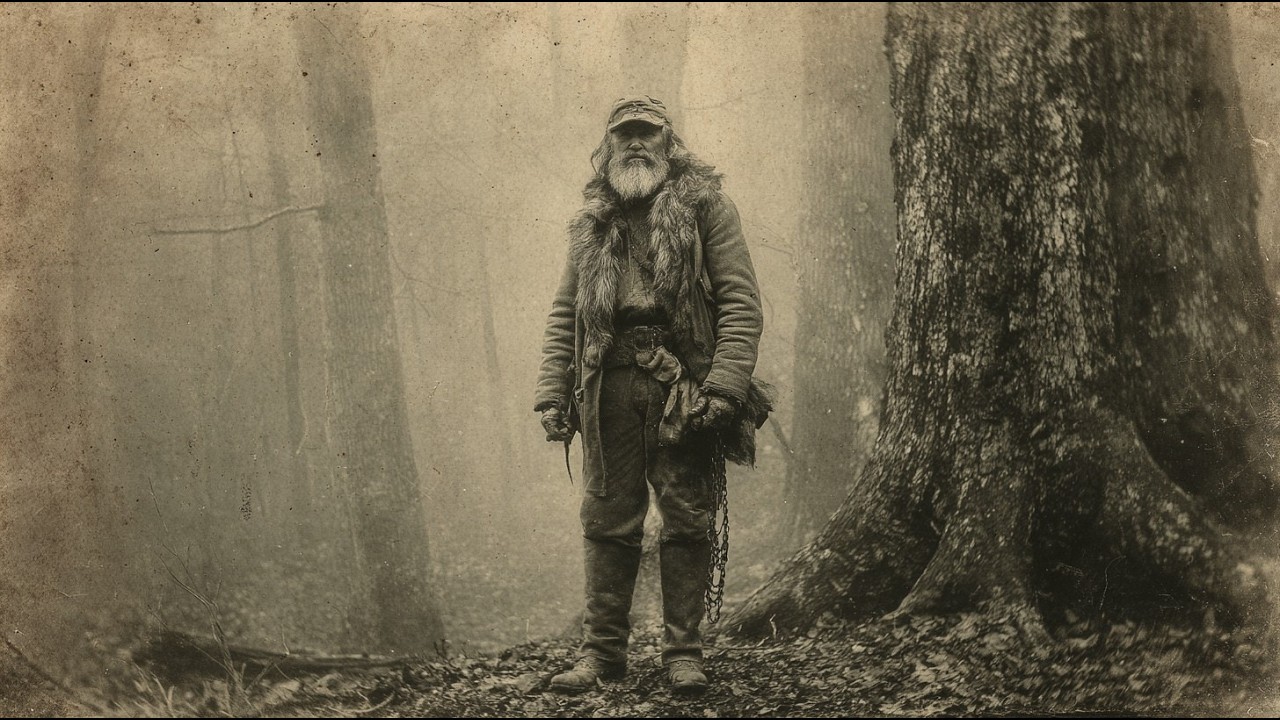
But Maddox noticed the absolute stillness. There were no birds, no squirrels, no deer sign, nothing alive moving in the woods. Then he found the first notched tree, three tally marks cut into the bark. By the time the sun touched Yarrow Ridge, he had counted more than 200 notches on the trees, and he walked out as instructed.
The boarding house keeper, Veril Senter, was waiting up for him. She asked if he had counted the trees, a question he had not spoken to anyone about. She then told him the story of an early settler named Absalom Teague, who came to the county in the 1840s and took up the worst land at the head of Sile Hollow. He was a trapper, and he never left.
When travelers began vanishing along the high roads that ran past the hollow, the men of the settlement went up to confront him. Veril Senter told him that eleven men went up the hollow in 1849. Seven came back. Those seven refused to say what they found in the cabin.
The county recorder, Lemeul Correll, was among them. He went straight to the courthouse, cut Teague’s name from the land ledger with a pen knife, gathered every other record containing the name, and burned the papers to ash. He told people that a thing like that should not have a name to be called by. Maddox went back to the hollow anyway.
On the fourth day, he found a single strand of bright wire strung taut between trees, well-kept and recently maintained. Under the leaves he found fresh set traps, oiled and baited. He followed the line for miles and realized it ran in a huge loop around the entire hollow. At the center, in a deep fold, stood a small cabin sunk into the earth.
The door was barred shut from the outside by a heavy iron bar. He could smell tallow and wet iron and old smoke. From inside the cabin came the sound of a small tin bell ringing slowly and patiently. There was no wind in the clearing, nothing to make the bell ring.
Maddox walked out, fast and steady, and he did not look back. He never told the truth to the timber company. In the margin of the chart beside Sile Hollow, he wrote the word unsurveyable. He went on with his life, but he was marked by the experience.
He could not abide the sound of any bell for the rest of his life, and he could not stand to be caught out in wooded country after dark. Near the end of his life, he told the entire story to a young surveyor, who wrote it all down. He said the timber company never did cut Sile Hollow, and the great oaks were still standing. Years later, a letter reached him from the grandson of the old storekeeper.
The grandson wrote that the people of Tygard’s Ford had begun to hear a bell from the hollow on still cold nights. He had gone as far as the first notched tree himself, and there he had found new notches cut fresh into the bark below the old ones. A new tally had been started, already climbed past the height of a man’s chest. He wanted to know if Maddox had ever counted to the end of the old tally.
Maddox never answered the letter. He died that winter, at home in his own bed, with every lamp in the house lit. His wife said that near three in the morning on his final night, he sat up in the dark, going very still. When she asked what was the matter, he looked toward the dark window and said, in a quiet voice, that he never did count to the end of them.
Then he lay back down and was gone by morning.