On July 18, 1944, Tokyo Radio made an admission it had withheld for 34 days: Saipan was lost. The announcement, broadcast on an English-language feed aimed at North America, came from the Imperial General Headquarters and marked the first time Japan had publicly conceded the loss of territory it had held for a quarter of a century. The admission toppled the government. Hideki Tojo and his entire cabinet resigned that same day.
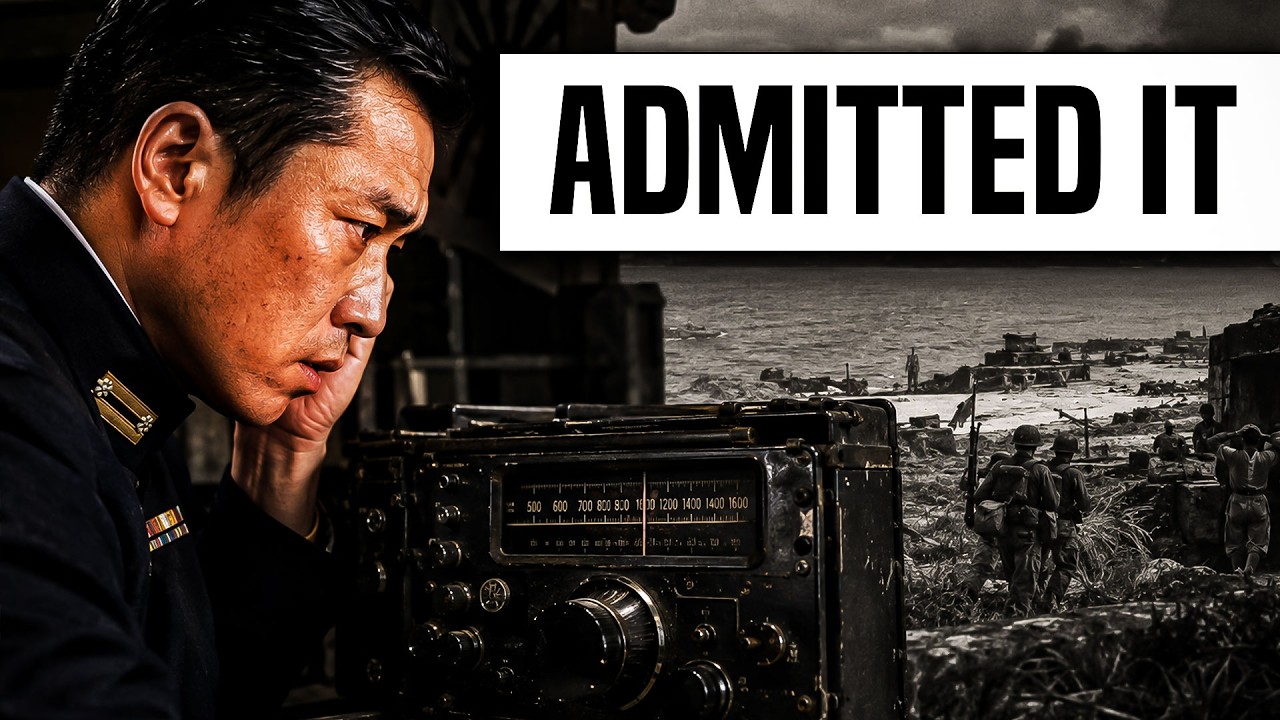
Theaters and amusement halls across Japan were shuttered, a national shutdown that had not occurred since the war began. A Japanese news agency bulletin carried the same recognition of defeat, and an American Marine Corps paper later ran the story under the headline, “Tears flow in Old Nippon. ”
The fall of Saipan was the culmination of a campaign that began on June 15, 1944, when the U. S.
Second and Fourth Marine Divisions landed on the island’s southwest beaches. The invasion was the opening move of Operation Forager, the American drive to seize the Mariana Islands. Admiral Raymond Spruance commanded the fleet, Admiral Richmond Kelly Turner led the amphibious forces, and Lieutenant General Holland Smith directed the troops ashore. Saipan, a 14-mile-long island about 1,300 miles from Tokyo, had been Japanese mandate territory since 1919, when the League of Nations transferred Germany’s former Pacific islands to Japan after World War I.
By 1944, it held two airfields, a sugar refinery, and a garrison that Tokyo had assured the Japanese public was holding firm. The Imperial Japanese Navy attempted to contest the landing. In the two-day battle fought on June 19 and 20 in the Philippine Sea, American carrier pilots inflicted a devastating loss, destroying roughly 300 Japanese aircraft and three carriers. The engagement became known as the Marianas Turkey Shoot.
The Japanese fleet never again put to sea in serious strength. Saipan was not only lost on the ground; the surrounding sea was lost as well. For years, the Japanese public had been given a carefully managed version of the war. Since the disaster at Midway in June 1942, the Cabinet Information Bureau had framed every island loss through a narrative called gyokusai, the “shattered jewel” death, in which defending forces were said to have died in final charges rather than surrender.
On the night of July 6 and the early hours of July 7, the garrison on Saipan actually carried out such an attack. Between 3,000 and 4,000 Japanese soldiers, including the walking wounded, formed up under their surviving officers and charged the lines of the U. S. Army’s 105th Infantry.
The assault ran for nearly 15 hours and became the largest single banzai attack of the Pacific War. When it ended, the 105th had lost around 650 killed and wounded, and more than 4,000 Japanese dead lay on the killing field above Tanapag. Admiral Chuichi Nagumo was among the dead. Nagumo had commanded the carrier strike force that attacked Pearl Harbor in December 1941 and the same force at Midway six months later.
Removed from sea commands, he had been posted to command the Central Pacific Area Fleet with headquarters on Saipan. He died in a cave on July 6 in the battle’s final hours, taking his own life with a service pistol. Marines found his remains in the same cave. The Japanese Army filed a presumption of death for him on September 30, 1944.
Tens of thousands of Japanese and Chamorro civilians were on the island when the Marines landed. Many had been told in the months before the invasion that American troops would kill the women and use the children for bayonet practice. As the Japanese defensive line collapsed northward toward Marpi Point in the second week of July, families began walking off the cliff edges at the island’s northern tip. American interpreters with loudspeakers tried to call them back.
Two cliffs mark that coastline. The smaller, known afterward as Banzai Cliff, drops about 80 feet into the surf. The larger, Suicide Cliff, drops more than 200 feet. By the end, the Americans counted around 8,000 civilian dead.
Some had been pushed. Most had gone over on their own. The broadcasts that carried the July 18 admission were monitored by the Foreign Broadcast Intelligence Service, an agency housed inside the Federal Communications Commission on the eighth floor of an office building in Silver Spring, Maryland, just outside Washington. The service ran listening posts in Hawaii, Puerto Rico, London, and several other points around the globe.
Its job was to take in foreign broadcasts, transcribe and translate them, and have them on the desks of policy officers in Washington by morning. The Silver Spring post took the Tokyo shortwave feed beginning at sundown and ran until past midnight. It also monitored feeds from Berlin, Rome, Chungking, and Madrid. The Tokyo feed ran the longest because of the time difference and the flight distance from Washington.
The Tokyo feed aimed at North America came through on the 31-meter band and was carried by Domei, the official Japanese wire service, as a daily English-language summary directed at listeners on the West Coast and in Hawaii. Some of the broadcasts were familiar to American troops. One program, “Zero Hour,” mixed music and propaganda in roughly equal shares and featured a woman Allied troops had begun calling Tokyo Rose. There was no single Tokyo Rose.
There were several. The most famous, Iva Toguri, an American citizen from Los Angeles and a UCLA graduate, had been stranded in Japan when the war broke out and found work at a Tokyo radio station to make ends meet. The station had her reading English-language scripts written by an Australian prisoner of war, Major Charles Cousens, a successful Sydney broadcaster before the war who had been captured at the fall of Singapore. Toguri did not read the announcement about Saipan.
The admission came as a Domei newscast read by a male announcer whose name does not appear in surviving records. The statement from Imperial General Headquarters said the situation on Saipan had developed “not necessarily to Japan’s advantage. ” That phrase had been used twice before, at Guadalcanal and Attu, and anyone in Japan who had heard it previously understood it to mean a total loss. A Domei bulletin that followed closed with the line about theaters and amusement centers closing.
The same bulletin moved across wire services within hours. The Associated Press version went out on the morning of July 19. The New York Times ran it on July 20 under the headline “Hull Sees Despair in Shift of Tojo,” with Secretary of State Cordell Hull telling reporters the resignation showed the Japanese government recognized its situation was hopeless. The Marine Corps Chevron, a service paper that ran overseas news for Marines in the Pacific, picked up the wire on July 22 and ran the headline about tears flowing in Old Nippon.
For American listeners who had monitored the Tokyo shortwave feed since the first week of the war, the admission was the first time Tokyo had conceded anything it did not later try to recast as a strategic withdrawal. Japan had lost islands before, but it had never publicly used the words lost, abandoned, or withdrawn from in connection with a named piece of territory it had held for 25 years. The reason the loss was so costly was the airfield. An airfield on Aslito captured by the Second Marine Division in the first days of the landing was lengthened and paved by U.
S. Navy Seabees through the second half of July. By August 1944, the first American B-29 Superfortresses landed there. By November, the runways served as the launch point for the first bombing raids on Tokyo since the Doolittle strike of April 1942.
The strategic arithmetic was simple. Saipan sits about 1,500 miles from the Japanese capital, and a B-29 had a combat radius of around 1,600 miles. The capture of the island put the Japanese home islands inside the operational range of the largest bomber in the American inventory for the rest of the war. The first B-29 raid from Saipan against Tokyo flew on November 24, 1944.
Ninety-eight bombers took off from the runways the Seabees had finished paving three months earlier. That raid did little damage. The raids that followed over the next six months did far more. Tojo resigned because the arithmetic was obvious.
His cabinet had been under pressure from the senior statesmen, or jushin, since the landing on Saipan began in mid-June. Admiral Shigetaro Shimada, the Navy minister, had already resigned his portfolio in the days before Tojo did. On July 17, the day before the Tokyo radio admission, Tojo went to the Imperial Palace to ask the emperor for permission to reorganize his cabinet. The emperor suggested with care that the time for reorganization had passed.
The senior statesmen told Tojo they would not serve under a reorganized cabinet of his making. Tojo returned to his residence, drafted his resignation, and released it on the morning of July 18. The Domei bulletin, the closed theaters, and the Tokyo radio admission all ran in the same news cycle on the same day in the same broadcast. Tojo, who had served simultaneously as prime minister, war minister, home minister, and chief of the army general staff, shot himself in the chest the following year on the day American military police came to arrest him.
The bullet missed his heart by an inch. American surgeons patched him up so he could stand trial. He was hanged after conviction. The surviving records of the Foreign Broadcast Intelligence Service for July 18, 1944 are held in the U.
S. National Archives at College Park in Record Group 262. They contain typewritten transcripts of the Tokyo shortwave feed for that date, with a monitoring officer’s pencil annotations in the margins. The annotator’s name does not appear on the document.
The marginalia is sparse. Decades later, a Japanese army officer then serving with the Kwantung Army in Manchuria told an interviewer that when he and his colleagues heard the Saipan broadcast in mid-July 1944, they knew the war was over. They did not say it out loud, but they speculated privately that the war would end soon. It lasted another 13 months.
The broadcast they heard that day on Tokyo radio was the first time their own government had told them the truth.