The Confederate defeat at Gettysburg is often examined through the lens of Union strength, but a closer look reveals a series of avoidable errors that crippled the Southern campaign. Confederate artillery officer General Edward Porter Alexander later provided sharp, firsthand criticism of these failures. His reflections highlight five critical reasons why the Confederates could not secure a victory.
One of the most significant missteps occurred before the battle even began. On June 22, 1863, General Robert E. Lee ordered his cavalry commander, General Jeb Stuart, to screen the army’s right flank and guard mountain passes into Pennsylvania. Instead, Stuart made a controversial decision to move farther east, attempting to capture supplies and disrupt Union operations. This maneuver allowed the federal army to position itself between Stuart’s cavalry and the main Confederate force.
Stuart was forced to ride farther north than planned and did not rejoin Lee’s army until late on July 2. His absence during the critical first two days of Gettysburg left Lee without his "eyes and ears." Without cavalry reconnaissance, Lee operated in near blindness, lacking essential intelligence about Union troop movements and positions. Alexander criticized Stuart’s actions as a violation of basic military principles, arguing that keeping forces within mutual support was essential. He believed Stuart’s presence at the outset could have altered the battle’s outcome.
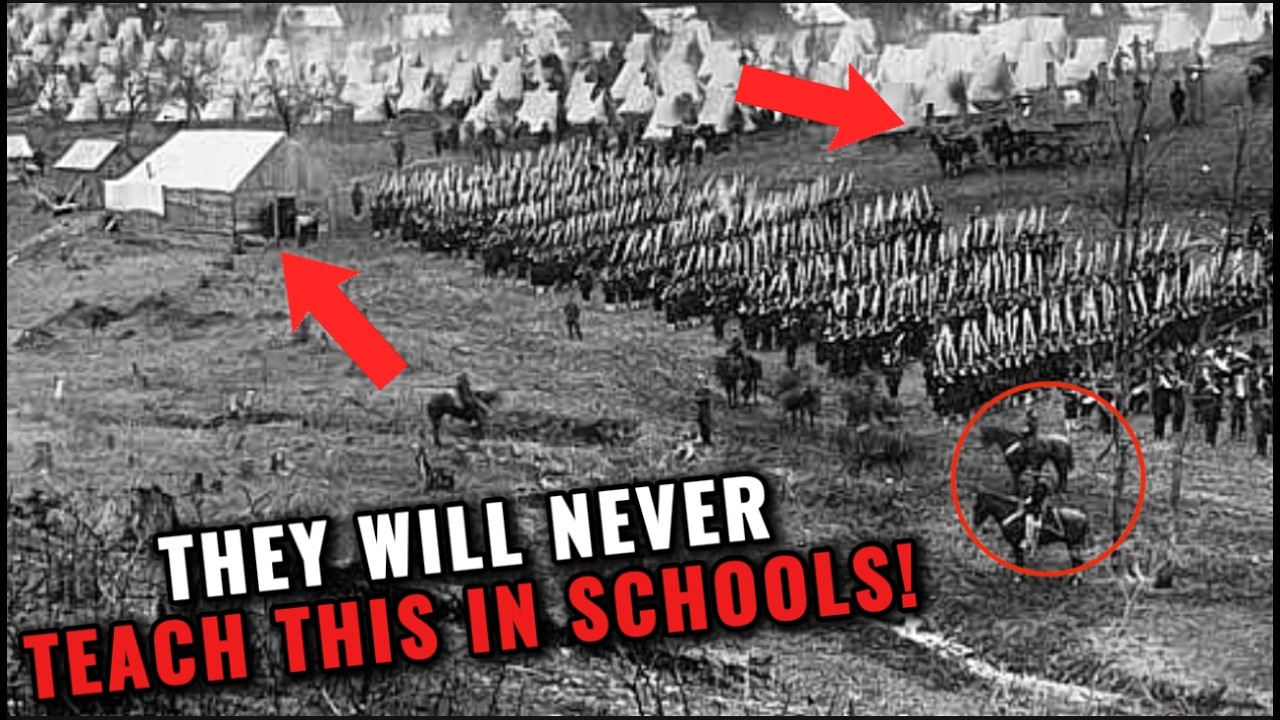
The lack of cavalry intelligence directly contributed to a second major error on June 30. A Confederate brigade under General Harry Heth was sent to Gettysburg to secure shoes, with no significant resistance expected. However, they discovered a strong Federal cavalry force already in place. Heth returned the next morning with his full division, supported by Dorsey Pender’s division, totaling about 12,000 men. They were met by General John Buford’s 3,000 cavalrymen, who skillfully delayed the Confederate advance.
Buford’s stand bought time for Union reinforcements, including the First and Eleventh Corps, bringing federal strength to over 23,000 soldiers. Heth and Pender faced a devastating numerical disadvantage. Alexander argued that with Stuart’s cavalry providing intelligence, Lee would have avoided stumbling into an engagement with two Union corps. He also criticized the lack of caution in Heth’s mission, noting that a warning against provoking a general engagement should have been issued. The two leading Confederate brigades were nearly destroyed, weakening Heth’s division for the rest of the battle.
After the first day, the federal army secured a strong defensive position on Cemetery Hill. General Richard Ewell faced a critical decision: continue the offensive or fall back to Seminary Ridge and adopt a defensive stance. Alexander believed the Confederate position was strong but not as advantageous as the Union’s. He argued that Lee should have waited for General George Meade to attack, as public opinion would likely have pushed the Union commander into action.

Lee, however, decided to attack, citing concerns about being too far from his supply base. Alexander disagreed, pointing out that the Confederate army remained at Gettysburg for four days and later foraged successfully at the Potomac River. He estimated that Lee’s decision to remain on the offensive cost the Confederates about 60% of their chances for a major victory. Alexander viewed this as the turning point of the entire campaign, a costly mistake that sealed the Confederates’ fate.
Alexander also highlighted the poor planning and lack of reconnaissance on July 2. He described the Union position on Cemetery Hill as unique among all battlefields of the war, estimating it added 50% to their numerical and firepower advantage. The Union army had roughly 94,000 troops compared to the Confederates’ 72,000, along with superior artillery. Alexander noted that no systematic examination of the federal position was conducted, and no preparations were made during the night to address these challenges.
He also criticized Ewell’s positioning near Cemetery Hill. Lee consented to Ewell’s move to occupy nearby high ground, likely Culp’s Hill, but Ewell ultimately failed to secure it. Alexander believed Culp’s Hill was almost unassailable and that Ewell’s troops and artillery were rendered nearly useless for the remainder of the battle. This poor placement effectively paralyzed a substantial portion of Confederate forces during the final critical days.

The final major failure occurred during Pickett’s Charge on July 3. Alexander was placed in charge of the First Corps artillery and ordered to unleash an intense bombardment to cripple Union forces. However, the Confederate artillery effort suffered from a lack of centralized coordination. While Alexander controlled the main bombardment, other artillery units operated independently, leading to an uncoordinated strategy.
General William Pendleton, Lee’s chief of artillery, assigned Alexander nine howitzers to support the infantry charge, but several were missing when the attack began. Pendleton had redirected four or five cannons elsewhere without informing Alexander. Additionally, Lieutenant General A.P. Hill had 65 guns on Seminary Ridge but failed to use them effectively, wasting ammunition in a morning duel that yielded no advantage.
Alexander reserved his harshest critique for Ewell’s corps. The Confederate battle line formed an exterior arc around the Union’s interior fishhook position, offering a chance for flanking fire. However, only one of Ewell’s five artillery battalions participated in the bombardment. Alexander argued that an effective chief of artillery should have coordinated efforts across all corps to maximize firepower. Instead, Pendleton’s ineffective leadership left each corps operating in isolation.
These failures allowed Union forces under Major General Henry Hunt to withstand the bombardment and prepare for the infantry assault with minimal disruption. Alexander’s reflections show that poor coordination and inadequate preparation contributed significantly to the failure of Pickett’s Charge, marking a turning point in the battle and perhaps the Civil War itself.
Through Alexander’s eyes, the Confederate defeat at Gettysburg was not simply a matter of Union strength. It was a cascade of avoidable errors, from Stuart’s absence to disjointed artillery coordination. His insights reveal how poor planning, miscommunication, and strategic gambles doomed the South’s chances. History is not just about battles; it is about choices, risks, and their consequences.