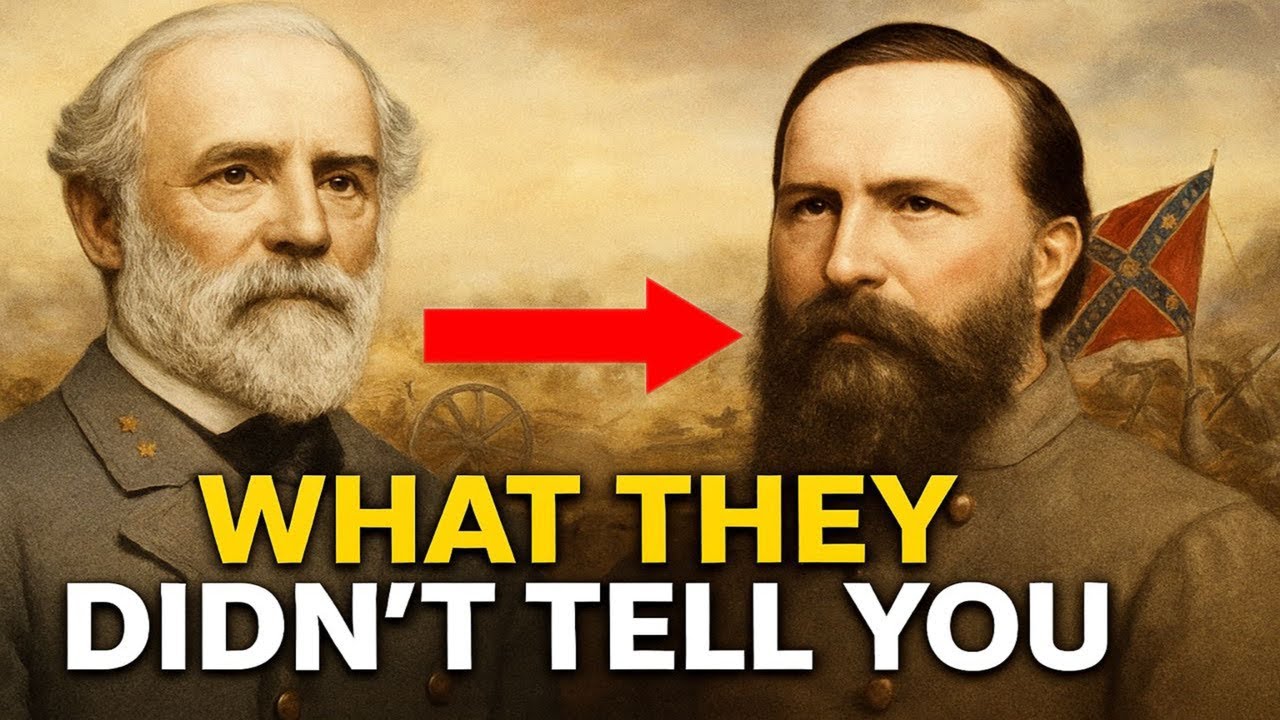
The turmoil and unpredictability that marked the Battle of Gettysburg set the stage for a pivotal moment in history. As dawn broke on July 2nd, 1863, General James Longstreet stood at a critical juncture, burdened by duty and the looming fear of failure. With Robert E. Lee, his commanding officer, insisting on a bold attack against well-fortified Union troops, Longstreet’s own judgment pulled him toward restraint.
This compelling narrative follows Longstreet as he wrestles with the demands of leadership amid the roar of artillery and the carnage of war. Experience his inner conflict as he battles not just enemy forces, but also his own misgivings about a plan he fears may bring disaster.
Through striking imagery and deep introspection, we examine how split-second choices on the battlefield determine the destiny of entire armies and redirected history’s path. Step into Longstreet’s boots as we uncover the disorganization plaguing Confederate forces and the brutal truths endured by soldiers in this decisive Gettysburg encounter.
On May 9th, 1863, James Longstreet arrived at the winter quarters of the Army of Northern Virginia and conferred with its commander, Robert E. Lee. The two generals debated the aftermath of the Battle of Chancellorsville and the grave injury sustained by General Jackson, which weighed heavily on Lee.
The next afternoon, just past 3:00 p.m., Jackson died from his wounds. With the Second Corps leader gone, Lee relied solely on Longstreet to devise tactics for the coming offensive.
Years later, Longstreet would extensively document his May 11th to 13th conversations with Lee. These meetings shaped the foundation of what became the Gettysburg campaign. Longstreet again pushed his idea to detach two divisions from his corps to Tennessee, uniting them with the Army of Tennessee and Joseph E. Johnston’s men.
His strategy aimed to crush the Army of the Cumberland outside Nashville, then advance into Kentucky, endangering Cincinnati. Longstreet argued this move was critical to avert Vicksburg’s surrender.
When Lee suggested marching into Pennsylvania instead, Longstreet worried the operation would drag on, risking Vicksburg’s collapse before they could act. He later wrote that further objections seemed futile and out of place. He maintained that their approach should hinge on defensive warfare, forcing the enemy to strike them on favorable ground within southern territory.
Despite his doubts about Lee’s plan, a private letter to Senator Wigfall betrayed his optimism about the Pennsylvania invasion. He argued that if they could lead 150,000 men across the Potomac, they could force Lincoln’s hand, compelling him to declare his stance, whether for peace or total war, and then respond in kind.
Longstreet understood the tactical advantage of bringing the fight onto northern soil, revealing that his later claims of prioritizing Western campaigns were not entirely consistent.
Meanwhile, between May 14th and 18th, Lee journeyed to Richmond to meet with President Davis and his cabinet, securing their approval for the invasion. Before marching north, Lee restructured the Army of Northern Virginia, a move he had considered even before Jackson’s death.
With Jackson gone, the timing was ideal. He named Richard Ewell as Jackson’s successor and created a new Third Corps under A.P. Hill, pulling divisions from both the First and Second Corps. Longstreet’s reshaped command now included divisions led by Lafayette McLaws, John Bell Hood, and George Pickett.
While Longstreet supported Ewell’s promotion, he regarded A.P. Hill as less capable, believing D.H. Hill would have been a better choice for the Third Corps.
Lee had grown skeptical of McLaws’ leadership after illness hampered his performance at Chancellorsville. He tasked Longstreet with evaluating McLaws’ fitness and willingness to be reassigned. McLaws insisted he was ready for duty, refusing relocation despite Longstreet’s offer to transfer him south or exchange him with Hood’s division.
As a result, McLaws stayed in position, but Lee made it clear that any failures on his part would rest on Longstreet’s shoulders. Longstreet accepted this arrangement, pledging to keep close watch over McLaws and his men. This tension sowed the first seeds of discord between Longstreet and McLaws as they prepared for their June 3rd advance north.
Before setting off, Lee voiced unwavering confidence in his army’s strength. “The nation cannot overvalue them. With the right leadership, they will march anywhere and never falter in their duty.”
The northward trek was rapid but punishing under the summer heat. Longstreet’s forces repeatedly forded the Shenandoah River, shoring up Stuart’s cavalry and securing Blue Ridge gaps while masking the army’s movements.
Noticing Longstreet’s weary demeanor one day, an officer commented on his exhaustion. He brusquely replied that he had never been tired a day in his life.
As the campaign unfolded, Lee relied on Longstreet’s advice at every turn. By June 27th, elements of their army had arrived in Chambersburg, setting up headquarters in a wooded area called Shetter’s Woods.
Around this time, British military observer Arthur Fremantle of the Coldstream Guards attached himself to Longstreet’s command. Fremantle documented their unusually close bond, noting, “The camaraderie between him and Longstreet is remarkable. They’re nearly inseparable.”
However, some officers in Longstreet’s corps resented this constant companionship, believing it restricted their chances for independent operations compared to Ewell’s more mobile units.
Fremantle made an interesting observation that complimenting Lee was the surest way to gain Longstreet’s approval. He described both generals as remarkably free from personal ambition.
The situation changed dramatically on June 28th when, deprived of Stuart’s cavalry reconnaissance, Lee and Longstreet finally obtained credible intelligence about Union movements. Their scout Harrison, the same man Longstreet had paid in gold coins earlier that month, tracked down headquarters with urgent news. The Union Army was marching through Maryland into Pennsylvania.
Reacting swiftly, Lee recalled Ewell’s forces from Carlisle to consolidate their strength. By June 30th, Lee and Longstreet had shifted east toward Cashtown, establishing their command post near a deserted sawmill.
That morning, Lee had announced a change of plans. “Gentlemen, tomorrow we won’t proceed to Harrisburg as intended. We’ll march instead to Gettysburg to discover General Meade’s disposition.”
The fateful encounter came on July 1st. As Longstreet, Lee, and Fremantle traveled along the Chambersburg Pike, troops from Edward Johnson’s division, who didn’t recognize Longstreet, spotted him. Some Florida soldiers shouted excitedly, “Look alive now, boys! Here comes the old war dog again.”
Approaching the developing battle, Longstreet observed Union forces regrouping on high ground beyond the town. He pointed out to Lee, “We couldn’t have asked for a better position. The enemy has practically delivered themselves to us. If we swing around their left flank and take the high ground between them and Washington…”
Lee abruptly cut him off, smacking his fist into his palm. The commanding general declared, “If they’re still there tomorrow, we attack them head on.”
Longstreet argued that if Union forces remained in position, it was likely because they wanted to be attacked, which he stressed was reason enough to reconsider. The strategy of slipping between the Union Army and Washington seemed unwise at that moment, especially since Lee lacked concrete intelligence on enemy positions.
Unknown to them, multiple Union corps were already converging on Gettysburg, meaning any movement risked triggering unintended clashes. For now, Lee’s decision to attack the next day appeared the safer course.
That night, Longstreet bedded down near his resting divisions, but slept little, uneasy about the coming battle.
Before sunrise on July 2nd, 1863, he rode to Seminary Ridge to meet Lee, who had risen early, eaten breakfast, and begun preparations. When they conferred, Lee reaffirmed his aggressive plan.
Longstreet again protested, urging a flanking maneuver to position their forces between the Union Army and Washington. Lee dismissed the proposal and summoned Captain Samuel Johnston of his staff to scout the enemy lines, accompanied by Major John Clark from Longstreet’s command.
After the scouts departed, Lee met with Longstreet, A.P. Hill, Henry Heth, and John Bell Hood near the seminary buildings. Three hours later, Johnston and Clark returned, having ventured southeast past the Peach Orchard and crossed Emmitsburg Road near Big Round Top and Little Round Top.
They reported encountering only four Union cavalrymen. Lee pressed Johnston. “Did you reach those hills?” Johnston confirmed they had.
Following a brief discussion, Longstreet and Hill withdrew while Lee ordered Johnston to assist Longstreet. Unbeknownst to them, Johnston’s report was flawed. Union infantry from the Third Corps already held ground north of the hills, though morning mist may have obscured visibility.
Around this time, Lafayette McLaws arrived for his own meeting with Lee. While most accounts place McLaws’ arrival after Johnston’s return, McLaws later insisted he came before, a discrepancy suggesting Lee may have acted without full knowledge of the terrain.
According to McLaws, Lee pointed to a map and drew a line perpendicular to Emmitsburg Road, instructing, “General, I want your division positioned across this road, unseen by the enemy if possible. Can you do it?”
McLaws assured him nothing would stop him, but requested permission to scout the area first. Lee mentioned Johnston was already surveying the ground, prompting McLaws to ask if he could join.
Longstreet, listening nearby, abruptly interjected. “I don’t want McLaws leaving his division.” He then traced a line parallel to the road, contradicting Lee’s earlier mark. “I want your division here,” he declared.
Lee overruled him. “No, general. Perpendicular.”
McLaws again sought Lee to reconsider, but Longstreet refused, sending him back to prepare his men.
Lee then rode off to consult with Ewell on the left flank, returning to Seminary Ridge by 11:00 a.m. There, he finalized orders for McLaws’ and Hood’s divisions to advance.
A brigade from Hood’s division had yet to arrive, forcing Hood to request a delay until his forces were fully assembled. Lee agreed before riding off again.
Even Longstreet’s admirers like artillery officer Edward Porter Alexander noted his uncharacteristic lack of vigor that day. A stark contrast to his decisive leadership at Second Manassas, Sharpsburg, and Fredericksburg. Some historians speculate his disagreements with Lee may have dulled his usual precision.
Yet the blame did not rest on Longstreet alone. The Confederate advance on July 2nd lumbered forward like a groaning beast.
McLaws’ division led the corps with McLaws and Johnston at its head while Longstreet rode ahead of Hood’s troops. As they neared the hillcrest, both officers realized Little Round Top’s summit would expose their movements to Union signal stations.
When the column halted, Longstreet rode up to investigate. After conferring with McLaws about the visibility risk, he ordered a countermarch to find concealed routes. Johnston proposed cutting through fields as Confederate artillery had done earlier, but Longstreet insisted on sticking to roads.

By 3:00 p.m., Kershaw’s lead brigade came under artillery fire upon reaching their position, revealing Union troops where McLaws had expected none. Though McLaws urged an immediate attack, Longstreet demanded they wait for Hood’s full deployment.
Hood, meanwhile, sent scouts who reported an opportunity to flank the Union right. Longstreet rejected this proposal four times before finally riding to Hood and tersely ordering a frontal assault.
As Hood’s men charged Devil’s Den, the Wheatfield, and the Round Tops at 4 p.m., Longstreet remained mounted like an iron statue, calmly surveying the carnage through his spyglass as shells tore limbs from trees around him.
McLaws’ division advanced toward the Peach Orchard, spearheaded by Barksdale’s Mississippians and Wofford’s Georgians. When troops spotted Longstreet and cheered, he growled, “Cheer less, men. Fight more.”
A captured Union soldier, earning his identity, muttered, “No wonder we’re beaten everywhere. Your army has no other lieutenant general who’d lead a charge like this.”
Longstreet observed from the Peach Orchard, closer to combat than he’d been since Antietam. Some suggest he positioned himself there to personally oversee McLaws’ performance.
As he monitored Hood’s and McLaws’ progress, General Pickett arrived. Having ridden ahead from Chambersburg to receive orders, Pickett briefly observed the battle alongside Longstreet before returning to his division with instructions that Lee would summon him when needed.
As darkness settled, Longstreet halted the assaults, but notably avoided reporting to Lee in person, instead dispatching an aide with a battle summary. Historians suggest this avoidance reflected Longstreet’s embittered state more than the inconvenience of the ride.
After watching his men bleed heavily for a strategy he’d vehemently opposed, his resentment toward Lee had hardened into silent fury.
Lee, undeterred, ordered a dawn renewal of the offensive. Longstreet later insisted he never received these orders and failed to alert Pickett about his slated role. But artillery chief Edward Porter Alexander contradicted this, recalling a nighttime meeting where Longstreet acknowledged the planned attack.
Regardless, Longstreet retired that evening, seething over the day’s futile carnage.
At sunrise, Lee sought out Longstreet on the Confederate right flank. Longstreet, ever the pragmatist, urged a flanking maneuver. “General, my scouts confirm we still have a prime chance to swing around Meade’s right and force him to attack us.”
Lee brushed this aside, gesturing toward Cemetery Ridge. He outlined his new plan, a three-division assault by the First Corps.
Longstreet’s response blended professionalism with foreboding. “General, I’ve fought at every scale, from duels to army clashes. I know troops’ limits. No 15,000 men, however brave, can seize that ground.”
The debate continued, but Lee’s resolve was ironclad. He thrust a fist toward the ridge. “The enemy is there. I will strike them.”
The generals rode along Emmitsburg Road to study Union lines, soon joined by A.P. Hill and Henry Heth. Longstreet grimly reported that Hood’s and McLaws’ shattered divisions were too bloodied for another frontal assault.
With Hood’s and McLaws’ divisions too battered for further action, Pickett’s fresh troops, supported by depleted brigades from Hill’s Corps, were chosen to spearhead the assault. A massive artillery barrage would precede their charge, intended to soften Union defenses and silence enemy guns.
As soldiers formed ranks for their advance on Cemetery Ridge, Pickett arranged his division in two waves. Two brigades forward, one in reserve.
The attached brigades from Hill’s command, still recovering from July 1st carnage, struck Longstreet as a disastrous addition to the attack. Yet Lee placed him in overall command of the operation, superseding Hill, who later claimed in his report to have ordered his brigades to report to Longstreet, though they appeared leaderless in practice, likely from Hill’s reluctance to interfere.
By noon, preparations were complete. At 11:45 a.m., Longstreet sent artillery chief Porter Alexander a loaded instruction. “If our guns fail to break enemy morale decisively, do not advise Pickett to charge. I leave this judgment to you. Signal him only when success seems assured.”
This passing of responsibility alarmed Alexander. After consulting Brigadier General Ambrose Wright, he replied with stark realism. “Smoke and concealed infantry will obscure the barrage’s effect. If alternatives exist, weigh them now. Once we fire, our ammunition will be spent. Victory, if possible, will come at horrific cost.”
Longstreet’s terse 12:15 p.m. response reiterated, “The infantry advances only if artillery proves effective.”
When Alexander found Pickett brimming with confidence, he reported, “I’ll signal the charge at the barrage’s peak.”
At 1:00 p.m., over 150 Confederate cannons erupted, shaking Cemetery Ridge with what one observer called a tempest of iron.

Amid the bombardment, Brigadier General James Kear noted Longstreet riding alone before the assembled troops. His tall figure motionless in the saddle, calm as stone beneath the screaming shells. The general’s silent presence spoke volumes to men about to march into history.
To Kear, Longstreet embodied the war’s most profound paradox, calm amid carnage. Though expecting each moment to see him struck down, the general moved with unhurried dignity, his composure steadying the men.
When Kear warned, “General, this ground is death itself,” Longstreet questioned their losses. “My ranks thin by the second,” Kear admitted. “Sometimes a single blast claims a dozen.”
Longstreet’s dismay showed. “Unthinkable. Can you reposition?”
“None safer. We’re shielded by this crest’s reverse slope.”
Clenching his jaw, Longstreet conceded, “Endure a little longer. We’re bleeding them. The charge comes soon.”
Meanwhile, Colonel Alexander noted with alarm that Union guns weren’t being silenced. Spotting artillery withdrawing, he scrawled to Pickett. “18 enemy pieces retreated. Advance now or lose our support, ammunition exhausted.”
The courier found Pickett and Longstreet together. Reading the note, Pickett turned ashen. “Your orders, General.”
Longstreet could only nod silently.
Writing to Alexander, Longstreet learned the dire truth. Our caissons are empty. Supporting fires impossible.
“Then delay the assault. Replenish.”
“An hour’s delay only lets them fortify,” Alexander countered.
Longstreet’s shoulders slumped. “This attack is doomed. I’ve said so from the start. Yet Lee demands it.”
As Pickett’s lines advanced, Longstreet perched on a fence rail, watching his veterans walk into the slaughterhouse. He dispatched aides to secure flank support, but the die was cast.
Later, Fremantle found him hollow-eyed. “A sight worth seeing,” the Briton enthused.
Longstreet’s reply was a dagger. “The devil it was. I’d have given my arm to avoid it.”
The assault had failed. The butchery was complete. Broken regiments streamed back towards Seminary Ridge, their ragged lines etching defeat across the Pennsylvania countryside.
Longstreet and Lee rode slowly along the crumbling front, offering quiet words to the day’s survivors, not as commanders now, but as fellow soldiers sharing their grief.
Their conference was brief, their decision inevitable. The army would withdraw under cover of darkness.
By July’s midpoint, the battered Army of Northern Virginia had limped back across the Potomac.
As the sulfurous smoke cleared over Gettysburg’s fields, an unnatural stillness settled where thunderous combat had raged. Longstreet, his uniform still powdered with battle dust, stood alone on the ridge that had witnessed both his greatest doubts and his army’s greatest sacrifice.
In that hollow silence, the arithmetic of war, casualty counts, ammunition expenditures, tactical diagrams, dissolves before its human truth. The real cost lived in the vacant stares of surviving soldiers, in the letters soon to be written to grieving widows, in the unanswerable questions that would haunt survivors’ dreams.
As Union forces tended their wounded and strengthened their lines, Longstreet contemplated the judgment of history. Would posterity remember this as noble sacrifice or tragic folly?
Beside him, Lee’s weary shoulders carried the same burden. The road ahead promised neither redemption nor respite, only harder choices and diminishing options.
One irrevocable truth remained. Gettysburg had changed everything. The echoes of those three days would reverberate through the remainder of the war and through the soul of a nation forever torn.