Before Joseph Kennedy became the father of the “Camelot” legend, he was a man in Hollywood, and Gloria Swanson knew that side of him—the side the Kennedy family spent decades trying to erase. Kennedy’s business partners believed Hollywood was just a financial chapter in a much larger career. The Kennedy family believed private settlements could stay out of the public dynasty they were carefully building. Gloria Swanson lived long enough to see the impossibility of separating those two legends.
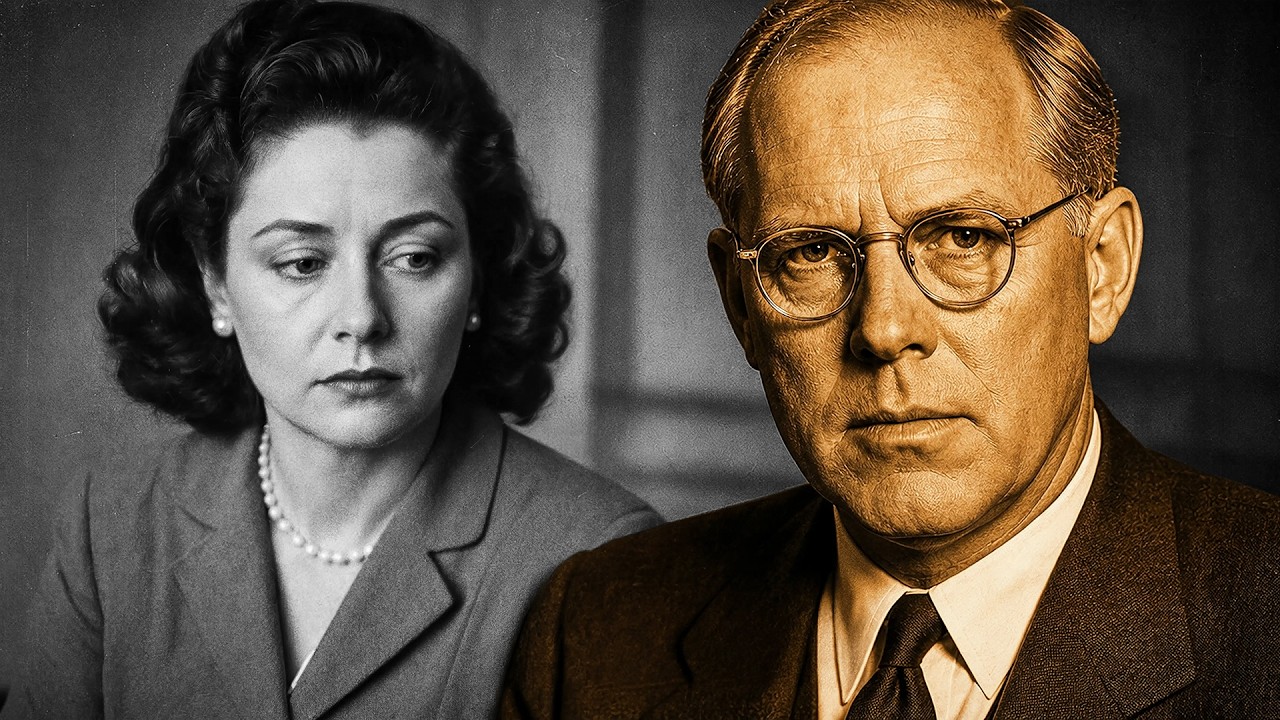
Only one of those positions has been fully proven correct by history. Kennedy did not enter Gloria Swanson’s life as the father of a future president. He entered it as a Hollywood financier with money, influence, and a private world the Kennedys would later work hard to separate from their public image. He was Joseph P.
Kennedy Sr. , born in September 1888, a financier who had built a considerable fortune in banking and shipbuilding before stepping into the film industry. Kennedy entered Hollywood in 1926, where he acquired American film booking offices and became deeply involved in film production and the celebrity business that was reshaping American culture. Gloria Swanson, born in March 1899, was already one of the biggest stars of the silent film era.
She had gained extraordinary wealth and fame during the 1920s, managing large productions alongside a career marked by extreme volatility. Kennedy provided financing and management for parts of Swanson’s film career, and their professional relationship became personal during the late 1920s—a documented affair now addressed in numerous biographies, memoirs, and later Kennedy family history. At the time, Kennedy was married to Rose Fitzgerald Kennedy, whom he had wed in 1914 and with whom he would eventually have nine children, including the future president. Swanson, during the same period, was going through her own marriages, divorces, and significant professional pressures in Hollywood.
The relationship ended around the time Kennedy withdrew from Hollywood and turned his ambitions toward finance and then national politics. Gloria Swanson was never destined to appear in the Kennedy family portrait. She belonged to the chapter that came before the White House, before the ambassadorship, before the sons became America’s political royalty. While Rose Kennedy carefully managed the family’s disciplined public Catholic image, historical accounts suggest that Joe Kennedy’s private relationships were known within his social circles, were actively managed to avoid public exposure, and were largely excluded from the official dynasty narrative the family later presented to the country.
Some later accounts describe arrangements that were more visible within elite circles than the public record acknowledged at the time, though the precise nature and extent of that visibility remains a matter of historical description rather than definitive public documentation. The relationship existed in a space the Kennedys recognized and tolerated, while working hard to separate it from the image of Joseph Kennedy later presented to the public as a devoted Catholic father and family man. Joe Kennedy left Hollywood to build a powerful dynasty. Gloria Swanson remained in the spotlight, survived the collapse of the silent film era, rebuilt her career, and lived to see the Kennedy name become far larger than either of them could have imagined.
Kennedy’s career moved decisively away from Hollywood in the following years, progressing through massive finance to federal government work as chairman of the Securities and Exchange Commission, and then to a prominent diplomatic post as ambassador to Britain, while laying the foundations for what would become one of the most influential political families in American history. Meanwhile, Swanson’s career faced serious disruptions with the arrival of talking pictures, a transition that ended or damaged the careers of many silent-era stars. She suffered real financial setbacks before achieving one of the most famous comebacks in Hollywood history through her role in “Sunset Boulevard” in 1950. She continued working in television and theater and pursued various business ventures over the following decades.
The relationship between them became a buried chapter beneath two completely separate public legends: the story of the Kennedy family’s political rise and the story of Gloria Swanson’s Hollywood glamour. Each narrative developed independently, almost as if the other did not exist. After Joe Kennedy’s death, Gloria Swanson retained the one thing the public family legend could not control: her memories of the man before he became the father of the “Camelot” legend. Joseph Kennedy’s life ended in Hyannis Port in November 1969, after years of declining health following a serious stroke in 1961 that had already limited his public activity.
By the time of his death, he had already witnessed the assassination of his son, President John F. Kennedy, in 1963, and the assassination of his son, Senator Robert Kennedy, in 1968—tragedies that turned the public image of the Kennedy family into one defined by loss and myth as much as by political achievement. Gloria Swanson outlived him by 14 years. She died in New York in 1983, having witnessed the complete transformation of the Kennedy name from a private financier’s ambition to America’s most famous political tragedy.
In 1980, three years before her death, Swanson published her autobiography, “Swanson on Swanson,” a memoir that renewed public attention to the Kennedy chapter in Hollywood at a moment when Joe Kennedy was no longer able to respond, deny, or control how that period of his life was publicly framed. The memoir, along with later biographies that drew on it, made it extremely difficult to maintain the simplified public image of Joseph Kennedy as only a family patriarch, financier, ambassador, and devoted father. It added a documented private chapter that complicated the family narrative Rose Kennedy and family members had carefully maintained for decades. Gloria Swanson inherited no Kennedy money, no public role within the family, and no control over the Kennedy family’s private archives.
But she outlived the man who had helped shape her Hollywood career and lived long enough to publish her own account of who he was before the family legend had fully transformed into the version the country knew through his sons. Her existence, and the memories she later published about their relationship, remained a continuing complication for the idealized public story the Kennedy family had spent decades constructing: Joe as family patriarch, Rose as mother, the sons as political heirs, and Hollywood reduced to a minor early commercial chapter. Available records suggest that professional ambitions and work pressures on both sides led eventually to their separation, and that Kennedy’s private life during that period was carefully managed and kept separate from the family’s evolving public image—a strategy that worked for decades until Swanson herself chose to speak, having outlived the man and much of the myth built around him.