In the autumn of 1959, a secret began to form that would take nearly half a century to surface. At Widcom Manor, the home of Jeremy and Camila Fry, social boundaries were treated as suggestions. Into this world walked Anthony Armstrong Jones, known as Tony, a photographer who was also Jeremy’s best friend.
Tony was conducting a covert courtship of Princess Margaret in London while pursuing a very different game in Bath. He treated his best friend’s wife, Camila, as his prize. It was an act of breathtaking arrogance, juggling the most famous woman in the world and a married aristocrat simultaneously.
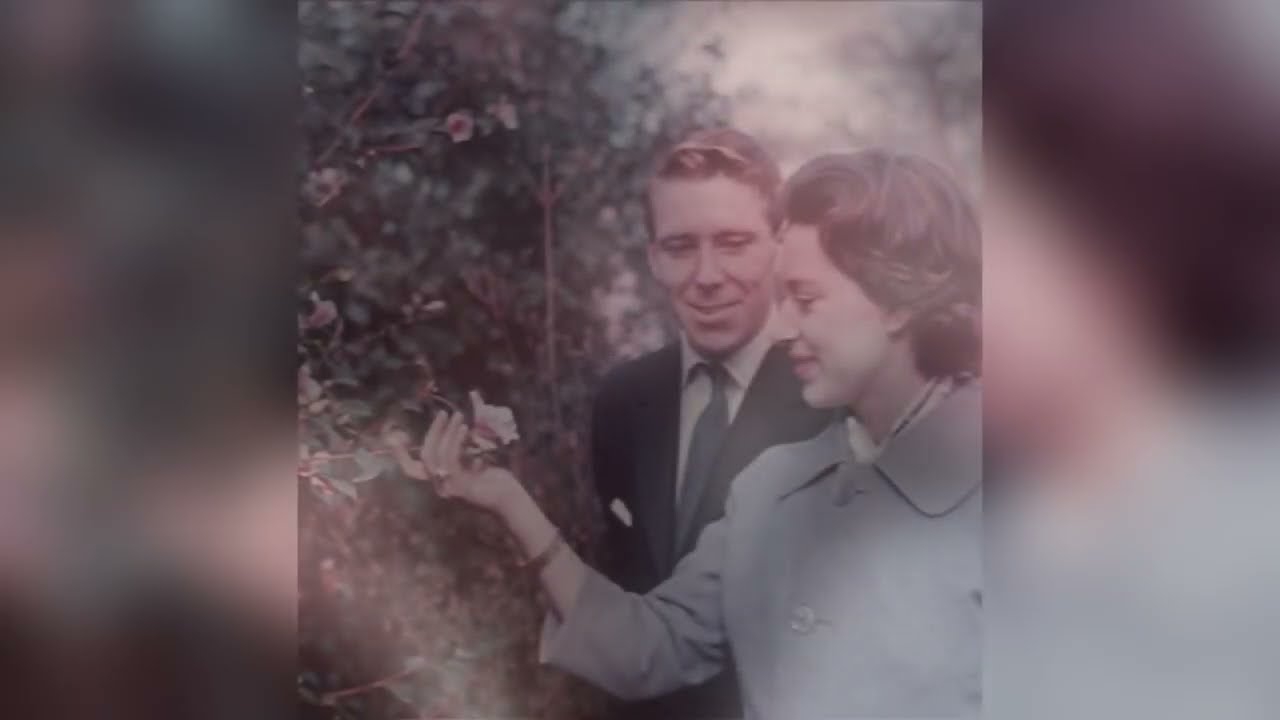
In February 1960, the engagement between Princess Margaret and the photographer was announced. But down in Bath, a nightmare was unfolding. Camila Fry was pregnant, and the conception landed squarely in the danger zone. Those illicit weekends occurred weeks before Tony proposed to the princess.
Jeremy Fry was set to be the best man at the wedding. The palace, sensing the radioactive potential of the situation, intervened. A polite medical lie was manufactured, and Jeremy was quietly erased from the lineup. He watched the wedding of the century from the shadows while his wife carried a child that belonged to the groom.
On May 6th, 1960, Princess Margaret walked down the aisle. Tony stood at the altar as the newlyweds sailed away on the royal yacht Britannia for a six-week Caribbean honeymoon. Three weeks later, on May 28th, 1960, Camila Fry gave birth to a daughter. They named her Polly.
From her very first breath, Polly was a secret agent in her own life. To the world, she was the third child of Jeremy and Camila Fry. She was safe. But biology is a patient artist. As she grew, the features that would eventually damn her began to emerge. The sharp jawline, the hooded eyes, the diminutive stature. She was a physical echo of the man waving from the balcony of Buckingham Palace.
While Polly was taking her first steps, her biological father was created Earl of Snowden in 1961. He remained a frequent visitor to Widcom Manor. Instead of disappearing, Tony leaned in, becoming a familiar, almost uncle-like presence. He appointed himself her uncle Tony, a glamorous, benevolent satellite in her life.
Polly adored him. She didn’t know why she felt a specific resonance with him. She assumed it was just charisma. She didn’t know it was recognition.
Jeremy Fry was a fantastic father, engaged and creative. He loved Polly with a ferocity that belied any doubts he might have harbored. He raised her as a Fry, embedding in her the values of curiosity, independence, and a slight disregard for authority.
But a child is a sponge for the unspoken. The rumor that Polly was Tony’s became a dark parlor game among the upper classes. It was told over brandy and laughed about at balls. Polly was too young to understand the words, but she felt the gaze. She grew up with a vague, undefined sense of being an impostor in her own family.
By the time Polly reached adolescence in the 1970s, the Snowden marriage was disintegrating. Tony was revealed to be cruel, unfaithful, and bored. Margaret was revealed to be needy and demanding. On the sidelines, watching the destruction from the safety of the countryside, was the teenage girl who was the original sin of that union.
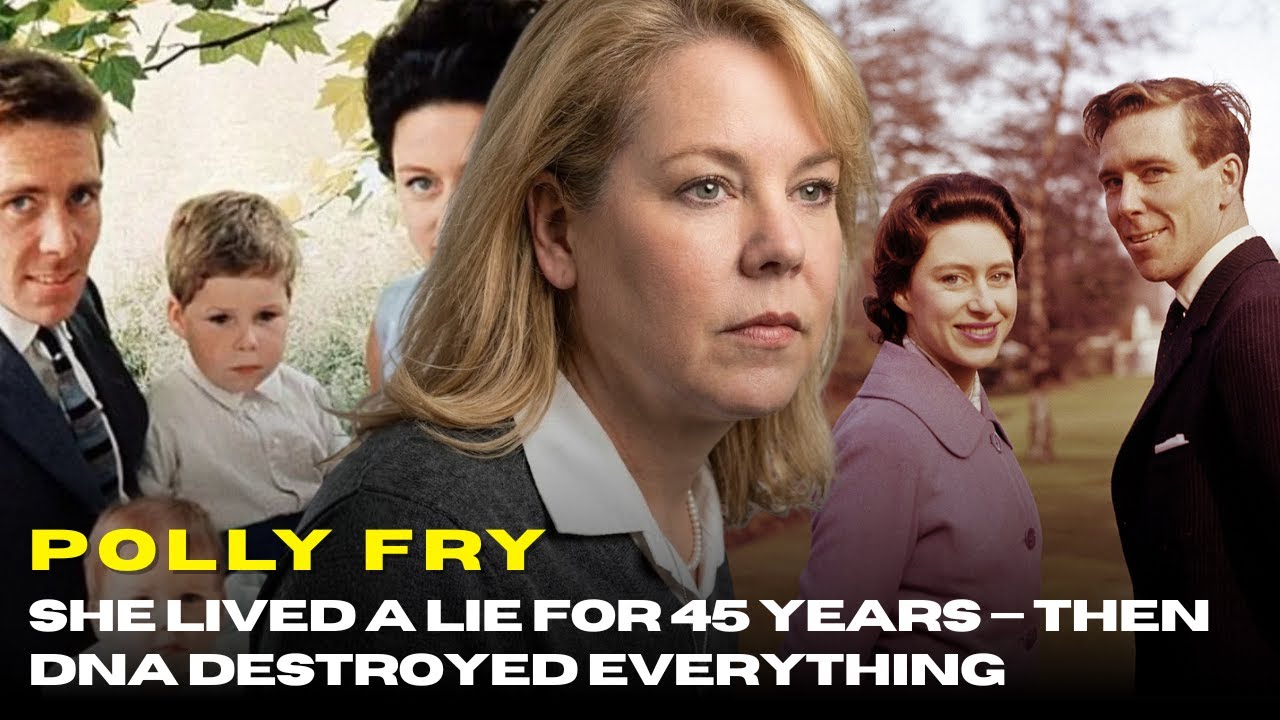
The 1970s and 1980s were decades of the great silence for Polly. She was growing up in the long shadow of a secret that everyone seemed to know except her. She looked at her father, Jeremy Fry, tall and lanky, and then she looked at herself. She was small, fine-boned, with piercing, hooded eyes that felt alien to the Fry lineage.
Whenever Uncle Tony appeared on the television, the resemblance was uncanny. It was not just a similarity, it was a duplication. But the human mind is a fortress designed to protect us from truths that would destroy our world. Polly built a wall of denial. To question her paternity was to betray the only father she had ever known.
As Polly entered her 20s, the dangerous whispers moved to the foreground. At parties in London, she would catch the tail end of conversations that stopped abruptly when she approached. She developed a deflection mechanism. She laughed it off, treating it as a ridiculous, fantastical story.
But beneath the laughter, the anxiety was rotting her confidence. She felt a profound sense of displacement, a spiritual homelessness. She was drifting between two continents, the warm, eccentric continent of Fry and the cold, glamorous continent of Snowden.
As she matured, Polly discovered she had an artistic soul. She had an eye for composition and aesthetics. This talent felt like a betrayal. Every time she picked up a camera, she felt she was channeling the ghost of the man she wasn’t supposed to be related to.
Lord Snowden remained a presence in Polly’s life, but a distant one. He played the role of the godfather to perfection. He never dropped the mask. He never took her aside and told her the truth. He had compartmentalized Polly into a box marked the past.
Jeremy Fry played the role of the saint. He never wavered in his affection. If he knew the truth, he decided that love was stronger than biology. He chose Polly. He chose to be her father every single day.
The 1990s brought a change in the atmosphere. The tabloids were becoming more aggressive. The royal family was disintegrating in real time. The pressure on the secrets of the past was mounting.
Polly married and had children of her own. Motherhood became a catalyst for truth. She looked at her children and wondered what chain she was part of. The denial began to crack.
As the new millennium dawned, Jeremy Fry’s health began to fail. Polly was seized by a panic that was almost primal. She realized that the era of silence was ending. Once Jeremy died, the protective shield he had thrown around her would vanish.
In 2004, the dam broke. Polly was 44 years old. She approached Lord Snowden and asked him directly if he was her father. He initially resisted, but he agreed to the test.
The procedure was simple, a mouth swab. The sample was sent to a laboratory. When the results came back, there was no ambiguity. The result was reported as a 99.9% match. Lord Snowden was her biological father.
Polly later described the moment as devastating. It wasn’t finding a father. It was losing one. In that split second, Jeremy Fry, the man who had held her hand and loved her without condition, was legally and biologically erased.
The man she had known as Uncle Tony was suddenly her father. It was a rewriting of her entire history. Every memory had to be re-examined. She realized the magnitude of the betrayal. They had built her life on a foundation of sand.
Polly was not just a private citizen. She was now a public figure. She was proof that Lord Snowden had been cheating on Princess Margaret right up to the altar. She was proof that the perfect royal marriage had been a sham from day one.
If Polly had hoped that the scientific proof would melt the icy reserve of Lord Snowden, she was mistaken. There was no tearful embrace. There was simply a grunt of acknowledgement. He treated her not like a long-lost daughter, but like a newly discovered negative in an old archive. Interesting, undeniable, but ultimately an artifact of the past.
Jeremy Fry died in 2005, less than a year after the DNA test. He never publicly addressed the scandal. He never withdrew his love. In his will, he treated Polly exactly as he treated his biological children.
For Polly, his death was complicated by a terrible guilt. She felt she had robbed him of his paternity in his final months. She grieved for him not just as a daughter grieves a father, but as a conspirator grieves a victim.
With Jeremy gone, Polly was left exposed. She was officially a Snowden, but she had no place in the Snowden hierarchy. She was trapped in the uncanny valley of royal relation. She was the half-sister of David Armstrong Jones and Lady Sarah Chatto, the Queen’s niece and nephew.
The reaction of the Snowden legitimate children was a testament to the stoic manners of the British upper class. There were no public denouncements. They were polite. There were meetings. But you cannot manufacture a sibling bond in middle age, especially when that bond is forged in the fires of scandal.
The years following 2005 were a period of intense isolation for Polly. She had the truth, but the truth was cold comfort. She began to look for meaning in the one thing she shared with her biological father: art.
As Polly navigated her 40s and 50s, she leaned harder into her creative side. She wrote, she took photographs. Every time she looked through a lens, she must have felt the ghost of Snowden guiding her hand. It was a haunting validation. It was the only thing he had given her that he couldn’t take back.
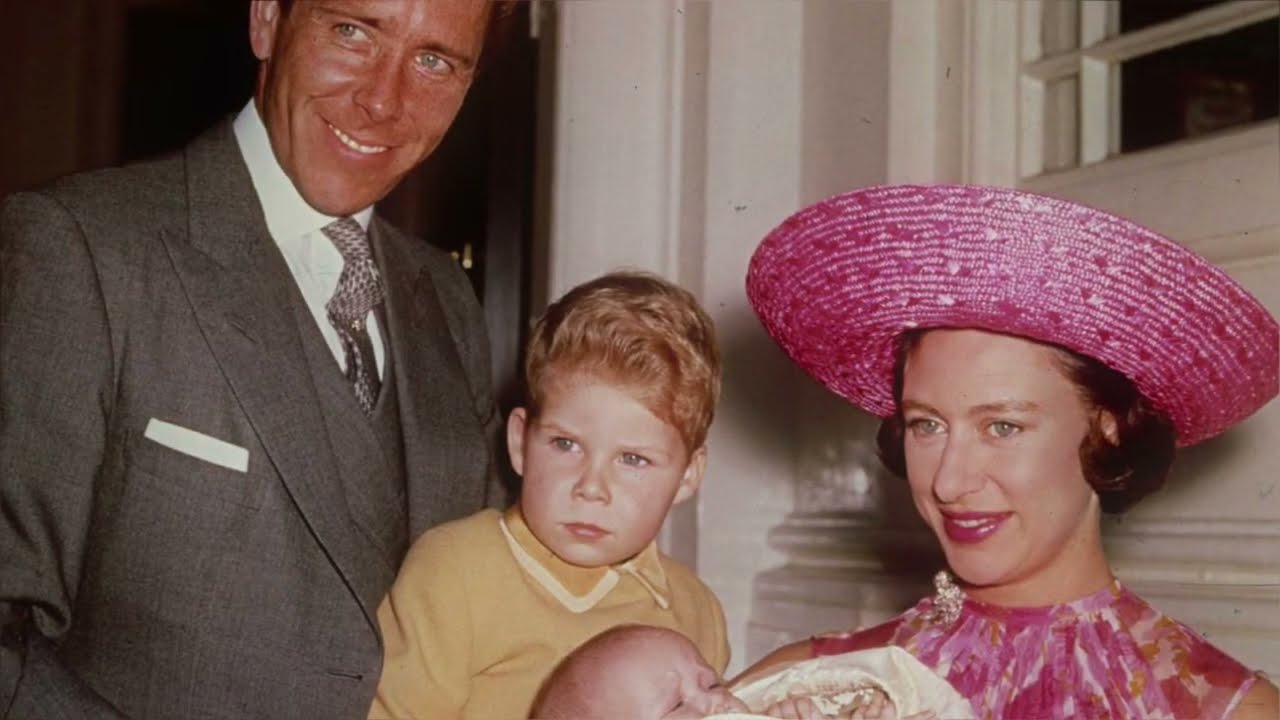
She made a conscious decision to be transparent with her own family. There would be no secrets in her house. She used her pain as a blueprint for how not to raise a family.
As Lord Snowden entered his final decade, his health declining, Polly faced a choice. She could hide, or she could own it. She began to give interviews, cautious at first, then more open. She spoke not with bitterness, but with a kind of melancholic wisdom.
She refused to villainize Jeremy Fry. She refused to villainize her mother. She even refused to fully villainize Tony. She presented the situation as a tragedy of manners, a collision of people who were too polite to tell the truth until it was too late.
In the final years, there was a quiet, unspoken détente. The interactions became softer. Not because Tony changed, but because Polly stopped expecting him to. She accepted the crumbs.
In January 2017, Anthony Armstrong Jones, first Earl of Snowden, passed away peacefully at his home. The world mourned the artist, the icon, the royal in-law. But in a quiet house, away from the cameras, Polly Fry sat with the news that the man who had made her and the man who had denied her was gone.
The fear that had dogged her life had died with him. Jeremy was gone. Margaret was gone. Tony was gone. The toxic triangle that had created her had dissolved into dust. She was no longer a result of a scandal. She was just Polly.
A memorial service was held at St. Margaret’s Church, Westminster on April 7th, 2017, attended by senior members of the royal family. Polly walked into that church, in front of the Queen, in front of the cameras, and took her place. Not as a legitimate daughter, perhaps, but as an undeniable truth.
The death of Lord Snowden brought a final legalistic nod. Public reports have varied on whether she was formally provided for, but the symbolic weight of public acknowledgement mattered more than money. It was his final signature on the truth. He had acknowledged her in death, as he never quite could in life.
In the years after the revelation, Polly largely remained a private figure. She watched her own children grow into adults, secure in their own identities. Her daughters were raised in the light of the truth. The cycle of secrecy that had poisoned the 1960s was broken.
As 2025 arrived, Polly Fry occupied a unique space in the British cultural landscape. She was the woman who had survived the most dangerous secret of the 20th century. She was no longer defined by the betrayal of Tony Armstrong Jones or the silence of Camila Fry. She was defined by her own resilience.
She often returned to the memory of Widcom Manor, but the pain of the deception was gone. She realized that Jeremy Fry’s decision to remain silent was perhaps the greatest gift he ever gave her. He had protected her childhood so that she could be strong enough to face the truth as an adult.
Polly Fry did not let the lie destroy her. She used it as raw material for a deeper, more honest existence. She demonstrated that blood may tell us where we started, but only love tells us who we are.
She is the ghost who came back to life, the secret that refused to stay buried, and the woman who taught the House of Windsor that the truth, however late, is the only thing that can set you free.