She was the kind of presence that could silence a room mid-conversation. People weren’t sure whether to look at her wide, darting eyes or the ever-present lock of silver-blonde hair, perfectly twisted above her fragile collarbones. Born into wealth and privilege, Edie Sedgwick carried a family name that carried weight in the polished social circles of Santa Barbara. But in just 28 years, she went from a golden cradle to a whirlpool of art, fame, and despair.
More than half a century later, she remains both a tragic footnote and a lasting symbol of a cultural moment. She never tried to offer a rational argument for her existence. She simply walked into a room in a haze of eyeliner and teased hair, turned heads for a single, brilliant second, and then disappeared.
Edie was born in 1943 into a family so grand it seemed like a fairy tale at first glance. Her grandfather was a prominent political figure. Her father owned a sprawling horse ranch. The Sedgwicks were as close to American aristocracy as the West Coast could offer.
But that golden facade masked an emotional minefield. The patriarch, Francis Minturn Sedgwick, called Edie "Fuzzy." He was charming at his best and terrifying at his worst, prone to violent outbursts, manipulative games, and suffocating control over his children. Edie, the seventh of eight children, grew up in a house full of underlying tension.
The family lived by an iron rule: you did not speak about mental illness, instability, or heartbreak, no matter how obvious the cracks in the windows were. Long before Edie turned 15, she had seen enough subtle cruelties to suspect that her father's temper was more than a personal quirk. Family rumors suggested that at least two of Edie's older siblings had suffered emotional or physical damage. Two of her brothers would eventually die by their own hand.
Edie learned early to keep her mouth shut, to smile in that airy aristocratic way society demanded, and to hide every bruise under a layer of feigned confidence. If she had illusions about fatherly love, they were tested whenever Francis launched into one of his paranoid or controlling rages, or quietly made clear that mistakes and weaknesses were not tolerated in the Sedgwick home.
Despite all that darkness, Edie could still be found as a slender figure in the vast ranch gardens, wandering between the stables in a tight dress, the image of a carefree heiress. She had a presence that was both boyish and unnaturally feminine. Big eyes, short hair in the style that would eventually define a generation, thin limbs, and a face that radiated a contradictory mix of innocence and danger.
She could have stayed in Santa Barbara, married a respectable heir from another wealthy West Coast family, and spent her days organizing charity brunches. But Edie's restless spirit pushed her beyond those manicured lawns. She wanted something else. Maybe a place loud and bright enough to drown out the disturbing whispers in her head. Or maybe just a chance to cast off the mask of polite society and reveal something raw and true.
So she left for New York in the early 1960s. A twenty-something with a trust fund, a signature from her mother on a substantial inheritance check, and a heart too bruised but also too hopeful for that enormous maze of skyscrapers. Manhattan was a kaleidoscope of possibilities for a girl with wide eyes and a thirst for the extravagant.
She enrolled in art school, but the formalities of study bored her. Instead, she became addicted to the city's social circuit. Loft parties, late-night gatherings in clubs pulsing with the energy of bohemians, starlets, musicians, and the occasional rich vagabond. Within weeks, Edie's style began to change. T-shirts cut open to reveal her collarbones, black tights that drew attention to her astonishingly thin legs, short hair dyed, bleached, or silver, and always that rim of heavy eyeliner that made her look both doll-like and wild.
Fashion magazines noticed her quickly. Here was a girl who stepped out of a Rolls-Royce in a $5 secondhand T-shirt and diamond earrings. Someone who mixed classic high-society elements with a rebellious, cheap aesthetic. The "It Girl" phenomenon was already stirring in the 1960s, and Edie had all the puzzle pieces: wealth, eccentricity, good looks, and a hidden vulnerability that made her simultaneously glamorous and heartbreakingly real.
She posed for a few photographers, and her pictures piqued the curiosity of top editors. With every party invitation, Edie's circle expanded to include the rising artists and fashion icons of the time. She had the ease and flamboyance to flutter through any crowd with equal confidence, from a chic dinner on the Upper East Side to a smoky party in Greenwich Village.
Around this time, she attended a fateful event where Andy Warhol, the already notorious pop artist, sat on a couch, silver-haired and alert, scanning the crowd for the next big sensation. Warhol's Factory, his hybrid of studio and lounge, was a magnet for eccentrics, the ambitious, and the strange. He had a remarkable eye for iconography and could turn a soup can or an unknown actor into a spectacle that fascinated the masses.
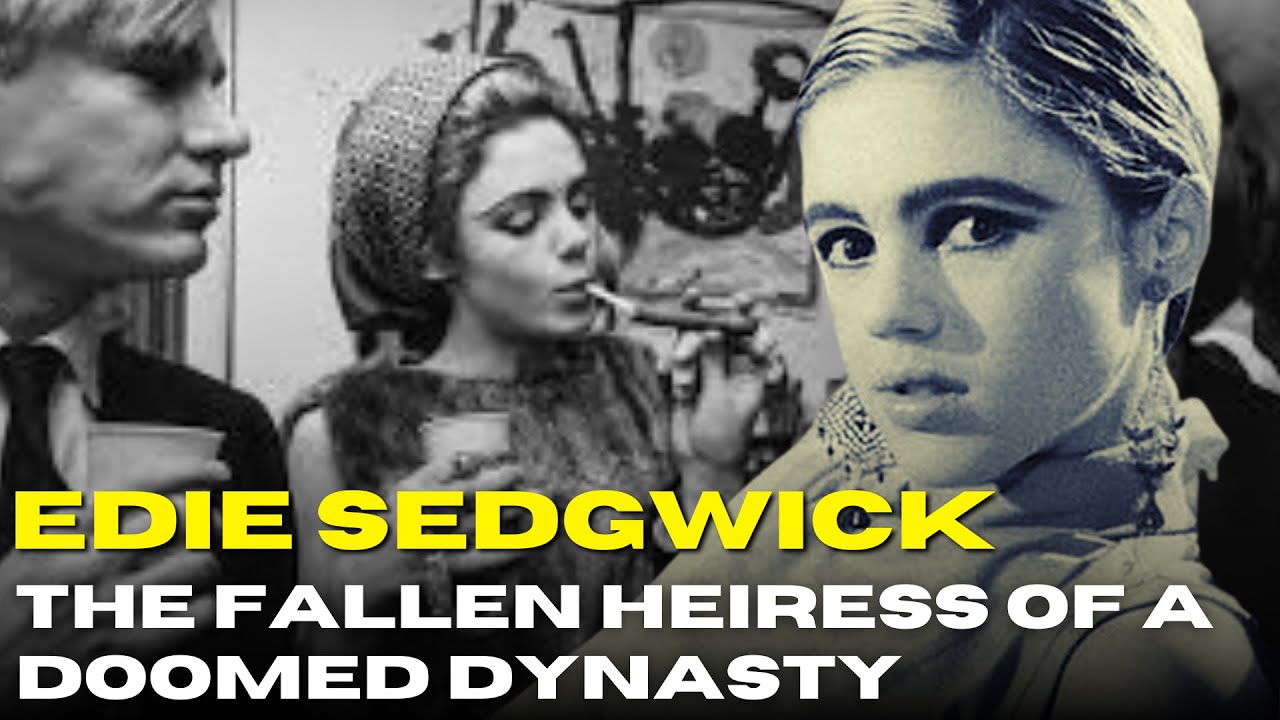
In Edie Sedgwick, Warhol recognized a kindred spirit. She possessed something elusive that he was eager to exploit: a willingness to be seen, a captivating vulnerability, and an almost total lack of self-protection. When Warhol looked at Edie, he famously said he saw something special: a brilliant candle, lit from within by a fascinating but short fuse. He described her as a kind of elegant ruin, though in her presence he displayed his characteristic emptiness, a detachment that left people guessing.
Within weeks, Edie found herself at the center of Warhol's universe, in the silver and aluminum wonderland of the Factory. Every wall was covered in glittering foil. Strobe lights flickered at random moments. The music never seemed to stop. Eccentric figures lurked in the corners: speed-using poets, aspiring superstars, drag queens, disillusioned journalists, and an ever-changing cast of socialites.
Warhol's camera rolled constantly, producing films with little plot or structure, more like existential sets where any fleeting star could pose and flutter through the frame. Edie's arrival was a small sensation. She wore those black tights that clung to her legs like a second skin, a pair of chandelier earrings, and a boyish blonde bob that immediately drew attention. Warhol introduced her to the public as his new superstar, suggesting not just that she was a friend, but the next artwork in his unstoppable collage of pop culture.
Edie became a fixture in Warhol's avant-garde films like *Poor Little Rich Girl*, *Kitchen*, and *Beauty 2*. These were strange, barely scripted experiments, often shot in raw black and white with improvised dialogue Warhol encouraged. She wasn't really acting. She was simply being Edie: chain-smoking, laughing, or sinking into melancholic silence while both ignoring and inviting the camera's gaze.
Warhol paid her a token amount, usually $50 a week, nowhere near enough to maintain her glamorous city life. But for Edie, it wasn't about money. She once said that being part of the Factory was like stepping into a luminous dream, a place where art, image, and the swirling pop madness of the 1960s came together. Warhol, in turn, was fascinated by how effortlessly Edie drew attention. She walked into a bar or gallery and it went quiet. Cameras flashed. Rumors ignited.
"She's perfect," Warhol told a journalist. "She needs no script or direction. She's a star, simply by existing."
But a star who simply exists soon discovers that fame is a voracious beast. By 1966, Edie Sedgwick was the talk of Manhattan's trendsetters. Magazines wrote about her silver hair, her enormous chandelier earrings, and her mod style. She appeared at clubs or at the openings of Warhol's happenings, sipping champagne or something stronger while the crowd circled around her.
But as Warhol's fascination shifted to other muses, other young talents who wandered into the Factory with peculiar mannerisms, Edie realized, perhaps too late, that she had no real contract, no promise of stability. Warhol's generosity was fleeting. He gave her a platform, but behind the scenes there was no plan for her. She was like a captivating cameo in Warhol's carnival, easily replaced if she lost her shine or if Warhol's mood turned.
Tensions escalated. Edie had a desperate need to be recognized, to be cherished for more than her passing sparkle. The Factory thrived on short attention spans and an aesthetic that worshipped change, trading old toys for new ones. Edie found herself increasingly on the margins. Some nights Warhol almost completely ignored her. Other days he filmed auditions of another potential star while Edie watched from the corner, haunted by the realization that her novelty was fading. She was only 23.
Meanwhile, her private life was falling apart. Freed from Warhol's studio schedule, she discovered a gnawing emptiness. The parties that once sparkled now felt like obligations, and the lines of amphetamines or bowls of pills at the Factory were no longer occasional indulgences but daily crutches. She sank deeper into heroin, a powerful anesthetic for that feeling of betrayal and fading identity.
The once radiant mod girl began showing up later and later to events, confused and hollower by the month. She left Warhol after an intense argument over finances and creative direction. The details remain unclear. Some claim he refused to pay her more than $50 a week even as she was recognized as the face of his artistic brand. Others say Edie felt humiliated by Warhol's neglect. In reality, it was probably a mix of personal grievances fueled by the madness of the environment.
After leaving the Factory, Edie tried to reinvent herself. She pursued a real acting career in Hollywood and had some conversations with producers who found her fascinating but unpredictable. Her drug use was no secret, and her emotional scars gave her a precarious aura. She showed up at photo shoots with bruises she tried to explain away or burst into tears unexpectedly at the mention of her father.
The fashion world, always hungry for the next big talent, quickly moved on to younger, fresher faces. Needing money, Edie sold or pawned her belongings and drifted between hotels and temporary apartments. She tried to maintain her bohemian glamour and occasionally landed small modeling jobs, but she was no longer the darling of Warhol's empire. Without Warhol's support, the scene was less enchanted by her. People still recognized her on the street, but the star power had faded.

Some nights she ended up in hospitals or psychiatric wards after an overdose or an emotional crisis, only to leave again with help from her well-meaning but distant mother. The Sedgwick family, still determined to keep up appearances, never admitted to the press that Edie needed serious therapy or drug rehabilitation. They quietly paid her medical bills, hoping she would eventually marry well and settle down.
Instead, Edie spiraled further downward. She attempted a brief marriage. It may have been an impulsive search for stability or a desire to prove she could live a normal life outside the smoky clubs and Warhol's camera, but in the maelstrom of her addictions and emotional turmoil, the marriage fell apart. Friends noted that she didn't really want family life. She just wanted to be safe and loved in a stable environment. A desire she had carried since childhood.
The fleeting ceremony didn't heal her heartbreak or quiet her nightmares. She returned to the same circle. Stays in psychiatric institutions, half-hearted attempts at sobriety, and nights in cramped apartments with no purpose. By the autumn of 1971, the once radiant Edie Sedgwick was a shadow of herself at 28. Her body was marked. Her eyes had lost that playful spark, replaced by a kind of haunted resignation.
In mid-November, just released from a rehab clinic, she was staying in a modest home with her young husband, Michael Post. The sedation from her prescribed medication was dangerously strong. On November 16, she went to bed after taking her usual combination of barbiturates. At dawn, she was found collapsed in that small room. Her heart had stopped from an overdose. The official cause of death was acute barbiturate poisoning. A bleak term that closed the final chapter of her life.
She didn't die amid roaring crowds or the flashing lights of the Factory, but in the silence of a bedroom that had never been captured by a camera lens. The newspapers, if they covered it at all, offered obituaries that simply described her as an Andy Warhol star, forgetting all the heartbreak that had shaped her since childhood.
Despite that, Edie Sedgwick's ghostly presence lingers in pop culture. She remains a symbol of the fleeting nature of 1960s stardom. The idea that someone can be consumed by the spotlight that once adored them. In the eyes of many cultural historians, Edie was one of the first true "celebutantes," an It girl whose fame revolved around style, presence, and mystique rather than recognized talent. She was also one of the first victims of Warhol's consume-and-discard phenomenon, where the radical artist's roster of muses was constantly refreshed.
Briefly, Edie was the silver-haired superstar who danced at Warhol's side, wore Manhattan's thickest eyeliner, and inspired an entire generation with black tights, flamboyant tops, and an existential gaze. Then, at breakneck speed, she became a cautionary tale of what happens when someone invests all their self-worth in fleeting fame.
But there is another side to Edie's story. A side that reveals a woman who was also a victim of the secrecy culture and trauma within her own family. The hush money, the demand to keep mental problems invisible, the refusal to let her or her siblings publicly testify about the family's unraveling. These factors shaped her from a young age. Two of her brothers had already committed suicide. Edie's own mind was a battlefield no one wanted to discuss.
The interplay between a dominant father, a repressed mother, and a chaotic city that valued superficial glitter was deadly. In that sense, Edie's tragedy was set in motion long before she ever stepped into a taxi to the Factory. The Warhol scene merely accelerated the collapse, offering her instant fame without a safety net.
She is referenced in songs by Bob Dylan. Some say "Leopard-Skin Pillbox Hat" was partly inspired by her, as were The Velvet Underground, who circled Warhol's universe. Later artists like Patti Smith wrote or sang about her fleeting star status. Books and films have tried to reimagine her story, from the raw black-and-white diaries of Warhol's acquaintances to Hollywood adaptations like *Factory Girl*, which never quite captured the elusive sorrow that seemed to surround Edie in real life.
She remains a slender figure at the edge of our cultural memory. Short hair, big eyes, standing awkwardly in the corner of a Warhol film or captured by paparazzi stumbling out of a club. A fleeting muse who unintentionally taught us how devouring the spotlight can be.
So why does she endure as a legend? Perhaps because she prefigured so many who came after her, from rock stars to social media influencers, consumed by the same public that first adored them. She lived that cycle decades before it became a tired cliché. The beloved It figure who rose too fast, found fleeting comfort in substances, and departed too soon, leaving behind the brief glow of a falling star.
She is also a microcosm of a generation struggling with dysfunctional parents, the illusions of free love and open creativity, and the harsh reality of addiction. Like an overexposed photograph, her image still burns on the retina, both enchanting and desolate.
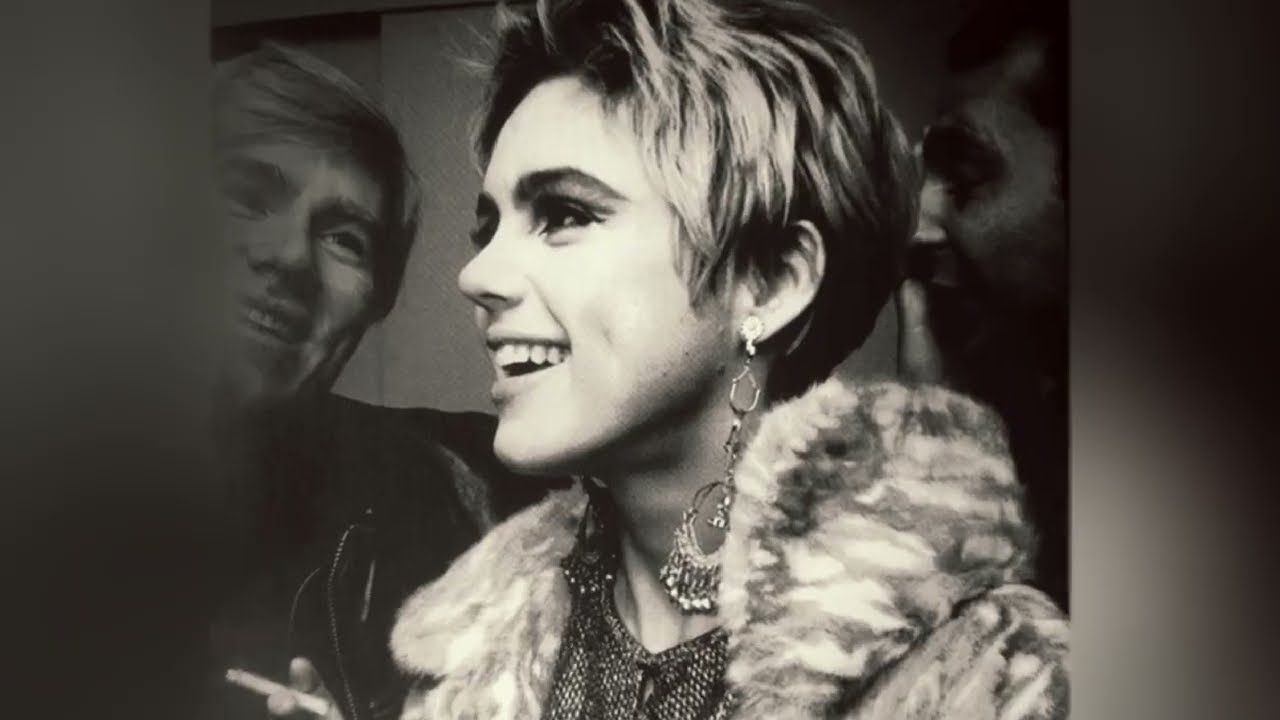
In the end, Edie Sedgwick was not just a naive angel or a reckless junkie. She was a complicated young woman who desperately longed for genuine affection, marked by her father's manipulations, enchanted by the shiny promise of Warhol's world, and undone by the unstoppable wave of self-destructive glamour. She never got the chance to refine or deepen a stable identity. The art world that made her a star had no more use for her when a new muse appeared, leaving her alone with unresolved trauma.
She tried to escape her ghosts through marriage, fleeting attempts at movie stardom, and rehab clinics, but the illusions offered no foothold. When the final day came, the world barely noticed. It was only months or years later that cultural critics saw how her story had become a great American tragedy.
Decades later, we still see Edie's influence on a model's runway walk with a short haircut or in smoky nightlife photos where a young socialite stares into the lens with eyes that say, "Help me or love me. I don't care which." We see her in the concept of the party girl who is just too beautiful and too fragile to survive. The 1960s may have been flooded with color, LSD, protest marches, and experimental art, but it was also a decade that ate its children, just like the decades after.
Edie was a perfect morsel for that hungry era: rich, eccentric, rebellious, and damaged. She was a canvas onto which Warhol and the press projected all the fantasies they wanted, without ever pausing to consider the real person underneath. And by the time the brushstrokes formed a coherent image, she was already gone.
On November 16, 1971, that last breath in an unremarkable bedroom, without paparazzi, without Warhol, without flamboyant silver sets, stands as the lonely final chord of a short, explosive life. She likely spent her last night counting the pills that would bring her the sleep she needed, perhaps hoping to wake up to a better morning. Instead, she didn't wake up at all. A slender apparition of a woman whose illusions were exhausted.
She was laid to rest at Oak Hill Cemetery in Santa Barbara, near the ranch where she once wandered as a restless child. The funeral was small, overshadowed by more pressing news of the day, and the Warhol crowd largely stayed away. And yet her memory persists, floating through Warhol's old films, flickering in black-and-white silent images where her luminous presence still commands the viewer's attention.
That may be her legacy. The ephemeral spark. She formulated no manifesto and pioneered no new art form. Her message to the world was simply to live in the fleeting now, wearing an outfit that dared you to look, with a smile that hinted at heartbreak beneath the mascara. She wasn't the only It girl of the 1960s, but she was one of the most iconic, precisely because she burned so brightly and went out so tragically.
Her story is a warning for the next star who thinks they can escape the devouring nature of the spotlight. She tried, after all, and lost. In many ways, Edie Sedgwick stands as a miniature metaphor for America in the 1960s: a country full of youth, money, and creative explosions, but also haunted by unspoken trauma, illusions of immortality, and a voracious consumer culture.
She was a brief phenomenon, but decades later people still speak of her the way they speak of meteor showers. They remember flashes: the tight black leotard, the tousled mass of platinum blonde hair, the feverish whirl of Factory parties. Warhol's comment about Edie was that she had so much presence, yet was so ephemeral. That could just as easily be her epitaph.
And so she remains the original ephemeral star, a 1960s style icon pinned to a cautionary tale about how the same flashbulbs that sanctify you can burn you to ash in an instant. That is the legacy of Edie Sedgwick: a whirlwind of eyeliner, heartbreak, glitter, runway walks, pills, and that vague half-smile in Warhol's flickering films.
She was adored for about two brilliant years by an entire generation of Manhattan bohemians, then cast aside like an outdated trend. Yet she left an impression that lingers far beyond those parties. She is both a symbol of consumer culture, the star we devour for novelty, and proof of how the desire for acceptance can drive even the wealthiest souls to self-destruction.
She may have died in darkness, but the brief light she radiated still flickers in every conversation about Warhol's circle, every retrospective of 1960s fashion, and every pop song that references the lonely brilliance of an It girl gone too soon. Perhaps that is why, decades later, we still whisper her name over images of a fragile woman, half lost in a whirlwind of cigarette smoke and flashbulbs, who lived too brightly for a world that never knew how to embrace her.
Edie Sedgwick never found a safe stage to stand on. She stepped onto Warhol's sets with confident grace, only to be consumed by the bright lights that once adored her. In the end, she didn't write a triumphant final line. Instead, she simply stepped out of life, leaving us with a haunting question. If the spotlight that made her a star had been a little softer, if she had found even one place of real love or stability, would we have seen a different ending?
That question is as unanswerable as the riddle of her entire existence. And so Edie Sedgwick remains, in the silence that follows, a lasting, flickering silhouette of American heartbreak and fleeting glory.