The Old West is remembered as a world of blazing gunfights and outlaw legends, where men and women died in dramatic showdowns. The truth is often stranger. Buffalo Bill Cody, one of the most famous showmen of the late nineteenth century, captured the imagination of audiences with his traveling Wild West spectacle, complete with sharpshooting, cowboy skills, and dramatic reenactments of frontier life. When he died of kidney failure on January 10, 1917, while staying with his sister in Denver, his final wishes collided with the brutal Colorado winter.
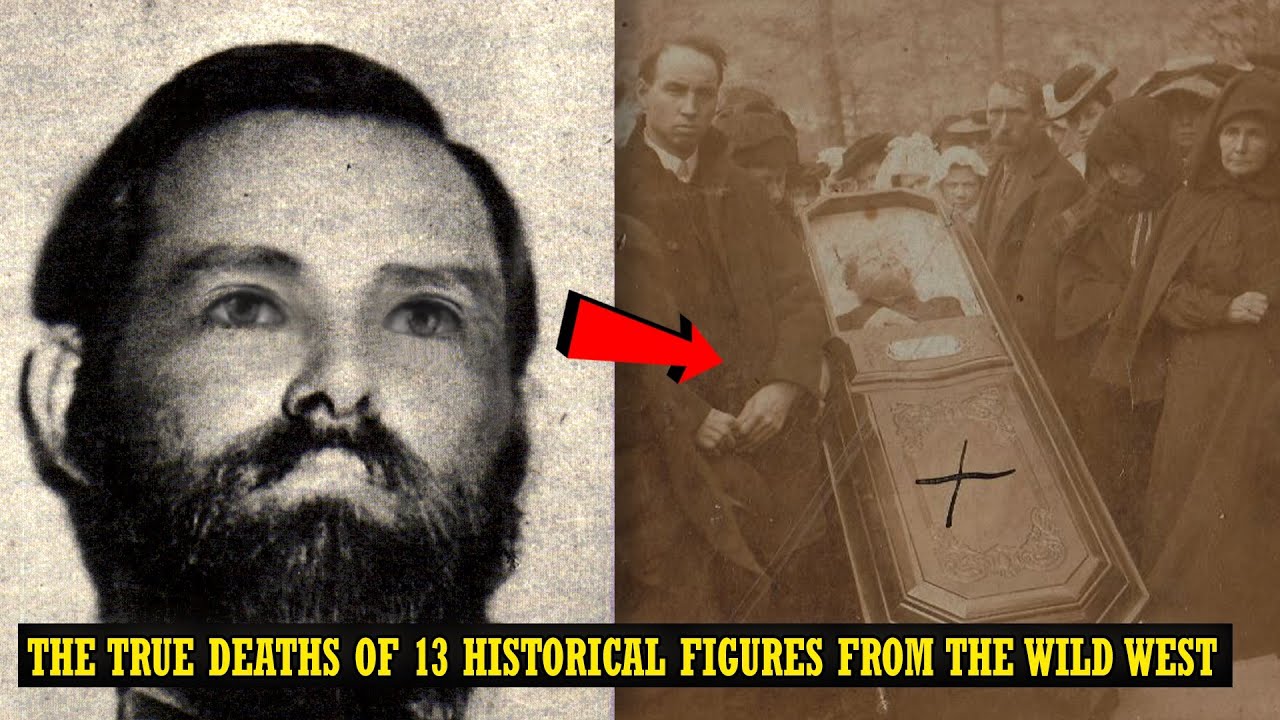
Cody had asked to be buried on Lookout Mountain, a peak prized for its sweeping views, but the snow-covered road to the summit made transport impossible. His body was kept in a funeral home’s coal storage room for six months. It was embalmed six times to preserve it. During that long delay, a dispute raged over where he truly belonged.
Some insisted he should rest in Cody, Wyoming, the town he had founded and where an earlier version of his will had requested burial. Rumors and conspiracy theories spread, with some claiming his remains had been secretly moved to Wyoming anyway. Most historical accounts agree that Buffalo Bill was eventually buried on Lookout Mountain, where his grave became a tourist attraction. The very building that held his body for those six months was later converted into a modern restaurant.
Cody’s strange wait for burial became part of his enduring legend. Bat Masterson spent his early years as a gunslinger known for his skill with firearms and his part in skirmishes across the frontier. His life turned when he met Wyatt Earp, who recognized his abilities and persuaded him to take on a role in law enforcement. With his brothers already serving as peace officers nearby, Masterson accepted the position of sheriff in the turbulent frontier town of Dodge City, Kansas.
His time in office brought both success and personal tragedy. He managed to restore some order to a town famous for chaos and rowdy saloons, but he also witnessed the brutal murder of his brother Ed, killed in the line of duty. The loss left a deep mark. By the time he reached his late forties, Masterson was tired of the violence.
He moved to New York City with his wife, seeking a quieter life. In the city, he became a newspaper journalist, covering sports and writing commentary, while also serving as a United States marshal. His sharp wit and direct knowledge of the West made him a well-known figure in the urban landscape. Masterson died on October 25, 1921, at the age of sixty-seven, from a fatal heart attack.
Ironically, he died at his desk, still devoted to his work as a journalist. John Henry Doc Holliday began his career as a dentist after earning his degree in Pennsylvania. He established a practice in Texas and seemed destined for a quiet life. But Holliday was passionate about card playing, a hobby that gradually pulled him away from the dentist’s chair and into the saloons of the Old West.
Through gambling, his path crossed with famous figures of the era, including the legendary lawman Wyatt Earp. Holliday became known for his involvement in high-stakes poker games and his sharp mind at the table. He was also known for his fondness for alcohol, which, combined with the pressures of his turbulent lifestyle, worsened his existing health problems. Since his youth, Holliday had suffered from tuberculosis, a common and often fatal disease at the time.
Seeking relief, he entered a sanatorium in Glenwood Springs, Colorado, hoping the dry mountain air would ease his symptoms. His health continued to decline regardless. In 1887, at the age of thirty-six, Doc Holliday died peacefully in his bed at the sanatorium. Wyatt Earp was not widely famous during his own lifetime.
He only became a celebrated figure after his death, largely thanks to a biography that detailed his bold exploits, including the famous gunfight at the O. K. Corral. As his years of law enforcement and frontier life came to an end, he sought a calmer existence and eventually settled in Los Angeles.
In California, he was drawn to the emerging film industry, particularly the Westerns that tried to capture the spirit of the frontier he had lived. Earp became an unpaid consultant for Western films, and his firsthand knowledge made him valuable to filmmakers. He formed close friendships with early Hollywood Western stars, including William Hart and Tom Mix. When Earp died in 1929, both Hart and Mix served as pallbearers.
It is said that Mix was so moved by Earp’s death that he wept during the ceremony. Annie Oakley became an American icon and an inspiration to girls across the country as one of the finest sharpshooters in history. For years she performed with Buffalo Bill’s Wild West show, displaying her remarkable shooting skills before enormous crowds. Before she was known as Annie Oakley, she was Annie Moses, a sixteen-year-old girl with an exceptional talent for marksmanship.
While visiting her sister, her reputation led a local hotel owner to arrange a shooting contest between her and a famous exhibition shooter named Frank Butler. The contest involved firing at twenty-five targets. Butler hit twenty-four. Annie hit all twenty-five.
Butler was not only stunned by her skill but also charmed by her. A bond grew between them, and they married soon after, beginning a partnership that lasted nearly five decades. Tragically, Annie’s health declined in her later years, and she eventually died of anemia. Just eighteen days later, Frank Butler also died.
While the exact cause of his death is not documented, many believed his grief over losing Annie contributed to his passing. They were buried together in the family plot, a symbol of the enduring bond they shared. Jesse James’s reputation as an outlaw was so great that Missouri’s governor, Thomas Crittenden, took a personal interest in bringing him to justice. After a failed bank robbery, Jesse and his brother Frank decided to lay low.
Frank, tired of the outlaw life, left the gang to seek a more conventional existence. His departure forced Jesse to recruit new members, many of whom lacked the loyalty of his former partners. Among the new recruits were the Ford brothers, Bob and Charlie. When Bob learned of the governor’s large bounty of ten thousand dollars for Jesse’s capture, he saw an opportunity.
He persuaded his brother Charlie to join him in a plot against Jesse. They negotiated with Crittenden, who promised them the reward money and a pardon for their crimes in exchange for their betrayal. After several months, the Ford brothers worked their way into Jesse’s inner circle and were living in one of his homes. One day, Jesse removed his coat and guns because of the heat, leaving himself unarmed.
He stood on a chair to dust a picture hanging on the wall, unaware of what was coming. Bob Ford seized the moment and shot Jesse James in the back of the head, killing him instantly. Calamity Jane led an adventurous and unconventional life. To support herself in the hard frontier days, she often adopted male personas and worked a variety of jobs, including as a rider for the Pony Express.
She gained considerable fame as a skilled marksman in Buffalo Bill’s Wild West show, performing impressive shooting while on horseback. She was also known for her love of a rowdy social life and was often seen drinking heavily. That fondness for alcohol eventually took a severe toll on her health. She suffered from severe alcoholism for many years, a condition that led to her early death at the age of fifty-one.
According to popular stories, she was buried beside Wild Bill Hickok, who was sometimes a friend and companion. The tale suggests this arrangement was meant to bring them together in the afterlife, although the nature of their relationship remains a matter of speculation. Billy the Kid was only eighteen when he gained his notorious reputation, already linked to nearly seventeen murders. His criminal activities kept him constantly on the run.
Eventually, Sheriff Pat Garrett captured him. After trial and conviction, Billy was sentenced to hang, with his execution scheduled for 1881. Just days before the date, he staged a dramatic escape from his cell, killing two guards in the process. Garrett launched a relentless pursuit that lasted three months.
The breakthrough came when Garrett received a critical report of Billy’s whereabouts. Billy was staying at the Maxwell ranch in New Mexico. Under cover of darkness, Garrett crept into a bedroom and waited. When Billy entered the room, Garrett fired a fatal shot.
In the years after his death, two different individuals came forward claiming to be the famous outlaw, though their identities were never conclusively verified. Belle Starr is often remembered for her associations with outlaws more than for crimes she committed herself. Although she was convicted of horse theft and served nine months in prison, no other crimes were ever proven against her. For someone with such a fearsome reputation, her criminal record was relatively slight.
She married twice, and both husbands met violent ends in gunfights, adding to her dangerous image. One day, while returning home, Belle was ambushed and shot twice in the back. The identity of her attacker was never determined. Her death sparked numerous rumors and theories, one of which suggested her own son, Ed Starr, might have been involved in the tragic incident.
Butch Cassidy and the Sundance Kid became infamous for their criminal exploits as part of the Wild Bunch, a well-organized gang. Their robberies were highly profitable, averaging about thirty-five thousand dollars per job. For years, law enforcement struggled to capture them. After a long criminal career, the pair chose to retire and move to South America, seeking a fresh start.
They managed to keep a relatively low profile, but their past eventually caught up with them. Reports say the duo were involved in a payroll robbery in Bolivia that led to their being cornered by Bolivian cavalry. A gunfight broke out, and the Sundance Kid was among the wounded. That night, two gunshots were heard from their hiding place.
When authorities discovered their bodies, both men had fatal gunshot wounds, one shot between the eyes and the other a self-inflicted shot to the temple. Their identities became a matter of intense debate, and persistent rumors suggested that Butch Cassidy may have survived and lived for years afterward. Henry Plummer remains a controversial and mysterious figure of the Old West, with conflicting accounts of his life and actions. He is remembered either as a law-abiding sheriff who met an unjust end or as a corrupt official who abused his power and committed numerous crimes.
Historical records about him are scarce and often contradictory. He was involved in several deadly confrontations, though some argued those incidents may have been in self-defense. His tenure as sheriff was remarkably short. He was elected to the office just one year before his death in 1864.
His fall came when a mob, convinced of his criminal activities and abuse of power, decided to take matters into their own hands. The crowd forced him onto the gallows and hanged him. Wild Bill Hickok gained national attention after a magazine published his dramatic account of killing three men who threatened his life. His skill with firearms was proven through a series of intense gunfights, earning him fame as one of the most celebrated figures of the West.
But his career took a tragic turn after an accidental shooting in which his deputy was killed during an exchange of fire. His star began to fade, and he was forced to earn a living as a card player in Deadwood, South Dakota. One fateful day in August, as he sat in a saloon with his back to the door, a young gunman named Jack McCall entered and shot him in the back of the head. In a twist of fate, McCall tried to fire at others in the saloon, but his remaining shots failed to go off.
At the time of his death, Hickok was holding a hand of cards known as aces and eights, which became forever linked to his legacy and is still known as the dead man’s hand. Davy Crockett is remembered primarily for his role in the Battle of the Alamo in 1836. The generally accepted account describes him as a heroic figure who, along with about two hundred defenders, held out against a much larger force of Mexican soldiers for thirteen days. According to this version, Crockett was killed in the final moments of the siege when enemy forces finally overwhelmed the defenders.
Other historical accounts offer a more complicated picture of his final hours. Some historians point to a possible alternative scenario in which Crockett and five other men may have surrendered to the Mexican forces, hoping to negotiate for their safety. This version of events holds that their surrender agreement was not honored, and they were executed despite promises of clemency.