In 1957, Vincent Gigante walked into the lobby of Frank Costello’s apartment building, pulled out a gun, and fired. The bullet struck Costello in the head, and Gigante fled to a waiting car, certain the boss of the Genovese family was dead. But Costello survived—the bullet had only grazed his skull. When authorities pressed the victim to identify his attacker, Costello refused to cooperate, and Gigante walked free.
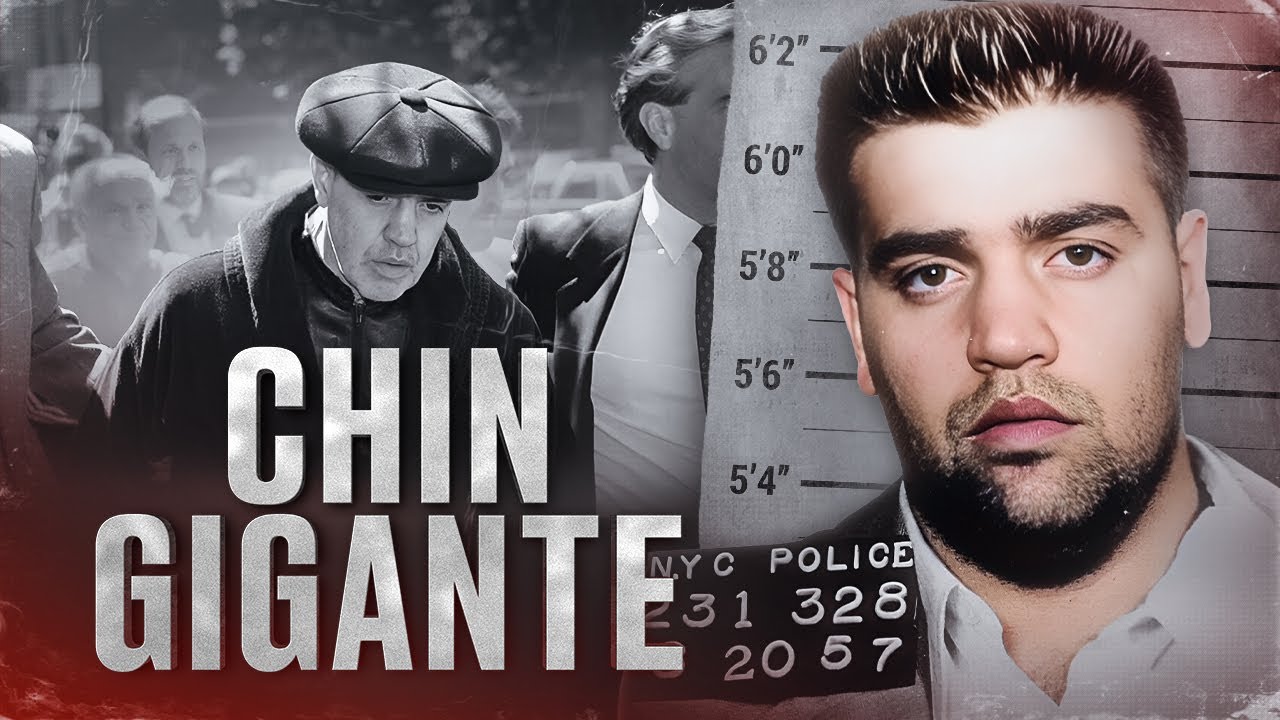
That act of loyalty would launch one of the most extraordinary criminal careers in American history: a mob boss who spent nearly three decades pretending to be insane while running one of the most powerful Mafia families in New York. Vincent Gigante was born in New York City in March 1928, named after a brother who had died three years earlier. His father, Salvatore, was a jeweler, and his mother, Yolanda, worked part-time in a garment factory while raising five children in Greenwich Village. Vincent’s childhood was ordinary enough.
He played football in high school and seemed headed for a conventional life. But around age sixteen he began gambling in illegal craps games, and soon he was running one of those small venues. His first arrest came in 1945 on a theft charge, and by age twenty-five he had been arrested seven times. The turning point came at Stillman’s Boxing Gym, where Gigante pursued a short professional boxing career under a manager named Thomas Eboli, a man close to Vito Genovese, then a captain in the Mafia.
Gigante fought twenty-five bouts, winning twenty-one, but he never reached the top of any division. He stopped boxing in 1947 and threw himself fully into crime. Small arrests followed, but nothing stuck. In the mid-1950s, Genovese took notice of the young man and hired him as a driver and bodyguard.
At the time, Genovese was maneuvering against Frank Costello, who ran the family while the imprisoned Charles Luciano was in exile. Genovese decided to eliminate his rival and chose Gigante for the job. The failed shooting in 1957 still achieved its purpose. Costello, shaken and unwilling to testify, resigned as boss and retired.
Genovese took control, and Gigante rose with him. But Genovese’s power brought scrutiny. In 1959, authorities charged him with running a heroin smuggling network, and Gigante was swept up in the case. He received seven years and served four, released in 1964.
From then on, Gigante became violently opposed to drugs, and when he later became boss, he would ban his men from dealing them under penalty of death. More importantly, during those six years after prison, Gigante rose to captain in the family and began the performance that would define his life. It started in the late 1960s, when he bought a house in Old Tappan, New Jersey, and befriended local law enforcement officials, sending the police chief postcards stuffed with hundred-dollar bills. When the bribery came to light in 1970, Gigante faced up to fifteen years.
He paid $25,000 bail, and in April his lawyer announced that his client was undergoing psychiatric treatment. A man who had been confirmed healthy while in prison had, almost instantly, become psychotic. The authorities were skeptical, but Gigante was just beginning. He checked into a psychiatric hospital complaining of an uncontrollable desire to sleep, then checked himself out once his lawyer had informed the court.
In September he returned, this time complaining of constant anxiety. His mother and wife backed the story, claiming he feared the dark and threw tantrums. Doctors later added tales of boxing head injuries and street fights to his file. When the authorities sent their own psychiatrists to examine him, Gigante performed flawlessly.
He sat unshaven in his bathrobe, staring blankly, repeating pieces of questions back to the examiner. He got up without explanation and left the room, then returned and sat down again. The doctors concluded he was suffering from schizophrenia, and the case was put on hold. That performance launched nearly thirty years of deception.
Gigante continued the act constantly: walking his neighborhood in his robe and slippers, mumbling to himself, talking to parking meters and trees, even defecating in public. When FBI agents visited his home, they found him standing naked in the shower under an umbrella. To protect the illusion, he banned his own name from use in the Mafia. Men referred to him by touching their chins, and anyone caught speaking his name could be killed.
He also discouraged other mobsters from faking insanity, fearing too many madmen would make the act less believable. While playing insane, Gigante was building real power. By the early 1980s he was one of the most authoritative members of the Genovese family, and after a series of leadership changes, he became its boss. From behind his bizarre facade, he ran a criminal empire that stretched across New York’s docks, construction industry, and music business.
His influence over Roulette Records, a label that once signed Louis Armstrong, was complete. The company was run by Morris Levy, a man close to the Mafia who, according to musician Tommy James, stole millions in royalties from his artists. Musicians who tried to leave could end up beaten, like the singer Jimmy Rogers. Gigante took his share of the profits.
He also controlled the Manhattan waterfront, where his men collected money for every container unloaded. The FBI believed he personally earned about $2 million a year from the docks alone. Through the so-called Concrete Club, Gigante and other families controlled New York’s construction industry. Only six Mafia-approved firms were allowed to bid on cement work worth more than $2 million, and they paid two percent of each contract to the families.
In the window scam of the late 1970s, the Mafia rigged contracts for new windows in public housing, capturing $151 million of a $191 million program. Companies that refused to pay kickbacks found their windows smashed by unidentified hooligans. Gigante’s rule was marked by violence when necessary. He personally volunteered to punish a Philadelphia mobster who killed his boss without Commission approval.
He ordered the murders of Jerry Pappa, who had carried out unauthorized killings, and Nat Meli, who was cooperating with authorities. Most famously, he sought revenge against John Gotti, whose unauthorized murder of boss Paul Castellano violated everything Gigante stood for. Gotti, flashy and attention-seeking, was everything Gigante despised. Gigante planned to blow up Gotti in his car, but the plot failed.
Several more attempts also failed. Gotti never suspected Gigante until FBI agents warned him of a threat, but even then, he could not turn suspicion into action. Gigante killed Gotti’s associates instead, preparing the way for a successor, though he never completed that plan. The authorities got to Gotti first, and soon they would get to Gigante.
The FBI had long suspected Gigante was faking. In the 1980s, agents watching his homes saw him acting normally with his family, competent and clear-minded, no robe in sight. But proving it required more than observation. They tried to infiltrate his inner circle, but his closest associates said nothing.
They tapped his phones, but he said nothing incriminating and often whistled in code they could never break. They bugged his social club without success. Then the defectors began to speak. Vincent Cafaro, a former associate, told a Senate committee that Gigante was the family boss and had never suffered from mental illness.
Peter Savino, who ran the window scam, wore a microphone and recorded conversations that formed the basis of a prosecution against Gigante. More defectors followed. In 1990, Gigante appeared in court in his lunatic act, and again psychiatrists declared him unfit to stand trial. But the evidence kept mounting.
In 1993 he was indicted for racketeering, extortion, and two murders. The testimony of former mobsters finally convinced the judge that Gigante was faking, and the psychiatrists admitted they could have been wrong. In 1997, Gigante was convicted and sentenced to twelve years. He ran his family from prison and continued to stage fits of madness.
But in 2003, charged with racketeering and obstruction of justice for faking illness while running the family through his son, he finally made a deal. Facing the possibility that his son would be prosecuted, Gigante admitted that he had been deceiving the authorities all along. He received three additional years in prison. His son received two years and a $2.
5 million fine. Gigante was moved to a federal medical center in Springfield, Missouri. His body was failing from heart and kidney problems. In 2005, at age seventy-seven, the man who had fooled psychiatrists for nearly three decades died in a prison bed.
The sham had kept him free for years, but in the end, the law knew exactly who he was.