On the night of November 28, 1966, 540 people arrived at the Plaza Hotel in New York City, dressed in black and white and wearing masks. They came from Hollywood, Washington, London, and Rome—politicians, movie stars, novelists, and socialites. The host had been planning the evening since July, carrying a black-and-white notebook wherever he went, adding names and removing others, building what he would later call the most balanced social event of the century. He was five feet three, weighed about 120 pounds, and spoke in a voice that sounded like something borrowed from a southern aunt and never returned.
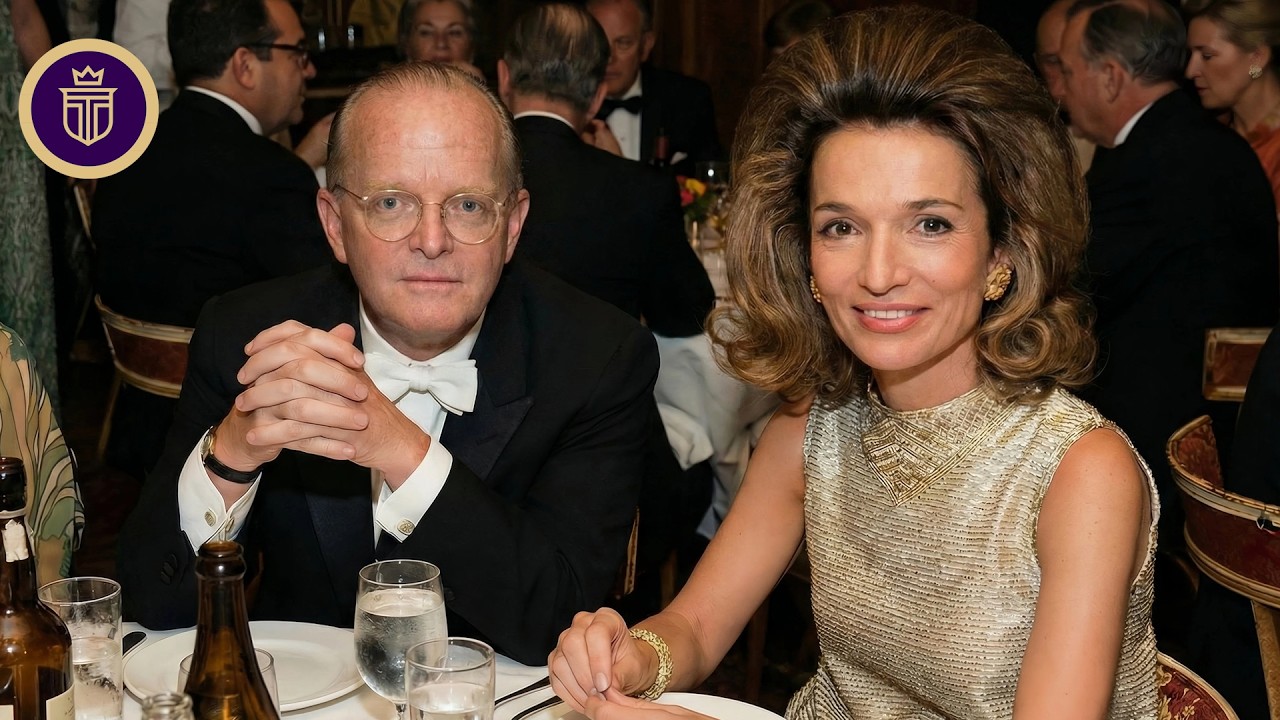
His name was Truman Capote. At forty-two, he was the most famous writer in America, at the peak of everything he could achieve in life. He knew it. Most of the people in the room did not realize it yet.
Truman Streckfus Persons was born in New Orleans on September 30, 1924, to parents aged nineteen and seventeen who wanted nothing to do with each other and very little to do with him. When he was four, his parents separated and left him in Monroeville, Alabama, with a group of elderly female relatives he would spend the rest of his childhood calling his aunts. The house was large, enclosed by a high stone wall, run by women who smelled of talcum powder and old wood. They left the strange little boy largely to himself.
He was delicate-looking and fiercely intelligent, spending his days reading everything he could find and teaching himself to type on a machine left in the back bedroom. He was also, by his own account, the most beautiful child he had ever seen. The confidence was real, and it served him for decades. A neighbor’s daughter two years younger was named Nelle Harper Lee.
She became his protector in the way only children who recognize each other’s strangeness can protect one another. They climbed trees together. They wrote stories together. They remained friends, intermittently and then permanently, for the rest of their lives.
Truman moved to New York in his early teens when his mother married a Cuban businessman named Joe Capote. He never attended university. He got a job at the New Yorker carrying mail and talking to anyone who would listen, which was everyone. By twenty-three, he had published his first novel.
Other Voices, Other Rooms appeared in January 1948 and was discussed with a ferocity usually reserved for political scandals. The cover photo showed Truman lounging on a sofa with an expression combining innocence and knowingness, and the letters about the photograph nearly equaled the letters about the book. He was openly and explicitly gay in an era with no framework for it beyond shame, and he wore that fact like a piece of couture no one else owned. New York decided he was a phenomenon and invited him everywhere.
Breakfast at Tiffany’s, published in 1958, confirmed the phenomenon had staying power. Holly Golightly was instantly understood as a version of a real person, and everyone argued about her identity, which is exactly what Truman wanted. He had an instinct, refined during his childhood among women who talked and whispered and watched from behind their curtains, for judging the precise amount of truth that makes fiction magnetic. He would use that talent one final and spectacular time, and it would destroy him.
In November 1959, Truman read a small item in the New York Times. A family of four had been murdered in their home in Holcomb, Kansas. The Clutters were beloved, well-off, and utterly ordinary in the way only certain Kansas families can be, and someone had slaughtered them. Truman read the item several times, then called his editor and said he was going to Kansas.
He took Harper Lee with him. In Holcomb, his small body, affected voice, and tailored overcoat made him seem like a ghost from another world, so strange the townspeople did not know how to handle him. Harper Lee, a large, plainspoken, practical woman from Alabama who could talk to anyone, conducted interviews for six weeks and produced more than 150 pages of notes, making the book possible by providing the access Truman needed. The killers, Richard Hickock and Perry Smith, were arrested in Las Vegas in late December 1959 and returned to Kansas.
Truman visited them in prison over the following years with a regularity that raised questions and unleashed rumors. He was, by his own eventual admission, in love with Perry Smith in a way he never precisely defined and perhaps never fully understood. Smith was dark, stocky, psychologically damaged. Truman, the boy abandoned by his mother, recognized it and responded to it.
Whether Smith reciprocated the feeling or simply realized that a famous New York writer was a more useful friend than most death-row inmates would ever have was a question Truman preferred not to explore. He spent six years on the book. He befriended both murderers with a seriousness that went beyond mere professional interest. When Kansas executed the two men in April 1965, Truman was present.
He wept. The book was published in January 1966, after being serialized in the New Yorker, and sold in numbers no serious literary work had achieved in recent memory. Truman Capote became famous in a way few writers ever do—not just as a writer, but as a public figure. He decided to throw a party.
For years, women had been gathering around him. He called them his swans, and the name was precise in the way nicknames are only when coined by people with sharp vision. They were beautiful. They moved through the world with a quality of expensively manufactured ease and discipline most people mistook for spontaneity.
They had married men of wealth, or in some cases, had been born with golden spoons in their mouths. They occupied the upper floors of a social structure Truman, the boy from Monroeville, had always seen from below and spent his adult life climbing. Babe Paley was the first and most important of them. Born Barbara Cushing, daughter of a Boston brain surgeon, she grew up in a family that took social standing as seriously as others took religion.
In 1947 she married William S. Paley, who had built CBS into the most powerful television network in the world. She was known primarily for her taste, which was perfect in the way only a few people in any generation achieve. Truman loved her with a devotion that was entirely sincere and entirely complicated, the only way Truman knew how to love anyone.
Slim Keith, born Nancy Gross in California, had crafted herself into an entirely different personality through a combination of striking features and sharp intelligence. She had been married to Howard Hawks, Leland Hayward, and finally a British banker named Kenneth Keith. She and Truman spent hours on the telephone conducting what she later described as the most entertaining conversations of her life. Gloria Guinness was born in Mexico to a poor family and ended up married to Loel Guinness, who had a great deal of money.
The distance between those two points represented a journey of strategic precision Truman genuinely admired. She was the most international of the swans, possessed of a comfort that reflected people who had learned to be comfortable. Marella Agnelli was Italian, married to the man who ran Fiat. She and Truman shared such precision of observation that their conversations felt like joint work.
Lee Radziwill was Jackie Kennedy’s younger sister, which guaranteed a degree of attention she spent her life seeking and resenting simultaneously. She married a Polish prince named Stanislas Radziwill and gained a title that seemed more significant than the marriage actually was. C. Z.
Guest took gardening with a seriousness Truman found both puzzling and charming. Pamela Churchill Harriman, the most politically influential of the swans, was married to Winston Churchill’s son during the war and leveraged a series of relationships with powerful men into genuine diplomatic influence. She understood with unusual clarity that access to powerful men was itself a form of power, and she used it accordingly. What bound these women together, beyond money and status, was something more specific.
They had all reached a point in their lives where everyone around them wanted something from them, while very few were interested in knowing who they actually were. Truman was interested. He asked questions, waited for answers, remembered everything, and asked follow-up questions weeks later, which is the most flattering thing possible for someone accustomed to being admired without being seen. So they opened their hearts to him.
It was a catastrophic misjudgment, and entirely understandable at the same time. What they gave him was access. What they gave him beyond that was something rarer: honesty. They told him things they had told no one else.
He served as repository of secrets, confidant, entertainer. It worked perfectly for everyone for fifteen years. William Paley was a man of great accomplishments and great appetites. Throughout his marriage to Babe, he conducted affairs with a frequency and carelessness suggesting either that he did not expect anyone to notice, or that he did not care much if they did.
Babe noticed. She told Truman specifics, shared over the years of their friendship in abundance. She talked about her husband’s behavior with other women. She talked about the particular humiliation of being married to a man the world considered a prize catch.
She talked about the gap between the life she appeared to live in the society pages and the life she actually lived. Truman listened and remembered. He always remembered. Their friendship was marked by an interdependence beyond what either would publicly describe.
She gave him cachet and access. He gave her the experience of being truly known by someone who found her interesting rather than merely admirable. She had spent her life being admired. It was not the same.
He confided his secrets to her too, or so it seemed. The mistake she made, the mistake they all made, was failing to understand that for Truman, nothing was truly secret when there was a better story to tell. Then he sat beside the pool at his friend Elena Fride’s house in July 1966, and the idea arrived fully formed: a masked ball at the Plaza, black and white, in honor of Katharine Graham, the publisher of the Washington Post, whose husband had recently committed suicide, and who Truman felt deserved to be celebrated in the greatest possible way. The guest list took three months.
He carried the black-and-white notebook everywhere. He was constantly on the phone, adding and removing names with the care of a general deploying troops. Every decision in that list was a statement about who mattered and who did not, an announcement of Truman’s taste and Truman’s power encoded in 430 paper invitations. He invited Frank Sinatra and his then-girlfriend Mia Farrow.
He invited Norman Mailer, which required a willingness to manage the chaos Mailer’s presence brought to any occasion. He invited Lauren Bacall, Henry Fonda, Candice Bergen. He invited McGeorge Bundy, national security adviser to both Kennedy and Johnson. He invited the Duke and Duchess of Windsor, old and withered but still capable of silencing a room.
He invited Lee Radziwill, who was not Jackie Kennedy but made people think of Jackie Kennedy, which served the same purpose. He invited the Plaza’s doorman. He did not invite the critics who had reviewed him negatively. He did not invite certain actresses he found insufficiently interesting.
He did not invite people who bored him, a category including a surprising portion of New York society. The exclusions became, in their own way, as famous as the invitations. People spent weeks trying to determine whether they were on the list. Some were not, and never forgave it.
The preparations in the weeks before the party produced a secondary social event as time-consuming as the party itself. Women who received invitations discussed their dresses the way generals discuss strategy. The black-or-white requirement narrowed options but did not simplify the decision. Within those constraints, every choice of fabric, design, and accessory became an argument about who you were and how seriously you took it.
The masks were the detail that distinguished Truman’s event from any ordinary party. He understood from the beginning that the mask was not merely a costume accessory but a structural element. It forced people to look at each other differently. It temporarily removed the social shorthand of recognition that usually governed how the rich and powerful interacted.
Behind a mask, the senator and the doorman occupied the same formal status. The equality was brief and theatrical, but Truman judged correctly that even brief theater could change the atmosphere of a room. The guests arrived at the Plaza on the evening of November 28 through crowds of onlookers gathered on Fifth Avenue. The dress code was explicit.
Men wore black tie and black masks. Women wore black or white dresses with white masks or hand fans. The instruction that masks remain on until midnight created a secondary industry. Adolfo and Halston designed custom masks for guests willing to spend hundreds of dollars for the privilege, while Truman’s own mask had cost thirty-nine cents from a drugstore, paper and rhinestones.
The Grand Ballroom was decorated with red tablecloths, gold candelabra wrapped in smilax vines, and white candles instead of flowers, because the florist Truman originally contracted had suggested something excessive and was dismissed. The band played. Champagne moved in waves through the room. The masks stayed on, producing the intended effect.
People talked to one another without the usual social calculations, because behind a mask one could briefly forget who one was supposed to be and simply become interested. Truman moved through the room receiving congratulations with the precision of a head of state who had waited too long for proper ceremony. He danced with Katharine Graham, the guest of honor in name, and with Babe Paley, Mia Farrow, and people who would spend the rest of their lives describing the moment. At midnight, the masks came off.
By the time the last guests left at four in the morning, an understanding had settled over New York society. Nobody was more socially powerful in the city than that small man with the notebook. He had organized the best party of the century, with a guest list universally judged perfect. It was the last perfect thing he would ever do.
The reviews in the following days were lavish in a way that suggested people had been waiting for something to get excited about. The New York Times, Women’s Wear Daily, and society pages in three countries treated the party as a cultural event. Truman was photographed everywhere. He gave interviews in which his comments about who was invited and who was not were treated as social criticism.
The position he occupied in the months following the party was extraordinary and precarious in a way he did not perceive, and his friends perceived but could not adequately convey. He was at the summit of a certain kind of American social achievement with no formal name. The gay man of modest origins who had become so skilled at performing social grace that the people he performed it for sincerely believed he was one of them. The swans believed he was one of them.
The mistake was understandable. He had worked hard to make it so. The party was, among other things, a demonstration of something New York in 1966 was still trying to absorb: that social, cultural, and financial power are not identical and do not always move in the same direction, and that a man who possessed none of the third and borrowed the first from his friends could, through sheer force of personality and intelligence, wield the second absolutely. Truman had invited a presidential national security adviser and a Kansas farmer’s wife to the same party and seated them in adjacent rooms.
Both attended. That tells you a great deal about his standing. The question no one asked at the time, or no one asked loudly enough for him to hear, was what he would do next. The party was a summit, and summits by nature are followed by decline.
The friendships, invitations, and access were based on continuity of performance, on the ongoing production of humor, gossip, and literary reputation that justified the swans’ investment of their time and trust. He had been performing this role for twenty years. Performance requires raw material. The material was what the swans provided.
At the same time, he was a serious writer who had not written a serious book in years but was under contract to deliver one. Random House had a manuscript that was overdue. The advance was generous. The title was Answered Prayers.
Truman told anyone who would listen that it would be his Proustian novel, his most important work, a summa of everything he had seen and heard during twenty years of living among the most interesting people in America. The contract with Random House was signed in 1966, the same year as the party, with a delivery date of January 1, 1968. Truman missed it. He renegotiated.
He missed the next deadline. He renegotiated again. By the time the advance reached one million dollars, he had produced fragments of chapters and a vast quantity of justifications for why the fragments were incomplete. The truth he did not fully admit to himself, and certainly not to his publishers, was that the book he was writing required using material that could not be published without destroying the relationships that had provided it.
The swans had given him the raw material for Answered Prayers—their secrets, their humiliations, their private assessments of their husbands and of one another. He had transferred it with minimal disguise into literary works. He knew what would happen when the book appeared. He kept writing anyway.
There was also a simpler problem. In Cold Blood had been possible because Truman had immersed himself in a Kansas community that had no power over his literary career or social life. The subjects of Answered Prayers were not Kansas farmers’ wives. They were the women who had invited him to their homes in Southampton, Palm Beach, and the south of France.
He had to finish the book and continue living among those women simultaneously, which produced a paralysis he treated with drinking, television appearances, and assurances to interviewers that the work was going brilliantly. The story he carried most carefully, transmitted under specific conditions of confidentiality, concerned a woman named Ann Woodward. She was not one of the swans. In the view of 1950s New York society, she was precisely the kind of woman the swans had been created to exclude.
Born in Kansas, she came to New York to become a showgirl and model, and in 1943 became the wife of William Woodward Jr. , heir to a banking fortune, a racing stable, and everything his family decided he should not waste on someone like Ann. The Woodwards received her with a coldness recorded in the society pages and understood by everyone. She was tolerated because the marriage was legal.
She was not accepted. On October 30, 1955, the night after a dinner party at their Oyster Bay home, Ann Woodward shot and killed her husband in a dark vestibule. She told police she had heard an intruder. A man named Paul Witz was indeed on the property that night and was arrested.
A grand jury returned a verdict of accidental death. Ann Woodward was legally innocent. Legal innocence was not social innocence, and New York society knew the difference. Her life was over.
She spent the following years wandering Europe, visiting cities where people expelled from one world attempt to build a smaller version of it. William Paley had known Billy Woodward well. He told his wife Babe what he believed had actually happened. Babe told Truman.
Esquire published the first excerpt of Answered Prayers in its November 1975 issue. The chapter was titled La Côte Basque 1965, after the chic French restaurant on East 55th Street where Truman had spent many lunches listening and watching. Narrated by a character called P. B.
Jones, immediately understood to be Truman, the chapter describes Jones meeting a woman called Lady Ina Coolbirth at a side table in the restaurant, immediately understood to be Slim Keith. During lunch, women at surrounding tables talk. A character named Ann Hopkins tells the story of shooting her husband in a dark vestibule, believing him to be an intruder. It was immediately understood that Ann Hopkins was Ann Woodward.
A character named Sidney Dillon, married to a woman named Cleo, appears in a subplot involving a sexual encounter with a governor’s wife under circumstances of some sordidness. Sidney Dillon was immediately understood to be William S. Paley. Cleo Dillon was immediately understood to be Babe Paley.
The governor’s wife story was one of William Paley’s real affairs, told to Truman by Babe in confidence, converted into fiction with a disguise so thin it amounted to a challenge. New York received the chapter the way cities receive catastrophic weather. First shock, then damage assessment, then a long period of reckoning. Phones burned for weeks.
Gloria Vanderbilt announced that the next time she saw Truman Capote, she would spit in his face. Ann Woodward learned before the issue appeared on newsstands that she was in it. She was living in Paris. She obtained a copy and read it.
On October 9, 1975, she swallowed a cyanide pill and died in her apartment. William Woodward’s mother, Elsie Woodward, in her nineties, had spent twenty years holding a position on her daughter-in-law’s guilt she never expressed publicly but never doubted privately. When she received news of Ann Woodward’s death, she was reported to have said: “She shot my son, and Truman has just killed her. ” That sentence contains everything.
It acknowledges without ambiguity what Elsie Woodward believed about the Oyster Bay shooting. It acknowledges without ambiguity what the publication of La Côte Basque did to a woman with no social protection left. And it names with precision what Truman had done. He had not written about her.
He had not fictionalized her. He had killed her. Truman’s reaction to the news of Ann Woodward’s death was recorded by several people in his circle. He said little.
What he seemed to understand by October 1975 was that his calculations about the consequences of publishing the chapter had been catastrophically wrong. He had told the people who warned him of the swans’ reactions: “They’re too stupid. They won’t know who they are. ” They knew exactly who they were.
Babe Paley never spoke to Truman Capote again. That was the most important sentence of all the silence that followed publication of the chapter. The others were hurt. Slim Keith consulted a lawyer about a defamation suit and decided not to proceed, settling for simply not answering the phone when the caller was Truman.
Gloria Guinness withdrew from the friendship with a finality suggesting she had been waiting for a reason. Marella Agnelli, the most reserved of the swans, simply became unavailable in all the ways a woman with several houses and a busy social calendar can become unavailable without uttering a decisive word. Babe’s silence was different because Babe’s relationship was different. She had told him things about her marriage to William Paley she had told no one else in the world.
Sidney Dillon’s fictional encounter with the governor’s wife was not Truman’s invention. It was Babe’s information, transferred from the privacy of her marriage to the pages of a magazine sold at newsstands. She had trusted him with the specific documented humiliation of her adult life, and he had published it. Truman initially described the reactions as misplaced.
He told Dick Cavett he had not expected anyone to be upset unless they had been excluded. He told a journalist the characters were fictional and the connections being drawn were the work of people with excessive imaginations and too little to do. In his apartment at the United Nations Plaza, he reportedly wept and repeated the same sentence to the person with him: “I didn’t mean it. I thought they’d come back.
” They did not come back. The social structure that had supported him for fifteen years—party invitations, houses, long lunches, telephone calls—collapsed within a few months into absolute silence. Truman Capote, the funniest man in the room, had become, overnight, a Judas in tweed. In 1977, Babe Paley was diagnosed with lung cancer.
She was sixty. He tried to reach her. He wrote letters. He called people who might carry a message.
He wanted, by all accounts, to speak to her before she died. She did not respond. William Paley, whose betrayals had been dissected in the pages of Esquire, had no interest in facilitating a reconciliation. Babe died on July 2, 1978, at sixty-three.
Truman was not present. He was not invited to the funeral. He did not write publicly about her death, unusual for a man who had written publicly about almost everything that happened to him. Those closest understood the silence as a form of grief that could not be publicly expressed.
She had been the person he loved more than anyone else. He had used what she told him in a way that made love indistinguishable from betrayal. Whether he had intended that outcome had become an irrelevant question by July 1978. She was gone, and the silence was permanent, and there was no one to blame except the writer inside him, who had always seen the story as more important than the person who provided it.
The years between the publication of La Côte Basque and Truman’s death were nine years of diminishment. He drank. He took pills. He appeared on talk shows in states that alarmed the public and embarrassed the hosts.
He had a relationship with a man named John O’Shea that was, by eyewitness accounts, destructive in the specific way relationships between addicts and those who enable them are destructive. His long-term partner, Jack Dunphy, with him since 1948, remained technically present in his life while practically absent, a reasonable reaction to what Truman had become. He continued to claim to publishers, journalists, and anyone who would listen that Answered Prayers was nearly finished. It was not nearly finished.
It had not been near finished for years. The one-million-dollar advance from Random House had become a contract with a deadline of March 1, 1981, which he missed, producing another renegotiation, another deadline, another period of justifications. Whether the manuscript existed in any completed form became entirely uncertain. His television appearances in the late seventies and early eighties are difficult to watch now.
Partly because they are genuinely painful, and partly because you can still see underneath the pain—that performer who had once made a room of 500 people feel like the most alive place in the world. The intelligence was still there. The observation was still there. The lightness appeared in flashes that made the surrounding struggle more painful.
He was a man attempting to perform a version of himself that required a stability he no longer possessed. He was arrested for drunk driving in Southampton in 1977. He attended rehabilitation programs. He left them and resumed drinking.
He appeared on talk shows as an inferior version of himself. The performance of Truman Capote, so brilliant and sustained for so long, was collapsing publicly and in real time before an audience never entirely sure whether it was watching a tragedy or something else. On August 25, 1984, Truman Capote died in Bel Air, California, in the home of Joanne Carson, Johnny Carson’s second wife, one of the few people who had not abandoned him in the years after Answered Prayers. He was fifty-nine.
The official cause of death was liver disease complicated by phlebitis and multiple drugs in his system. His health had been failing for years. He died in a bed that was not his, in a city that was not truly his, cared for by a friend who stayed partly out of loyalty and partly because she was one of the few still willing. Jack Dunphy received the news in New York, where he lived separately but remained Truman’s designated heir and executor.
The two men had been together in one form or another for thirty-six years. Dunphy wrote a memoir, Dear Genius, published three years after Truman’s death, the most honest document anyone close to Truman produced about what living near him was actually like. The manuscript of Answered Prayers was never found. Whether it was deliberately destroyed, lost in the shuffle of a life that moved between so many apartments and houses, or never completed beyond what Esquire published, remained an open and never-answered question.
Three chapters were published posthumously, assembled from what existed. They are good in the specific way Truman’s best work was always good, direct, precise, astonishing in their social observation. They are also incomplete in a way that makes them difficult to read without sadness, because you can see what the full novel would have been and understand exactly what was lost. Truman Capote left two perfect books and one unfinished one.
He left a party still described as the greatest private social event of the twentieth century. He left a literary legacy that generated substantial income and a cultural presence that continued growing for decades after his death. Partly because the story of the swans and their betrayal was exactly the kind of story every generation rediscovers and finds immediately compelling. He left behind women who built walls around what had happened to them and maintained those walls with a firmness that was itself a form of acknowledgment.
Amanda Burden, Babe Paley’s daughter, said in later years that her mother loved Truman, that the love was real, that the betrayal was also real, and that the two existed simultaneously in a way that could not be resolved. That is likely the most accurate description available of what that friendship was and what its end meant. Princess Yasmin Aga Khan once observed that the cruelest thing you can do to someone who trusts you is to prove their trust was misplaced. She was not speaking of Truman Capote, but she could have been.
The boy from Monroeville wanted, above all, to be one of the people in the room. He achieved that completely and permanently through talent, charm, and work, through systematic courtship of women who had no reason to distrust him. Then he took what they had given him and put it in a magazine and watched the room empty. He always said writing was the only thing he was good at and the only thing he truly wanted to do.
In 1975, when the choice between writer and friend became unavoidable, he chose the writer. The writer never finished the book. The swans did not simply disappear when he died. Babe Paley was gone by 1978.
The others lived for years, some for decades, carrying memories of friendship and betrayal through marriages, divorces, deaths, and reinventions. Slim Keith published her memoir, Slim: Memories of a Rich and Imperfect Life, in 1990, serialized in Vanity Fair before her death. It contains the most precise description any of the swans provided of the nature of that friendship. She describes Capote telling her during one of their phone calls that he exaggerated his personality so people would laugh with him, not at him.
She responded, “No, no, we love you. ” Decades later, she left that exchange in her memoir without comment. The gap between what she said at that moment and what she understood when she wrote it expresses more than any explicit judgment. Slim Keith believed the character Lady Coolbirth in Answered Prayers was her, the only interpretation that mattered for the truth of the friendship.
She read the story, recognized herself, and never spoke to Capote again. She died on April 16, 1990, at seventy-two. Pamela Churchill Harriman became the most spectacular second act of any of the swans. After La Côte Basque, she transformed herself into the most effective Democratic fundraiser in America.
In 1980 she founded an organization called Democrats for the Eighties, known informally as PamPAC, which raised twelve million dollars for the party. She hosted dinner parties in Washington that functioned simultaneously as policy seminars and talent showcases. Jimmy Carter benefited. Walter Mondale benefited.
Bill Clinton benefited perhaps most of all. Averell Harriman died in 1986, leaving her the houses, fortune, and Washington status she had spent fifteen years acquiring. In 1993, President Clinton appointed her United States Ambassador to France. She moved into the American embassy in Paris, hosted the most sought-after dinner parties in the diplomatic quarter, and exercised genuine influence in French-American relations precisely as both countries were trying to understand what the post–Cold War world required of them.
The American embassy in Paris under Pamela Harriman became one of the social centers of the city, operating on instincts developed over sixty years, understanding that a dinner table, where the right people are placed in the right proximity to one another, is as effective a foreign policy tool as any official statement. She never publicly addressed her place in Answered Prayers. She died on January 5, 1997, at seventy-six, of a cerebral hemorrhage. She had swum in the pool of the Ritz Hotel in Paris earlier that day.
The woman who met Truman Capote at a party in the fifties, whose social life was painted and dissected in his stories, ended her days as the American ambassador, representing her adopted country to the country where she died. Lee Radziwill spent more than forty years after the publication of La Côte Basque adapting. She opened an interior design company in 1976, attempted acting, worked as a fashion consultant for Giorgio Armani, and kept apartments in Paris, London, and finally on the Upper East Side of New York. Her sister Jacqueline Kennedy Onassis died in May 1994.
Lee outlived her by more than two decades, outliving Capote, outliving Slim Keith, outliving Babe Paley, outliving almost everyone from that world. She died on February 15, 2019, at eighty-five. Whatever else his failures, Truman Capote had given her the experience of being found interesting for herself. C.
Z. Guest handled the question of what to do after Capote in the most literal way possible. She went to the garden. Her Palm Beach property, a villa called Artemis, became over the following decades one of the most written-about private gardens in America.
She published books about gardening and appeared in magazines seated among her flowers with a practicality that made her seem less like a socialite who found a hobby and more like a gardener who happened to have a famous address. Andy Warhol photographed her extensively throughout the seventies and eighties, producing images that captured something the society photographs of the fifties and sixties had missed: a woman genuinely comfortable with herself in a way her peers rarely achieved. C. Z.
Guest died November 8, 2003, at eighty-three. Marella Agnelli, the most European and most private of the swans, published books about Italian gardens received as reference documents for a particular kind of private beauty most people would never see in person. When Gianni Agnelli died in January 2003, she had been with him for more than fifty years. She outlived him by sixteen.
According to most accounts, she did not discuss Truman Capote much. She died on February 3, 2019, at ninety-one. Twelve days later, Lee Radziwill died. They had both been at that party in 1966.
Both had known Capote in the years when knowing him was the most important social friendship available to a woman of their position, both had lived through the betrayal and the ostracism and the decades of distance, and both died in the same winter month more than half a century later. The last of the original swans had left the world in the same month and the same year, as if the story had finally decided it was time for the ending. Gloria Guinness left the least documentation of her thoughts about the betrayal. She died on September 18, 1980, in Paris, at sixty-seven, only five years after the publication of La Côte Basque, meaning she died knowing exactly what Capote had done, without the benefit of the distance time eventually provides to those who live long enough to receive it.
What she said to him in the intervening years, if she said anything, was never recorded. Truman Capote died in 1984. The swans outlived him, most of them for a long time, and the story outlived the swans. In 2005, a film called Capote covered the research years of In Cold Blood, starring Philip Seymour Hoffman.
The following year, a separate film called Infamous covered the same period with Toby Jones. Both were received as serious works. Neither addressed La Côte Basque with the depth the story deserved. In 2024, the streaming series Feud: Capote vs.
The Swans portrayed the betrayal and its aftermath, with Tom Hollander as Capote, Naomi Watts as Babe Paley, Demi Moore as Ann Woodward, and Calista Flockhart as Lee Radziwill. The series was praised as stylish and emotionally affecting but was also speculative in ways the historical record does not support, the usual problem when dramatizing recent events involving people whose families are still alive. Critics familiar with the record noted liberties taken. Some dialogue placed in the swans’ mouths was invented.
Some timeline was compressed. Some emotions were amplified. This is always the case with dramatizations involving real people who left real records. The drama is always a little bigger, a little louder, a little more certain about things the historical record leaves ambiguous.
That does not make the essence of the story less true. What these dramatizations confirmed, regardless of their individual accuracy, is that the story has not lost its power to grip people who were not there. The images remain. The Grand Ballroom of the Plaza in November of ’66.
Five hundred forty people in black and white with masks at the summit of a world that would not survive much longer. The small man with the notebook, who planned everything, who assembled this particular room at this particular moment, and who would spend the rest of his life watching what happened when the masks came off.