In the autumn of 1971, an air-conditioned tent was erected in the desert outside Persepolis for the First Lady of the Philippines. Inside it, with the personal permission of the Empress of Iran, slept the wife of the man who ran the Ford Motor Company—not as a guest of the Shah, but as the personal companion of Imelda Marcos. Half a world away, in a 76-room Georgian mansion on the shores of Lake St. Clair, her husband often ate dinner alone in front of the television.
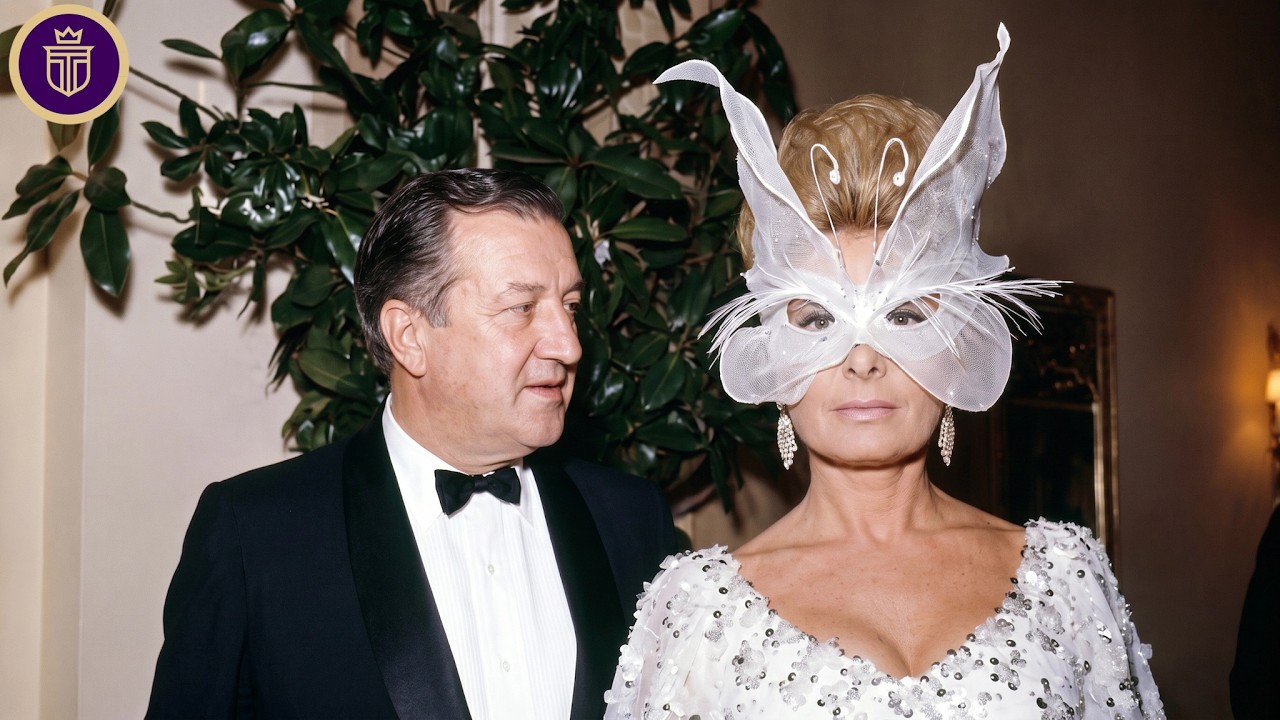
The woman in that tent had arrived in Detroit four years earlier as an international curiosity with no clear title, a puzzling previous marriage, and a birth date that changed depending on which newspaper one read. She left it as one of the most photographed hostesses in international society, a permanent fixture on the best-dressed lists, and the closest foreign friend of Imelda Marcos. And when her marriage collapsed, she did something unexpected for a woman in her position: she stood in a court of law and argued publicly over furniture, snuffboxes, and the precise financial value of her own signature. Eight years later, after her former husband had been buried and his fortune locked inside a Florida trust, she came back to claim what remained.
Maria Cristina Vettore was born in a stone house in a small valley near Vicenza, Italy, and her origins were never precisely agreed upon. American gossip columnists spent nearly four years in the early 1960s speculating about a mysterious European aristocrat who had captured the attention of the most powerful industrialist in the United States. When the press finally obtained a photograph, it turned out the aristocrat was not an aristocrat at all. Time magazine noted with amusement that the papers had at last published pictures of the countess, who was not a countess but Maria Cristina Vettore Austin.
The man she had captured was Henry Ford II, grandson of the founder and chairman of a company whose name decorated buildings the way other family names decorated currency. By 1960, his wealth was beyond explanation: the Model T, the assembly lines, a company building cars on four continents. His assets included the 76-room mansion in Grosse Pointe Farms, a Palm Beach house later valued by the probate court at a million dollars, an 18th-century estate in the English countryside near Henley-on-Thames, jewelry, club memberships, and a collection of jeweled snuffboxes that would one day become the most ridiculed exhibit in an American divorce case. What he lacked was a wife willing to go anywhere.
The divorced Italian he met at a party in Paris that year offered him something different: a life spent in constant motion. Within two years, the American magazines that had crowned her a countess were describing her as a corporate asset. The company in Dearborn was content to let them. For the next decade, she traveled almost nonstop with heads of state and their wives while her husband remained in Michigan.
The companion who eventually unraveled the marriage was not a man. It was the First Lady of the Philippines. By the early 1970s, Imelda Marcos and Cristina Ford were close enough that American diplomats logged their friendship in confidential cables. In February 1975, police outside Santa Barbara stopped a Ford Granada driving the wrong way down a street.
The driver was Henry Ford II, then 57 and still running the company. He failed a sobriety test and was held in jail for about four hours on a charge of drunk driving. In the passenger seat sat a 35-year-old model from Grosse Pointe named Kathy DuRoss, who had appeared in Ford advertisements and was described by police as not intoxicated. He later paid a fine and lost his license.
When asked about the incident, he gave the only public statement he would ever make on the subject, five words that followed his name in every later account of his life: Never complain, never explain. His wife was not in the country. Cristina Ford read about her husband’s arrest with another woman while she was in Kathmandu, Nepal, attending the coronation of King Birendra with Imelda Marcos. Lee Iacocca, then president of Ford, later recalled that everyone at the company knew the marriage was collapsing.
For Cristina, reading the news in a Nepalese newspaper was the end of any pretense that her absence was an arrangement rather than an emptiness. She did not act immediately. In January 1976, a lawyer in Grosse Pointe Farms confirmed what the American trade press had long assumed: the Fords had separated. Then the story stopped developing for two years.
In December 1977, Cristina Ford filed for legal separation in Wayne County Circuit Court in Detroit. She accused her husband of planning to sell or transfer a large portion of their joint assets and asked the court to stop him. The filing set the tone for everything that followed: from then on, her story was no longer about parties but about the inventory of possessions. The divorce came before the same Detroit court in February 1980.
Reporters and photographers arrived from around the world. The only real issue was the size of the settlement. Henry had offered between three and five million dollars; she asked for far more. The couple avoided trial by reaching a settlement that kept both of them from testifying.
She was widely ridiculed after saying she felt an emotional attachment to every piece of property her estranged husband owned, particularly the jeweled boxes he was planning to auction. The settlement was reported inconsistently: English records said she received $16 million; Time estimated the cost to Ford at $15 million. The Chicago Tribune, which saw the actual property agreement, listed a different arrangement: a London residence, several apartments, furniture, clothing, furs, and jewelry, none of which would be disputed eight years later. Separately, she was awarded $9.
5 million in alimony, with most of it scheduled at $100,000 per quarter until June 1, 2001. Later that same year, Henry Ford II married Kathy DuRoss. Fortune later recorded that his daughters Charlotte and Anne boycotted the wedding. The bitterness that eventually reached a Florida courtroom began not with a will but with a guest list.
Henry Ford II died of pneumonia on September 29, 1987, at a Detroit hospital. He was 70. His widow and his children were at his side; Cristina Ford was not in that room. His will was filed in Palm Beach, Florida, in the first week of October 1987, disposing of an estate estimated at $250 million.
The bulk went to a private trust whose beneficiaries were not named. To his widow, Kathy DuRoss Ford, he left his clothes, jewelry, club memberships, cars, and insurance policies. The document never mentioned the woman he had been married to for eleven years. Her income depended on an obligation the will neither mentioned nor canceled.
So a Florida probate court had to determine whether a Michigan divorce agreement from seven years earlier remained enforceable. The trust was valued at $350 million. Kathy Ford was its sole beneficiary for life, under an agreement giving her one and a half million dollars a year plus investment income. Upon her death, the six grandchildren would inherit.
The document was written by a man who had seen his family fight and intended to make fighting impossible. It achieved the opposite within nine months. A bitter dispute broke out pitting Edsel and his sisters against Kathy DuRoss Ford. The conflict reignited a family feud that had begun when Charlotte and Anne boycotted the 1980 wedding.
Cristina Ford stopped receiving her quarterly payments. The $100,000 due on March 1, 1988, was not transferred. She had a settlement valid until 2001, an estate that said nothing, and a widow already fighting a war on another front. On Tuesday, April 19, 1988, she filed her claim in Palm Beach County, seeking $5.
4 million in alimony from the estate. Her lawyer in Detroit, Frank Donovan, immediately minimized the headline figure: only $1. 5 million was genuinely disputed, and the estate had already agreed to pay the rest. The real fight was about tax liability.
He also confirmed that the March payment had not arrived. On Monday, September 26, 1988, a last-minute settlement in the family dispute over the $350 million trust collapsed in open court. Two days later, in the same courtroom, the judge was scheduled to consider a motion to dismiss Cristina Ford’s claim entirely. The last week of September marked the point where every thread of the story converged in a single Florida court.
On Monday, the children and the widow watched their negotiated peace shatter over the appointment of a guardian for the minor grandchildren. By Thursday, the obstacle was resolved and the settlement was back on track. Every dollar paid to the second wife under the 1980 settlement was a dollar the third wife could not receive under the 1987 trust, and therefore a dollar the six grandchildren could not inherit. Two sets of claims on one fortune moved through the same court on the same schedule.
Three weeks later, the family war ended. On October 19, 1988, Kathy DuRoss Ford reached a settlement with the Ford family. It guaranteed her a minimum of $10. 5 million per year from the estate for life, drawn as three percent of the trust annually, plus title to several houses, including a Palm Beach residence that Christie’s would ultimately auction.
Cristina Ford’s own claim was resolved without any surviving contemporary record of the result. What can be said is that her lawyer publicly acknowledged that most of the claim was undisputed, that the argument was over taxes, and that he expected a resolution. What can also be said is that she was approaching sixty, twice divorced, living mainly in Europe, financially dependent on the diligence of a dead man’s executors. She had negotiated her security in 1980 against a schedule, and that schedule was the only asset she had left.
For the final two decades of her life, Cristina Ford faded from the American press that had made her. The town of Val Liona records that those who knew her in the community of Grancona knew her as a benefactor, one who for years made substantial donations to the parish through its priest. The house where she was born, on the street now named for De Gasperi, stands empty and visible from the regional road near a camper parking area. Her death is recorded as December 25, 2008, in Rome, at age seventy-nine.
Another structured biographical record gives March 22, 2001. The woman remembered as Mrs. Henry Ford the Second in auction catalogs is the model who sat in the passenger seat of the Granada. If one strips away the title invented by columnists and the marriage they mythologized, what remains in the documentary record is a woman who understood the machinery of great American wealth better than the family that owned it.
In December 1977, she realized that fortune could be transferred faster than a wife could sue, so she went to court to freeze it before negotiations began. She understood that a settlement is an itemized list, not a gesture, and she was mocked by the American press for saying so out loud over a collection of snuffboxes. In the spring of 1988, she recognized that an alimony agreement becomes worthless the moment a dead man’s executors decide it is optional, so she sued the estate within seven months of his death. Her claim was to enforce a contract she had already signed.
The difference in coverage was not the merits of the claims, but the permanence of her title, which had never been real. The Ford Motor Company was glad to have her called an ambassador while she was useful. When the marriage ended, the value assigned to that decade was a quarterly check with an expiration date. The assets she had helped make attractive and photographed remained inside the family trust.
The house on Via De Gasperi still stands, still empty, still marked on a local tourist map as the birthplace of a woman the internet cannot even agree on the date of her death.