She had 186 dollars in her pocket and one last errand before the weekend began. Eighteen-year-old Michelle Martino attended a choir dinner that evening, then drove to Westdale Mall in Cedar Rapids, Iowa, around 7:30 p. m. to buy a winter coat with money her mother had given her.
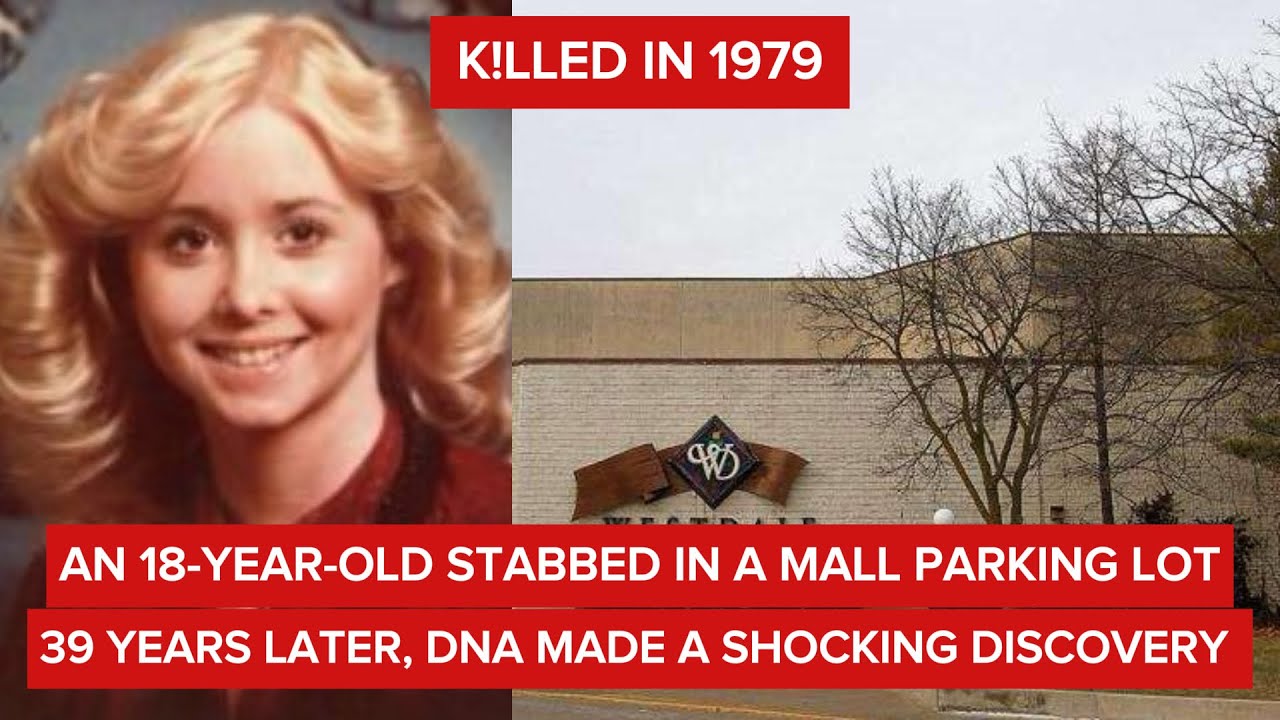
She was a senior at Kennedy High School, a girl with plans. She had been accepted to Iowa State University to study interior design. She was a twirler, a choir member, a theater performer, the kind of person who drew attention the moment she walked into a room. It was said her beauty and stylish clothes caused friction with other girls her age, a kind of envy that shadowed some people through high school without their ever seeking it.
She had done nothing wrong. She had 186 dollars, a parking lot, and a coat to buy. Around 4 a. m.
on December 20, 1979, her body was found in the passenger footwell of her family’s car, parked at Westdale Mall. She had not been robbed. The 186 dollars was still there. She had not been sexually assaulted.
She had been stabbed 29 times in the face, neck, and chest, and her hands carried deep defensive wounds from fighting off the blade. Traces of rubber gloves at the scene pointed to a planned, deliberate attack. In the days before, she had reportedly expressed fears that she was being followed. Whoever came at her in that car was prepared.
Michelle fought back hard enough to wound her attacker and draw his blood. That blood, which soaked into the fabric of her dress and transferred to the transmission of the family Buick, remained in the car for 27 years before anyone understood its value. Cedar Rapids police worked the case from that first morning. A former boyfriend was examined and quickly cleared.
Other leads surfaced and faded. By 1986, the investigation had effectively stalled, not from a lack of effort but because there was nothing left to try. The files were closed and the case went cold. Janet, Michelle’s mother, told a Cedar Rapids television station in 1987 that she had cried a great deal, watched from windows through the night hours, and talked to herself without knowing what to do.
She said she had to pray. The case stayed cold for another 20 years after that. In 2006, a cold case investigator named Doug Larson was reviewing Michelle’s file when he found something that had been overlooked. Blood on the transmission of the Buick and on Michelle’s dress had never been fully analyzed.
Further lab testing confirmed it was male DNA, not Michelle’s, but the killer’s. The profile was entered into CODIS, the FBI’s national DNA database, but no match came back. The killer had never been arrested. His DNA was not in the system.
The profile sat there, complete and precise, connected to no name. In 2017, Cedar Rapids police reached out to Parabon NanoLabs in Reston, Virginia. Using the crime scene DNA, Parabon built a predictive physical profile, identifying ancestry and the color of eyes, hair, skin, and face shape. The department released composite images to the public in May 2017.
Tips followed. None led anywhere. The composite was a face built from biology alone, with no associated memory, no name, no address. Then Parabon told investigators about a second technique, the one that had cracked the Golden State Killer case only months earlier.
Genetic genealogy. The suspect’s DNA profile was uploaded to GEDmatch, a public genealogy database where people voluntarily submit their DNA to trace family history. The database returned one person sharing enough genetic markers with the unknown suspect to suggest a close second cousin. That was enough.
Investigators built a family tree starting from four great-great-grandparent couples of that woman, then began systematically eliminating branches through DNA collection and exclusion testing. One branch led to another. One cousin led to another. The trail led from cousin to three siblings raised in Manchester, Iowa, a small town about an hour northeast of Cedar Rapids.
Investigators placed the three brothers under surveillance. They needed to obtain their DNA without revealing why. On October 29, 2018, an investigator watching one of the brothers saw him drink several sodas through a plastic straw at a restaurant. The straw was thrown in the trash.
The investigator retrieved it. The DNA on that straw was sent to a lab. The full profile extracted from it matched the crime scene sample at every genetic location tested. Experts testified at trial that only an identical twin could produce such a match.
The probability of finding Burns’s DNA profile among unrelated individuals was less than 1 in 100 billion. The man drinking soda through a straw in Manchester, Iowa, a local business owner of 64 who seemed ordinary in every public respect, was Jerry Lynn Burns. He had been 25 years old in December 1979. He had no prior connection to Michelle Martino in any record investigators could find.
No relationship, no history, no overlap. He was simply in a parking lot in Cedar Rapids on a winter evening 40 years before, and he had gone to that car prepared. On December 19, 2018, exactly 39 years to the day after Michelle was killed, investigators went to Burns’s place of business in Manchester and interviewed him. He refused to voluntarily provide a DNA sample but was compelled to give one under a search warrant.
He insisted he did not know Michelle and had not been there when she died. He showed almost no emotion throughout the interview, even when told he was under arrest. When asked repeatedly whether he had killed anyone that night in 1979, Burns gave the same answer every time. Check the DNA.
They did. It matched. A later search warrant executed on his computer revealed searches relating to blonde girls and assaults. His phone, when examined, showed no browsing history at all, indicating it had been used only for calls and texts for as far back as investigators could trace.
On February 24, 2020, after three hours of deliberation, the jury convicted Jerry Lynn Burns of first-degree murder. On August 7, 2020, he was sentenced to life in prison without the possibility of parole. His lawyers, including famed defense attorney Kathleen Zellner, appealed the conviction, arguing that collecting DNA from a discarded straw without a warrant violated his constitutional rights. The Iowa Supreme Court rejected the appeal in March 2023.
He remains in custody at Anamosa State Penitentiary. John Stonebraker, Michelle’s brother-in-law, said after the sentencing that her defensive wounds made her her own best witness. The wounds on her hands, proof that she fought, that she did not give in easily, that she left a trace of his blood in those final moments, preserved the only evidence that mattered. She was 18 years old, with 186 dollars in her pocket and one last errand.
She fought fiercely that night to make sure the truth stayed alive.