The most scrutinized marriage of the twentieth century produced its defining image in January 1998, not in a courtroom or a scandal sheet, but on a beach at Martha’s Vineyard. The photograph showed the three of them walking: Chelsea Clinton between her parents, serving as the buffer they could not be for each other. Every picture desk in America ran it because the image told the story without a line of copy. What happened inside that house stayed inside that house, and the public has been interpreting the walk ever since.
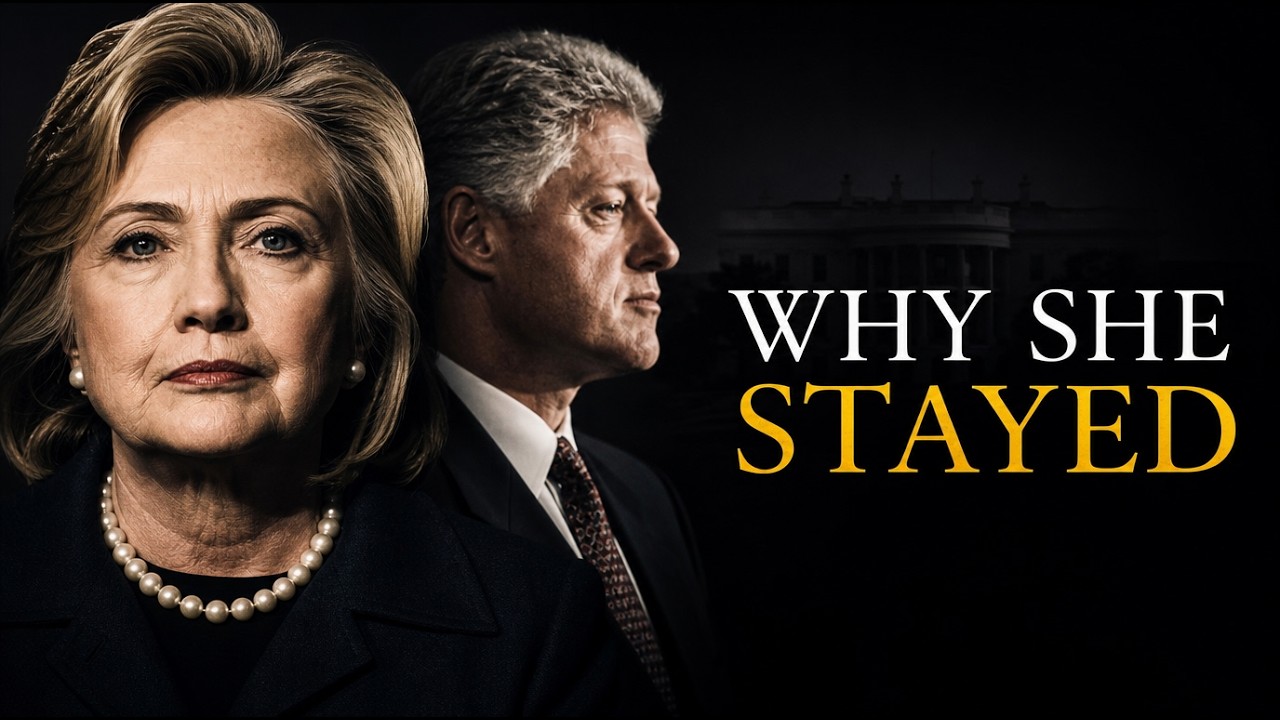
The story began decades earlier at Yale Law School, where a disciplined Midwesterner with a frightening intellect met a young Arkansas charm artist who could talk his way into any room and then talk the room into whatever he wanted. By his own later account, Bill Clinton understood her better than anyone alive and made her laugh in a way nobody else managed. In her memoir Living History, Hillary Clinton reached back past all the wreckage to point to a conversation her husband started in the spring of 1971. The bond began as something real, and the working currency of that marriage was talk.
In January 1992, the tabloid Star ran the story that should have ended him. Jennifer Flowers, an Arkansas state employee, claimed a twelve-year affair with the sitting governor, who was at that moment chasing the Democratic presidential nomination. Primary campaigns die of such stories. But the Clintons chose national television instead of hiding.
On Sunday, January 26, with Super Bowl 26 winding down and the country still on the channel, CBS handed the couple a couch and a camera on 60 Minutes. Bill Clinton conceded on air that he had caused pain inside his marriage. Then his wife delivered the sentence that would trail her for the rest of her public life: she refused to be some little woman standing by her man. She sat on that couch, she said, because she loved him, respected him, and honored what the two had come through together.
Historians generally credit that broadcast with saving his candidacy. The marriage did not merely survive the primaries; it rescued them. America that night met a co-counsel who had just argued the case herself before the largest jury available in national life. Once a marriage becomes load-bearing for a campaign, walking out stops being a private act and becomes a demolition with a body count: staff, donors, a party apparatus, a policy agenda, a child.
The decision never got to be simple again. On May 6, 1994, Paula Jones, another former Arkansas state employee, filed a civil sexual harassment suit against the sitting president. The coverage treated it as a legal headache rather than a marital one, but the filing worked like a can opener. The Jones case built the machinery that later allowed independent counsel Kenneth Starr to put the president under subpoena and question him about his private sexual behavior.
A tabloid story could be survived by sitting on a couch and looking sincere. A federal subpoena does not care how sincere anybody looks. The crisis playbook that had worked so beautifully in January 1992 turned into scrap. A marriage performed live on national television would be worth nothing in a room where sworn testimony is the only currency accepted.
Mid-January 1998, the story broke first on the Drudge Report and then in the Washington Post: the president under investigation over an alleged sexual relationship with a twenty-two-year-old White House intern, along with the possibility that he had pushed someone to lie under oath. Monica Lewinsky’s name entered the American language within a week. For the seven months that followed, Bill Clinton denied all of it, to the public, to his own cabinet, and to his wife. That number, seven months, does more work in this story than any other figure in it.
On January 27, with the thing still detonating, Hillary Clinton went on NBC’s Today show and pinned the scandal on a vast right-wing conspiracy built to destroy her husband’s presidency. The phrase lodged itself in the political vocabulary and has never come out. She spoke that morning as a wife defending a man who had looked her in the face and lied. She also spoke as the most effective surrogate the White House had, and nobody alive could separate those two roles in real time, possibly including her.
Whether she believed him remains the most violently contested question in the entire literature. One camp reads her as a woman deceived by a virtuoso liar, a reading her own memoir supports. Another camp reads her as a professional operator who picked the defense most likely to keep the presidency breathing. The Diane Blair archive deserves a word here, because it is close to the only material in this story written by someone with nothing to sell.
Blair, Clinton’s closest confidant, kept a contemporaneous private diary. Historians working from it, most of all Carl Bernstein, come away describing a woman in real shock and real grief through 1998 rather than a strategist running a play. Not proof, but notes taken by a friend at the time carry a different weight than a memoir published years later by a woman with a career to protect. By her own account, the worst morning of the marriage arrived on August 15, 1998, two days before Bill Clinton was due in front of a federal grand jury.
He told his wife that the affair had happened. Everything she had spent seven months defending in public collapsed inside a single conversation, and the collapse came with a clock attached. On August 17 he testified, and that night went on national television to admit a relationship he described as inappropriate. The country received the confession as a broadcast.
His wife had received it roughly forty-eight hours earlier in private. The most private conversation of a thirty-year marriage had been scheduled by a court. In Living History, she describes herself as dumbfounded, heartbroken, and outraged that she had believed him at all. The arithmetic of the humiliation runs clear: not just the betrayal, but the seven months of her own credibility spent covering it on camera, under her own name, in front of everyone she had ever asked to trust her.
Somewhere in the weeks that followed, with the House assembling articles of impeachment and her husband’s presidency hanging on a vote count, Hillary Clinton decided not to file for divorce. No document explaining that choice has ever surfaced. What historians agree on is the consequence: her refusal to leave preserved the moral and political capital he needed to survive removal from office. Take that away in the autumn of 1998, and the arithmetic in the Senate starts looking very different.
One frame gets skipped in nearly every cable segment ever aired about this marriage because political reporters own no working vocabulary for religion. Hillary Clinton is a Methodist, not the Christmas-and-Easter kind. Several biographers treat her United Methodism as one of the fixed points of her adult life, a tradition that leans hard on grace, forgiveness, and the covenant sitting underneath a marriage rather than the feelings floating on top of it. Under that theology, forgiveness is not a prize the wronged party awards once the offender has earned it back; it is an obligation running in one direction.
During the 1998 crisis, she went to her clergy, consulting regularly with religious figures including Reverend Bill Shillady and Reverend J. Philip Wageman. The frame rests on second-hand reporting rather than documentation; the pastoral counseling sits sealed behind clerical confidentiality. What can be said is narrower and still worth saying: a woman with those beliefs, in that much pain, went looking for her ministers instead of her divorce attorney, in the same weeks the House was drafting articles against her husband.
The cynical reading deserves a fair hearing, because serious reporters assembled it out of insider accounts rather than spite. Jeff Gerth and Don Van Natta Jr. in Her Way describe something closer to a corporation with two principals than a household. The argument holds that the Clintons’ ambitions fused into a single object years before 1998.
He needed her discipline and strategic mind; she needed his political talent to move the policy she cared about and eventually to launch a career of her own. Under that reading, divorce in 1998 looks like liquidating a twenty-five-year joint venture at the absolute bottom of the market. Sally Bedell Smith’s For Love of Politics runs colder still, arguing that a shared obsession with policy and power functioned as the connective tissue that let the marriage outlast its interpersonal failures. The sourcing thins out badly right where the theory gets juiciest, and the researchers themselves file the claim about her 1998 strategic calculation under speculation rather than documented fact.
By 1999 she had become a Rorschach test with a Secret Service detail. One line of feminist criticism reads her decision as a betrayal, holding that she subordinated her own dignity to her husband’s survival. The counterargument runs that refusing to be driven out of her own marriage and public life by his political enemies was itself an act of agency, and that she converted the position of a grieved spouse into the political capital that won her a United States Senate seat in 2000. Less than two years after the acquittal, the wronged wife of the impeachment coverage held office in her own name with her own mandate.
The outcome is on paper. The intention behind it is not, and no document has ever surfaced showing what she was calculating that autumn. In October 2019, Hillary Clinton sat down with Good Morning America and was asked to name the gutsiest thing she had ever done. She had a deep bench to choose from: a Senate seat pulled out of the wreckage, three memoirs, an entire public career rebuilt after a humiliation broadcast into every house in the country.
She named staying in her marriage, and she used that word specifically. Calling it gutsy inverts the entire national assumption. The country had spent twenty-seven years treating what she did as passivity and weakness. She explained in What Happened the actual test she applied on the days she wasn’t sure the marriage should survive: did she still love him, and could she stay without turning into someone she wouldn’t recognize, warped by anger or resentment?
The answer, every time she ran it, came back yes. That is the whole record, and it is all we are getting. The rest, the part everyone argues about with such total confidence, stayed behind a door that a special prosecutor, a Congress, and a quarter century of speculation never managed to open.