In a house in Queens, on January 14, 1979, Tommy DeSimone walked through a door expecting the ceremony he had chased his entire life: wine, cigars, and the ritual of being made. Instead, he was met with bullets. The popular story, the one told in Goodfellas, holds that Tommy died because of a barroom beating nine years earlier, because of Billy Bats. But that version omits the man who actually signed the death warrant.
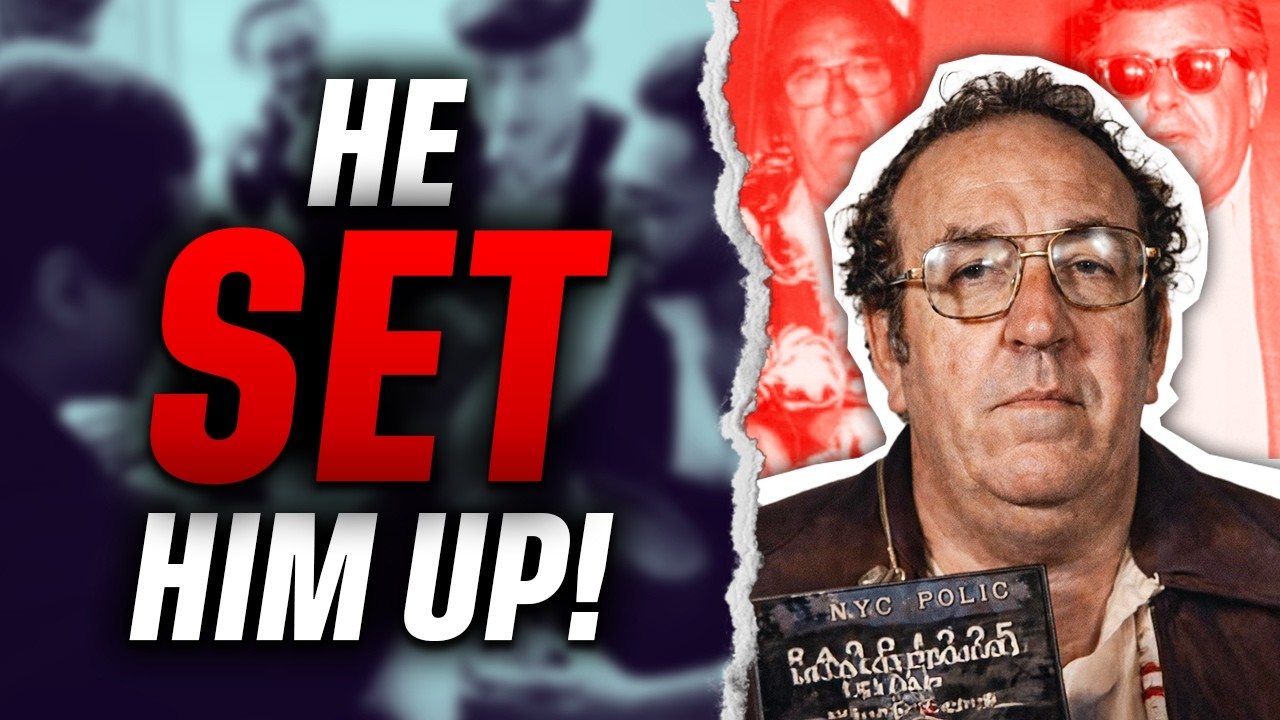
It was not a Gambino. It was the man Tommy called his boss, the man who smiled at him, vouched for him, and then stepped aside. Paul Vario rarely receives the attention he deserves, and that is deliberate. In the film, he is portrayed as a quiet, dignified patriarch, a man of calm authority and few words.
That version is partially accurate, but it misses the single most important thing about him. Paul Vario was a survivor, not a warrior. In the mafia, that is the rarest quality of all. Born in Brooklyn in 1924, Vario spent four decades working his way through the Lucchese crime family.
He did not climb; he worked. Climbers make noise and chase titles. Vario did the opposite. He kept his head down, kept earning, and kept his name out of conversations that did not need to include it.
By the 1970s, he was a capo with his own crew and carefully maintained political relationships. His operations ran through Brooklyn and Queens: loan sharking, gambling, stolen goods, and airport hijackings out of Kennedy. He had people in unions, inside cargo terminals, and in legitimate businesses feeding him information. Vario built an ecosystem and sat at its center, invisible to everyone except those who needed to know he existed.
His philosophy could be reduced to three rules: stay useful, stay invisible, stay alive. For four decades, that philosophy worked. His relationship with Jimmy Burke was the centerpiece of everything. Burke was Irish and could never be made, but he was one of the most talented earners in New York organized crime.
Vario was too smart to let ethnicity interfere with a profitable partnership. Burke generated income, loyalty, and results on scores other crews could not pull off. In exchange, Vario provided the one thing Burke could not generate for himself: cover, the family umbrella, the political protection that let him operate without interference. Henry Hill fit into that structure as the connector, linking Burke to Vario when Hill was still a teenager.
Tommy DeSimone was different, and Vario knew it from the beginning. Tommy was valuable the way a loaded gun with a broken safety is valuable: extremely useful, extremely dangerous, and eventually inevitable. Tommy was a killer, not a strategic one. He killed when he felt like it.
He killed bartenders, made men, associates, and people who looked at him wrong. His violence was not a tool; it was a compulsion. But that compulsion made him useful in specific circumstances. Hijackings needed enforcers.
Debt collections needed men who did not hesitate. Tommy filled that role completely, and Vario kept him around because Tommy produced. But here is the distinction that the movie glosses over entirely. Tommy was useful, never protected.
Those are two completely different things. A useful man gets work. A protected man gets defended when the politics turn against him. In Vario’s world, men had value as long as their contribution outweighed their cost.
The moment that equation flipped, loyalty evaporated. In organized crime, every unsanctioned killing goes on a ledger, and Tommy’s was catastrophic. On June 11, 1970, at the Bamboo Lounge, Tommy beat Billy Bats unconscious. Bats was a made man in the Gambino family.
Jimmy Burke helped finish him, and they buried the body upstate. The Gambinos suspected Tommy immediately, but without a body or proof, they could not move against another family’s associate without triggering a war. So they waited and built the case slowly. Then, on December 18, 1974, Tommy killed Ronald Jerothe, a Gambino associate connected directly to John Gotti’s crew.
The motive was personal, a dispute over a woman. The result was not disputed. Tommy went to Jerothe’s apartment and shot him. Every time Tommy killed a Gambino-connected man without permission, that debt landed on Vario’s desk, because Tommy operated under Vario’s umbrella.
In the protocol of the five families, the capo is responsible for his men. While Tommy killed without consequence, Vario accumulated political debt he never agreed to carry. The Gambinos understood something important. Eventually, Tommy would make himself too expensive to protect, and when that day came, they would not need to fight.
They would only need to ask. On December 11, 1978, six armed men robbed Kennedy Airport of $5. 8 million in cash and $850,000 in jewelry, the biggest cash robbery in American history. Tommy DeSimone was in the middle of it.
The heist should have been his greatest score. Instead, it accelerated everything working against him. The heist went perfectly. The cleanup did not.
Parnell Stacks Edwards was given one job: drive the van to a junkyard in New Jersey and have it crushed. Instead, he got high on cocaine and left the van parked on a street in Ozone Park. Three days later, police found it. FBI technicians pulled fingerprints from the steering wheel, the door handles, and the gear shift.
The entire crew became visible in a way Jimmy Burke’s operation never allowed before. Burke made the calculation quickly. Dead men do not testify. He started eliminating everyone connected to the heist.
Tommy participated in those killings. He walked into Stacks Edwards’ apartment on December 18, 1978, raised a . 38 caliber revolver, and fired six times. Five shots hit Stacks.
One missed. The whole thing took eleven seconds. For Vario, the post-Lufthansa period was a nightmare in slow motion. His crew was being dismantled by federal investigators.
His most reliable earner, Burke, was headed to prison. And his most volatile associate, Tommy, was now on the FBI’s radar for multiple murders. Tommy had not become more powerful after Lufthansa. He had become more exposed.
Sometime in late 1978 or early 1979, the Gambinos made their move, not with violence, but with protocol. In the mafia, you do not announce you are going to kill another family’s guy. You communicate through proper channels that a problem exists. The Gambinos’ position was simple.
Tommy had killed two of their men. One was made. The debt was nine years old for Bats, four years old for Jerothe. They were prepared to collect, but they could not act unilaterally against a Lucchese associate.
They needed Vario’s silence at minimum, his cooperation at best. Vario had to do the math. He could defend Tommy and preserve his life, but that would cost the goodwill of one of the most powerful families in New York, and for what? For an associate drawing FBI heat?
For a man who could not control himself? Or he could step aside. That option solved four problems at once. It repaid the Gambino debt.
It eliminated a liability. It removed an FBI heat magnet from his orbit. And it preserved the political relationships he had spent forty years building. For Paul Vario, that was not a difficult decision.
It was arithmetic. The Gambinos could not have killed Tommy without Vario’s silence. That is not speculation; that is how the protocol works. Vario did not pull the trigger.
He did not order the hit. He simply declined to prevent it. And in the mafia, declining to prevent something is the same as authorizing it. In return, he cleared a nine-year political debt, removed the most volatile member of his crew, distanced himself from the Lufthansa investigation, and sent a message to every associate under his umbrella: cross the limits, and the umbrella disappears.
Tommy thought loyalty was personal. He thought that because he had killed and earned and bled for Vario, Vario would protect him as family. But Tommy was not family. Tommy was an asset.
And when the asset’s liabilities exceeded its value, Vario wrote it off. There was no confrontation, no accusation, no warning. Just a door that does not open when you need it to. Paul Vario went to prison in 1979 for obstruction of justice connected to Henry Hill’s activities.
He was released, then convicted again in the early 1980s, largely because of Henry Hill’s cooperation with federal authorities after Hill entered witness protection in 1980. Vario died in federal prison in 1988. He never publicly discussed Tommy DeSimone. Tommy’s body was never found.
He was twenty-eight years old. The real story is not Tommy dying for Billy Bats. It is a capo deciding that one of his men had become more expensive than he was worth. Tommy confused being used with being valued.
That confusion cost him everything. The real danger in that world is not the rival crew or the FBI. It is the quiet man at the top who has been doing math on your value since the day he met you.
And the day the numbers stop working in your favor, you walk through a door that does not lead where you think it does.