On the morning of December 14, 1991, sixteen-year-old Sarah Yarbrough rushed out of her house in Federal Way, Washington, with hot rollers still in her hair and the keys to her father’s car in her hand. She wore her drill team uniform because she thought she was late for a Saturday morning competition, and she did not want to let her teammates down. She pulled into the parking lot of Federal Way High School just after eight o’clock, stepped out, and looked around. No one was there.
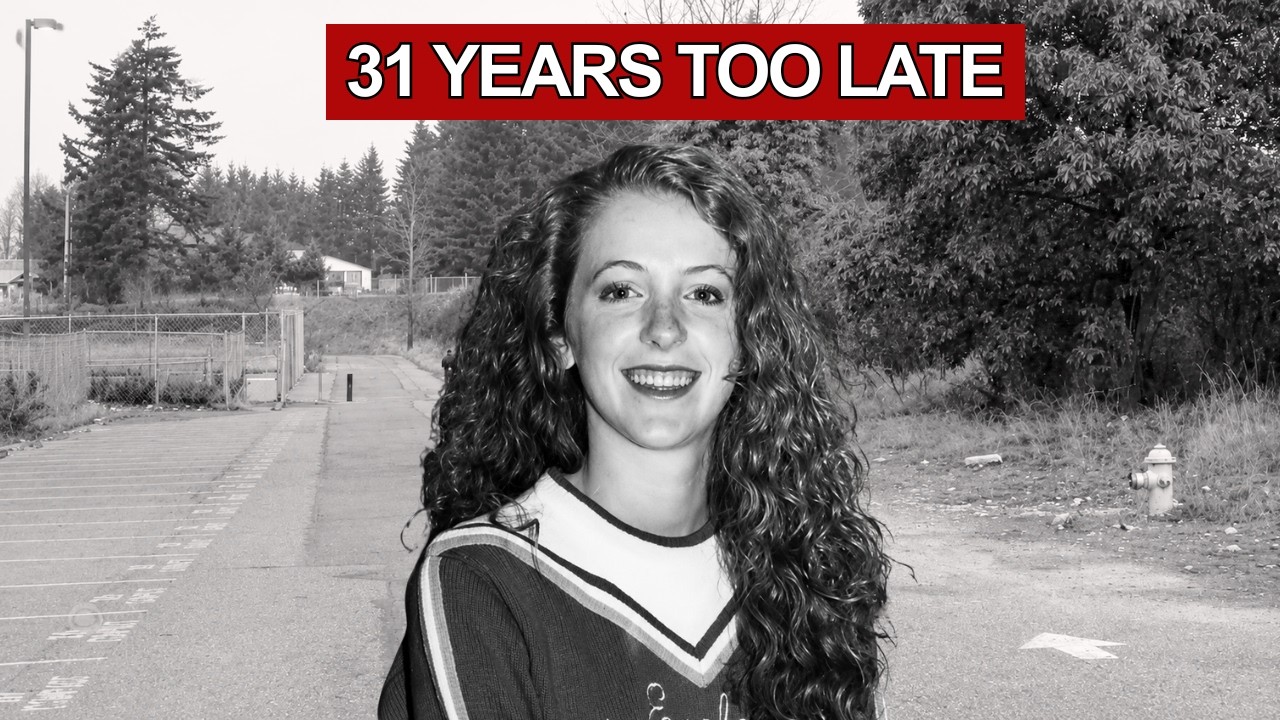
She was not late. She was a full hour early. That hour would prove fatal. Later that morning, two boys, aged twelve and thirteen, were cutting across the campus on their way to go sledding.
They saw a man emerge suddenly from behind a hill at the edge of the school grounds and hurry away. Something about his movement made them decide not to approach him. Instead, they went to the bushes. There they found Sarah Yarbrough, nearly naked and motionless among the dense undergrowth, about 300 feet from her car.
She was still wearing her drill team uniform, her tights pulled up and wrapped around her neck. The medical examiner’s report confirmed what investigators could already see. She had been beaten. Her tights had been used as a ligature to strangle her, and the cause of death was a combination of ligature and manual strangulation.
Her killer had left a full male DNA profile from semen found on her clothing. There had been no intercourse, but the crime was not impulsive. The man who attacked her had planned it. He was Patrick Leon Nicholas, a man who had been convicted of attempted rape eight years earlier and should have remained in prison until 1993.
He had been released early on parole. Free again, he had been riding a bus line that regularly passed Federal Way High School, observing the campus and learning its rhythms. On that Saturday morning, he saw a sixteen-year-old girl standing alone in an empty lot, and he acted. He attacked her and left her in the bushes, then walked past the two boys and disappeared into a suburban Saturday morning while everyone who knew Sarah was still on their way to school.
The case went cold, but it never closed. Over the next thirty-one years, King County Sheriff’s Office investigators followed more than four thousand leads. Suspects were interviewed and cleared. Evidence was reexamined as technology improved.
In 2011, forensic scientists were able to determine physical characteristics and ancestry from the DNA profile, producing a picture of the suspect from his genetic material alone, but still no name. Every advance in forensic technology brought them closer to a face, but never to a name. The man they were searching for had never been convicted of a crime requiring his DNA to be entered into any searchable database. Sarah’s mother, Laura Yarbrough, described the decades of waiting.
She said her family had lived those thirty years wondering whether and when someone would be caught, and knowing it was like a sword of Damocles hanging over their heads, never knowing when it might fall. Even when she lost hope at times, she said, the detectives never did. The deeper tragedy of the case lay in the fact that the system had failed Sarah long before December 14, 1991. In 1983, Patrick Nicholas had approached a young woman named Ann Crony in Benton County, Washington.
She was near her car, and he put a knife to her throat through the open driver’s window and ordered her to undress. He then forced her to walk toward a river. She jumped in and swam away, later saying she swam with a strength she had never used in her life. She survived.
Nicholas was convicted of first-degree attempted rape and sentenced to remain in prison until 1993. He was released early, on parole, and he was on parole when he killed Sarah Yarbrough. Ann Crony stood in a King County courtroom more than forty years after the attack and said the system had let her down, and had let Sarah down. Nicholas continued committing sexual assaults after Sarah’s death, including a 1993 arrest for harassing a child, two years after the murder.
His pattern across multiple attacks was consistent: finding a woman alone near her car, approaching with a knife, forcing her to walk to an isolated area. The system knew. And still the system let him out. The breakthrough came in 2019, twenty-eight years after the murder.
King County investigators arranged for forensic genetic genealogy analysis of the preserved DNA. Genealogists built family trees from partial matches in public genealogy databases, narrowing the suspects branch by branch. The analysis identified two brothers. The older brother’s DNA was already in the CODIS database from an unrelated case, and he was immediately excluded.
That left the younger brother, Patrick Leon Nicholas, of Covington, Washington, then fifty-five years old, living just six miles from Federal Way High School. Investigators placed him under surveillance and watched him live his ordinary life. Over several days, they collected items he discarded, including cigarettes and a tissue. The DNA from those discarded items was sent to the Washington State Patrol crime laboratory.
On October 2, 2019, the lab confirmed that the DNA from the cigarettes matched the DNA found on Sarah Yarbrough’s clothing in 1991, a complete match. That same day, investigators found Nicholas at a company in Kent, Washington, and arrested him. Bail was set at five million dollars. The trial of Patrick Leon Nicholas began in the spring of 2023 in King County.
For more than two and a half weeks, the jury heard evidence gathered over thirty-one years of investigation. They heard about the crime scene, the DNA, his prior convictions, and the predatory pattern that prosecutors argued had defined his adult life. Senior Deputy Prosecutor Mary Barbosa told the jury that Nicholas was a serial sex offender who had killed Sarah Yarbrough while on parole for attempting to rape another woman. She presented his method from four previous attacks: a knife to the throat, the victim alone near a car, and being forced to walk to an isolated area.
She argued that this was exactly what happened to Sarah. On May 10, 2023, the jury convicted Patrick Leon Nicholas of first-degree murder and second-degree murder, both with sexual motivation. He showed no reaction. Sentencing came on May 25, 2023.
Before the judge pronounced the sentence, those who had lived with the details of the case for thirty-one years spoke. Andrew Yarbrough, Sarah’s younger brother, had been eleven years old when his sister was killed. He stood in the courtroom and described the pain of his father’s voice on the phone telling him Sarah was dead, and the sound of his parents crying behind the walls at night while he lay in his bed. Laura Yarbrough told the court she never had the chance to take Sarah shopping for a prom dress or a wedding dress, to see her fall in love, become a mother, or enjoy grandchildren.
She said her family had been changed forever and irrevocably. She said Nicholas was incapable of remorse or empathy and should spend the rest of his life in prison without parole. Then she added that after the sentence, standing outside the courthouse surrounded by news cameras, she intended to give him as little space in her thoughts as possible, because she did not believe he deserved her time or attention. A detective named Hutch, then nearly seventy years old, had worked the case.
He looked at Laura Yarbrough and apologized for how long it had taken. He spoke of a colleague, Detective Jim Doyan, who had also worked the case and had since died. He said that when his time came and he met Detective Doyan at the gate, Doyan would ask whether the case was solved, and he would tell him yes. The judge sentenced Patrick Leon Nicholas to 548 months, nearly forty-six years.
He showed no reaction and did not address the court. He planned to appeal. He was fifty-nine years old, and it was almost certain he would die in prison. Justice, when it finally came, came through the combination of persistent detective work, advancing forensic technology, and the refusal of a family to let a case fade into memory.
Laura Yarbrough told reporters that her goal throughout the trial, in everything, was to make sure no other woman was hurt or killed by Nicholas. It was not a request for revenge but a forward-looking, practical aim to prevent the same thing from happening to someone else’s daughter. She said her family would always miss Sarah, that they still missed her, and that the emptiness never becomes easier; you simply learn to live with it. She said you learn which chairs to avoid, which questions to turn away, and which dates on the calendar to prepare for.
You do not stop missing them. You just become better able to carry it. Sarah Yarbrough was sixteen years old, a honor student and a member of the drill team. She rushed out of her house on a Saturday morning with hot rollers in her hair because she loved what she was part of and did not want to let anyone down.
She drove her father’s car to school, arrived early, walked into a quiet parking lot, and stood there waiting. She was just three hundred feet from safety, but she never reached it. The system failed her years before that morning, when a convicted rapist was released early and returned to a world where Sarah Yarbrough was waiting, unaware.
And it took thirty-one years, a genetic genealogy match from a discarded cigarette, and the determination of detectives who refused to quit, for anyone to answer for it.