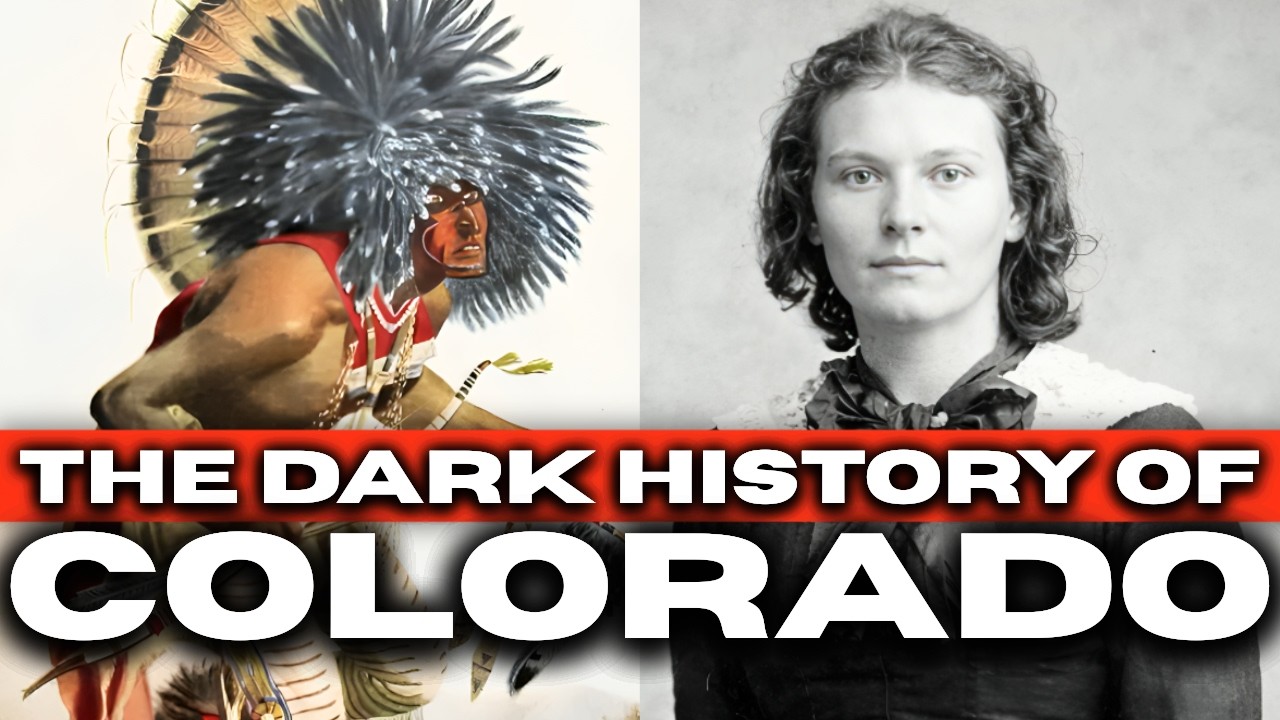
On July 11, 1869, in eastern Colorado, a young Cheyenne warrior known as Wolf with Plenty of Hair stood at the head of a small ravine on the open plains, watching the United States Army charge toward him. He unfastened the blue sash tied at his waist, let it fall into the dirt, and drove his long crooked lance through it, tethering himself to the ground. This was the signal of the Dog Soldiers, the Cheyenne warrior society that fought without retreat, that he was ready to die where he stood. Nearby, his chief, the legendary Tall Bull, prepared to defend his wives and sister.
Only minutes earlier, the Cheyenne village had been enjoying its midday meal. Now dead and dying warriors lay scattered across the ground while terrified women and children were being captured by soldiers. Tall Bull had ordered the survivors into the ravine, where he and his warriors planned to fight to the last man to protect their families. On the American side, Major General Eugene Carr led Army soldiers and scouts, including a young William Buffalo Bill Cody.
The attack smashed into the Cheyenne line, and Wolf with Plenty of Hair made his last stand. Dust and screams filled the air as hand-to-hand combat broke out in the cramped ravine. Warrior after warrior fell, their wives and children only yards away. This ambush was no random act of violence.
It was the result of years of escalating war between encroaching American settlers and the Cheyenne, fueled by the Sand Creek Massacre of 1864, when troops under Colonel John Chivington attacked a Cheyenne village believed to be on peaceful terms with the United States. Men, women, and children were killed in what became one of the darkest chapters in the history of the Old West. In the five years that followed, eastern Colorado became a deadly place for settlers. The events leading to the battle had begun six weeks earlier, on Sunday, May 30, at the home of Michael Haley near the Saline River.
Nineteen-year-old Eli Ziegler and his brother-in-law John Albertson had stopped there to visit Ziegler’s sister, Susanna Alderdice, and her four young children. Susanna’s husband, Thomas, was away on business, as was the husband of Bridget Cain, who stayed at the home with her two-month-old daughter. Haley had taken his own family to Fort Harker, believing Cheyenne raids were imminent. As the two men rode away, they spotted a group of horsemen.
Ziegler thought they were soldiers, but Albertson insisted they were Cheyenne. When the group split, half rode north and half charged directly at them. Ziegler turned the wagon and made a desperate attempt to escape. He later recounted that as the Cheyenne closed in, one warrior rode up and picked up the reins, holding the horses.
Ziegler and Albertson fled on foot, hid under a creek bank, and eventually found shelter behind a log, where they remained until late afternoon. Meanwhile, the other half of the war party, a band of Dog Soldiers under Tall Bull, followed Spillman Creek. They killed a Danish immigrant couple out for a Sunday stroll. Around two in the afternoon, they attacked George and Maria Weichel and their neighbor Fred Meigerhoff.
The two armed men fought a vicious running battle for three miles, covering Maria’s escape until they ran out of ammunition and were cut down. Maria was lifted onto a horse. The warriors then stopped to carry out a brutal ritual of abuse on the prairie. Elsewhere, the Cheyenne struck the Haley home.
Susanna Alderdice grabbed her four children and ran for the Saline River, with Bridget Cain following. The women almost reached the river undetected but were spotted. Bridget plunged over the bank and hid beneath an overhang, clutching her infant. Susanna was not so fortunate.
As the warriors closed in, she fell to the ground protecting her eight-month-old daughter, Alice, while her three young sons were struck down by arrows. She was then tied to a horse, still holding her baby. Two younger Cheyenne split off from the main groups and came upon Arthur Schmutz and John Strange, teenagers harvesting turnips. The warriors approached under the pretense of friendship, claiming to be Pawnee scouts.
Then one struck Strange in the head with a war club, killing him. Schmutz was hit by an arrow in the chest but ran, taking another arrow in the back before reaching the Strange homestead. The Strange brothers provided covering fire, and Schmutz collapsed inside the cabin, badly wounded. That night, Bridget Cain miraculously emerged from the river and made her way to a nearby cabin, still carrying her child.
Word of the raid spread, and local ranchers gathered to form a search party. The next morning, Ziegler and Albertson staggered into the camp of the 7th Cavalry and reported the attack to Lieutenant Edward Law. Ziegler begged for an immediate pursuit, but Law refused, saying he could not move without orders from Fort Harker. Ziegler described his disgust, noting the officer said he did not know how much damage the Cheyenne could have done.
The search party found the bodies of John Strange, the Danish couple, and the two men who had fought alongside Maria Weichel. Remarkably, four-year-old Willis Alderdice, Susanna’s son, was still alive, covered in wounds. A messenger was sent to request the camp surgeon’s help, but the surgeon refused to treat the boy. Despite this, Willis survived, enduring the extraction of an arrow at the hands of local men.
When Thomas Alderdice and his neighbor John Strange returned from their business trip, they were met with the news. A cousin of the Strange family delivered it bluntly: Strange’s boy was killed, and Alderdice’s family was all killed or captured. Alderdice buried his sons, attended to Willis, and then set out on his own to find his wife and child. He had served as an Army scout years before and knew he could not rely on the military.
On June 1, he took to the plains. After days of tracking, he found the Cheyenne camp but returned to the settlement for help. Lieutenant Law and the 7th Cavalry had moved on. Alderdice went to Fort Harker, arriving eighteen days after the attack, and requested a meeting with General John Schofield.
He was denied. He managed to speak briefly with General George Armstrong Custer, who promised to pass along his story but warned it might have no effect. A local newspaper, the Leavenworth Daily Commercial, ran a sympathetic story condemning the military’s inaction. The bad press led Schofield to meet with Alderdice, but to little effect.
The general argued the Cheyenne had almost certainly left the area and said a full company could not be sent on a fruitless search. He offered to send a telegram to General C. C. Augur at Fort Supply.
That was all he could do. Alderdice returned to the Cheyenne camp location and found it abandoned. Among the flattened grass where lodges had stood, he noticed something hanging from a tree. It was his infant daughter, killed by the Cheyenne and left there.
He buried her in the hard prairie ground, sick with grief. At Fort Supply, General Augur had received the telegram and ordered Major General Eugene Carr to take to the trail. Carr assembled his men, including his Pawnee scouts and William F. Cody, and moved out.
On July 11, nearly six weeks after the raid, Carr located the Cheyenne camp and attacked at noon. The village was caught completely by surprise. Tall Bull and his Dog Soldiers moved their families into the ravine, where they made their final stand. As the battle raged, Captain Sylvanus E.
Cushing of the 5th Cavalry rode into the village and found a young white woman crawling toward him, covered in blood, crying out in German. She was Maria Weichel, one of the captives. She had been shot in the back by her captors and left for dead. Cushing rushed her to the field hospital.
When questioned about Susanna Alderdice, Weichel said she was somewhere in the village. Thomas Alderdice, present with the army, searched every lodge for his wife. In the ravine, the fighting was brutal. The Dog Soldiers, tethered to the ground by their lance ropes, fought to the death.
The Pawnee scouts, longtime enemies of the Cheyenne, fell upon the warriors and their families with particular fury. Tall Bull watched his youngest wife killed early in the engagement. The Cheyenne were overwhelmed. Their horses were stampeded, cutting off escape.
Wolf with Plenty of Hair lay dead, his body pulling taut the rope that bound him to his lance. Tall Bull was killed, though accounts differ on who fired the shot. Cody claimed the kill, a claim he would later dramatize in his Wild West shows. Captain Frank North claimed it as well, though his journal entry for the day makes no mention of it.
By the end, only one Cheyenne in the ravine was left alive: Tall Bull’s youngest wife, Sundance Woman. She was taken prisoner. Susanna Alderdice was found after the fighting, dead, killed by a blow to the forehead from a war club and a bullet wound above her left eye. Sundance Woman later stated that Tall Bull had killed her.
Thomas Alderdice buried his wife near the battlefield. The soldiers burned the village, and among the ruins they found a necklace made of human fingers. Maria Weichel identified one of the rings as her husband’s wedding band. Carr’s report reached the front page of the New York Times within a week.
The Battle of Summit Springs was a devastating defeat for the Cheyenne. They never returned to the area, and, almost unheard of in their culture, refused to bury their dead. Lakota allies eventually traveled to the site to perform the burials. The surviving Dog Soldiers moved north, and many surrendered at Fort Supply over the following months.
Maria Weichel recovered, remarried, and gave birth to a healthy daughter. Carr received tragic news of his own: his five-month-old son had died, and he was relieved of his duties and sent home to St. Louis. Thomas Alderdice remarried and had more children.
His stepson Willis, the boy who survived with arrows in his back, walked with a limp for the rest of his life, carrying the scars of that day until his death in 1920. Alderdice refused to visit the site of the raid for forty-two years. When he finally returned in 1911, he could not find the graves of his sons.
He died in Conway, Kansas, in 1925, at the age of eighty-four.