Alexandra Feodorovna, the last Empress of Russia, began life far from the glittering court of St. Petersburg. She was born Alix of Hesse-Darmstadt, a princess from a modest German duchy. Her mother was Princess Alice, a daughter of Queen Victoria, but her early childhood was shattered by tragedy. In 1878, diphtheria swept through the family, killing both her younger sister May and her mother. Alix was only six years old.
The trauma changed her profoundly. She became deeply introverted and withdrawn, a shadow falling over her childhood. Her familiar toys were burned to prevent infection, leaving her isolated in the nursery. Queen Victoria stepped in as a surrogate mother, taking a very hands-on role in raising the young princess. Alix was brought up with solidly English tastes and a strict Victorian morality, a characteristic that would define her more than her German heritage.
In 1884, at the age of 12, Alix visited Russia for her sister’s wedding. There, she met Nicholas, the 16-year-old heir to the Russian throne. Within a few years, they were deeply in love. However, the match was not welcomed by either family. Queen Victoria worried about the dangers of the Russian court, while Nicholas’s parents, Tsar Alexander III and Empress Marie, disliked the idea of a modest, shy German princess marrying their son. They wanted a grander match for the heir to the vast Romanov empire.
Nicholas’s life changed abruptly in the autumn of 1894. He was summoned home to his father’s sickbed, and Alexander III died shortly after. Just a week after the funeral, Nicholas married Alexandra in a lavish ceremony at the Winter Palace. The couple shared a uniquely strong love, but Alexandra was thrust into a world she was completely unprepared for. She barely spoke Russian and was overwhelmed by the rigid protocol and opulence of the Russian court.
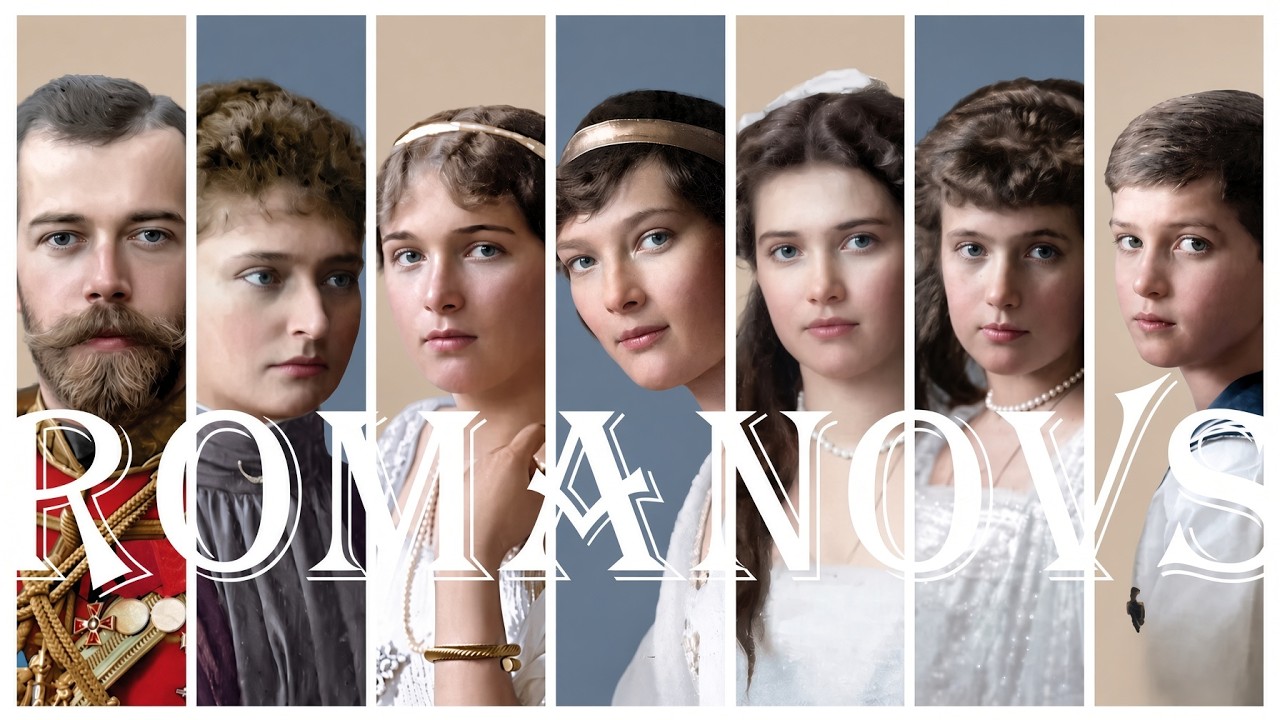
The new Tsarina struggled to cope. She was shy and easily mortified, often retreating to her bedroom to escape the pressures of society. Her mother-in-law, the Dowager Empress Marie, was a glamorous and sociable contrast, constantly reminding Alexandra of what she was not. The court was unimpressed with the new Empress, mocking her as gauche and awkward behind her back. In response, Alexandra retreated even further.
The couple found sanctuary at Tsarskoye Selo, a secluded royal estate south of the capital. There, they focused on their growing family. Alexandra gave birth to four daughters in quick succession: Olga in 1895, Tatiana in 1897, Maria in 1899, and Anastasia in 1901. Defying aristocratic convention, Alexandra insisted on raising her children herself, even breastfeeding them, which shocked the Russian nobility. The girls were given a modest, spartan upbringing, wearing hand-me-downs and living simple lives far removed from their immense wealth.
The four sisters, who called themselves OTMA from the initials of their names, had very different personalities. Olga was sensitive, independent, and compassionate. Tatiana was reserved, dutiful, and organized, often called "the governess" by her sisters. Maria was generous and warm, while Anastasia was the mischievous tomboy who loved playing pranks.
The family’s joy was overshadowed by the pressure on Alexandra to produce a male heir. On July 30, 1904, she finally gave birth to a son, Alexei. The capital erupted in celebration, but the joy was short-lived. Almost immediately, the baby began bleeding from his navel. Alexandra’s worst nightmare was realized: Alexei had hemophilia, the "royal disease" she had inherited from her grandmother, Queen Victoria. The condition was a death sentence at the time, and the secret had to be kept at all costs.

Alexei’s illness transformed the family dynamic. The four girls became secondary to their fragile brother, drawn into a life of caring and protecting him. The family’s isolation increased after the 1905 revolution, and the children rarely appeared in public. When Alexei suffered a severe accident at age three, Alexandra turned in desperation to a mystical healer named Grigori Rasputin. His prayers seemed to ease the boy’s pain, and Alexandra became convinced he was sent by God to save her son.
Rasputin’s influence over the Empress caused immense scandal. His crude manners, drunkenness, and affairs were notorious, and rumors swirled about his relationship with the Tsarina and her daughters. Alexandra instructed her daughters never to mention his name in public, keeping his visits a closely guarded family secret. The Romanov relations grew increasingly concerned, with Nicholas’s mother warning that the adventurer was ruining the dynasty.
In 1909, the girls enjoyed a rare taste of freedom during a family trip to Britain for the Cowes sailing regatta. They were allowed to shop and buy postcards, a revelation for girls who had never handled money or moved freely in public. But the trip was a brief respite. Back in Russia, Alexandra’s health deteriorated, and the family retreated further into their private world.
As the girls grew older, the search for suitable husbands began. Olga was horrified when Prince Carol of Romania was suggested as a match, and she and her sisters conspired to appear sunburnt and unattractive to ward him off. The plan worked, but any thoughts of marriage were soon swept away by the outbreak of World War I in 1914.

The war brought the family closer to the outside world. Alexandra and her two eldest daughters, Olga and Tatiana, trained as Red Cross nurses. They worked in a hospital at Tsarskoye Selo, witnessing horrific wounds and amputations. For the first time, the girls met ordinary people and formed close bonds with their patients. Olga fell in love with a wounded Georgian officer, Dmitri Shakh-Bagov, but the romance was doomed. As an Imperial Grand Duchess, she could never marry an ordinary man.
The war also tested the family’s reputation. Nicholas took command of the army, leaving Alexandra to oversee the government. With Rasputin still in St. Petersburg, rumors of sexual and political corruption spread like wildfire. The German-born Tsarina was accused of spying for the enemy, and the monarchy’s credibility crumbled.
On December 16, 1916, Rasputin was murdered by a group of nobles, including members of the Tsar’s own family. The sisters were devastated, but Olga sensed that his death might be a blessing. The murder did not save the dynasty. In March 1917, Nicholas was forced to abdicate, ending more than 300 years of Romanov rule.
The family was placed under house arrest at the Alexander Palace. The children, recovering from measles, had their heads shaved when their hair fell out. In August, they were moved to Tobolsk, a remote Siberian town. The girls wrote endless letters, describing their cramped quarters and their longing for their former life. They found small pleasures in watching people pass by from their windows and playing in the garden.
In April 1918, the family was separated. Nicholas, Alexandra, and Maria were moved to Yekaterinburg, while the other children stayed behind with the ailing Alexei. The separation was agonizing. The girls wrote desperate letters to their parents, hoping for news. When they were finally reunited in May, they were imprisoned in the "House of Special Purpose," a real prison surrounded by a high wooden fence.
The guards subjected the family to constant humiliation. They drew obscene pictures on the walls and taunted the girls. Tatiana and Maria bravely silenced their tormentors with sharp words, but the atmosphere was increasingly threatening. The family found solace in their faith, praying and attending church services whenever allowed.
On the morning of July 17, 1918, the Romanov family was executed by firing squad in the basement of their prison. Their bodies were destroyed with acid and buried in a nearby forest. Olga was 22, Tatiana 21, Maria 19, and Anastasia 17. They are remembered as martyrs of the revolution and are now venerated as saints by the Orthodox Church.